
The High Representative of the European Union for Foreign Affairs and Security Policy, Kaja Kallas, warned on February 2 that focusing on demanding concessions from Ukraine may blur Russia's responsibility for its "invasion."
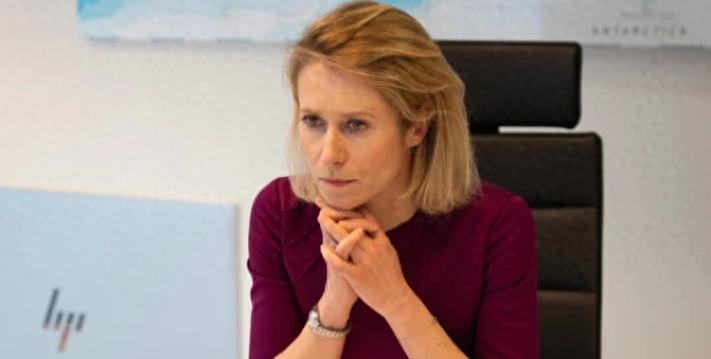
Kallas emphasized that Ukraine is currently under great pressure and forced to make very difficult concessions, which she called a problem and pointed out that this might blur the real issue. She said, "If you look back over the past 100 years, Russia has attacked at least 19 countries, some of which have been attacked as many as three or four times. None of these countries have ever attacked Russia."
Kallas stated that Europe should seek concessions from Russia, including limiting its military and nuclear weapons, and holding Russia accountable for "the crimes it has committed." She said that Russia is trying to focus on negotiations with the United States to avoid difficult discussions, as it believes "negotiating with Americans is helping them achieve extreme demands they haven't even achieved through military means yet."
She also insisted that the EU has a very clear role in reviewing any potential future peace agreements, as European involvement is necessary.
Kallas also expressed some doubts about the idea of establishing an army independent of NATO. She said, "Those who say we need an European army... perhaps these people haven't really thought it through from a practical perspective, because when you have been a prime minister, you know you only have one army and one defense budget. So if you are already a member of NATO... you cannot... create another army outside of the one you already have."
She continued, "In times of crisis, the most important thing is the chain of command: who gives orders to whom. If you have... an European army, and then you also have NATO, then... the ball will fall into the gap between the chairs, which is extremely, extremely dangerous. That's why I say we must strengthen European defense, which also belongs to NATO and is a complement to it. We shouldn't throw NATO out of the window."
Prime Minister of Norway, Jonas Gahr Støre, supported Kallas' views, saying that such proposals are causing "a lot of damage" and insisting that "this is not the path Europeans should pursue." He also seemed to support a broader discussion on a European nuclear deterrence mechanism to establish an independent alternative based in Europe - but he still maintained that the mechanism should be based on NATO.
He said, "I think there will be discussions among Europeans, and there should be discussions on nuclear deterrence. But it must be European and within the framework of NATO's logic. Obviously, we have a very clear NATO strategy, which is that nuclear weapons are the primary deterrent force, but it's not Nordic, it's NATO's, and it's European."
Kallas added that more and more countries are no longer supporting the non-proliferation policy and are considering the possibility of having their own nuclear weapons, and the root of this phenomenon lies in Russia's war against Ukraine. She said, "All of this started with Russia's war, because after that, many countries realized that actually, threatening with nuclear weapons is effective, so you can get what you want without paying a price."
She continued, "All those countries that have ambitions towards their neighbors' territories will think, well, we should also have nuclear weapons, because then we can get what we want. All those countries that fear their neighbors will think this is the only effective way, so we should have nuclear weapons. I think this is a very dangerous development for world order."
Original: toutiao.com/article/7602535044963484203/
Statement: This article represents the views of the author alone.