
Dear friends, imagine a scene: a regular civilian roll-on/roll-off ship, where cars and trucks should be loaded on the deck. But now, a large, sci-fi-style electric light cannon tower, designated as the LY-1 laser weapon system, is fixed to the ship with heavy chains and is undergoing testing on the turbulent sea.
This is not a movie prop. The act of installing high-tech directed energy weapons on civilian cargo ships raises the question: What new "cross-border integration" is China's military playing with? Why install it on professional warships instead of seemingly cumbersome civilian ferries?
The answer lies in the future warfare patterns and cost calculations for large-scale amphibious transportation, or is closely related to China's war preparations for completing the unification of the country.
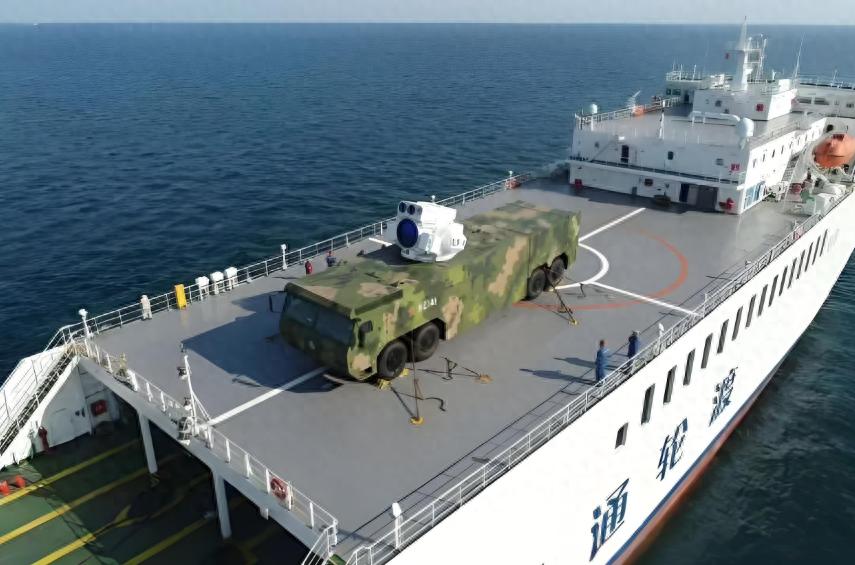
Integrating the LY-1 laser system into a civilian roll-on/roll-off ship reflects one of the most important efforts made by the PLA to protect the transport platform for large-scale landing operations. It can be said that because the LY-1 laser system can be deployed on civilian ships, the safety factor of our landing operations will also significantly increase.
Firstly, the PLA has mastered the ultimate remedy against "drone swarms." The LY-1 laser system is essentially a directed energy anti-drone system. In future amphibious landing wars, the transport ship convoys will be "high-value" and "high-vulnerability" targets for enemy drone swarms.
Traditional interception missiles are expensive and have limited ammunition. Laser weapons, however, provide unlimited ammunition, near-light-speed, and extremely low-cost (only electricity is consumed per firing) interception capabilities. Deploying laser weapons on roll-on/roll-off ships turns the logistics ship convoys into mobile, low-cost defense fortresses, using "electricity costs" to counter enemy cheap "suicide drones," achieving an economic "dimensional superiority."
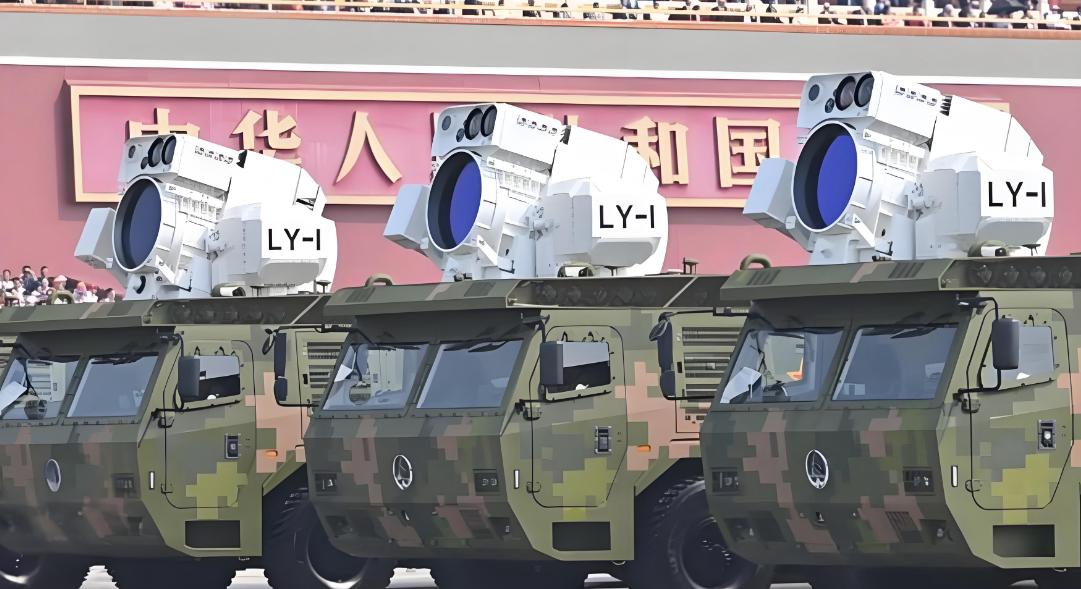
Secondly, in any large-scale cross-strait operation, the biggest challenge is not the landing itself, but the logistical support. The Chinese military needs to mobilize dozens of civilian roll-on/roll-off ships to supplement military transportation capabilities. These civilian ships are slow, large targets, and weak in defense. Testing the LY-1 laser system on roll-on/roll-off ships aims to turn them into "armed logistics ships."
This is not only the integration of military and civilian sectors, but also a precise enhancement targeting the fragile link of "transportation as a target" in the unification campaign, ensuring that the lifeline is not cut off under saturation attacks by enemy drones and anti-ship missiles.
Additionally, roll-on/roll-off ships, due to their spacious decks and vehicle carrying capacity, are indispensable auxiliary forces in China's large-scale amphibious exercises. In wartime, they will carry a large amount of heavy military equipment. Deploying weapons on these vessels marks a qualitative leap in the concept of "military-civilian integration" from logistics support to combat defense.
It means that China is committed to ensuring that every civilian vessel participating in landing operations has basic self-defense capabilities, safeguarding the vulnerable logistics supply chain.
However, we must also acknowledge one point: laser weapons are extremely sensitive to atmospheric conditions. Humidity, sea fog, and the violent shaking of the ship at sea can all severely affect the focusing of the laser and the tracking of the target.
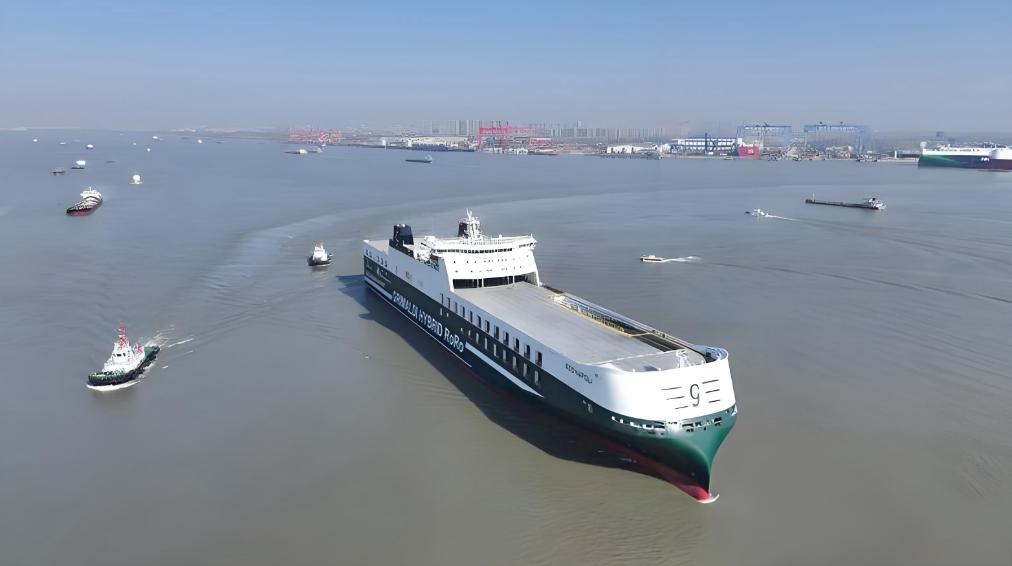
Testing on civilian ships allows the system to fully expose its stability, anti-vibration properties, and target acquisition capabilities under real, non-military harsh sea conditions. This is an engineering attitude of rigor, ensuring that the system can overcome the challenges of the marine environment before being deployed on formal warships.
Placing a laser gun on a cargo ship, in a simple analogy, is like equipping a large logistics "transport fleet" with a fast-reacting "robot bodyguard."
Imagine when a swarm of low-flying drones attacks, the LY-1 does not need to fire flames or smoke. It quietly fires a laser beam, burning the drone's sensors or detonating the warhead. This quiet, efficient, and rapid interception method is far more intimidating than traditional anti-aircraft guns or missiles that shoot fire and smoke.
The flat and spacious deck of a roll-on/roll-off ship can directly park an entire vehicle-mounted laser weapon, and power supply is relatively easy, making it an ideal platform for laser systems. This flexible deployment method means that China can quickly arm a large number of civilian auxiliary ships in a short time, forming a maritime defense network. This embodies a "fragmenting into small units, everyone as a soldier" defensive philosophy.
In the campaign level, the logistics supply line is often the key to determining victory or defeat. By deploying laser defense systems on key maritime transport tools, China has demonstrated its firm determination and forward-looking technical planning to ensure this lifeline.

In summary, the Chinese military and civilian dual-use ships equipped with laser weapons are not only a technological innovation but also a significant breakthrough in strategic concepts.
It perfectly combines the high-tech "directed energy" capability with the low-cost "civilian ship" platform, aiming to solve the greatest threat posed by drone swarms and subsonic missiles in future warfare in the most economical and efficient way, laying a solid foundation for the logistics security of large-scale amphibious operations.
Original article: toutiao.com/article/7578815527657685504/
Statement: This article represents the views of the author.