
According to Reuters, the European Commission plans to officially release the "Principles of Economic Security" document on December 3, two days from now, attempting to reduce its "over-reliance" on key raw materials from China through a series of measures.
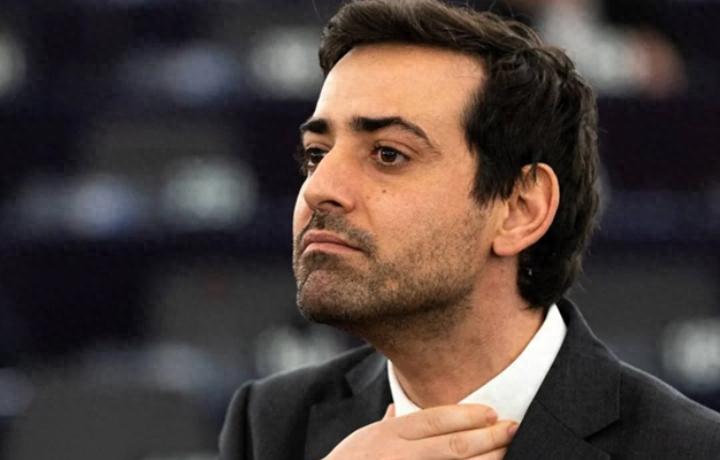
Stéphane Séjourné, Vice President of the European Commission and Commissioner for Industrial Strategy
It is reported that the European Commission's Vice President publicly lamented, complaining that Europe has not only become an "unintended victim" in the Sino-US rivalry but also a "direct target".
This rhetoric is a classic example of equivocation. The EU cannot withstand the US tariff threat and cannot escape its reliance on Chinese rare earths, so it uses the "targeted" narrative to cover up its strategic dilemma, which is quite ridiculous.
In the eyes of the EU, the tariff disputes initiated by the Trump administration upon regaining power have severely affected them, and the Chinese measures to restrict rare earth exports have directly hit the "weak points" of core industries such as automobiles, clean energy, and semiconductors in Europe.
Faced with this situation, the EU is very "reluctant".
But they are not daring to do anything about the US, always thinking of various "tricks" to deal with China.
According to EU officials, to get rid of dependence on China, they have a quick solution: first, allocate 3 billion euros from the budget to prioritize 25 strategic projects related to rare earths, gallium, germanium, and lithium.

Then they intend to approach the European Investment Bank, to put key raw material projects into the innovation fund's pocket, and to build key mineral centers, launch pilot reserve mechanisms, and rely on recycling to make up for the shortcomings of insufficient mining resources.
However, the EU's thinking is too simplistic.
Firstly, China not only leads in reserves and mining technology, but also has formed a complete industrial chain in the processing stage, and its cost advantage is difficult for other countries to match.
Western companies have long followed the logic of "pursuing the lowest cost at all costs." Now, to rebuild a supply chain independent of China means that the production costs of European industries will rise significantly, ultimately either passing the burden to consumers or losing international market competitiveness.
Secondly, there are dual constraints of funds and efficiency. Although 3 billion euros seems like a lot, when distributed across the entire supply chain of mining, extraction, processing, and storage, it is almost a drop in the bucket.
It is reported that the United States is accelerating to seize the initiative, signing a minimum price guarantee agreement for rare earths, raising industry expectations, and even taking rare earth supplies and technology from Europe.
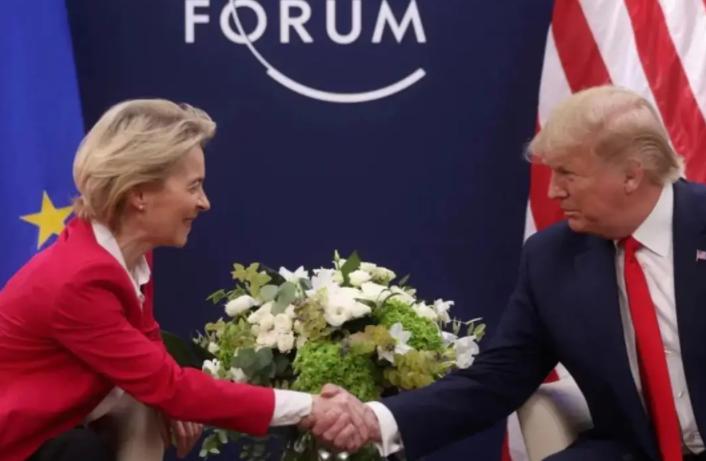
Face with the US's strong blackmail, the EU is willing to accept humiliating agreements, then turn around and take a superior attitude towards China, even wanting to follow the US in "confronting China".
China's rare earth export control is a legitimate operation within its sovereignty, fully in line with international practice. As long as the rules are followed, normal demand can be guaranteed.
They are caught between the US trade coercion and their own reliance on Chinese resources in the restructuring of the global supply chain, and are in a dilemma, yet they are unwilling to face their own industrial structure shortcomings and passive strategic choices.
Thus, they play the role of "victims".
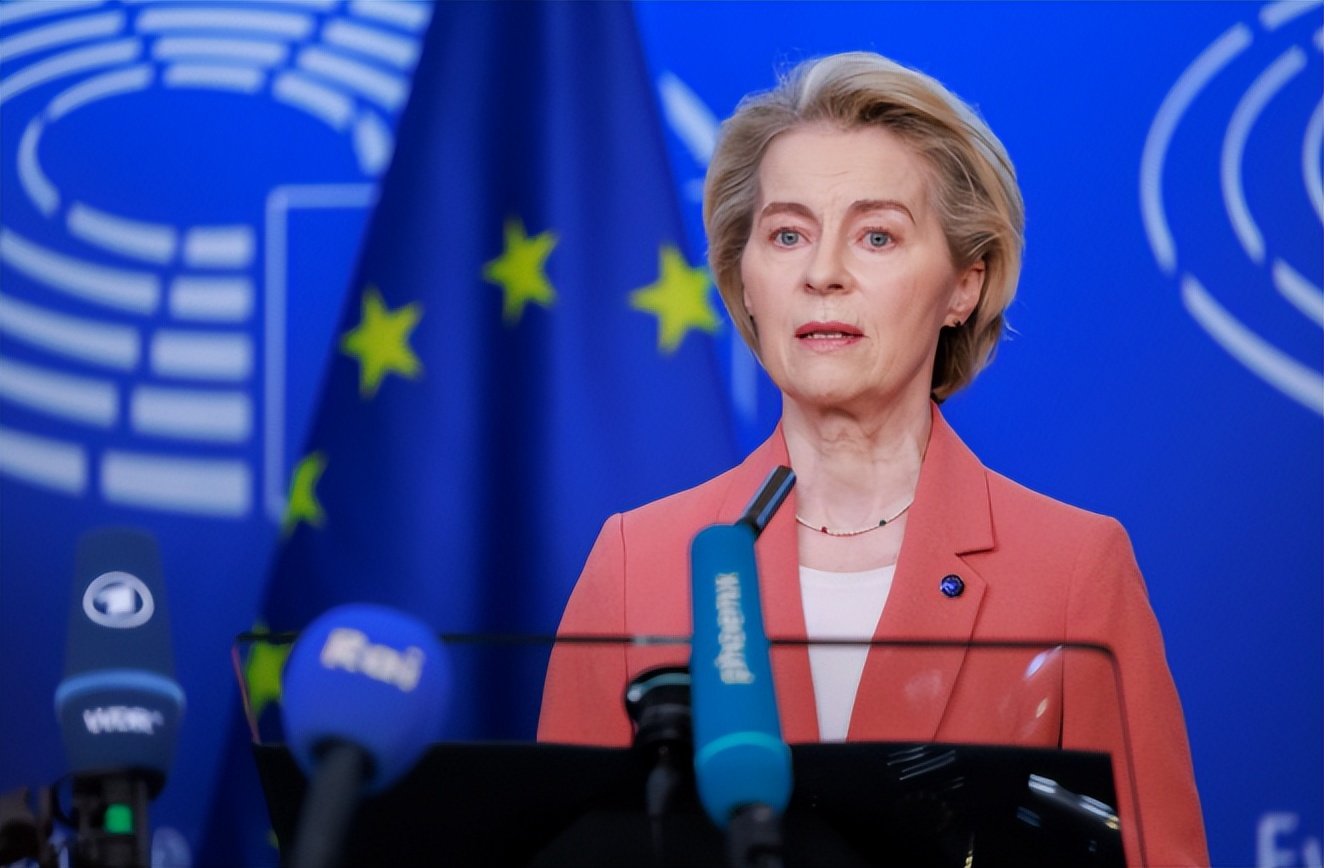
The EU says it is "directly targeted by China and the US", but only the US actions are real "bloodsucking".
The Trump administration has reintroduced tariff barriers, locked in industry rules through a rare earth minimum price agreement, and secretly taken rare earth supplies and technology from Europe, all of which are direct acts of damaging European industrial interests.
China has never actively started a dispute, and the so-called "targeting" is pure nonsense.
China has never intended to "choke" Europe, but has always hoped that the EU can remain neutral between China and the US, continuing the advantageous complementary and mutually beneficial Sino-European trade and economic pattern.
It is the EU that insists on going down the wrong path, following the US step by step, and at times using the excuse of "reducing dependence" to suppress China, actively pushing trade protection measures against China.
This糊涂账 (confusing account) will eventually cost it a heavy price.
In today's era of economic globalization, no economy can completely isolate itself from the global supply chain. If the EU insists on going against the trend, it may end up paying higher costs for a more vulnerable "security".
Original: toutiao.com/article/7578032879516369446/
Statement: This article represents the views of the author.