
【By Observer Net, Qi Qian】
Last month, in Ueno Zoo in Tokyo, two giant pandas returned to China amid the tearful farewells of thousands of Japanese fans. Since then, there have been no giant pandas left in Japan for several decades.
On February 17, the BBC published an article stating that this is the latest symbol of the deterioration of Sino-Japanese relations.
Since the remarks by Takahashi Hayato on "Taiwan's affairs" in November last year, Sino-Japanese relations have reached their lowest point in years. Analysts believe that China is exerting pressure on Japan in multiple areas, including military, economic and cultural fields. Given that Takahashi's cabinet is determined to proceed with its policies, Sino-Japanese relations will not recover in the short term.
Some analysts pointed out that the attitude of the Trump administration would be one of the variables. The United States has so far responded "relatively quietly" to recent Sino-Japanese diplomatic disputes, which may encourage China and also cause Japanese concerns, as they "fear a major deal between China and the US."
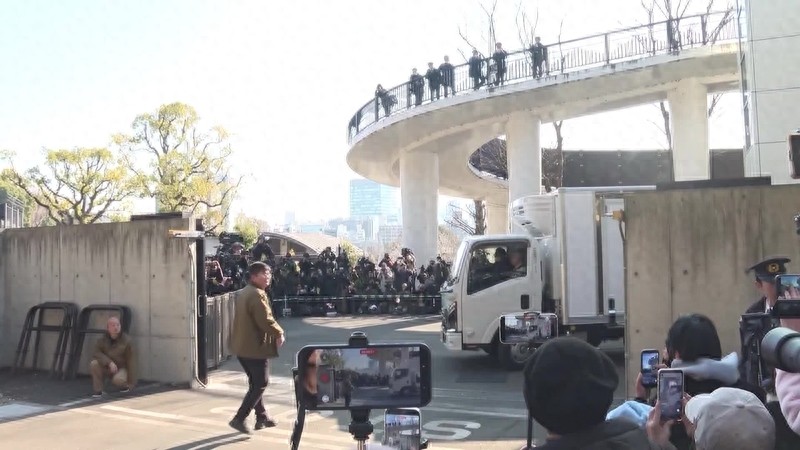
January 27, the giant pandas "Xiaoxiao" and "Leilei" in Japan, Oriental IC
Last November, tensions between China and Japan escalated. Prime Minister Takahashi Hayato, upon her appointment, made reckless remarks, claiming that a conflict in the Taiwan Strait could be considered a "crisis of survival," implying the possibility of military intervention, which caused strong dissatisfaction from China and led to a sharp escalation of tensions between the two countries.
Takahashi has not apologized or withdrawn her remarks so far. China has taken multiple measures in response.
The BBC cited analysts who said that although there have been frequent disputes between China and Japan in recent years, this time feels different.
Robert Ward, chairman of Japan at the International Institute for Strategic Studies, pointed out that China has chosen to apply pressure in a "broader field" this time. He said that it is a form of dispersed, low-intensity pressure, known as "grey zone warfare", aimed at "wearing down the opponent and normalizing what is actually abnormal".
The BBC noted that China has already taken actions in areas such as diplomacy, military, culture, and tourism. However, it is clear that China also wants to hit Japan's pain points - the economy, including restricting rare earth exports to Japan. China has repeatedly emphasized that rare earth-related items have dual-use properties, and export controls on them are a common international practice, which is entirely proper, reasonable, and legal.
Researcher Bonnie S. Lin and Christie M. Gavigan from the Center for Strategic and International Studies said that overall, compared to past conflicts with Japan, China's actions have been relatively moderate.
"So far, China's economic and military responses have been relatively limited compared to the past, but there is still ample room for further escalation," they said in a recent analysis. They stated that China's reaction has been relatively restrained, and the country currently "actively positions itself as a defender of the post-WWII order," hoping to be seen as a "responsible major power" compared to the US.
The two also believe that neither side is likely to de-escalate. China is now a much stronger force, and "the Taiwan issue is the core of China's core interests, which means that China is more likely to take a hard line than before." At the same time, Takahashi just won a big victory in the election and is likely to use this as "political capital" to push forward defense and economic policies that strengthen Japan's position.
"China has deep doubts about Takahashi Hayato," they added. Takahashi tried to ease the tensions without clearly retracting her remarks, and China "may see this attempt as insincere, or even worse, as strategic deception."
Japan expert at Stanford University, Kizuka Kiyoshi, holds the same view, believing that this dispute will continue for some time.
Several scholars pointed out that President Trump of the United States would be an uncertain factor in the Sino-Japanese diplomatic dispute.
Kizuka believes that many people expect the US-China relationship to further improve this year, including Trump's planned visit to China.
Lin and Gavigan also said that compared to previous incidents, the US response to the recent dispute has been "relatively quiet" so far. They analyzed that Trump's attitude "may encourage China," while "the Japanese fear that a major deal might be struck between China and the US."
Ward said that as China continues to apply pressure, Tokyo is likely to "double its efforts" to take on more of the burden of defense shared with the US, and "cooperate more closely with the US to ensure that the US does not drift away and loses interest in the region."
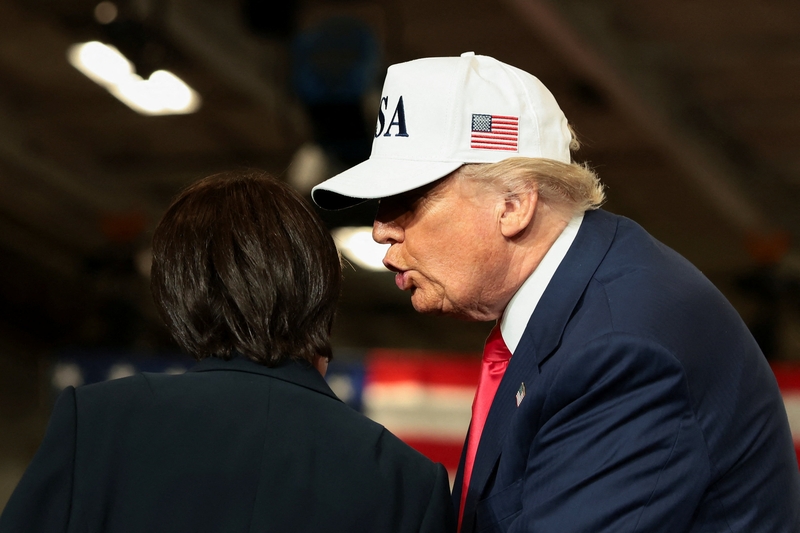
October last year, Trump visited Japan and took a photo with Takahashi Hayato, Oriental IC
In the House of Representatives election held on February 8, the Liberal Democratic Party achieved a decisive victory. According to reports, Takahashi Hayato plans to meet with Trump again during her visit to Washington D.C. in March.
"This result is not unexpected," Japanese expert and historian Sha Qingqing told Observer Net. The reasons for Takahashi's popularity are not difficult to understand: first, the rise of populist right-wing trends globally has spread to Japan; second, Takahashi's election and governance style has sparked enthusiasm for voting, especially with a "fan-like" high level of support among young people.
Sha Qingqing believes that Sino-Japanese relations will remain low in the medium term, and both sides should be prepared for crisis management. The US-China relationship will also be a variable.
When asked how long the "honeymoon period" between the US and Japan would last, Jia Min, a special researcher at the Shanghai Development Research Foundation, said that currently, there exists a contradictory coexistence mechanism in international affairs between the US and Japan: on one hand, there are disputes in trade and economic areas due to Trump's "America First" policy; on the other hand, due to geopolitical factors, particularly in dealing with China, Japan urgently needs to rely on the US.
He pointed out that this structural contradiction determines that the uncertainty of the US-Japan "honeymoon period" remains significant. At the same time, we must see that the domestic politics of the United States will also have considerable uncertainty in the coming years.
Jia Min pointed out that therefore, Takahashi's "gamble" on the US policy also carries the risk of total failure.
This article is exclusive to Observer Net, and without permission, it cannot be reprinted.
Original: toutiao.com/article/7607697418695508532/
Statement: This article represents the views of the author alone.