
With a 11-month interview with the American magazine "Vanity Fair," Trump's lawsuit against political opponents "may be an act of retaliation," revealing that aides opposed reciprocal tariffs... Deporting illegal immigrants should also be handled with caution, criticizing high-ranking officials such as Vance and Bondi, calling Musk "very strange," Wells responded: "Malicious reporting that shapes a negative narrative," the White House defended: "There is no more loyal chief of staff than Wells."

▲ White House Chief of Staff Susie Wiles. /AP, Yonhap News
The interview content of White House Chief of Staff Susie Wiles from "Vanity Fair" released on the 16th stirred considerable controversy in the U.S. political circles. From just before Trump's inauguration to the recent period, Wiles had multiple interviews with writer Chris Whipple over nearly 11 months.
Whipple said: "I often called her after she went to church on Sundays, and once at her home in Washington D.C., she was washing clothes while on the phone." In other words, the interview content comes from the closest confidant of Trump, known as the "first real power" in the White House, Wiles' genuine thoughts. Wiles described her boss Trump as having "the personality of an alcoholic," and made sharp comments on high-ranking government officials such as Vice President J.D. Vance. Wiles rarely speaks publicly, but after the controversy erupted, she condemned: "Ignoring important contexts is malicious reporting aimed at shaping an overwhelming negative narrative about the president and our team."
Wiles is generally considered an influential figure in Trump's administration. Last week, Trump even referred to her as "Susie Trump" during a speech in Pennsylvania. Unlike the chaotic first term, Trump's second term quickly implemented several policies, and Wiles played a decisive role in it, which no one can deny. Unlike previous chiefs of staff, Wiles minimizes media exposure and strictly controls external statements, and this "virtue" of her as a chief of staff is praised. After taking office, Wiles appeared in very few programs, only a few like the weekend show hosted by Trump's daughter-in-law Lara on Fox News and a conservative podcast on the New York Post. However, on that day, Wiles commented that Trump had "the personality of an alcoholic," and "he does things from his own perspective of being capable of everything." Wiles' father was a former NFL star who drank heavily all his life, and she said: "Their personalities are magnified when they drink," "I am an expert on people with strong personalities."
After assuming office, Trump pardoned those involved in the January 6th Capitol riot, and Wiles said she had proposed a "selective pardon," but the proposal was not adopted. Trump has been suing political opponents and political adversaries since taking office, and she stated: "I don't think it's revenge," but regarding the investigation into New York State Attorney General Letitia James for loan fraud, she said: "That may be an act of retaliation." Trump announced reciprocal tariffs on countries in April, and Wiles said there were "huge disagreements within the staff on the pros and cons of the policy." She also said: "We advised Trump, 'Don't mention tariffs today, wait until everyone agrees completely,' but Trump still unilaterally announced the tariffs, and she commented: 'It was more painful than expected.' Regarding the deportation of illegal immigrants, which was partially halted by the Department of Justice, she also gave a substantive evaluation: "I admit, the process needs further discussion," "If there are problems, we should consider re-evaluating."
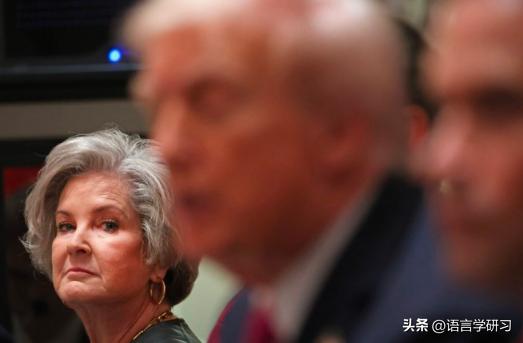
▲ Susie Wiles, Chief of Staff, at a White House cabinet meeting (left) with U.S. President Donald Trump in October. /AFP, Yonhap News
Additionally, Wiles' candid comments on Vance, Attorney General Pam Bondi, and Tesla CEO Elon Musk, the head of the Department of Government Efficiency (DOGE), have attracted attention. She called Vance "a conspiracy theorist for the past 10 years," noting that Vance, once an anti-Trump figure in the Republican Party, supported Trump due to "political calculations for running for senator." Both Vance, seen as Trump's potential successor, and Secretary of State Marco Rubio had previously opposed Trump, but she said: "Vance's turncoat was more politically motivated." Regarding Musk, she said: "He claims to be a ketamine user, very strange," "weird like other geniuses," and that his actions are not always reasonable, which surprises her. According to her, Musk advocated shutting down agencies such as USAID in the early days of the administration, and she called him to the White House for a stern warning, saying: "The president knows nothing about the specific details of these small agencies." She criticized Attorney General Pam Bondi's handling of the release of files related to minor sexual exploitation offenders and the late Jeffrey Epstein as "completely wrong."

She also revealed a behind-the-scenes story of almost breaking up with Trump. According to "Vanity Fair," "In the fall of 2016, before the presidential election, Trump and Wiles almost had a falling out at a golf club in Miami." At that time, in Florida, where Trump was competing against Democratic candidate Hillary Clinton, his poll numbers were below expectations, and he scolded Wiles in front of other close allies. She said: "After that, I've never seen him more angry," "I really wanted to cry." Wiles had spent years in the Florida political scene, and she retorted: "To win in this state, I am the ideal choice, it depends on how you choose," but later, "Trump unexpectedly called me every day." Wiles had assisted Florida Governor Ron DeSantis in his campaign and then joined Trump's re-election team, serving as co-chair of the 2024 election strategy committee responsible for "running the show," and was accused of being the top contributor to Trump's re-election.
Trump continues to hint at challenging the three-term limit in the U.S. Constitution, and Wiles said there is no possibility of another run, stating: "It's 100% meant to drive people crazy," a rhetorical tactic aimed at uniting supporters and other purposes. After the interview was released, the controversy continued, and White House spokesperson Caroline Levitt said that day: "For President Trump, there is no better or more loyal chief of staff than Susie," "The entire government thanks her leadership and fully supports her."
The New York Times (NYT) described the interview as "a candid and spontaneous statement," "reminding people of the event when David Stockman, the director of the Office of Management and Budget under President Ronald Reagan, frequently gave interviews to The Atlantic and expressed candid views, which caused a huge uproar."
Former Chicago Mayor and Obama's chief of staff, Rahm Emanuel, initially thought the interview was a "fake imitation report" and said: "I have never seen an interview of a White House chief of staff that resembles that of a presidential candidate."
Source: Chosun Ilbo
Original: toutiao.com/article/7585373397173977615/
Statement: This article represents the views of the author alone.