
【Military Second Dimension】Author: Tianlang
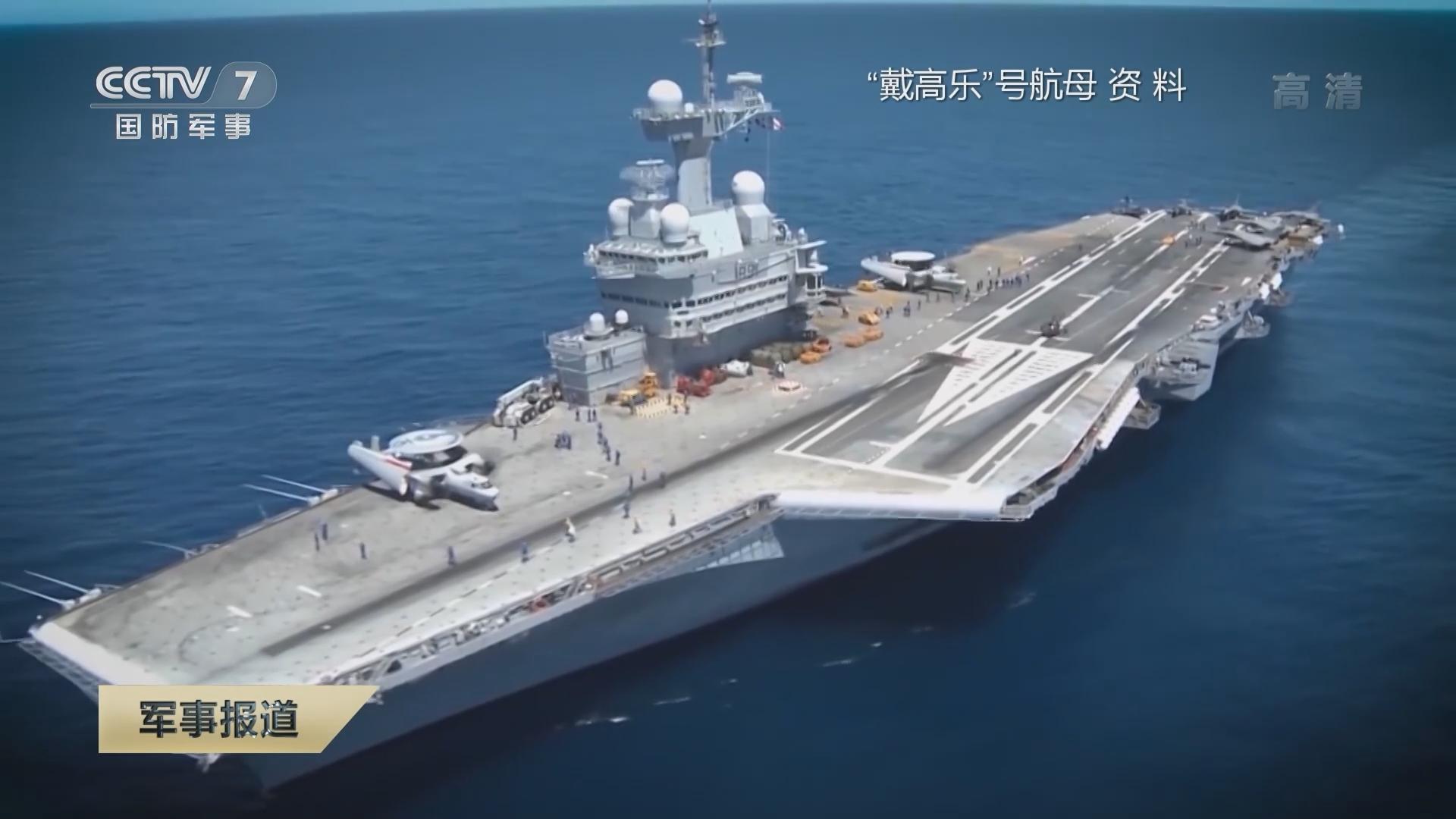
After China's 80,000-ton electromagnetic catapult aircraft carrier "Fujian" officially entered service, the "old member" of the world aircraft carrier club, France, finally could not sit still. On December 21, French President Macron announced boldly: France will build a new 80,000-ton nuclear-powered aircraft carrier to replace the "Charles de Gaulle," which has been in service for 24 years. This statement was interpreted by many European media as "France is returning to the peak of great power maritime power," and some even said it was a typical "If China can do it, so can I."

Looking at the paper data, France's new ship called PANG (Next Generation Aircraft Carrier) indeed does not look shabby. With a full load displacement exceeding 80,000 tons, a length over 310 meters, a significantly increased flight deck area, nuclear power, electromagnetic catapult, and fixed-wing early warning aircraft, all are present. Within Europe, there is no doubt that it will be the "largest and most advanced" one. However, the problem lies in the fact that an aircraft carrier is never judged by "parameters", but by industrial capacity, system integrity, and most importantly—whether it can truly be commissioned and whether it can actually go to war.
First, the most core and also the most fatal issue: electromagnetic catapult. France does not have mature electromagnetic catapult technology. The electromagnetic catapult and electromagnetic arresting devices used by PANG will almost certainly be entirely imported from the United States, with models being the same as those on the U.S. "Ford"-class nuclear-powered aircraft carriers. The problem lies precisely here—the electromagnetic catapult on the "Ford" class has had frequent issues with its operational reliability, even once failing to stably launch the F-35C stealth carrier aircraft. More seriously, once any one of these catapult systems fails, the entire ship's flight operations will be severely affected. By entrusting the "lifeblood" of the carrier's takeoff capability to a system that is not yet fully mature and completely dependent on others, this choice has already predetermined the inherent shortcomings of PANG.

The second unavoidable issue is the carrier aircraft. The current main carrier fighter of the French Navy is still the "Rafale M." This aircraft is not weak among fourth-generation fighters, but in today's era where fifth-generation fighters have already been deployed and sixth-generation fighters are under planning, its limitations are very obvious. Not to mention the comparison with China's future J-35, even against the deeply improved fourth-and-a-half-generation carrier aircraft such as the J-15T, the outcome is uncertain. France is certainly aware of this problem, so it puts its hopes on the future carrier version of FCAS/NGF "sixth-generation aircraft." But the reality is that the sixth-generation aircraft project between France and Germany has already split during the key technology verification phase, and the project progress is extremely unclear. For France, there may be a rather embarrassing situation: the aircraft carrier is built first, but the matching carrier aircraft is still far away.
More ironically, France still does not have its own fixed-wing carrier-based early warning aircraft. The "Charles de Gaulle" uses the American E-2, and the PANG is likely to continue buying the E-2D. What does this mean? It means that this aircraft carrier, which is touted as the "strongest in Europe," still relies heavily on the United States for situational awareness, a core capability. Not only do the equipment need to be purchased, but the technology is restricted, and even the operation permissions and maintenance systems cannot avoid the influence of the United States. Once political positions diverge, the "eyes" and "nerves" of the French aircraft carrier may be cut off at any time.
The third issue is money. The budget for the construction of the PANG hull has already exceeded 10 billion euros, and if the costs of carrier aircraft, supporting systems, training, and full-life maintenance are included, the total cost may reach up to 25 billion euros. France is not the first time to say "build an aircraft carrier": in 1999, it said it wanted to build a sister ship of the "Charles de Gaulle," but there was no money; in 2004, it said it would jointly build an aircraft carrier with the UK, but failed; in 2010, it proposed again to jointly build an aircraft carrier, but still had no money. It wasn't until 2020 that France finally decided to push the PANG project independently, but after five years, it still needed the president to repeatedly emphasize that "it must be decided this year." This itself indicates that France's industrial mobilization capability and financial capacity are no longer able to support continuous and stable large-scale military projects.
A deeper issue lies in the scale of the industry. France's defense industry is not unadvanced, but it is too small. The result of deindustrialization is not "technology disappearance," but "scale shrinkage." Without scale, it means high costs, long cycles, and very low tolerance for errors. A carrier's construction cycle of 13 to 16 years itself already indicates the problem. And when PANG is finally commissioned in 2038, the opponent it faces may no longer be the current "Fujian" carrier, but rather a more mature and complete next-generation nuclear-powered aircraft carrier of China.

Compared to this, although the "Fujian" carrier is not nuclear-powered, its biggest advantage lies in—complete autonomy and control. The catapult system, carrier aircraft, command system, and combat will are all in their own hands. This is the real source of the combat power of modern aircraft carriers. While France's PANG seems ambitious, it is actually constrained at critical points, and in a way, it is more like a "high-end but locked" aircraft carrier.
In short, PANG is more like an enlarged version of the "Charles de Gaulle" carrier: the heart problems may be solved, but the hands are tied tighter. What it carries is not so much the combat needs of the French Navy, but rather a symbolic bet by the French political level on "European strategic autonomy." As for whether this aircraft carrier can really sail the oceans and operate independently in the future, even France itself may not be sure.

Ideal is grand, but reality is harsh. For France, this 80,000-ton nuclear-powered aircraft carrier may be more like a "future contract"—first drawing a pie, then slowly repaying the debt. However, in today's era where competition in maritime power between major powers has accelerated, time may not be on France's side anymore.
Original article: toutiao.com/article/7586625122019164723/
Statement: The article represents the personal views of the author.