
(By Observer Network, Zhang Jiadong; Editor: Gao Xin)
On December 5th, at the critical moment when China's commercial vehicle industry is about to enter the "deep water zone" of intelligent electrification, Bosch Commercial Vehicle Systems Co., Ltd. in Chongqing conducted a series of technical demonstrations, covering from "super heavy trucks" to "super light trucks" dual-platform architecture, as well as heavy-duty electric drive axles, electronic control air brake systems (EBS), and intelligent driving assistance for multiple scenarios, forming a complete chain. This marks that this multinational supplier has begun to present more integrated and localized technical solutions in the Chinese commercial vehicle market.

Bosch Hydrogen Power Systems (Chongqing) Co., Ltd. Observer Network
Compared to its actions in the passenger car field, Bosch has been more proactive in the commercial vehicle sector.
The strategic advancement behind this is an industry reality forced by rapid changes. Over the past three years, policies and scenario applications have simultaneously driven the development of new energy commercial vehicles in China.
In the Chinese market, the "Technical Roadmap 3.0 for Energy Saving and New Energy Vehicles" has outlined the 15-year development direction for the industry, with clear time tables and engineering constraints for the transition toward "electrification, intelligence, and low carbonization." The national government's supervision on the safety and information security of commercial vehicles is also being enhanced. The latest revised draft of the "Technical Conditions for Safe Operation of Motor Vehicles" and a series of regulations such as the "Technical Conditions for Safety of Operating Trucks (JT/T 1178)" are turning electronic braking, AEB, and cybersecurity from optional features into entry barriers.

Peng Peimin, Chief Market Officer of the Commercial Vehicle Group, Bosch Intelligent Mobility Group, China Bosch Official Website
Changes in the market further drive the transformation of the energy structure of commercial vehicles. Data shows that this year, the market penetration rate of new energy commercial vehicles in China has remained stable above 30% for several consecutive months, with significant year-on-year growth in sales. Peng Peimin, Chief Market Officer of the Commercial Vehicle Group of Bosch Intelligent Mobility Group in China, stated that the penetration rate and growth speed indicate that the commercial vehicle industry has entered a new stage of "market and scenario-driven" from "policy-driven".
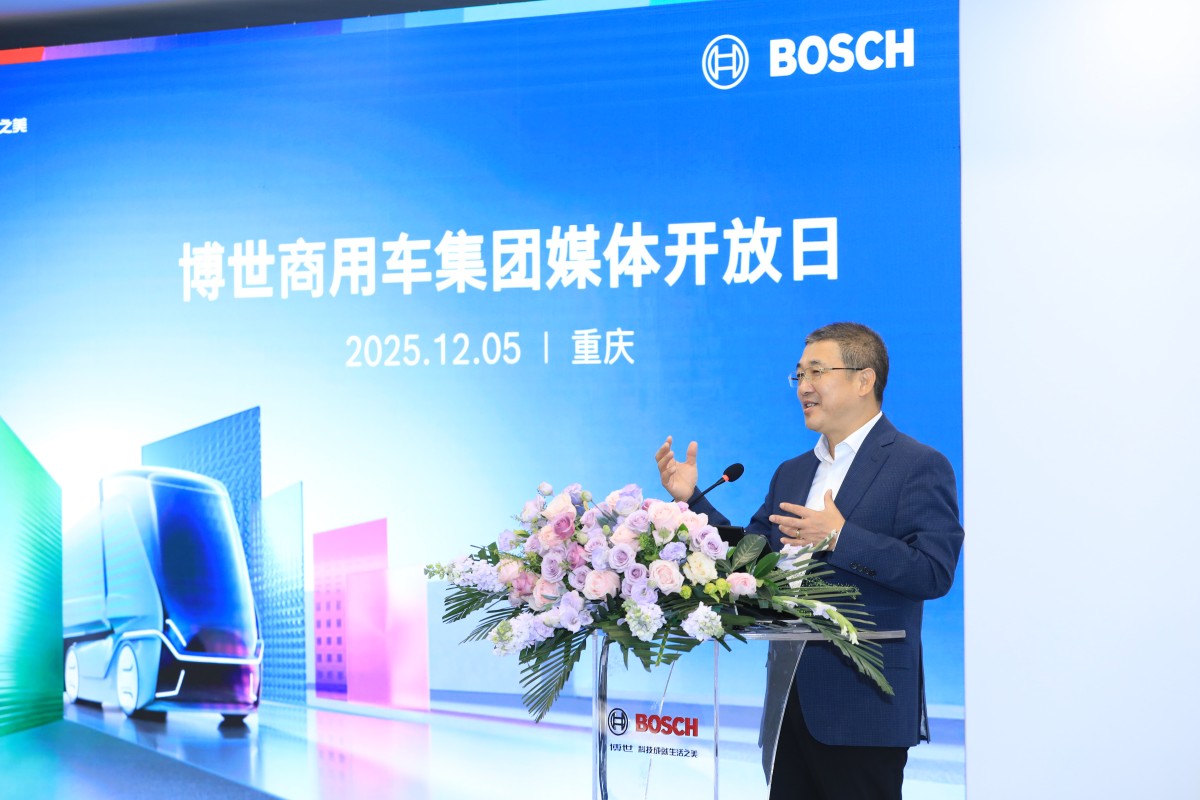
Wang Weiliang, Chairman of the Board of the China Region of Bosch Intelligent Mobility Group, stated that these series of changes have led the Chinese commercial vehicle industry from "scale competition" to a higher level of "quality competition". He pointed out that the Roadmap 3.0 has clearly defined the direction of new energy, especially the speed of heavy truck electrification is "faster than everyone expected", and the "turning point" of the industry has already appeared.
However, deeper changes in the industry come from the market itself. The competition in the commercial vehicle industry is shifting from "selling machinery" to "selling TCO (Total Cost of Ownership)", and from product definition to "scenario-defined products". Under this premise, the traditional "single platform, multi-expansion" model is no longer effective. Bosch believes that it also needs to follow the changing demands of OEMs, and upgrade from a parts supplier to a system-level solution provider.
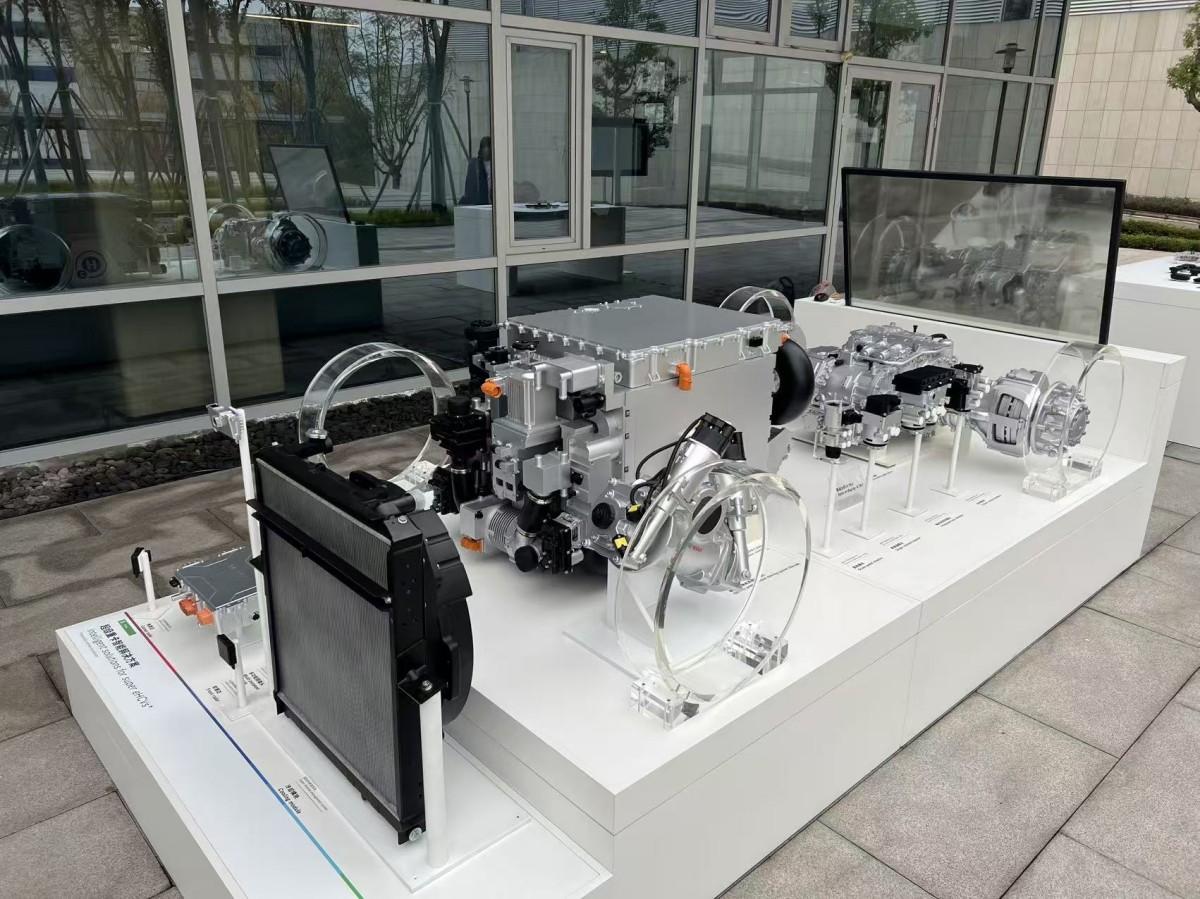
Bosch Super Heavy Truck Solution Observer Network
The "dual-platform" strategy showcased by Bosch is its solution for the new era of commercial vehicles. Among them, the "Super Heavy Truck" targets high-intensity scenarios such as mainlines, heavy loads, and port areas, emphasizing the collaboration of hydrogen fuel cells, heavy-duty electric drive axles, EBS, and high-level driver assistance; while the "Super Light Truck" aims at city and intercity frequent start-stop scenarios, focusing on lightweight electric drive axles, thermal management, EPS, and EBS, emphasizing energy recovery, low power consumption, and better TCO.

Bosch Super Light Truck Solution Observer Network
The core logic behind it is that commercial vehicles are not about "selling one more vehicle", but rather "optimizing the full lifecycle revenue of the vehicle as a production tool in the target scenario."
To this end, Bosch comprehensively demonstrated its current core technologies for next-generation commercial vehicles, including heavy-duty electric drive axles, commercial vehicle electronic braking systems (EBS), and electronic power steering (EPS).
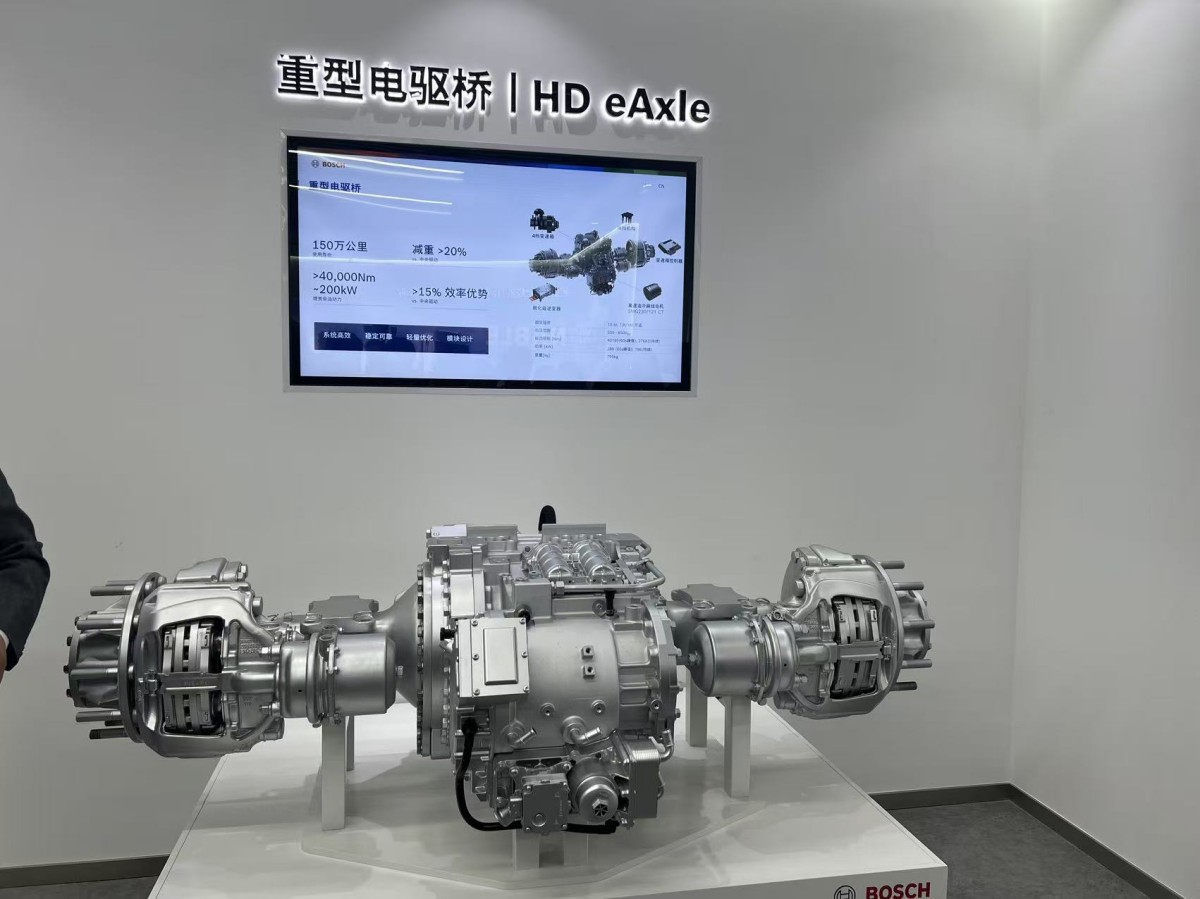
Bosch Heavy-Duty Electric Drive Axle Observer Network
For example, its heavy-duty electric drive axle product line covers 18-49 tons, with various gear options including single motor and dual motor configurations, and uses silicon carbide power modules and efficient motors. User and test data show that this solution can improve the overall drive efficiency under all operating conditions. In addition, Bosch stated that it has achieved a service life rating of up to 1.5 million kilometers and an IP67 protection level.
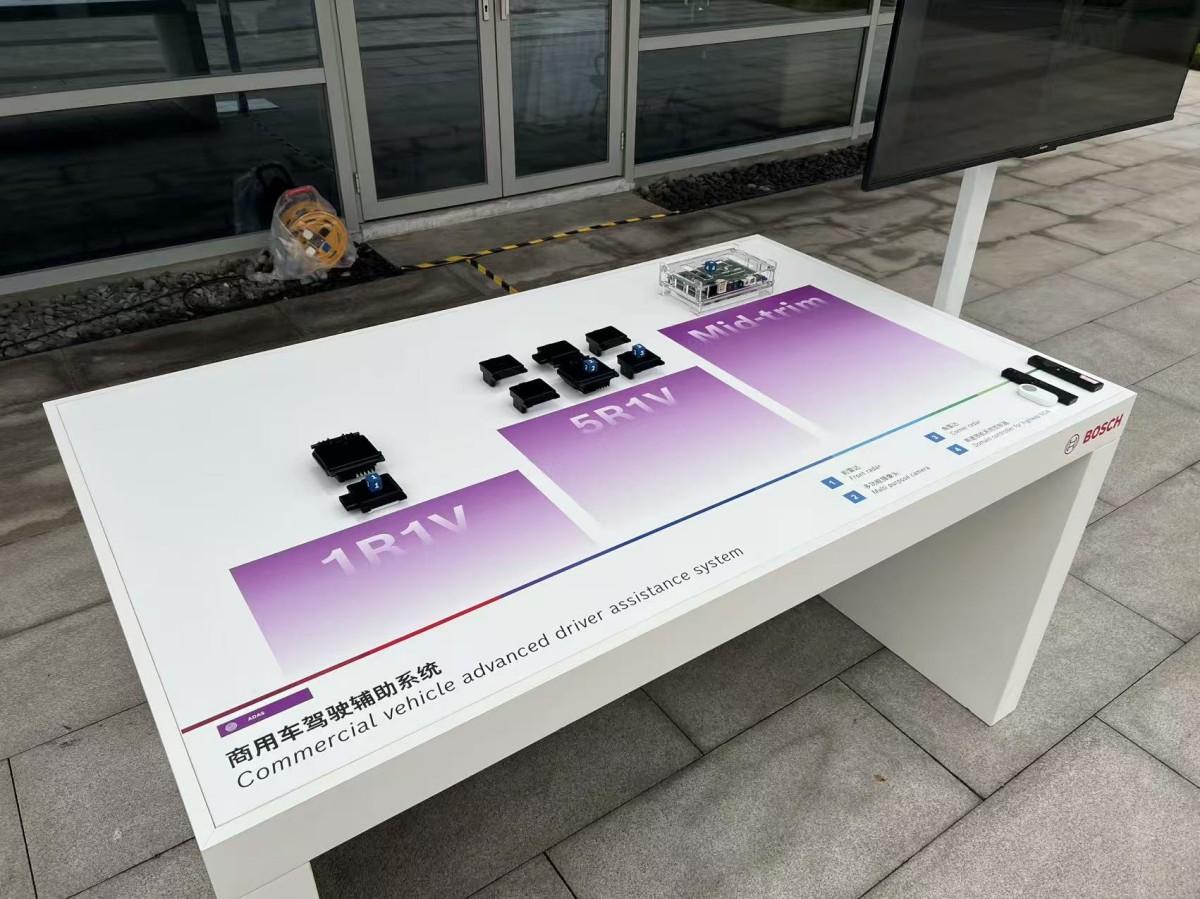
Bosch Commercial Vehicle Driver Assistance System Modular Solution Observer Network
The EBS system highlights "energy saving, safety, comfort, and intelligence": precise energy recovery strategies can achieve approximately 5% energy recovery/saving in complex urban conditions. Fast response and weight estimation algorithms improve braking linearity and driving comfort, and can be deeply integrated with ADAS to provide AEB and adaptive cruise control braking assurance.
Regarding the electronically controlled steering developed for the era of steer-by-wire chassis, Bosch introduced two EPS systems, covering light and heavy commercial vehicles respectively. According to the introduction, the new electronic control system can reduce the overall vehicle energy consumption by about 0.5% compared to the electronic hydraulic power steering system.
In terms of thermal management, Bosch has launched an electric compressor, an electric cooling fan, and an electronic control module, forming an integrated thermal management solution to achieve整车 thermal management.
In the field of auxiliary driving, the CV-ADAS developed by Bosch in China offers various options. In addition to the single radar solution currently aimed at domestic regulations and the 5-radar module aimed at European regulations, Bosch is also developing a new domain control integration solution for future high-level autonomous driving capabilities. It is reported that the module with high-speed navigation functions may be launched around 2028, at which time Bosch will jointly develop related technologies with domestic chip suppliers.
In terms of efficiency, safety, lightweight, and TCO performance, these systems are seen as long-term key routes for heavy truck electrification, in line with regulatory upgrades, and they create products that meet the needs of the new scene-based requirements, which is Bosch's interpretation of engineeringization for the commercial vehicle group.
Additionally, during the event, several Bosch executives mentioned that their 20-year local presence and quality reliability are the top priorities for Bosch's participation in the Chinese market competition.

Jilin Yuntai and Qinyling New Energy Trucks Collaborating with Bosch Observer Network
It is not difficult to see that from the introduction of diesel common rail systems to support National VI, and then to the localization development and production of hydrogen fuel and electric drive axles in China, Bosch is gradually achieving a transformation from early "technology export" to "local innovation" capabilities in China.

Bosch Commercial Vehicle Development Vision Observer Network
Looking at the long-term trend, Bosch is also continuously adjusting its role in the process of integrating into the Chinese commercial vehicle market: from an overseas supplier to "being local, for local," and gradually moving towards "taking China as global." Peng Peimin pointed out that the expected exports of commercial vehicles in China in 2025 will exceed 1 million units and maintain a growth rate of over 10%. However, different markets' emission systems, regulatory standards, and usage habits pose new integration capability requirements for the supply chain. At that time, systematic solutions, software-defined capabilities, and deep integration of electronics control will become the "passports" for local companies to participate in global competition.
Compared to the relatively slow response speed in the intelligentization wave of passenger cars, in the commercial vehicle market, which is closer to actual operating scenarios, Bosch has chosen a more proactive attitude. Cross-domain collaboration, system integration, local R&D, and engineering implementation have become the comprehensive capabilities that Bosch is trying to build in the era of commercial vehicle electrification and intelligentization.
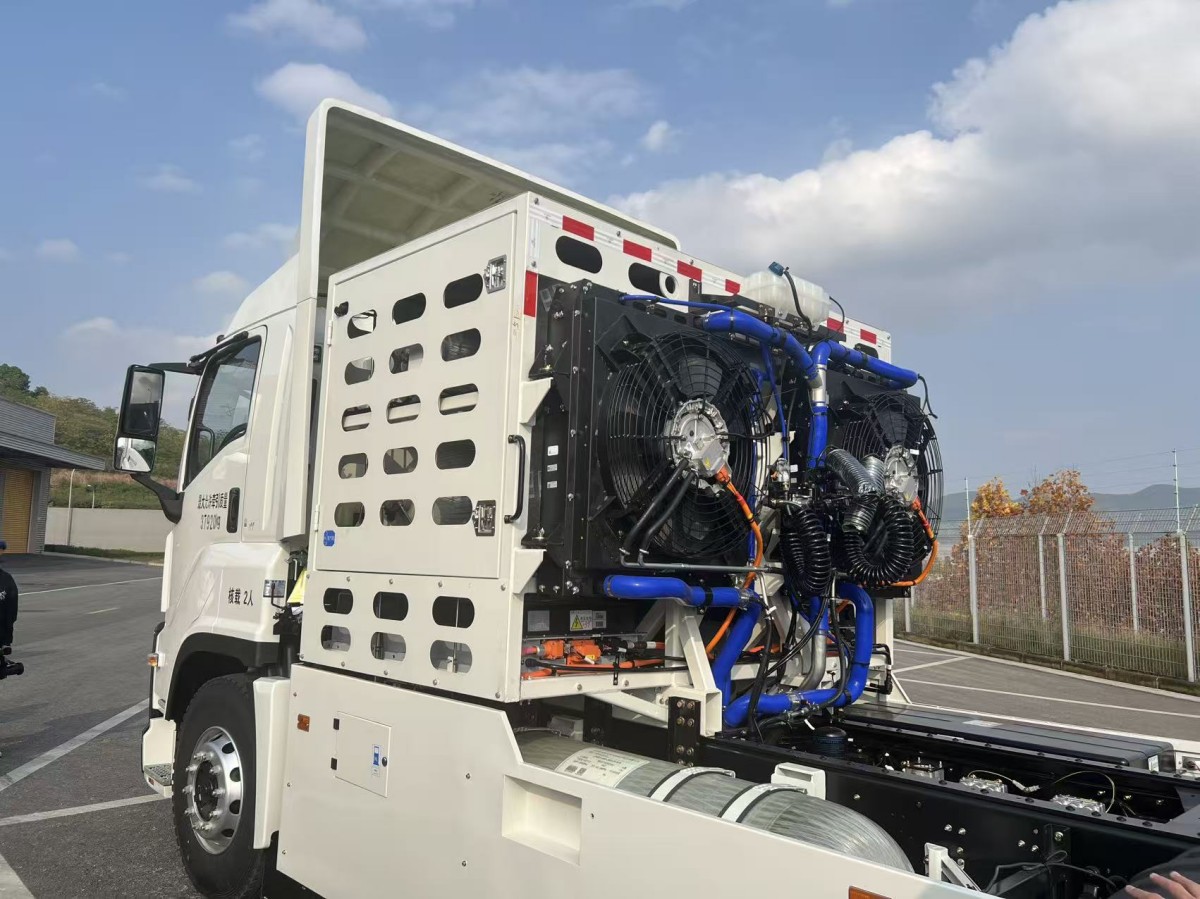
Qinyling Hydrogen Fuel Cell Heavy Truck Observer Network
It can be anticipated that with the parallel development of multiple powertrain routes, the improvement of operational efficiency demand, the continuous strengthening of regulations, and the export growth becoming a structural force, the competition in the commercial vehicle industry in China and even globally is being redefined. In this round of new technological leap, Bosch, who hopes to become a technology participant and ability co-creator through its "dual-platform" and system-level solutions, remains to be determined by the market whether it can fully enter the arms of the OEMs.
This article is exclusive to Observer Network, and without permission, it cannot be reprinted.
Original: toutiao.com/article/7581732623773336106/
Statement: This article represents the personal views of the author.