
Trump throws a "tech bomb," announces to present China with a "big gift," but with two additional conditions. Huang Renxun issued a warning in advance, telling Trump not to get too excited, as China may not accept it.

Trump
Recently, Trump announced on social media a decision that has attracted much attention: the U.S. government will allow NVIDIA to sell its powerful H200 chips to China, which is seen as a significant shift in the U.S. policy of chip restrictions against China. However, Trump also proposed two additional conditions to China.
On one hand, the U.S. government will take 25% of the sales from NVIDIA's transaction with China. On the other hand, the transaction must be conducted under the guarantee of U.S. "national security." Therefore, this is actually not a completely free and equal policy. But for Trump, this is a win-win deal.
For him, the current U.S. manufacturing recovery is weak, and the chip industry is a pillar. The sales of NVIDIA to China can directly boost employment and tax revenue. Additionally, with the 2026 midterm elections approaching, Trump needs support from tech giants, and this move is also giving Huang Renxun some face. Most importantly, this move is an important step in maintaining relations with China.
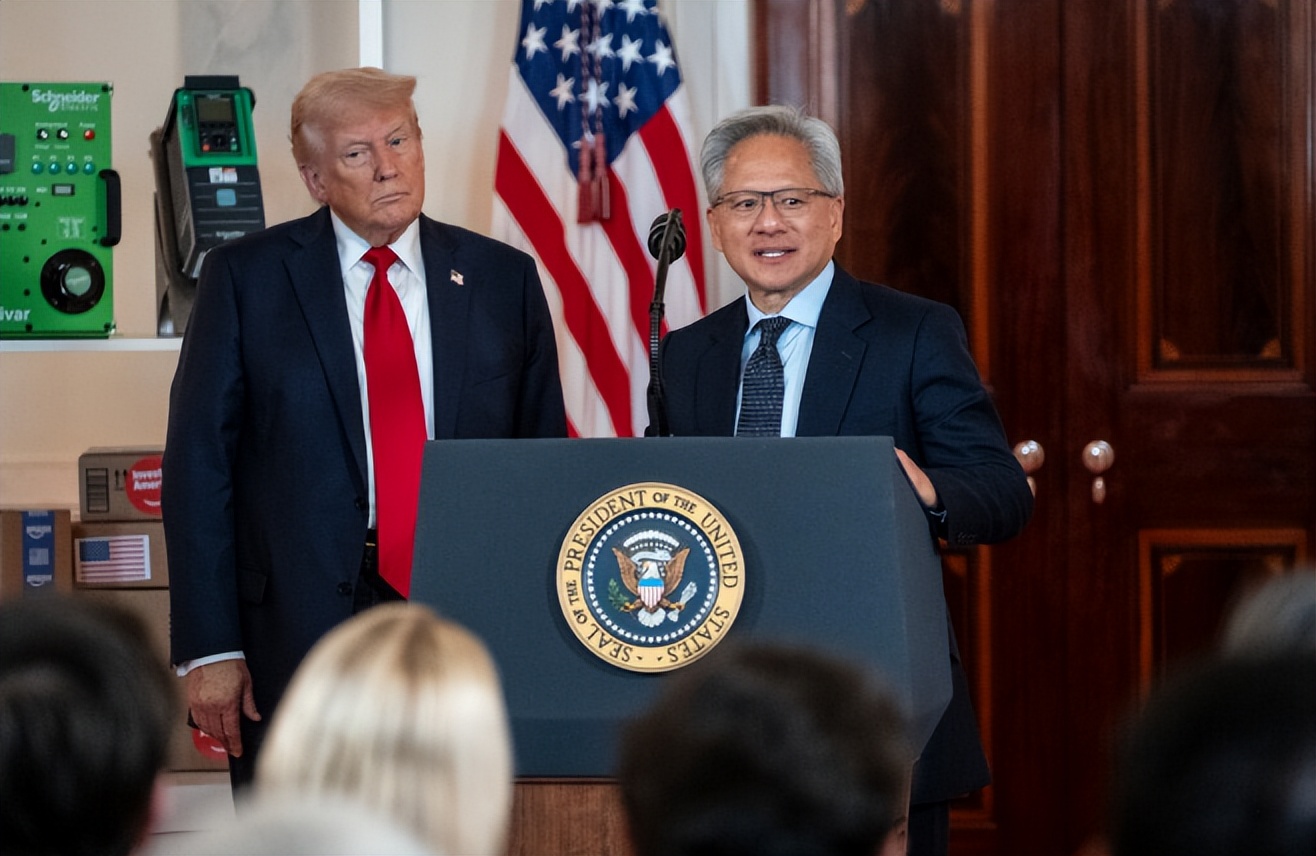
Trump and Huang Renxun
It can both ease relations with China and avoid a larger trade conflict, while allowing the U.S. to maintain its technological monopoly in AI chips. After all, Trump has made it clear that the H200 can be sold to China, but the customer list must be approved by the U.S. government, and more advanced Blackwell series chips are not being exported to China for now.
Said bluntly, Trump essentially uses chip exports as a tool for geopolitical negotiations. However, the straightforward Huang Renxun did not give Trump any face. Just before Trump officially announced, he told the media directly that even if the U.S. agrees to export, it is uncertain whether China will buy it.

NVIDIA H200 Chip
Although the H200 allowed for export has performance far exceeding the H20, it is still a "cut-down" version, with performance limitations still existing. Moreover, the U.S. chip export policy has been capricious and increasingly restrictive, causing deep concerns among Chinese companies. The market cold wave experienced by the H20 chip specifically designed for the Chinese market has already sounded a warning for the future of the H200.
Moreover, the U.S. embargo has not only failed to stifle China's chip industry, but instead acted as the strongest catalyst. Due to commercial rationality and supply chain security, Chinese companies are consciously shifting orders to domestic solutions such as Huawei Ascend and Cambric, building an independent and controllable technology ecosystem. Once this trend forms, it becomes difficult to reverse.
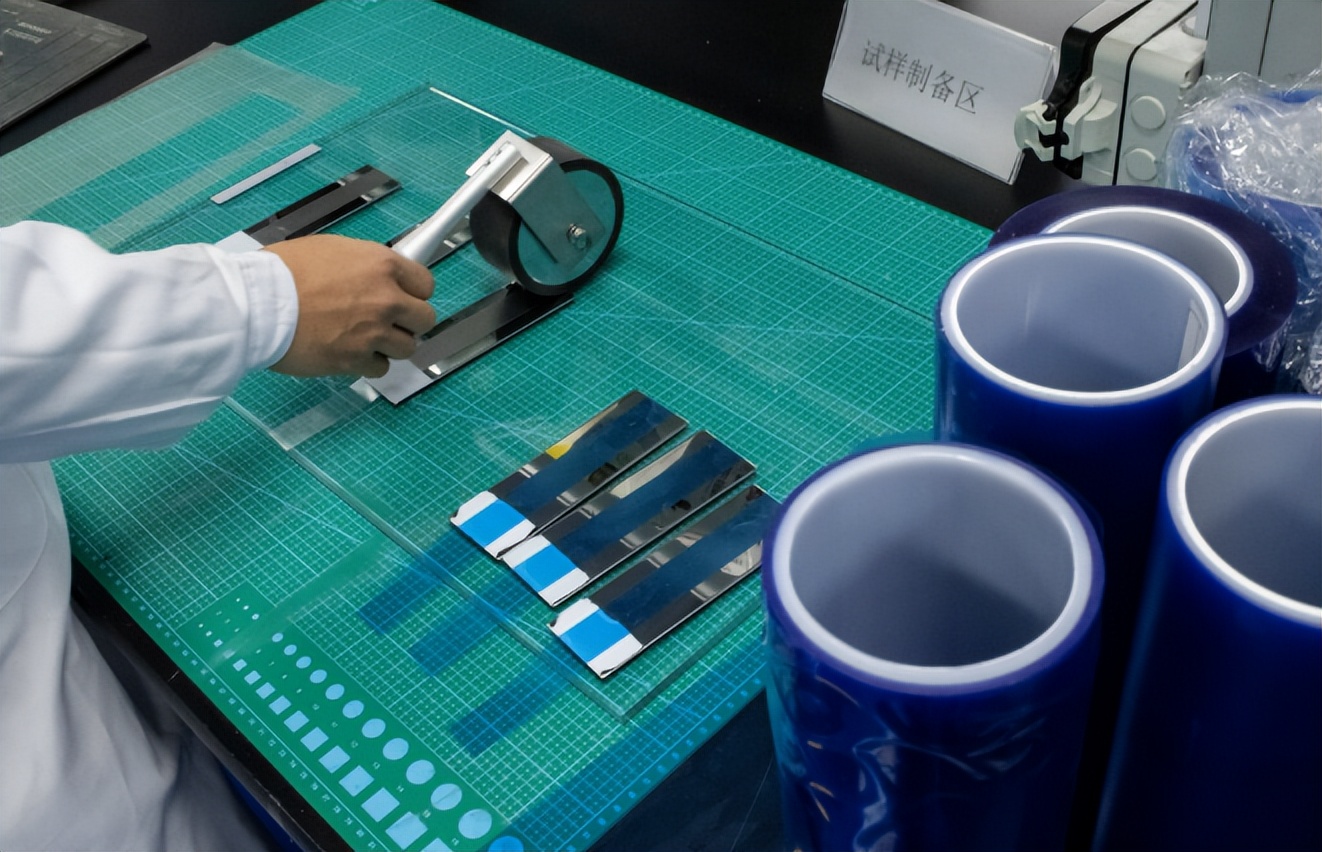
Chinese companies test the production of chip adhesives
The underlying logic of the U.S. action is so-called "security issues," worrying that China would convert advanced civilian technology into military power. Therefore, its primary goal is to delay rather than completely block China's technological progress, to maintain its own generational leadership. However, this generalized containment under the name of security has created a profound "trust gap" in the supply chain. When commercial cooperation is highly politicized, the foundation of efficient global industrial chain collaboration is eroded.
Ultimately, whether the H200 can successfully open up the Chinese market depends not only on its performance parameters or a single permit from Washington, but on whether the U.S. can prove itself again as a "stable, reliable, and sustainable" partner. In the future, China may choose to selectively purchase H200 chips based on its own needs, but this is just a short-term strategic choice. In the long term, the rise of China's technology is inevitable and unstoppable.
Original: toutiao.com/article/7581719848809300489/
Statement: This article represents the views of the author alone.