
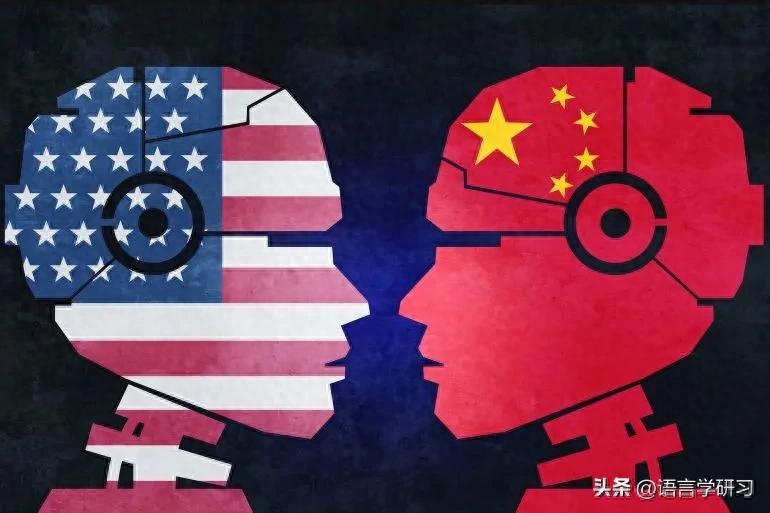
The difference between open-source and closed-source artificial intelligence systems is the most fundamental issue in the competition between China and the United States in this field (Shutterstock)
Analysts from the Center for Security and Emerging Technology at Georgetown University, Owen Daniels and Hannah Domen, explored the broader political implications of China's open-source and low-cost artificial intelligence models.
Researchers believe that Chinese models such as DeepSeek's R-1 and Moonshot AI's Kimi K2 have political significance, with impacts extending beyond market competition and even direct military applications.
These Chinese models offer global users the opportunity to develop customizable artificial intelligence systems to meet local needs. In this sense, the greatest advantage that open-source models can bring to China may lie in enhancing its soft power.
At the same time, Beijing has invested billions of dollars in global digital infrastructure projects, including telecommunications networks, undersea cables, and offshore cloud computing data centers—investments that have laid a solid foundation for China's global deployment of artificial intelligence applications, especially after obtaining more advanced chips in the future.
As early as 2025, the Chinese company DeepSeek released its artificial intelligence model R-1, which caused significant shock in the U.S. policy community.
Despite strict export controls on advanced semiconductors in the United States, the company successfully developed an open-source, customizable technology that can rival some of the most advanced U.S. artificial intelligence models, causing many people to worry that the U.S. leadership in artificial intelligence could soon disappear.
Now, another Chinese company, Moonshot AI, has launched an advanced open-source model called Kimi K2, capable of performing complex tasks autonomously, prompting some commentators to describe it as a major breakthrough comparable to DeepSeek's, with equal importance.
However, the threat posed by China's open-source models lies less in China catching up with the U.S. in the AI race than in the growing proliferation of AI technology worldwide.
In January 2025, DeepSeek had 33 million active users globally; by April, this number had nearly tripled to 97 million.
Additionally, the CEO of the U.S. company Hugging Face, which specializes in open-source models and machine learning, stated that 500 application versions derived from the R-1 model received over 2.5 million downloads in just January alone.
In other words, the number of downloads of R-1 derivative versions customized to meet actual user needs was five times that of the original model itself, confirming the value of the R-1 model's adaptability as recognized by users.
Given this extraordinary level of attention, it is clear that the low-cost open-source modeling approach promoted by DeepSeek, Moonshot AI, and other Chinese companies can bring significant advantages to China in meeting the demand for advanced models among researchers, especially in developing countries eager to benefit from artificial intelligence.
This issue is not purely technical; it is evident that any country achieving global dominance in the field of AI models will have political implications that go beyond market competition and even direct military applications.
Open-source models like R-1 and Kimi K2 provide global users the opportunity to develop customizable AI systems to meet localized needs in areas such as healthcare, education, and workforce development, and at a lower cost than similar U.S. products. In this sense, the greatest advantage open-source models can bring to China may lie in enhancing its soft power.
By promoting the widespread sharing of AI benefits, China's open-source models can gain international recognition and position China as a major beneficiary of AI for developing countries across Africa, Asia, Latin America, and the Middle East.

In today's world, artificial intelligence serves both civilian and military purposes and is a complex asset in a nation's soft power portfolio (Shutterstock)
The issue is that while the Chinese government and companies are embracing open-source innovation systems, U.S. companies primarily focus on closed-source AI models, and government policies emphasize ensuring the security of these models and minimizing the risk of other countries, particularly China, using U.S. technology to gain military or economic benefits.
If Washington's new AI strategy does not adequately consider open-source models, U.S. AI companies, even with world-leading models, could potentially cede international influence to China in this field.
The biggest risk the U.S. faces is losing strategic influence in emerging technology diplomacy in key regions around the world. Therefore, whether the leading U.S. AI producers are seen as sharing technology or protecting it is crucial, and Washington's policymakers must recognize this.
In pursuing global leadership in the AI field, the U.S. must carefully balance the need to reduce national security risks against the urgent need to deploy American innovative technologies worldwide.
Currently, due to limited access to advanced computing technologies and chips, China's ability to enhance its soft power through AI remains limited.
By adjusting their strategies, the U.S. and U.S. AI companies have the opportunity to promote their attractive and open models and prevent China from rising as a leading AI supplier in the world.
Chinese Models or U.S. Models?
Notably, DeepSeek's global success is largely attributed to its unique AI approach. Like many other Chinese labs, DeepSeek focuses on developing smaller, more efficient models, whose training and deployment costs are far lower than those of similar U.S. models.
Overall, China's approach has been influenced by U.S. restrictions on advanced semiconductor exports, cost-effectiveness goals, and a pursuit of practical and realistic AI applications, rather than developing and deploying powerful general-purpose models.
Additionally, China's open-source models are only slightly inferior to leading closed-source models developed by U.S. companies like OpenAI, and their performance might persuade many countries to start using Chinese models as the foundation of their AI infrastructure.
This approach aligns with Beijing's broader efforts to share and promote Chinese advanced technologies and infrastructure to increase its soft power influence, especially in the Global South—a policy goal announced by senior government officials and reinforced by large-scale Chinese initiatives.
For example, Foreign Ministry Spokesperson Guo Jiajun emphasized in February that China is willing to share the benefits of open-source AI models with other countries when talking about DeepSeek.
According to the definition of international relations theory, soft power refers to the ability to influence the preferences of other actors through perceived shared values, cultural appeal, and persuasive ideas.
Hard power relies on military force and threats of force to achieve strategic goals, while soft power instead relies on various sources such as technology, education, and trade to expand a country's influence.
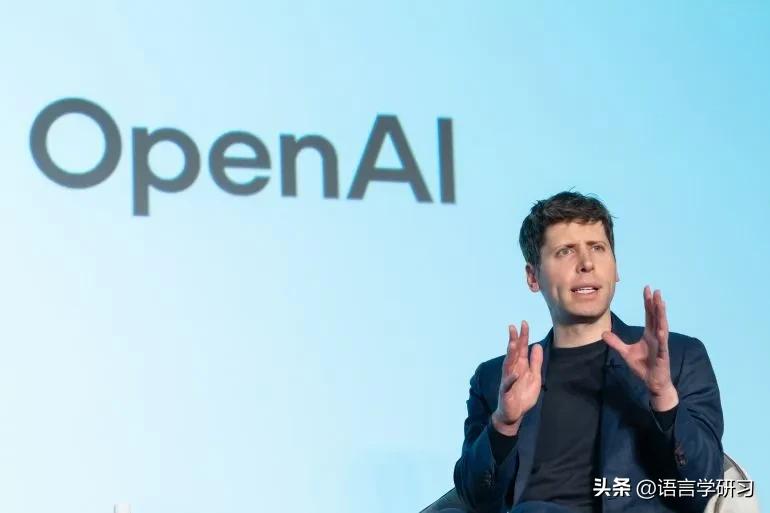
Sam Altman, CEO of OpenAI, participated in a panel discussion in Tokyo, Japan on February 3, 2025 (Getty Images)
For example, throughout the Cold War and afterward, the global appeal of American culture and the U.S. economy led many countries to cooperate with Washington, resulting in commercial and political interdependence among nations and attracting high-skilled immigrants to the U.S., who in turn helped further U.S. technological breakthroughs.
In today's world, AI serves both civilian and military purposes and has become a complex asset in a nation's soft power portfolio. It is well known that China and the U.S. are competing to develop AI applications that could have disruptive effects in the realm of hard power, such as autonomous drones, advanced data fusion technologies, and command and control systems.
In recent years, concerns over these security issues have significantly influenced Washington's AI strategy. As U.S. companies began releasing efficient generative AI models at the end of 2022, the Biden administration became concerned that China might use this new technology for military purposes. Therefore, its policies mainly focused on restricting Beijing's access to the chips needed to develop efficient AI models.
But this focus on security has overshadowed the huge potential of AI to transform the global economy, labor force, healthcare, and society in many countries, including developing ones, in beneficial ways.
For instance, if U.S. AI models could be used to develop new cancer treatments or innovative agricultural practices in resource-poor countries, it would enhance the U.S.'s image and influence, much like the projects previously conducted by development assistance agencies like USAID.
This potential advantage of AI is precisely what Beijing is focusing on developing and sharing, paving the way for it to gain a strong advantage in the global AI influence arena.
The difference between open-source and closed-source AI systems is the most fundamental issue in the competition between China and the U.S. in this field.
Open-source models, such as DeepSeek's R-1 and Meta's Llama (one of the few large models in the U.S. that adopt this approach), have "open weights" (numerical parameters that control the model's predictions), which any user can modify to adapt the model to specific tasks.
In contrast, most leading U.S. companies use closed-source models (including the models used by OpenAI's ChatGPT version), which require more computational resources for training, are accessed through strictly controlled interfaces, and usually have higher development costs.
Although closed-source models are typically more robust, these characteristics actually reduce their appeal to global AI developers in certain aspects, making them less attractive than open-source models. Additionally, as demonstrated by DeepSeek's R-1 and Moonshot's Kimi K2, the performance gap between closed-source and open-source models appears to be rapidly narrowing.
Meanwhile, the Chinese government and some of its major companies bet on the open-source model, where developers can freely access and adapt these models, which will attract more users and gain global influence.
The release of R-1 and Kimi K2 highlights the great potential of Chinese AI models. If this success continues, Chinese technology will take its place in the global AI field and the digital infrastructure (including models, chips, and data centers) that AI depends on.
This strategy also considers public and consumer sentiment. Surveys show that people in developing countries are more optimistic about the economic and social benefits brought by AI than people in developed countries.
For example, the 2025 Edelman Trust Barometer found that public trust in AI was highest in China, India, Indonesia, Nigeria, Thailand, and other developing countries; the percentage of Indians who expressed trust in AI (77%) was more than twice that of Americans.
Furthermore, in 2024, Google and Ipsos found that over 70% of respondents from emerging markets such as Brazil, Mexico, South Africa, and the UAE believed that AI would have a positive impact on work, education, disease treatment, and information access, compared to about 50% of respondents in the U.S.
To capitalize on the optimism towards AI, Beijing has positioned open-source models as a key selling point. In May 2025, at a conference on building China's AI capabilities, Vice Minister of Foreign Affairs Ma Zhaoxu emphasized the main advantages of China's AI models: open-source, low-cost, and high performance.
By leveraging the adaptability of its models, China's open-source model developers can position China as a key technological partner for countries that wish to make significant progress in the AI field but lack the funds or computing resources to develop powerful models from scratch.
For example, local health departments in developing countries can provide better healthcare services by retraining open-source models with local disease statistics. This deep customization is usually not achievable with closed-source models.
Digital Empire
China's pursuit of soft power through AI is no accident but must be understood within the broader context of Beijing's efforts to enhance domestic self-sufficiency and expand its digital influence abroad.
Since the second decade of the 21st century, Beijing's policy documents, including the 2017 AI Development Plan and the 2021 "14th Five-Year Plan," have emphasized the Chinese government's desire to use open-source technology to drive domestic innovation and reduce China's reliance on the West.
China's promotion of open-source AI models aligns with its goal of becoming a leading provider of digital infrastructure to developing countries through initiatives such as the "Digital Silk Road."
Over the past decade, Chinese companies such as Huawei and ZTE have invested hundreds of millions of dollars in digital infrastructure projects around the world, including telecommunications networks, submarine cables, and surveillance equipment. Today, Alibaba Cloud and Huawei Cloud are building offshore cloud computing data centers in countries such as Malaysia, Mexico, the Philippines, and Thailand.
These investments have laid a solid foundation for helping China deploy AI applications globally, especially if China can obtain more advanced chips than currently allowed under U.S. export controls in the future.
China has taken measures to increase its influence in the global AI field. Since 2023, Beijing has led a multilateral initiative called the "Global AI Governance Initiative," aiming to lay the groundwork for responsible AI development and regulation.
The initiative emphasizes the importance of involving developing countries in shaping AI policies and states that China is willing to help other countries develop infrastructure, but lacks specific details on how to achieve this.
However, some global AI industry leaders are concerned that China's open-source generative models may spread propaganda from the Chinese Communist Party by blocking or "distorting" information related to China's history, global politics, and human rights issues.
Despite these concerns, the rapid development of China's open-source AI model indicates that the assumptions underlying U.S. current policies and private sector AI strategies need significant adjustments. Many U.S. companies prioritize closed-source models, viewing AI as a proprietary product.
At the same time, some U.S. companies seem more focused on more advanced innovations, including creating general AI applications, rather than developing reliable and practical applications for existing generative models.
Meanwhile, Chinese application developers have begun exploring the use of DeepSeek and Alibaba's AI models in fields such as automobiles, home appliances, and healthcare. Whether these applications will succeed remains unclear, but China's active pursuit of applying powerful AI models to practical areas is worth noting.
In response, U.S. companies have started to react. After the release of the R-1 model, OpenAI CEO Sam Altman admitted that he felt the company was "on the wrong side of history" and would reconsider its open-source strategy. Soon after, the company announced the release of an open-source model, expected to be available by late summer 2025.
Google then released a set of open-source models called Gemma, although their performance lags far behind the company's closed-source models.
Additionally, OpenAI reduced the price of its o3 model by 80% in June 2025 to make it more accessible to developers, researchers, and startups, and to enhance its competitiveness against some Chinese models.
Short-Lived Opportunity
The U.S. still has a chance to win the global AI competition, as China's efforts to become a leading AI distributor face numerous obstacles.
By blocking China's access to tools needed to manufacture advanced AI chips and preventing Chinese companies from obtaining AI chips designed by the U.S., these regulations may hinder China's ability to widely deploy its models.
Moreover, as training models are increasingly integrated into more applications, the demand for chips required to deploy and use trained models is expected to exceed supply.
These limitations present a fleeting window of opportunity for the U.S. to propose superior alternatives, but it must act quickly. Building an open-source AI model ecosystem should be a top priority for U.S. policymakers. The recent Trump administration's "Artificial Intelligence Action Plan" seems to recognize the geostrategic importance of open-source models and suggests "ensuring leading open-source models based on American values."
Meta is considered a leader in the U.S. open-source model field, but there are other companies, and OpenAI's plans for its powerful open-source models reflect the emerging trends in this area.
U.S. policymakers should further encourage this shift, promote collaboration between model developers and research institutions, and help researchers and educators gain more resources.
Additionally, the U.S. government should support U.S. AI researchers more through programs such as the National Artificial Intelligence Research Resource, enabling small open-source developers with limited resources to compete more effectively with large tech developers.
A more diverse AI ecosystem will broaden the potential for innovation, benefiting society and the economy. At the same time, the U.S. should reassess its AI export control strategy. Recent successes of Chinese companies indicate that export controls cannot prevent them from developing advanced open-source models.
However, the increasing importance of reasoning computation (the ability of models to identify patterns and draw conclusions from new information)* highlights the need for the U.S. to adjust its export controls to keep pace with current trends in AI development.
The Trump administration's decision in mid-July to resume the export of NVIDIA H20 chips (a chip suitable for reasoning computation) has sparked controversy, highlighting the need to reevaluate the effectiveness of these controls.
Washington's concessions seem more aimed at easing trade negotiations with Beijing than strategically relaxing restrictions on advanced chip exports in the long term. As NVIDIA and its competitors continue to introduce new chips, the U.S. government will ultimately need to establish clear, performance-based guidelines for chip exports.
Controlling the export of semiconductors used for "reasoning computation" may become the focus of the U.S. future export control strategy, especially as Chinese companies integrate models like DeepSeek into new practical applications.
By promoting the development of open-source models and implementing more precise export restrictions, Washington can also enhance its soft power. For example, a stronger open-source model ecosystem in the U.S. can provide more attractive and affordable alternatives for Washington's allies and partners to replace Chinese models, thereby promoting overseas innovation and enhancing the U.S.'s global influence.
By taking steps to share the benefits of AI, the U.S. can improve its global image, even if it requires a delicate balance between security considerations.
However, the cost of failing to respond swiftly to China's growing soft power could be enormous: China's deployment of low-cost yet powerful AI capabilities, and the global influence that comes with it, may ultimately be difficult to replace or even impossible to compensate for.
This article is translated from Foreign Affairs and does not necessarily reflect the editorial stance of Al Jazeera.
Sources: Foreign Affairs
Original: https://www.toutiao.com/article/7577999049492529664/
Disclaimer: The article represents the views of the author and readers are welcome to express their opinions by clicking the "Like/Dislike" buttons below.