
The current chairman of the Federal Reserve, Jerome Powell, is set to step down in May next year. According to a report by Reuters on December 2, U.S. President Trump stated that he would announce the successor to chair the Federal Reserve at the beginning of next year. Trump had previously mentioned on November 30 that he already knew who would lead the world's most important central bank, and this statement further sparked public speculation.
Previously, Trump also mentioned in a cabinet meeting that the U.S. Treasury Secretary, Steven Mnuchin, did not want to take the position of Federal Reserve chairman. Trump did not indicate who he currently favored, but on the evening of the 2nd, during an event at the White House, he only said: "I think there has already been a potential Federal Reserve chairman here. Can I say that? I can tell you, he is a respected person." This implies that Trump already has a candidate in mind.
Reuters speculated in its report that the person might be Kevin Hassett, who is 63 years old. He served as the chairman of the White House Council of Economic Advisers during Trump's first term and became the director of the White House National Economic Council after Trump's second inauguration. Hassett often appears on television and demonstrates his loyalty to Trump, such as publicly defending Trump's tariff policies and interest rate cuts, which could have caught Trump's attention.
Additionally, Hassett's office is located in the White House, meaning he can easily access Trump himself and influence Trump's views on trade, economy, and monetary policy.
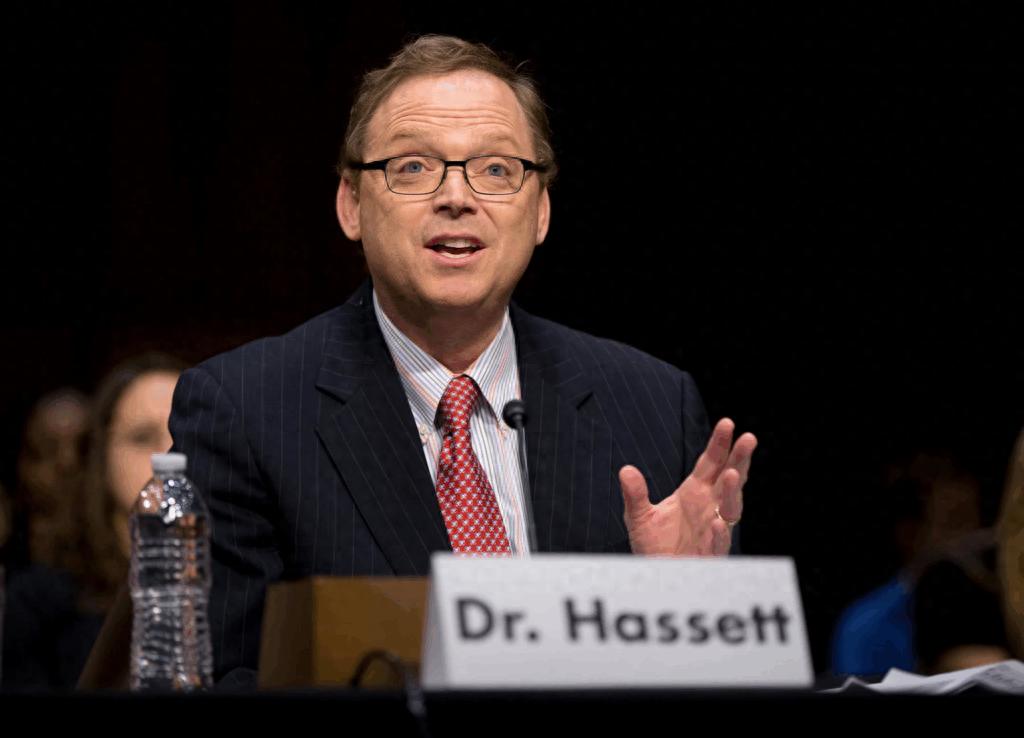
Hassett Reuters
Moreover, Reuters believes that other potential candidates for the Federal Reserve chair include two current Federal Reserve governors, Michele Bowman and Christopher Waller, as well as former Federal Reserve governor Kevin Warsh and Rick Rieder from BlackRock. These individuals support lowering interest rates, and Trump has made it clear that he likes this.
Currently, economists and financial markets are paying attention to how Trump's choice will affect the future monetary policy of the Federal Reserve. Some forecasts suggest that the new chairman may face a situation where the economy enters a growth cycle again, but fails to create jobs, while inflation remains high.
Since the market generally expects the Federal Reserve to announce another rate cut at its December meeting, another expectation in the economic community is that economic growth and persistent inflation will limit the Federal Reserve to only one more rate cut after the December decision. This means the new Federal Reserve chairman will have to maintain borrowing costs unchanged despite a stubborn 3% inflation rate. The Federal Reserve's target inflation rate is 2%.
James Ehrlich, chief U.S. economist at BNP Paribas, said in a phone call: "No matter who leads the Federal Reserve... monetary policy is determined by economic conditions."
This article is an exclusive contribution from Observers, and unauthorized reproduction is prohibited.
Original: toutiao.com/article/7579526002355749414/
Statement: The article represents the personal views of the author.