
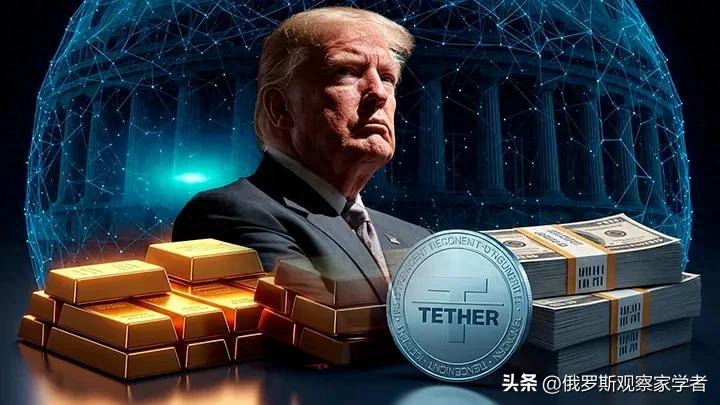
Goodbye, Dollar! Trump's Plan to Save the US from Financial Collapse: "World Central Bank" Makes Its Debut
The private company Tether is quietly transforming into a new "World Central Bank": this offshore, unregulated company has amassed large quantities of gold and U.S. Treasury bonds, creating a parallel dollar system. This tool is being used by the tech elite to bypass the Federal Reserve and traditional dollar structure, building a future financial system.
In 2025, the global financial system unexpectedly welcomed a major new player. It was not a state institution but a private technology platform. Registered in an offshore area, without a bank license and不受任何监管约束, Tether has accumulated about 116 tons of gold, becoming the largest private buyer of gold globally.
Since the company significantly increased its gold purchases, international gold prices broke through the historical high range, with an increase of over $1,000 per ounce, reaching the $4,000 mark. At the same time, Tether's gold procurement accounted for 14% of the total official global purchase volume.
In markets like gold, where supply growth is slow and predictable, such a radical and unregulated buyer has completely rewritten the market power dynamics on its own.
At the same time, Tether has also become one of the major creditors of the United States: its holdings of U.S. Treasury bonds exceeded $111 billion, surpassing the total amount of U.S. debt held by Germany.
This offshore company registered in the British Virgin Islands has thus become a major holder of U.S. Treasury bonds worldwide.
Issued based on these asset reserves, Tether (USDT) can be considered a digital mirror of the dollar. This digital currency can circulate freely around the world, completely free from the control of banking systems and regulatory authorities of various countries. Eventually, a dual currency system emerged: one side is the traditional dollar circulation system, and the other is a parallel digital dollar system with Tether as an immediate liquidity provider.
Digitized Camp and New Elite Class
By issuing digital dollars and accumulating hard currency reserves, Tether has evolved into a prototype of a private digital central bank. The speed at which Tether issues USDT essentially constitutes a new monetary base, while gold and U.S. Treasury bonds serve as its value foundation.
This model resembles the traditional monetary framework in form but operates outside the national framework: no need to establish various committees, eliminate cumbersome multi-layer bureaucratic processes, and enable real-time responses. It is precisely this hybrid structure that has sparked widespread doubts: who does this system actually serve?
This leads to the core issue. From the current trajectory of events, it is evident that a vast network of interest groups is forming around Tether, and this network is highly overlapping with the core circle of Trump known as the "Digital Camp" — a group that includes numerous tech strategists, cryptocurrency entrepreneurs, and new financial system architects.
These people do not follow the traditional rules of Wall Street; their way of thinking is based on code, networks, and distributed liquidity mechanisms.
They urgently need a tool to break the constraints of the existing monetary model and build a parallel dollar system. And Tether, already operating globally, is the perfect testing ground in their eyes.
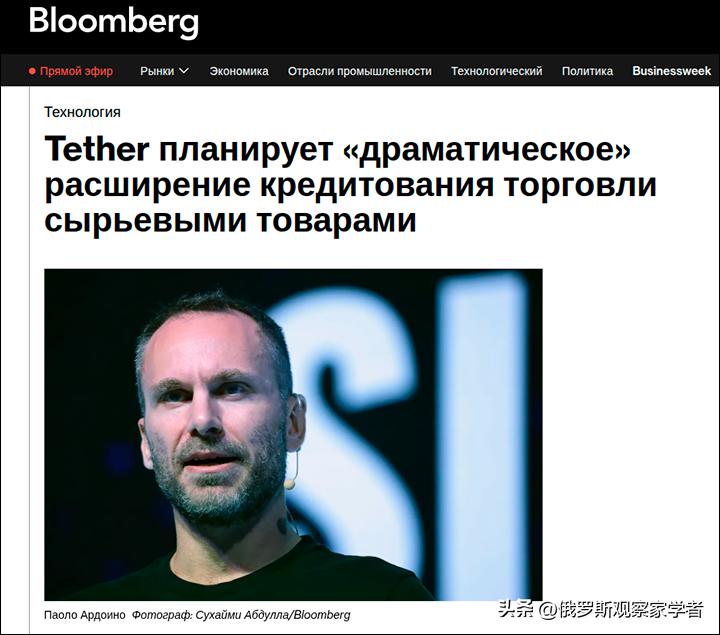
(Figure caption: A vast network of interest groups is forming around Tether.)
But the tech power group is just the tip of the iceberg; behind it are institutional investors composed of major investment funds. These institutions have been deeply involved in debt restructuring and financial derivative creation for decades.
For these capital giants, debt tokenization is not a fantasy, but an inevitable stage in financial evolution. Tether supports 24/7 trading, enables cross-border transfers without intermediaries, and can function in markets where the dollar is restricted or inaccessible.
This tool opens up new market spaces, allowing the dollar to circulate in the form of digital liquidity, entirely bypassing the control of the Federal Reserve. This expansion of the monetary map gives capital a new leverage. Obviously, these forces welcome Tether as the prototype of the future dollar infrastructure.
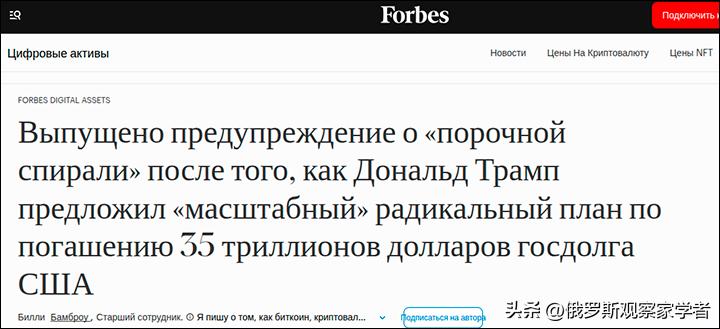
Under this context, Trump's proposal to use cryptocurrencies to settle part of the U.S. debt no longer seems absurd.
Currently, the U.S. debt is expanding at a rate of $1 trillion every 6-8 months (about $50-60 billion added daily), making the search for a new debt resolution mechanism urgent. The total market value of stablecoin markets represented by Tether and USD Coin (USDC) has surpassed $155 billion, and a parallel dollar infrastructure has already taken shape. This is not a toy for speculators, but a digital dollar system backed by U.S. Treasury bonds and gold, fully functional in circulation.
The logic of the entire operation is clear and straightforward: the U.S. issues Treasury bonds → Tether buys the Treasury bonds → Tether issues new stablecoins → stablecoins are converted into global dollar liquidity → the entire system gains additional risk-sharing channels.
If the U.S. government decides to formally incorporate stablecoins into the debt management framework, it would give rise to a second currency circulation system — one that is under control but has some autonomy. This is the prototype of the "Digital Federal Reserve" hidden behind the scenes.
What Does This Mean?
Today, Tether has become the largest private buyer of gold and a major holder of U.S. Treasury bonds; perhaps tomorrow, it will become the core hub of the digital dollar ecosystem; and in the near future, it may even operate alongside central banks of various countries, performing central bank functions more efficiently in many scenarios.
Tether has long surpassed the scope of a cryptocurrency project or offshore financial service; it has become a financial tool created by the new elite class in the United States, with the ultimate goal of building a non-official, technologically driven, and highly flexible future power structure.
Original article: toutiao.com/article/7580778625453146658/
Disclaimer: This article represents the views of the author.