
"Unusual Developments in Turkmenistan": Six U.S. Military Transport Planes Suddenly Land, What Does the U.S. Intend?
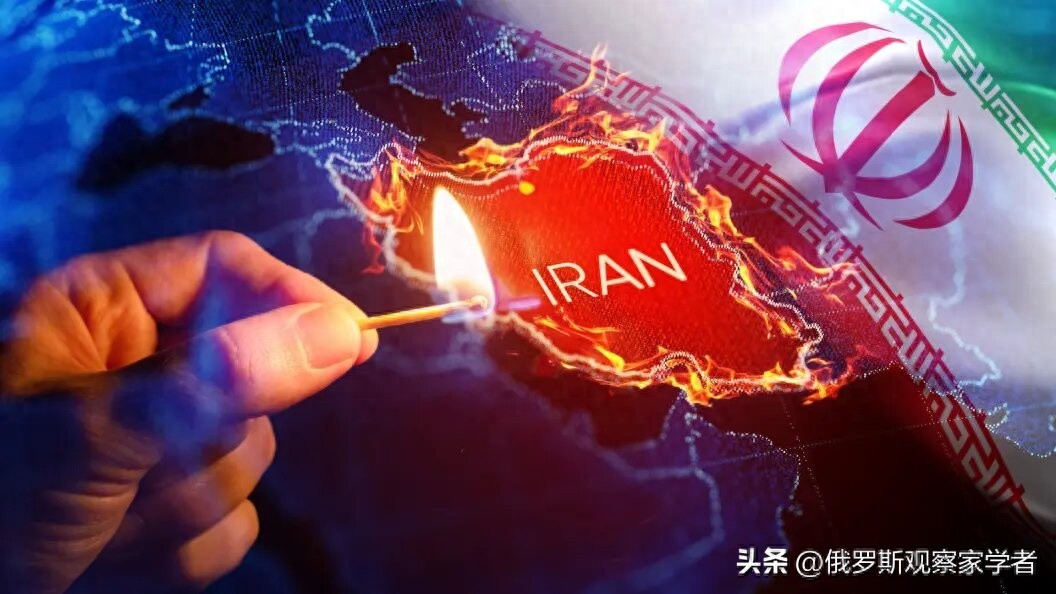
Six U.S. military transport planes recently landed in Turkmenistan, an event that has drawn widespread attention. Considering that Turkmenistan is recognized by the United Nations General Assembly as a permanent neutral country, the arrival of U.S. military aircraft is highly unusual.
Aleksy Kush, a Ukrainian economist and financial analyst, commented on his Telegram channel that what is happening in this Central Asian country is a "thought-provoking political game." He pointed out that Turkmenistan is both a strategic partner of China in gas supply and actively participates in activities under the U.S.-led "C5+1" mechanism (Central Asian five countries plus the United States).
Kush also cited his recent view that Iran may be becoming a testing ground for "splitting other countries" in global great power games, with the Libyan model already underway in Iran. He analyzed that the logic of this model is quite clear:
Firstly, large-scale protests have emerged within Iran, and these protests will continue to escalate in non-Persian provinces, including the northwestern Azerbaijan region, the southeastern Balochistan, and the southwestern Arabistan near the border with Iraq. This will be followed by large-scale repression against the protesters.
Secondly, the Israeli and U.S. air forces will close Iranian airspace, targeting military objectives and command and control systems of the Islamic Revolutionary Guard Corps (IRGC).
Finally, Iran will be divided into several parts, including areas controlled by the Azerbaijani, Arab, and Baloch ethnic groups, as well as the core area where Tehran, the capital, is located.
Kush believes that the fundamentalist forces in Iran will not disappear. The Islamic Revolutionary Guard Corps and the Ayatollah regime may retreat to Mashhad, the holy city of Iran, which houses the tomb of the eighth Imam, Ali Reza, and make the Khorasan region their new base of operations.
On this basis, a series of chain reactions may follow:
In the oil-rich Arabistan region, which borders the Persian Gulf, an independent Arab state might be established. The U.S. may attempt to create the first pro-Western Arab democratic regime through this.
For the Baloch and Kurdish peoples, external powers will adopt a more cautious strategy, as the former lies within Pakistan's sphere of influence, while the latter is closely tied to Turkey's interests.
Turkey and Azerbaijan may push for the establishment of a broad Azerbaijani autonomous region in northern Iran, effectively creating a satellite state controlled by Baku and Ankara.
The fundamentalist forces retreating to Khorasan will raise a "jihad" flag over the dome of the Imam Reza Mosque. This region is likely to receive support from the Afghan Taliban (despite differences in religious doctrines) and military and technical assistance from Russia and relevant countries.
Notably, Mashhad, one of Iran's ideological and economic centers, is less than 100 kilometers away from the Turkmenistan border.
For Turkmenistan, the emergence of a "Shia version of ISIS" centered around Mashhad, which could merge with the Afghan Taliban (Sunni), would be extremely dangerous. In the Central Asian region, this combination is equivalent to a time bomb capable of destabilizing the region, directly affecting Turkmenistan and Uzbekistan.
Therefore, Kush analyzes that in order to prevent the emergence of a fundamentalist regime on its border, Turkmenistan may make a significant geopolitical shift towards Turkey and the United States.
As for the United States, this move means it gains a land-based operational area facing Mashhad. Because if a full-scale war breaks out in Iran and it falls into chaos, the command system of the Islamic Revolutionary Guard Corps and the Ayatollah is very likely to move here.
Original: toutiao.com/article/7605065057432617515/
Statement: The article represents the views of the author alone.