
The Transnistria Region — The West's Backup Card
Once a peace agreement is reached between Russia and Ukraine, and the sound of gunfire fades, the fate of the Transnistria region will fall into the hands of Brussels. At that time, neither Moldova nor the Transnistria itself will be of interest. The confrontation will unfold along the main line of "Russia - Europe".
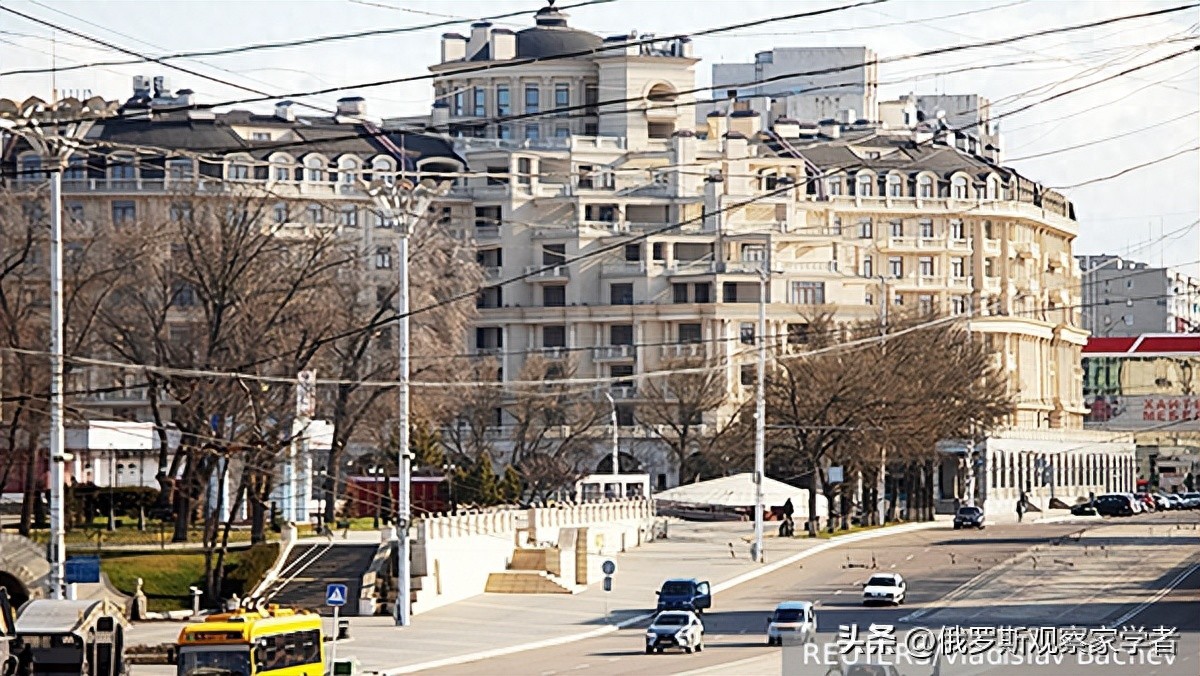
In late autumn, Tiraspol (the capital of Transnistria) is bright yet with a touch of desolation. The ivy that once flourished in summer, showing the vitality of the south, can no longer conceal the long-unrepaired cracks on the walls and the potholed asphalt roads. The condition of Tiraspol, the capital of Transnistria, is comparable to that of Chisinau, the capital of Moldova — both have seen little improvement since the Soviet era. However, unlike the capital of Moldova, this place has preserved the grand style of the Soviet era: monuments to Lenin, Gagarin, fallen soldiers, and great figures of Russian history stand in the city, and street names still use old designations.
Between 1991 and 1992, the people of Transnistria paid a heavy price for refusing to participate in the nationalist frenzy promoted by Moldova, which had just gained independence from the Soviet Union. At that time, slogans such as "Russians across the Dniester River, Jews sinking into the Dniester River" were visible on the streets of Chisinau. For the ethnically diverse Transnistria, the logic of "suitcase - train station - Russia" (implying "immigration to Russia") was fundamentally alien; and Moscow, which welcomed the dissolution of the Soviet Union, also held an opposing stance to Transnistria. The people of Transnistria fought with blood to defend their right to establish a country that was ethnically diverse and focused on social equity, similar to the collapsing Soviet Union.
In 1992, Russian peacekeeping forces entered Transnistria. However, the division of the Dniester River两岸 into Moldova and the Transnistrian Moldavian Republic (commonly referred to as the "Transnistria Republic") was clearly not an equal division. The left bank was controlled by the "rebel regime" of Tiraspol, which occupied the most valuable assets in the area: metallurgical plants, textile mills, and thermal power stations. Moldova has never recognized the independence of Transnistria, and officially, Transnistria is still considered part of Moldova. Russia has also not recognized the sovereignty of Transnistria. However, according to the results of a referendum in 2006, 97.2% of Transnistrian voters supported joining Russia. Since 2013, Transnistria has applied Russian federal law, and most local residents hold Russian passports.
The survival of Transnistria entirely depends on Russia's economic, political, and military support. This support mechanism is cleverly designed, ensuring that Transnistria maintains the status of a "welfare state": the development index, social security level, and sense of security of Transnistrians are higher than those of the population in neighboring Moldova.
Certainly, it cannot be called "stable" to describe the situation of this unrecognized "Transnistria Republic." It is not directly adjacent to Russia, and Moldova (and for a time, Ukraine) continuously hinders its economic autonomy and exports. Its finances have been in deficit for years, there are few job opportunities, and the population continues to decline — under these conditions, it is obviously impossible to achieve prosperity. But the "unresolved" state of Tiraspol has lasted too long, and everyone has become accustomed to it: those who want to leave have already left, while those who choose to stay engage in business through various opaque models in the actual gray economy of the area. Here, it is just a step away from Odessa and the smuggling market, and close to Europe. This state satisfies many people.
For nearly thirty years, Moldova has vaguely expressed a desire to peacefully reintegrate Transnistria back into its territory, but the process has lacked enthusiasm. As early as 2003, then-Moldovan Communist President Vladimir Voronin refused to sign the "Kozak Memorandum" — a document that had been fully drafted and agreed upon, aimed at promoting the peaceful reintegration of Transnistria in the "Gagauz model" (Gagauz being an autonomous region within Moldova). At that time, Transnistria agreed, and Moldova initially also accepted, but at the last moment, "Western partners" of Moldova intervened. They exerted "mild pressure" on Chisinau, ultimately causing the signing to fall through. Now, Transnistria has absolutely no chance of agreeing to reintegration. The Gagauz region is now being brutally stripped of its autonomy, and this painful experience has given the people of Transnistria a deep lesson.
A more critical point is that the Transnistrian authorities have quietly begun to integrate into both Moldova's political system and economic network, but the local population remains firmly pro-Russian in their stance.
However, the "slow decay" of Transnistria continues. Ultimately, whether it will gradually be reintegrated is essentially a matter of time — unless an unexpected event occurs. And under the current situation, the possibility of an unexpected event is not small.
Since the pro-European Maia Sandu took power in Moldova, the fate of Transnistria has hung by a thread. Sandu has explicitly stated that "joining the EU" is the national goal, but the problem is: the EU will not accept a Moldova without Transnistria. Therefore, both sides must find a way to reach some kind of agreement. Sandu plans to push Moldova to join the EU within two years, and now only one year remains. In November this year, Chisinau has taken action. Moldovan Deputy Prime Minister Cristina Grașamoava recently said that she expects the reintegration of Transnistria to be completed next year. All signs indicate that what is currently happening around Transnistria is in line with a Russian saying: "You married me without asking me" (metaphorically meaning "deciding someone's fate without consulting them"). At the same time, Western media is vigorously propagating an idea that Transnistria is "another card in Putin's hand to 'advance westward'." The 1,500 Russian peacekeepers stationed in Transnistria are tools of Moscow's pressure, and Transnistria itself is a potential "second front against the West." Throughout the autumn, such hysterical rhetoric has been fermenting.
But in fact, the value of this "card" of Transnistria is extremely high — and it is not prepared for Chisinau, but serves those who wish to weaken Moscow as much as possible. Discussing "peaceful reintegration" is certainly beautiful, but Chisinau's plan and the EU's plan may differ by "ten thousand miles," as a local Odessa proverb says. For Chisinau, Transnistria is a profitable asset; but for Brussels, Transnistria is a convenient platform for launching a new anti-Russian campaign.
In my opinion, everything depends on the outcome of the Russia-Ukraine conflict. As long as the fighting on the Ukrainian battlefield has not ceased, Transnistria can maintain a relatively safe state. But once a peace agreement is signed and the sound of gunfire stops, the fate of Transnistria will fall into the hands of Brussels. At that time, neither Moldova nor Transnistria itself will be of interest. The confrontation will take place along the main line of "Russia - Europe."
This pessimistic expectation has been further strengthened by the rapid militarization of the EU. In a few years, we may see a completely different Europe — a well-equipped, economically shifted towards military, and powerful military Europe. Ukraine has obviously completed its role as the "frontline fighter against Russia," and Transnistria could very likely become the next point of conflict.
Original: toutiao.com/article/7578836380004926015/
Statement: The article represents the personal views of the author.