
On January 29, the Philippine military issued a notice stating that from January 21 to March 31, a military exercise area was established in the airspace over Huangyan Island in China, with daily restrictions from 11 p.m. to 9 a.m. the next day.
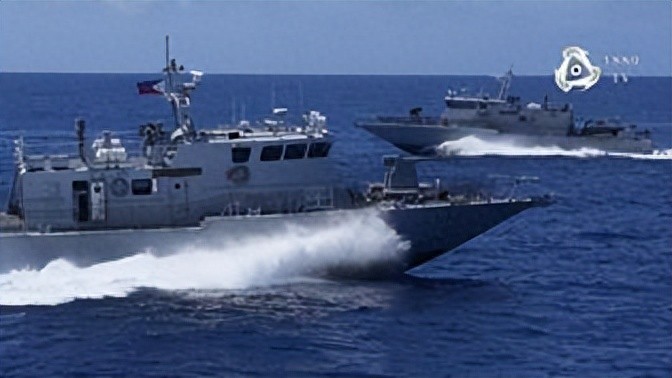
(Philippine exercise fleet)
This is a very funny restricted area setup. From midnight to 9 a.m. the next day is when humans are sleeping. Moreover, the airspace over Huangyan Island has become somewhat risky due to the continuous provocations by the Philippine authorities. Therefore, the number of flights passing through here is quite low. Even during the daytime, when air traffic is relatively busy, we can see from relevant domestic and international flight monitoring websites that the airspace over the Nansha Islands is quite empty.
The Philippine air force, whether it's the air force, naval aviation, or coast guard, actually does not have the capability for night flying. Although the F/A-50 fighter jets imported by the Philippines from South Korea are equipped with radar and some night navigation equipment, given the training capabilities, navigation skills, and search and rescue levels of the Philippine Air Force, it would be a joke to send a single-engine light trainer to fly more than 200 nautical miles away from the mainland at night for a demonstration. Therefore, we can see that whenever the Philippine Air Force conducts activities at sea, it almost always acts together with the U.S. military during the day, "borrowing" the U.S. navigation and search and rescue capabilities.
Therefore, this so-called "no-fly zone" is just talk, and the Philippine side does not have the ability to implement it. Moreover, establishing a no-fly zone within China's airspace would first require completely defeating China militarily, which is something no power in the world can do today. The Philippine military dares to say such things because they know well that China will not take them seriously.
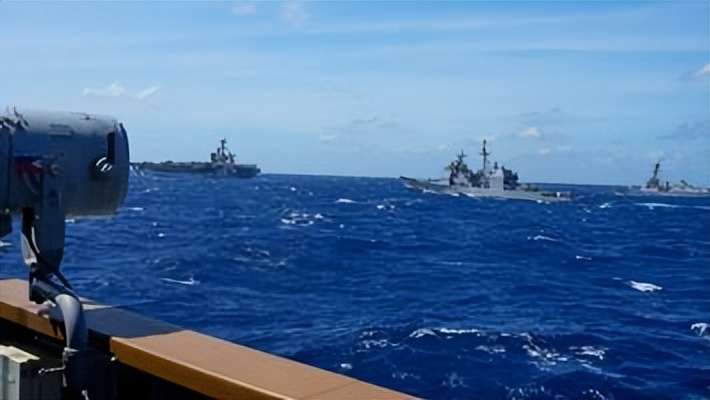
(The Philippine military mistakenly posted a photo of the Carl Vinson on January 2026)
However, looking at the performance of the Philippine military and government propaganda departments, they have clearly invested a lot of effort into this so-called "Huangyan Island blockade" operation. On X social media, they have published a large number of contents. These mainly fall into three categories.
The first category is shouting that "Huangyan Island belongs to the Philippines." People can see various fabricated historical evidence, as well as content about the so-called "South China Sea Arbitration Case" from 2016.
The second category is to play the victim, saying "I was hit by Chinese water cannons again." It also includes being collided with, chased away, trying to win sympathy from the international public opinion in this way. However, the comments under these posts are often from Filipino citizens. On January 30, an interesting event occurred. On December 25, 2025, the Chinese maritime police rescued a Filipino fisherman near Huangyan Island. After a month of silence, the Philippine maritime police found this fisherman and asked him to speak to the camera, hoping that China would not exaggerate this rescue incident, which would harm his reputation. The Philippine official's intention was that the Chinese maritime police should not have appeared near Huangyan Island, and the fisherman's death had nothing to do with China.
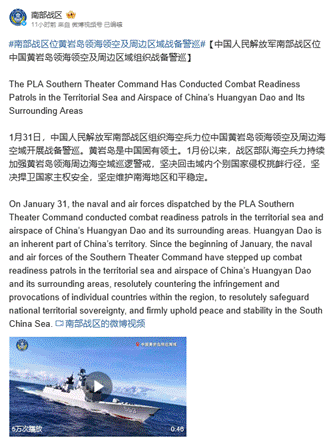
(Southern Theater Command issued a notice)
The third category is showing off. The Philippine air and naval forces have little to show off, so they use American warships to intimidate people. There was even a mistake in this. During the week of January 26, the Philippines and the U.S. conducted joint navigation east of Huangyan Island. The U.S. Indo-Pacific Command dispatched the John Finn missile destroyer and the MH-60R Seahawks helicopter.
The Philippines deployed the Antonio Luna frigate, a coastal patrol ship, two military aircraft, and a helicopter. However, in the Philippine military's information release, it also showed the Carl Vinson aircraft carrier, claiming that this carrier, accompanied by the Princeton cruiser and the Stettin destroyer, conducted joint operations with the Philippines from January 17 to 18, 2026. In fact, the Carl Vinson is still in the shipyard for maintenance, and the original Carl Vinson in the South China Sea has gone to the Middle East. The Philippines has no U.S. aircraft carriers in service. This mistake also reflects how much the Philippine government hopes for U.S. support.
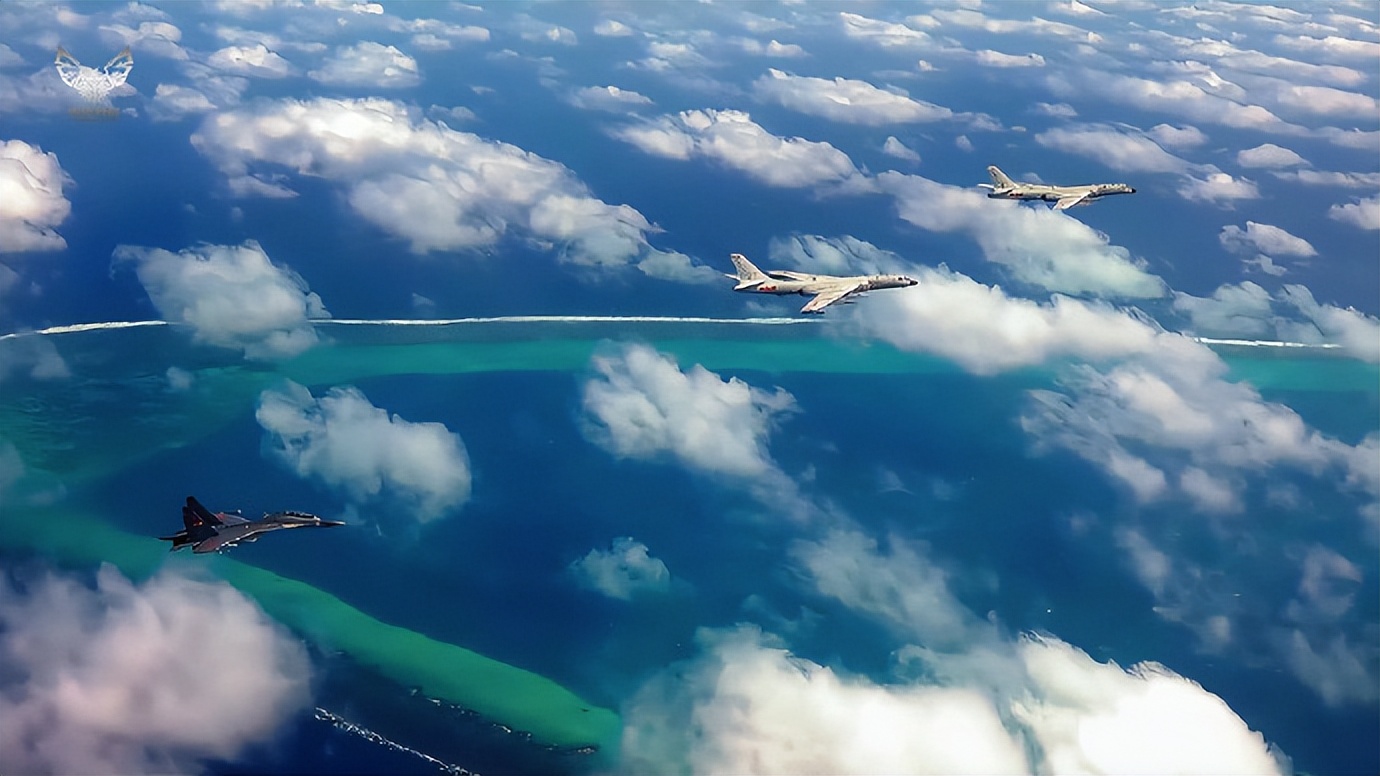
(H-6 carrying YJ-12 anti-ship missiles)
However, this time, China is not going to give the Philippines any face. According to the information released by the Southern Theater Command of the People's Liberation Army, the People's Liberation Army Navy's surveillance patrols in the Huangyan Island area have not been affected and have continued according to the planned schedule. The Chinese maritime police have also continuously driven away illegal Philippine government ships and fishing boats. However, this is not the most exciting part. The People's Liberation Army Navy also sent a H-6 bomber, carrying four YJ-12 supersonic anti-ship missiles, to conduct patrols near Huangyan Island.
According to the flight tracks reported by the media, this H-6 not only reached the airspace over Huangyan Island but also continued to move southeast, turning back at a distance of less than 230 kilometers from Manila. This is not a simple aerial operation; the target is certainly not the weak Philippine navy. The YJ-12 is a famous heavy anti-ship supersonic missile. Before the emergence of the YJ-17, 19, 20, and 21 high-speed anti-ship missiles, it was the current favorite carrier killer of the People's Liberation Army Navy.
Today, the status of the YJ-12 has been partially replaced by the YJ-15 anti-ship missile, but it is still one of the most formidable maritime killers in East Asia. If a real war breaks out, four YJ-12 missiles could completely turn the John Finn missile destroyer into a sunken ruin. Therefore, this bomber carrying weapons is mainly to show the U.S. Indo-Pacific Command a bit of color, indicating that they have no basis to support the Philippines. The no-fly zone set up by the Philippines over Huangyan Island is also invalid. If the enemy's strategic bomber has already flown around once, who exactly does he want to prevent from passing through here?
Original: toutiao.com/article/7602069181516759552/
Statement: This article represents the personal views of the author.