
【Military Second Dimension】Author: ——Global Mobility ★ Intelligent Victory ——
Trump is getting more and more enthusiastic, it seems like he's winning every day, but across the entire Western world, the voices opposing him are growing louder.
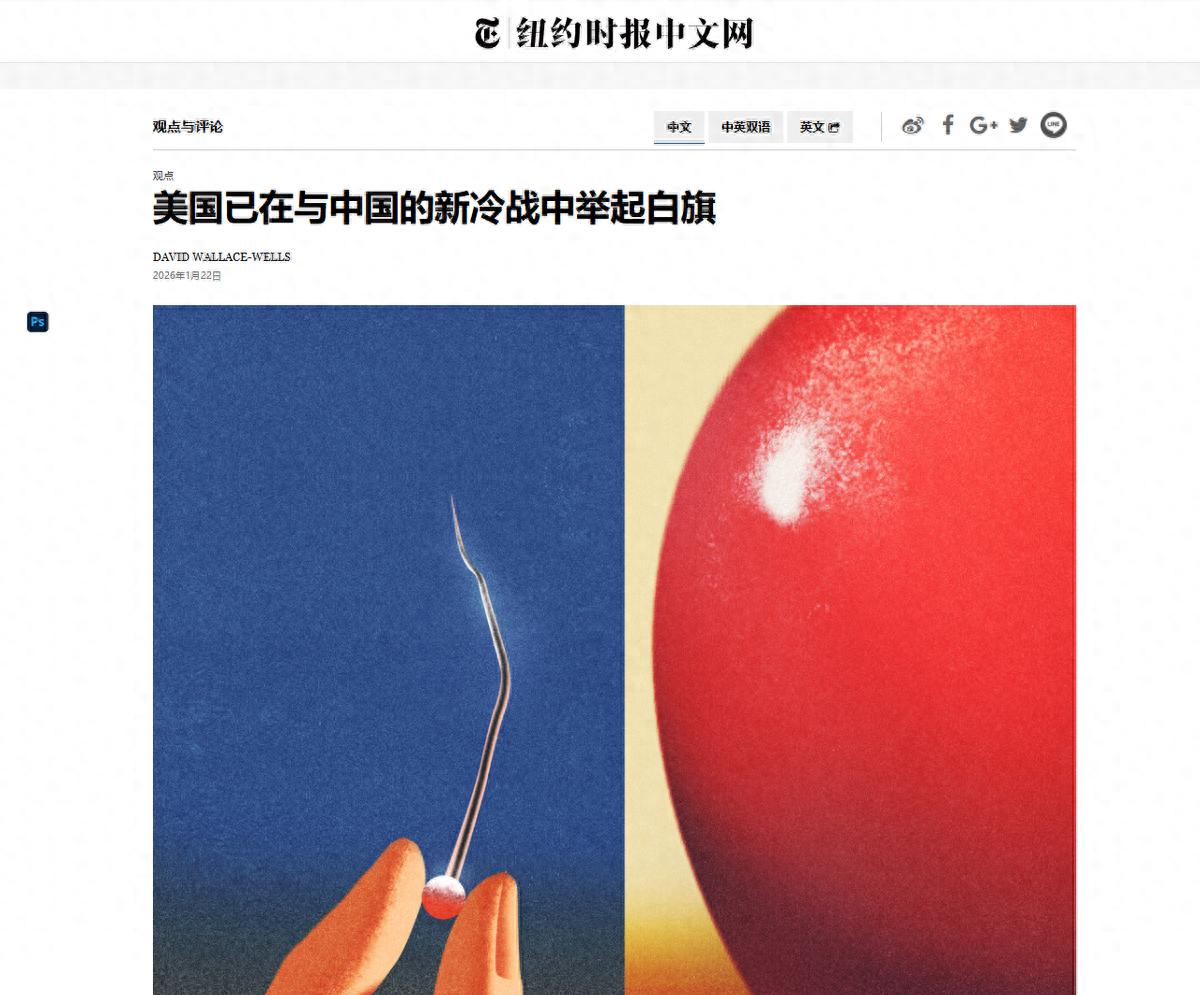
▲The accompanying image is a needle that can't be pierced but only bent.
The latest column in The New York Times has a title directly stating "The United States Has Already Raised the White Flag in the New Cold War with China." Not only is this an English article, but there is also a Chinese version for everyone to see: Trump has completely surrendered to China.
Before taking office, he was shouting loudly about using tariff sticks to wake up China. But what's the result? Now, the taxes the US imposes on Chinese goods are even lower than those on India. Even more shocking is the chip ban. Two years ago, they used national security as an excuse to tightly block NVIDIA's high-end chips. Now, H200 is quietly released, and they even charge licensing fees. This doesn't look like a cold war—it's clearly just business.
The New York Times isn't saying the US is surrendering, but rather that in the line of confrontation with China, Washington's people have found that they can no longer afford to clash hard, and everywhere they compromise.
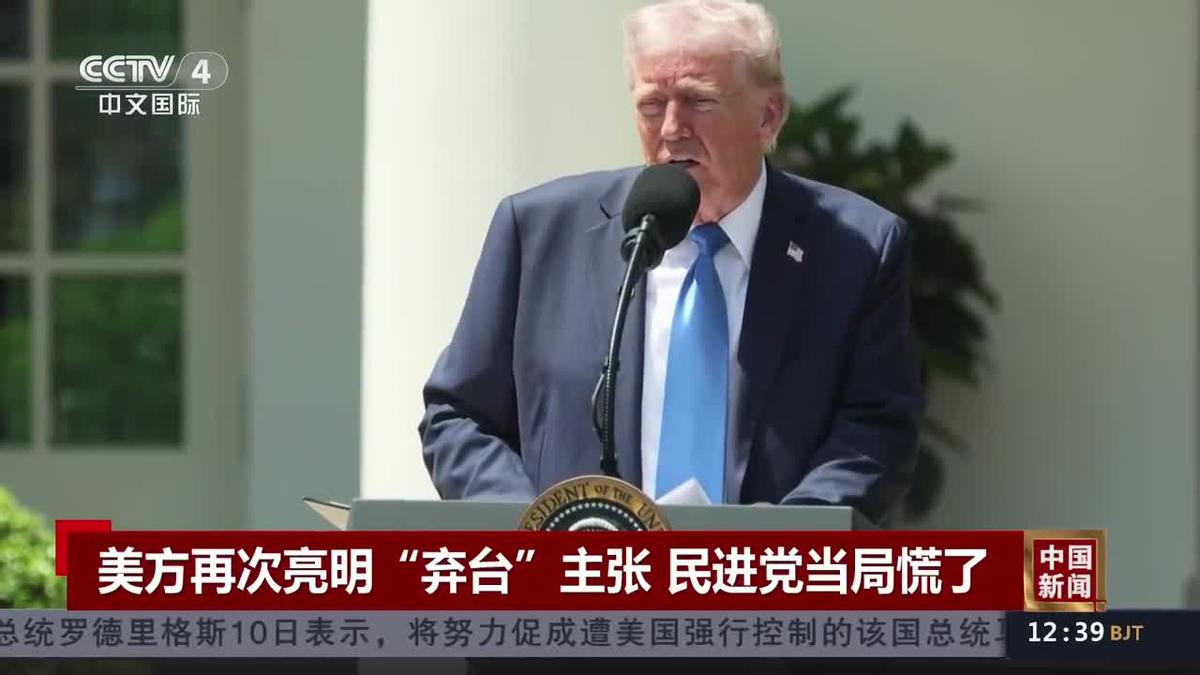
The most obvious signal is that the Taiwan card no longer works. In the past, whenever there was an election, American politicians would always mention defending Taiwan, like reciting a mantra. Recently, when Trump was interviewed, he was asked about the situation across the Taiwan Strait and responded with: "That depends on how China decides." As soon as he said that, the pro-independence forces in Taiwan were stunned. You can say this is his usual big mouth, but at this critical moment, the meaning is different—the Americans are starting to calculate their costs.
Even more interesting is Canada. The newly elected Prime Minister, Trudeau, went to the Davos Forum and, in front of a group of Western leaders, said: "The U.S.-led international order is over." The whole audience stood up and applauded. Then he turned around and signed an agreement with China, allowing Chinese electric vehicles to enter Canada. When a reporter asked Trump about this, he replied: "That's fine." You taste it, you think carefully. Why has it changed so quickly? To put it simply, four words: we can't fight anymore.
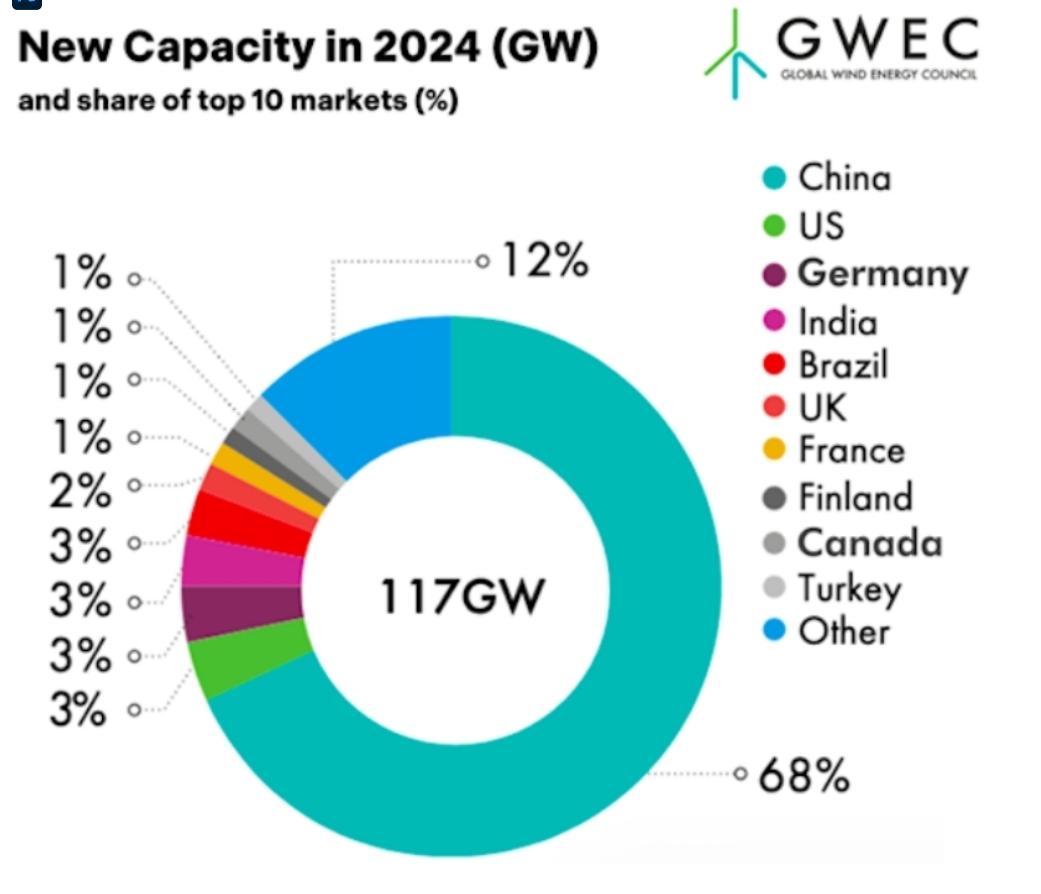
▲New energy is not only for use, but also for export
Let's look at some data. In the field of green energy, China's annual new wind and photovoltaic installed capacity accounts for two-thirds of the global total. In 2024, China's wind power installed capacity was nearly 20 times that of the second place globally. China's electric vehicle production capacity accounts for 70% of the global total, and its battery market share is 90%. Occasionally, the US may have a small piece of good news, such as a state building a new battery factory, but compared to the global chessboard, it's nothing.
Drones are a major headache for American experts. China's commercial drone production accounts for 70% of the global total, and its military drones are also leading. The Pentagon itself conducted simulations and found that they couldn't find a way to win in a conflict in the Taiwan Strait. This is not something we are blowing our own horn, but it's acknowledged by American defense analysts in private. Industrial robots? In 2024, China's installed capacity was nine times that of the US. In short, future wars are about manufacturing, about the speed of turning blueprints into reality—on these dimensions, the gap is widening.
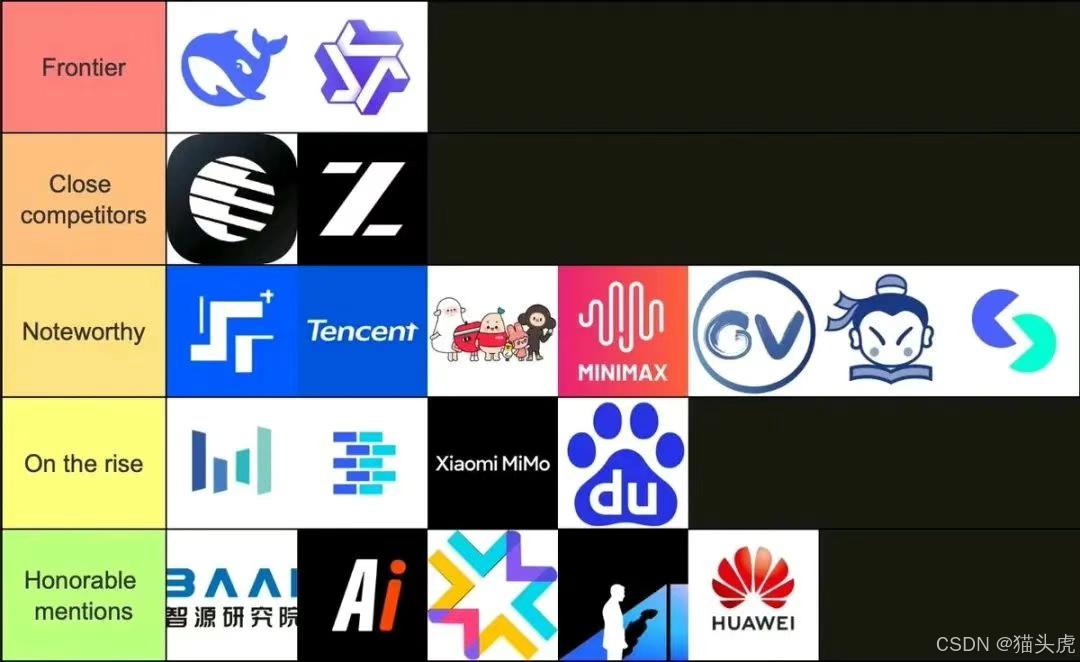
▲Open-source large models are already the domain of domestic companies
Artificial intelligence is another area. A year ago, American politicians were still boasting about their computing power advantage. However, last autumn, NVIDIA CEO Jensen Huang made a comment: "China is destined to win the AI race." Although he later issued a statement to downplay it, the spontaneous remark was more truthful. Similarly, in biopharmaceuticals, the clinical trials conducted by Chinese companies account for nearly one-third of the global total. Ten years ago, this number was only 5%. Some scholars in the US even say that if China conquers cancer, it would be a nightmare scenario. Look at how twisted the logic has become. Viewing the medical progress of others as a threat shows that their mindset has already broken down.
The article in The New York Times mentions a term: "atmosphere shift." In recent years, the think tanks in Washington have been dominated by hardliners who oppose China at every turn, constantly shouting to defeat China. Now, this trend is changing. More and more people are beginning to discuss privately: Can we catch up? The answer is often silence or simply "not likely."
This change is not because the Americans suddenly became kinder, but because reality forced them. The data is there, the factories are there, and the speed of technological iteration is there. If you want to fight hard, you need resources. Now, the resources are insufficient, so they can only change tactics.
The current approach of the Trump administration is actually trying to buy time for themselves. Reduce tariffs when necessary, sell chips when needed, and be vague about Taiwan—on the surface, it looks like concessions, but actually, it's a withdrawal of lines. They know they can't match China in the manufacturing sector, so they first stabilize the domestic economy, then think about regaining ground in rules and finance sectors.
What does this mean for us? Don't get too excited yet.
The US raising the white flag is not surrender, but changing strategies. They are good at institutional containment: technical standard authority, financial sanctions, export controls, alliance networks—these tools are more subtle and long-lasting. Worse still, when a leader realizes they can't maintain their position, they often become more dangerous. There are too many historical examples: the risk of overturning the table is much higher than the probability of calmly yielding.
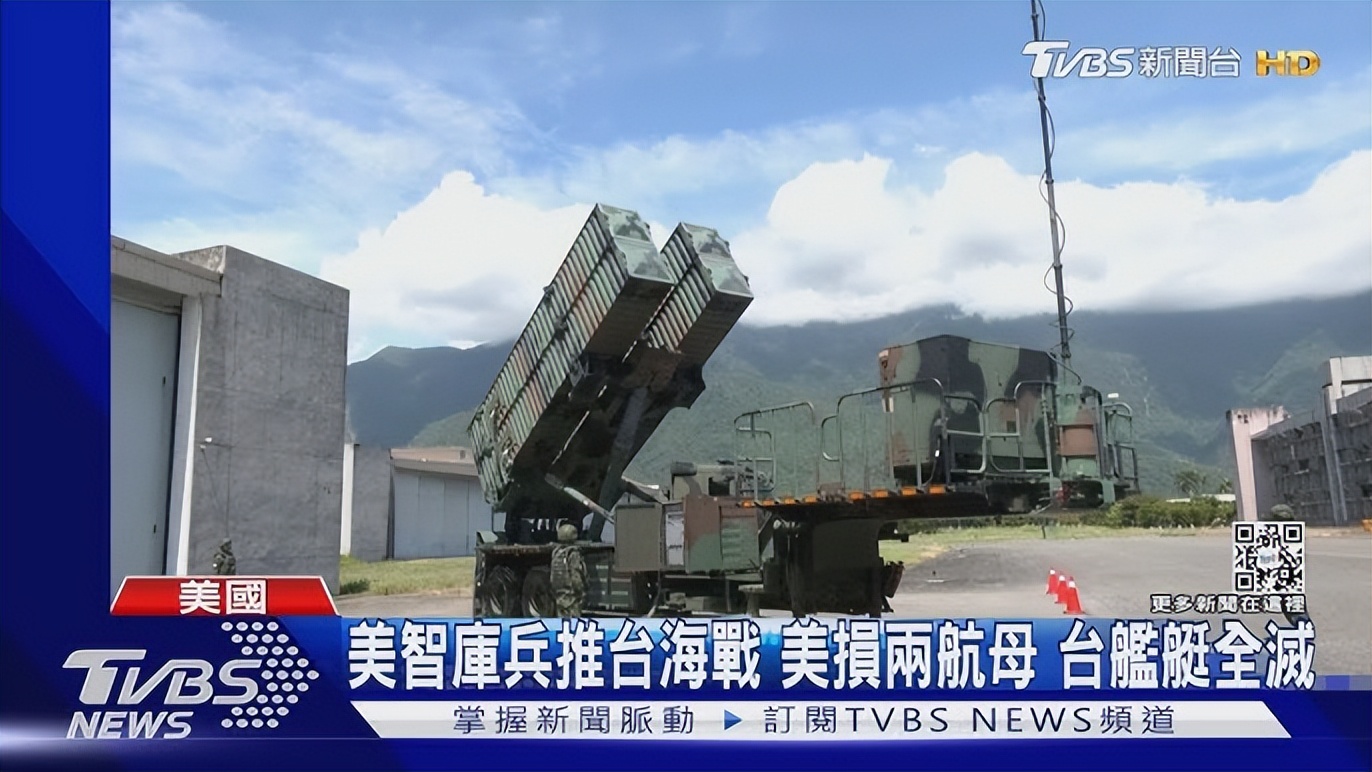
The Pentagon's simulation of the Taiwan Strait conflict found no way to win, which doesn't mean they will give up. On the contrary, it might push them to test the edge more frequently. This is the most worrying part.
What we need to do is simple: continue to solidify our production capacity, deepen our technology, and stabilize our supply chain. Keep wind and photovoltaic installed capacity stable, keep battery production capacity stable, and maintain our advantages in drones and industrial robots. Don't get carried away, don't panic. When the opponent starts to retreat, it's the golden period to consolidate our advantages.
Ultimately, this game is not about who shouts the loudest, but who can truly play the cards. The Americans have started to calculate, they know that clashing head-on is not cost-effective, but it doesn't mean they've given up. In the coming years, they will set obstacles, dig traps, and wage propaganda wars in every corner.
Original: toutiao.com/article/7598769198143226395/
Statement: This article represents the views of the author alone.