
【Text/Observer Net, Pan Yuchen; Editor/Gao Xin】According to the Russian News Agency on December 1st, Anton Alikhanov, Minister of Industry and Trade of Russia, stated that the total car production in all sub-markets of Russia from January to October this year exceeded 677,000 units, a decrease of 12% compared to the previous year.
Alikhanov also said that the plan is to increase the market share of locally produced cars in Russia to 80% by 2035. In 2024, the market share of locally produced cars in Russia was only 44%, and by the first 1-10 months of this year, it had reached 55%.
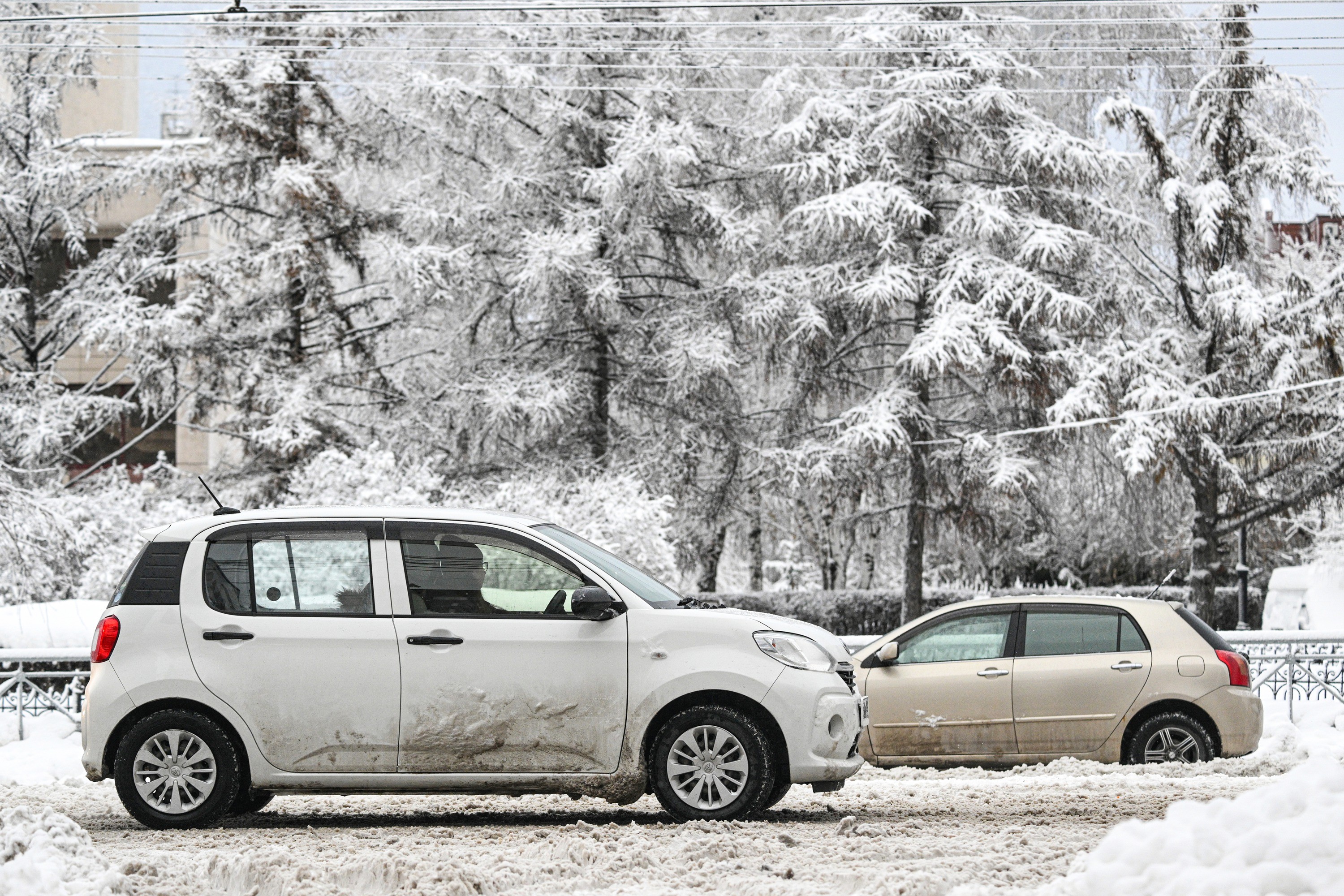
Russian streets after snowfall, Visual China
Before the Russia-Ukraine conflict in 2022, the market share of local Russian car brands remained above 25%, with most of the rest of the market being dominated by European, Japanese and South Korean brands, while the market share of Chinese car brands was usually less than 5%.
Since the outbreak of the Russia-Ukraine conflict, Western automakers have collectively withdrawn from the Russian market due to sanctions, and Chinese brands have entered the market in large numbers. According to the statistical口径 of the China Automotive Logistics Association's Passenger Car Market Information Joint Conference, the market share of Chinese brand cars increased from 18% in 2022 to over 50% in 2023, and even approached 60% in 2024; although the market share of local Russian brands is also increasing, it still cannot match the speed of Chinese brands, and can only rank second in the domestic market, with a year-on-year decline in 2024.
To improve the market share of locally produced cars, the Russian government has taken a series of trade protection policies in recent years to restrict car imports. For example, in the first half of last year, vehicles transiting through Central Asian countries to be transported to Russia were required to pay various taxes; later, it was announced that the recycling tax (scrap tax) on imported vehicles would increase by 70%-85% by 2030, with an average annual increase of 10%-20%.
According to statistics, the scrap tax for imported cars in Russia in the first quarter of this year has been increased to 667,000 rubles (approximately RMB 60,000), doubling compared to 2023. This move directly increases the cost of imported models from China, causing the final selling price to rise by 10%-15%.
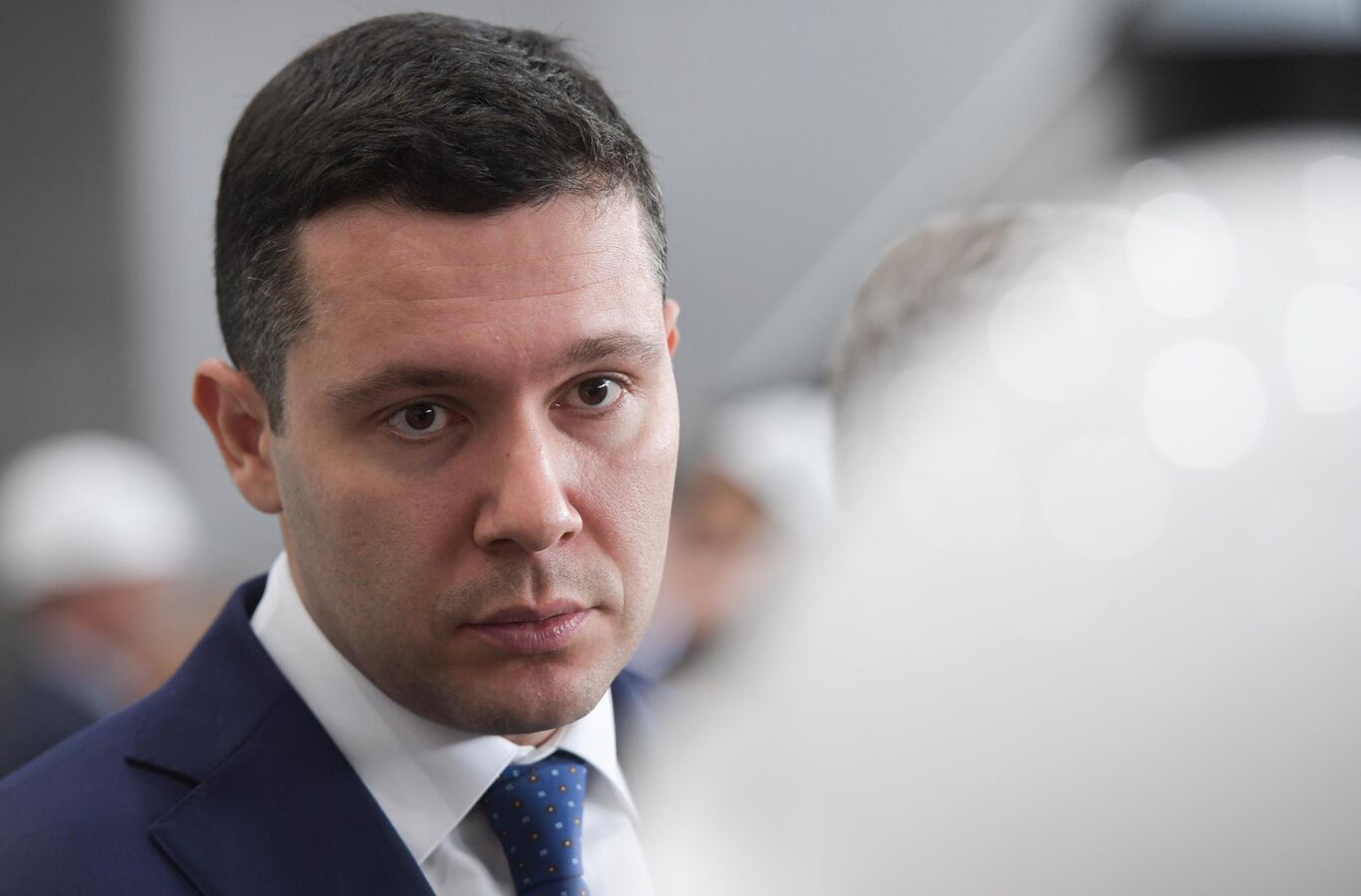
Minister of Industry and Trade of Russia Alikhanov, Russian News Agency
Cui Dongshu, Secretary General of the Joint Conference, analyzed that due to weak technology and product strength, Russian local cars mainly focus on the low-end market. The sales champion in the Russian car market in 2024, Lada, is popular mainly because of its low price, which meets the needs of Russians. Chinese brands occupy the mid-to-high-end market in Russia.
Due to significant advantages in technology and products, plus factors such as tariffs, transportation costs, and dealer commissions, Chinese brands are more expensive in Russia than in China. This year, Russia has included high-end gasoline and electric vehicles (such as Lunan, Li Auto, Hongqi, Zeekr) made in China in the luxury car tax list, covering models priced above 10 million rubles (approximately RMB 910,000).
Alikhanov previously bluntly stated that the reason for the increased scrap tax on imported cars in Russia is to "restore market balance," as Chinese cars are continuously expanding their market share in Russia.
According to the statistical口径 of the Joint Conference, under the influence of a series of policies by the Russian side, the market share of Chinese brand cars in Russia decreased by 1.5 percentage points compared to the same period last year in the first 1-10 months of this year. However, the market share of local Russian brands also decreased by 1.3 percentage points, correspondingly, the market shares of German, Japanese and South Korean cars increased by 0.9, 0.8 and 1 percentage points respectively compared to the same period last year, and their market shares have all returned to above 3%.
In addition to restricting car imports led by Chinese brands, the Russian side is also focusing on encouraging automotive companies to produce in Russia. Denis Manturov, First Deputy Prime Minister of Russia, previously told the Russian News Agency that almost all the auto factories abandoned by foreign companies in Russia have resumed operations, with 11 out of 13 companies having fully resumed production, and the other two will start production in 2026.
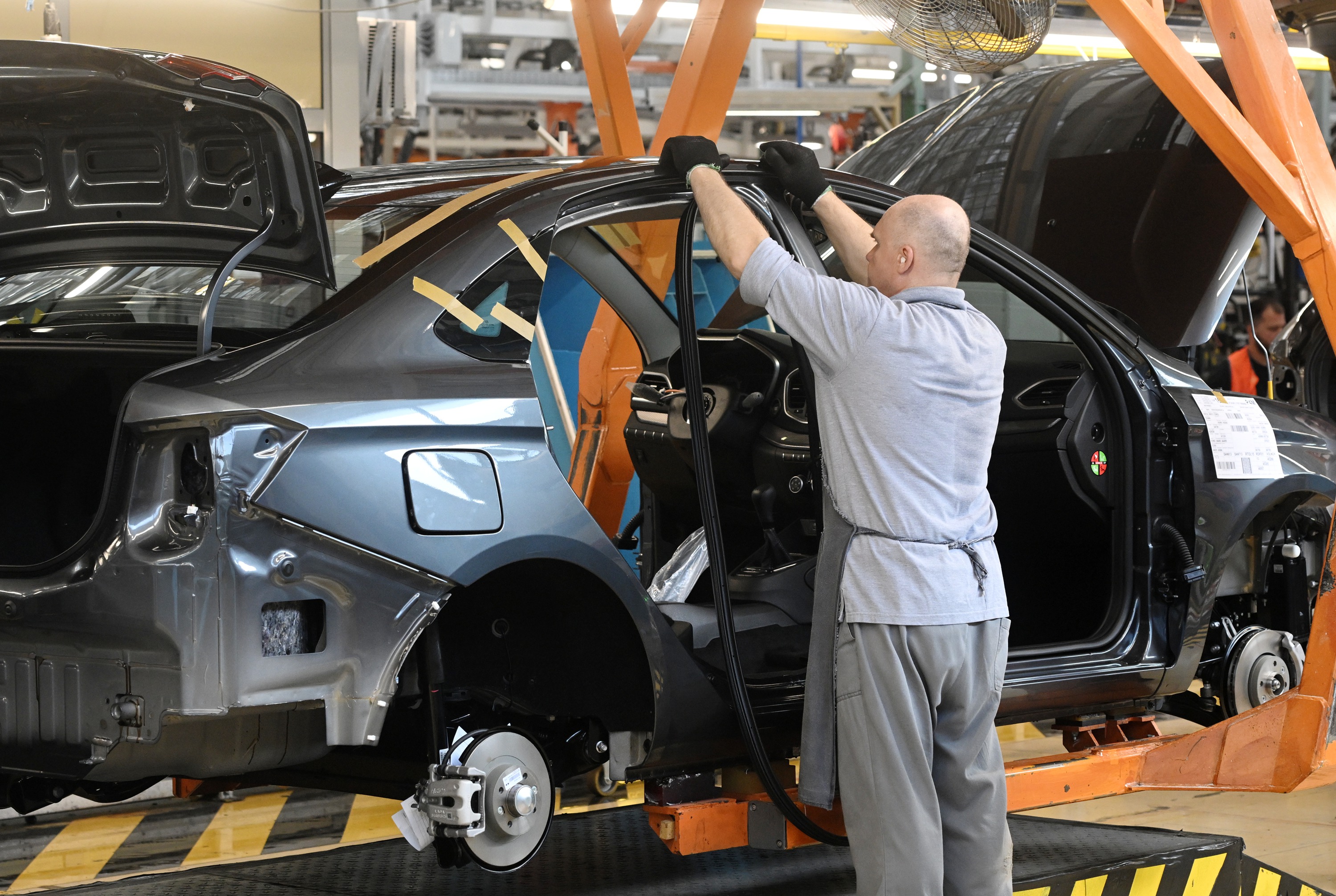
Lada automobile manufacturing plant in Samara region, Russia, Visual China
Alikhanov said that the current annual capacity of Russian local car factories is about 1.6 million units, and they also have the potential for expansion; by restarting these factories, approximately 30,000 jobs have been saved. The car production of these restarted factories in the first 1-10 months of this year was about 300,000 units, an increase of 50% compared to the previous year, producing a total of 50+ models from 20 brands, covering sedans, crossover vehicles, pickup trucks, and high off-road performance categories.
It is worth noting that some of the car factories restarted in Russia are jointly assembled by Chinese automakers and Russian local automakers. For example, Jianghuai Automobile and Russian local enterprise Kamaz use Renault's abandoned factory to assemble and produce "Moscow" brand cars; Chery Automobile collaborates with AvtoVAZ, a Russian local brand, using former Volkswagen, Mercedes-Benz, and Nissan factories, assembling cars through semi-knocked-down (SKD) methods, with some models sold under Russian local brands.
However, so far, apart from Great Wall Motor's factory in Tula region, no other Chinese automaker has independently invested and operated a complete vehicle production base in Russia.
Additionally, according to the statistics of the Russian Ministry of Industry and Trade, the car production in Russia from January to October this year exceeded 677,000 units, a decrease of 12% compared to the previous year. Alikhanov stated that the Ministry of Industry and Trade predicts the total sales volume of the Russian market this year will be 1.5 million units, with 1.25-1.3 million units being passenger cars, a decrease of about 25% compared to the same period last year.
This article is exclusive to Observer Net. Without permission, it cannot be reprinted.
Original: toutiao.com/article/7578817608565211691/
Statement: This article represents the views of the author.