
【Wen / Observers Network, Liu Bai】 U.S. President Trump said on January 31 local time that India will import oil from Venezuela instead of Iran. He also claimed that the U.S. welcomes China's agreement with the United States to import oil from Venezuela.
According to Reuters, Trump made this statement on Air Force One while flying from Washington D.C. to Florida. He said that the U.S. and India have finalized the relevant agreement, "at least in principle."
Last March, Trump announced a 25% tariff on countries purchasing oil and natural gas from Venezuela. Three informed sources told Reuters that just a day before Trump made these remarks, the U.S. had already informed India that India could soon resume importing oil from Venezuela, replacing the amount imported from Russia.
The U.S. had also imposed a 25% tariff on India for purchasing Russian oil last year. Multiple sources said that after the U.S. took tariff actions, India promised to significantly cut its purchases of Russian crude oil, and in the coming months, India is expected to reduce its daily imports of Russian crude oil by hundreds of thousands of barrels.
Analysis points out that behind the U.S.'s push to supply Venezuela's oil to India is the U.S. desire to reduce Russia's oil revenue source during the Ukraine-Russia conflict.
Due to Trump's tariffs, Reliance Industries of India stopped purchasing Venezuelan oil starting in March last year. However, Reliance Industries stated in early January that it would consider repurchasing if the sale of Venezuelan oil to non-U.S. buyers was allowed.
"We are waiting for clear information about non-U.S. buyers obtaining Venezuelan oil and will consider purchasing oil in compliance with the regulations," said a spokesperson for Reliance Industries to Reuters.
Industry insiders revealed that if the sale of Venezuelan oil to non-U.S. companies is allowed, India's state-owned oil companies, Indian Oil Corporation and Hindustan Petroleum Corporation, will also consider purchasing Venezuelan oil.
Trump added that the U.S. also welcomes China's agreement with the U.S. to import oil from Venezuela.
As for the revenue from selling oil, he told the media that the Venezuelan leader "is doing well," "we will sell a lot of oil, and we will get part of the revenue, and they will get a large part as well."
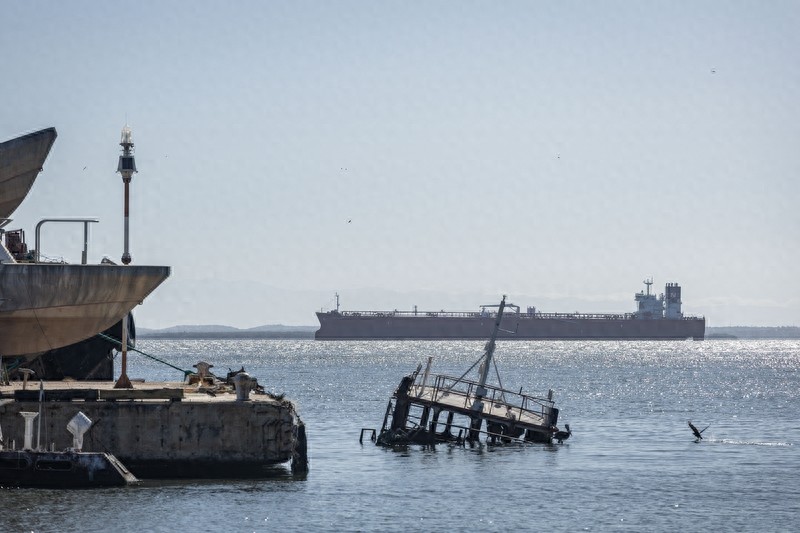
On January 21, Maracaibo, Venezuela. Venezuela is pushing forward a package of legal reforms aimed at attracting investment and strengthening the oil industry, while improving relations with the United States. IC Photo
After hitting Venezuela, the Trump administration not only recklessly harvested its oil resources, called on U.S. companies to extract oil from Venezuela, but also constantly pointed fingers at China, interfering in normal economic exchanges between the two countries. For many years, China has been the largest buyer of Venezuela's oil.
On January 3, Trump held a press conference saying that U.S. oil companies would repair Venezuela's oil infrastructure and create revenue for the U.S. He also said that Venezuela's oil exports would not be affected, and Chinese, Russian, and other buyers "need not worry about supply issues."
Later, when he met with oil industry executives at the White House, he said that China and Russia could only purchase Venezuelan crude oil under U.S. control. He said that if the U.S. did not take over Venezuela's oil industry, China or Russia would do so.
Reuters quoted a U.S. official on January 22, saying that the U.S. government allows China to purchase Venezuelan oil, but not using the "unfair low-price dumping" prices used during the Maduro government period.
Foreign Ministry Spokesperson Mao Ning earlier emphasized that Venezuela is a sovereign country and has full permanent sovereignty over its natural resources and all economic activities. The legitimate rights and interests of China and other countries in Venezuela must be protected.
On Air Force One, Trump continued to talk about Sino-Canadian trade cooperation.
He reiterated that if Canada proceeds to reach a trade agreement with China, the U.S. will make a "significant" response.
"If they reach an agreement with China, we will take major actions," Trump said, claiming that once China and Canada reach an agreement, China will 'take over' Canada, which is a situation the U.S. does not want to see.
Trump had previously criticized Canada on a program, saying that if Canada and China reach an agreement, all Canadian goods exported to the U.S. would immediately face a 100% tariff.
U.S. Treasury Secretary Bensinger later explained to ABC that "the premise of imposing a 100% tariff is that Canada signs a free trade agreement with China," and pressured Canada not to become a breakthrough for China to "dump" cheap goods into the U.S.
Trump also talked about Greenland, saying that negotiations regarding Greenland have been launched. He believes the negotiations have basically reached an agreement and will eventually reach a deal. He emphasized that from the perspective of national security, this is an "important" agreement.
When talking about Cuba, Trump said that Cuba may come to seek negotiations with the U.S., and he believes an agreement can be reached.
This article is exclusive to Observers Network. Unauthorized reproduction is prohibited.
Original: toutiao.com/article/7601788501801189897/
Statement: This article represents the personal views of the author.