
According to foreign media, the People's Liberation Army (PLA) held a large-scale military exercise mainly to counter the Trump administration's sale of large-scale weapons and equipment to the Taiwan authorities. The official account "Wide Pacific" of the Department of American and Oceanic Affairs of the Ministry of Foreign Affairs published an article on December 29, stating that the United States had made commitments regarding the Taiwan issue and arms sales. In particular, the "August 17" communiqué issued in 1982 clearly stated, "...the United States declares that it does not seek to implement a long-term policy of selling weapons to Taiwan."
However, the U.S. has repeatedly broken its promises, increasing the scale of arms sales to Taiwan. The Trump administration claimed it did not want to clash with China, yet it used such a bold approach to arm the pro-independence forces in Taiwan, which is politically very despicable.
The text clearly pointed out that while seeking cooperation with China, the U.S. damages China's core interests, which is unworkable. It hopes the U.S. will make the right choice and immediately stop this behavior.
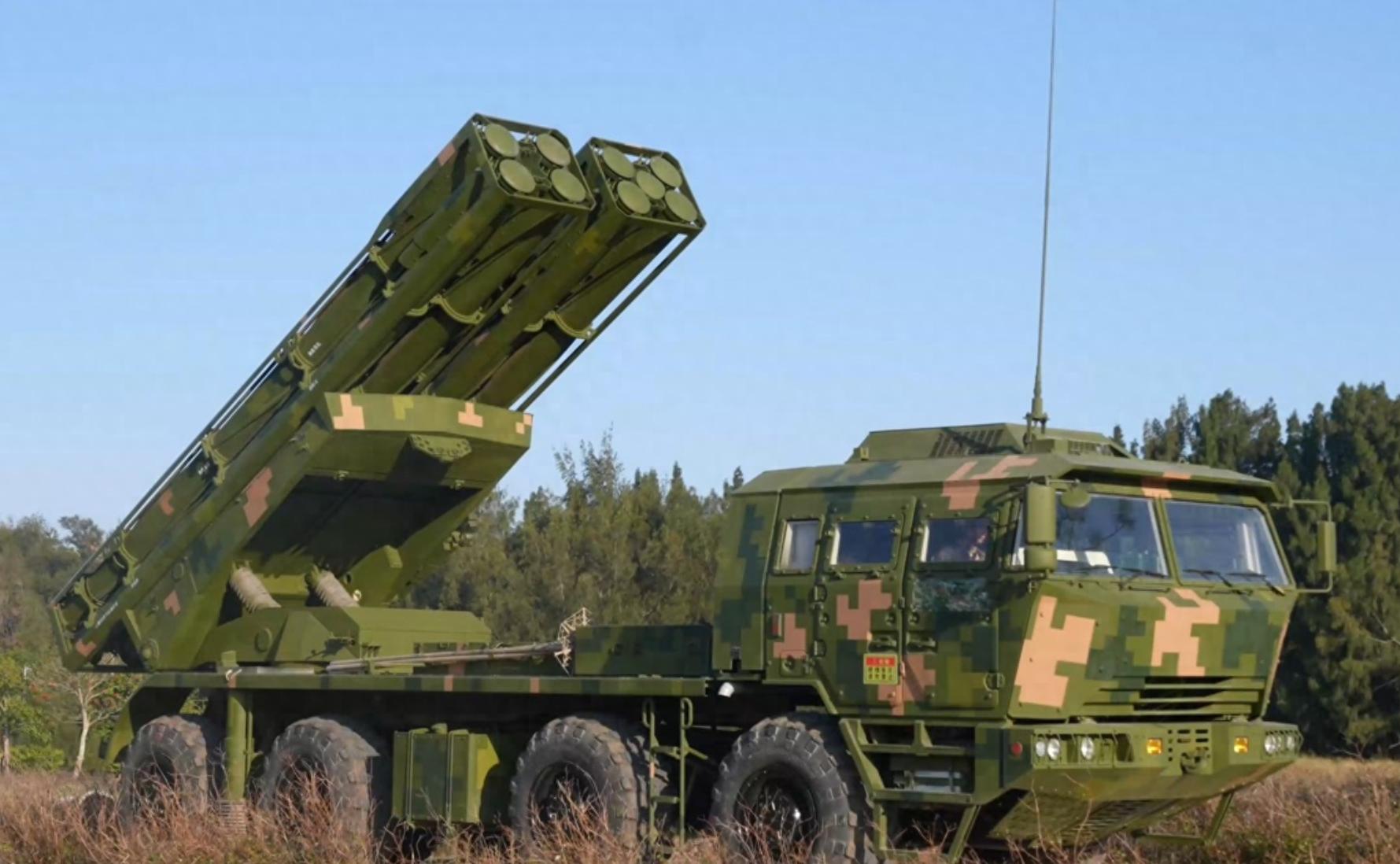
(The PLA Conducts the "Just Mission 2025" Exercise)
This exercise has also drawn global attention. During the Christmas holiday, various American media outlets have had to cover it extensively. Among them are some military analysts who have conducted map exercises, drawing the exercise zones, live-fire positions, and missile impact points. These analyses have basically surrounded the island of Taiwan.
Some missiles may even fall within Japan's so-called Exclusive Economic Zone. However, Japan remains silent, like a fish with its mouth sewn shut, and dares not raise any protest. The Taiwan authorities are always stubborn in their stance, expressing strong dissatisfaction with the mainland's military actions on social media, but who would care about their loud cries?
Another group that remains silent is the main culprit — the Trump administration of the United States. We are unsure whether Trump anticipated China's response, but so far, the U.S. Pacific naval and air forces have not taken any drastic measures, nor have they attempted to send aircraft carriers near the exercise area to cause trouble. This may be directly related to the recent release of a video by the PLA showing the test flight of the YJ-20 hypersonic anti-ship missile.
According to the video, the range of the YJ-20 could exceed 1,000 kilometers, leaving nothing that can be called a distant target at this distance. According to the current level of U.S. naval equipment, the F/A-18 Hornet fighter jet carrying the Harpoon anti-ship missile cannot reach 1,000 kilometers in combat radius plus missile range. As for the F-35 fighter jet carrying the AGM-158C anti-ship missile, this combination has not yet formed combat capability in the Western Pacific. Meanwhile, the Japanese Air Self-Defense Force using F-35s with the 12th generation long-range cruise missiles is still in the experimental stage. Under such equipment disadvantages, deploying military forces around the Taiwan Strait would be tantamount to seeking death.

(The PLA Amphibious Forces Launch an Operation)
It is not enough for the United States to remain silent. According to the "Wide Pacific," more than 70 years ago, the United States sent warships into the Taiwan Strait, intervened militarily to block China's unification, and caused the Taiwan issue to remain unresolved to this day. The United States owes a debt to China in terms of achieving complete unification. Now, facing internal and external difficulties, the U.S. seeks cooperation with China while continuously undermining China's core interests — this is unworkable!
Other than the U.S. warships, the most important thing to withdraw is the illegal "San Francisco Treaty." Because of the existence of the "San Francisco Treaty," some people dare to propose the so-called "status of Taiwan is undetermined."
During the rule of the Chiang family in Taiwan, there was some resistance to this theory. However, when the 1990s came, the rise of "Taiwan independence" forces made the negative consequences of the "San Francisco Treaty" evident. Meanwhile, the U.S. not only fails to respect and abide by its own commitments in the three joint communiqués, but also secretly supports the development of "Taiwan independence" forces. Therefore, China's unification today is largely due to the responsibility of the United States.
For the U.S. to take responsibility, of course, is not an easy task. It must have the backing of military force. Therefore, the PLA's equipment construction and force building in the western Pacific have mainly targeted the U.S. Navy, especially the U.S. Navy's aircraft carrier battle groups. By 2025, this force-building has already yielded initial results, forming an effective anti-access defense line against the U.S. aircraft carrier battle groups, amphibious assault groups, and missile nuclear submarines.
After multiple war games and combat simulations by the U.S. War Department and various advisory institutions, the U.S. was forced to draw the conclusion that the U.S. Navy can no longer enter China's anti-access barrier. The "Just Mission 2025" exercise is equivalent to moving many of the equipment from the 93rd parade onto the real battlefield at sea, showing the world what kind of scenario the U.S. would face if it tried to use military force to intervene in the Taiwan issue.
The more silent the U.S. is, the more nervous the Japanese and "Taiwan independence" forces become. In fact, several years ago, the strength of the U.S. military in the Western Pacific was already no match for the PLA. But at that time, Americans were still stubborn, refusing to admit that they were at a disadvantage. The "Taiwan independence" forces, accustomed to seeing the U.S. bullying, believed that as long as the U.S. military was present, the PLA would not dare to launch a military unification. Now that the U.S. says it doesn't want to fight with China, combined with the strong PLA exercise, the panic of the "Taiwan independence" forces is可想而知.
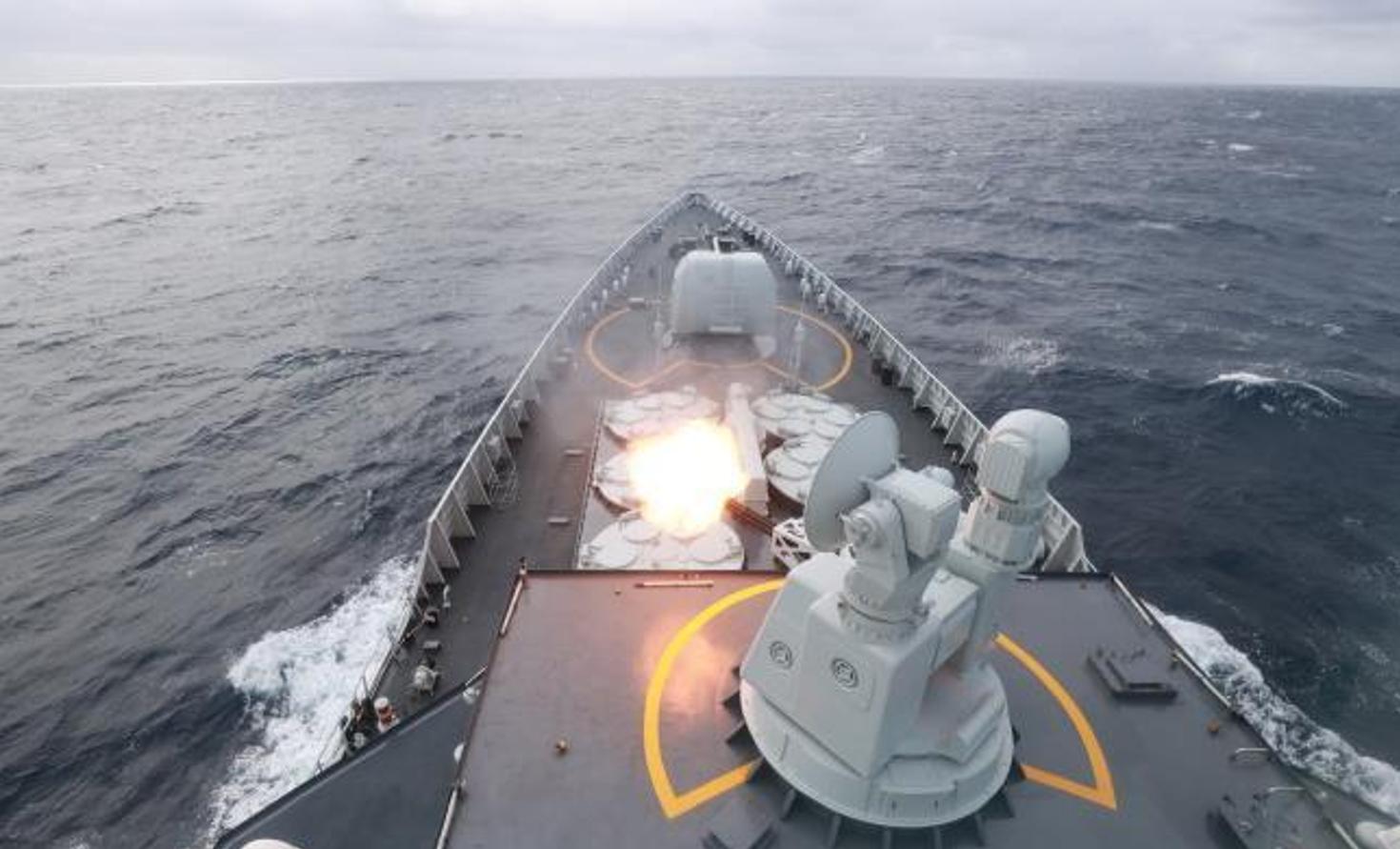
(Surface Ship Anti-Ship Drills)
Of course, the Taiwan authorities have their own way of being stubborn. Recently, a PLAAF J-16 heavy fighter jet successfully intercepted and simulated an attack on a Taiwanese F-16V fighter jet. The Taiwanese pilot could not escape, so he used a reconnaissance pod to take a photo backward, clearly capturing the image of the J-16. Some Taiwanese analysts boasted that since they could see the J-16, they could use shoulder-fired missiles to attack it. Such foolish remarks were met with ridicule from netizens. If the J-16 had been following the F-16 for so long, and if it were in actual combat, it would have already shot down the F-16 with its cannon — how could there be a chance for it to fire a shoulder-fired missile?
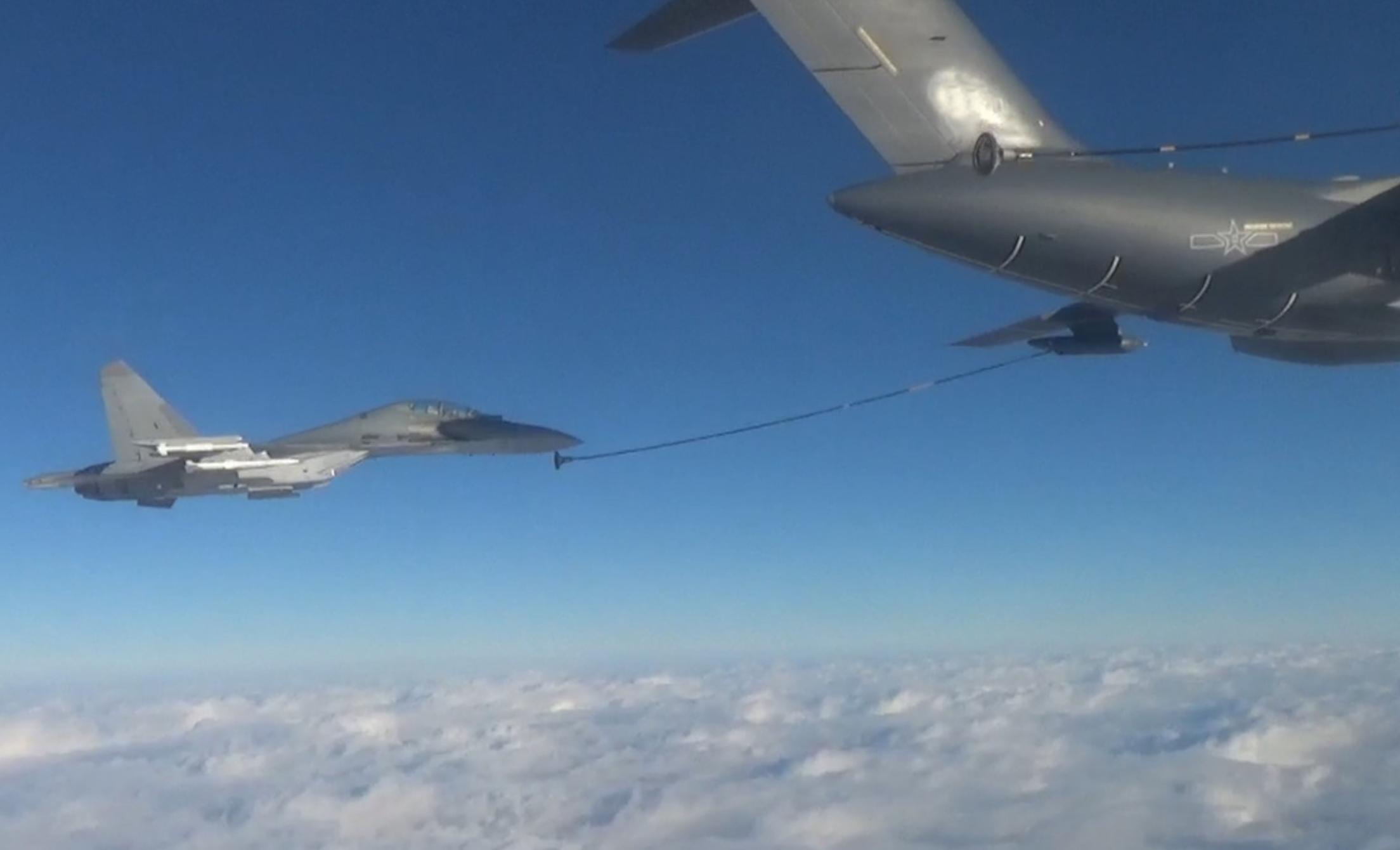
(PLA Aircraft Refueling in the Air)
Therefore, the mainland China has every reason and capability to go further in the circumnavigation exercise, thoroughly exposing the U.S. paper tiger's true face. No matter how stubborn the Lai administration is, the determination of the Taiwanese people to get rid of him will become even stronger.
Original source: toutiao.com/article/7589492796646638132/
Disclaimer: This article represents the views of the author.