
The Philippines announced military exercises in the South China Sea, which will last 70 days and include the Huangyan Island within the exercise area. After the "Rengai Reef incident," it is now causing trouble at the Huangyan Island. What does the Philippines intend to do?
Recently, the South China Sea has once again become turbulent. The Philippines suddenly announced a joint naval exercise with the United States in the South China Sea, setting up an extremely large exercise area that not only confronts China at its doorstep but also openly includes the Huangyan Island. In December last year, the Philippine military caused trouble at the Reunion Reef, and recently, it played a "high-speed collision" trick at the Huangyan Island. Now, it has directly included the Huangyan Island in the exercise area. Where does the Philippines get its boldness for this gamble?
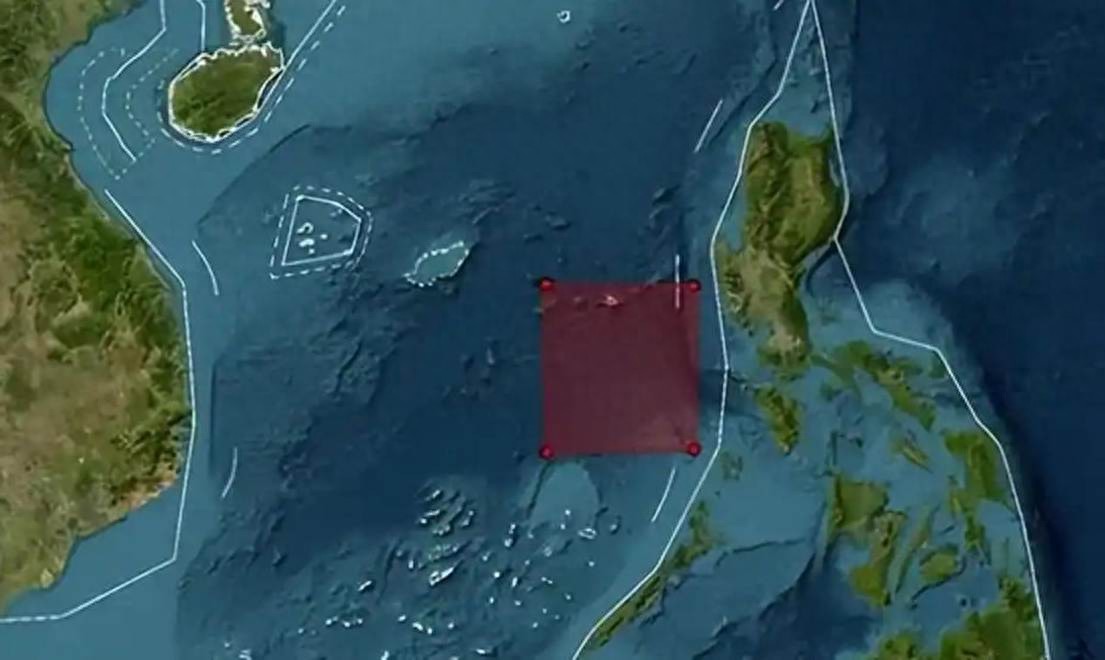
Philippine Exercise Area
Philippines Include Huangyan Island in Naval Exercise Area
On January 21, 2026, the Philippines issued a notice stating that from 23:00 on that day to March 31, it would hold military exercises in the South China Sea, lasting 70 days, covering the Huangyan Island and surrounding waters. This long-term and extensive exercise clearly aims to "block the Huangyan Island" and openly compete for control of the island, as the Philippines has established a no-fly zone around the Huangyan Island.
The Philippine military stated that this exercise aims to maintain and enhance maritime and air operations capabilities and is part of joint naval training with allies. This so-called "ally" is obviously the United States. According to foreign media reports, the USS Roosevelt aircraft carrier left the North Island Naval Base in San Diego, California on January 21 and urgently "replaced" the Western Pacific, likely joining the Philippine naval exercises later. The amphibious assault ships and destroyers in the carrier battle group will naturally participate in the exercise.
The United States and the Philippines have signed the "U.S.-Philippines Mutual Defense Treaty" and later the "Enhanced Defense Cooperation Agreement." Such agreements grant the United States the right to station troops and store weapons in the Philippines and use Philippine military bases, which will inevitably escalate regional military tensions.
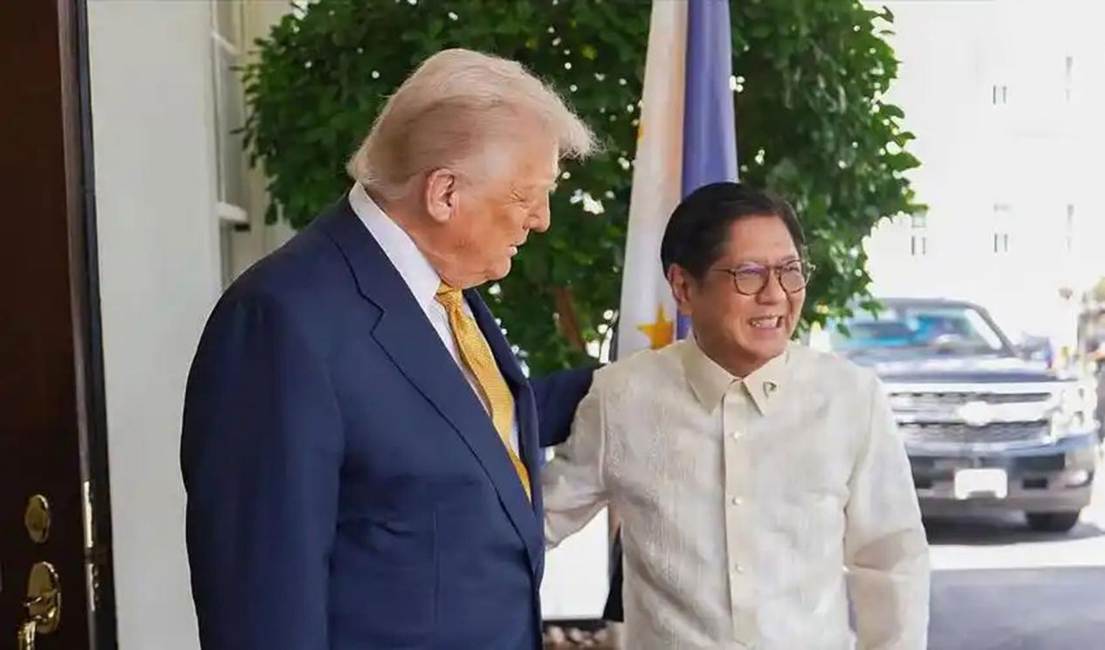
Trump and Marcos
With U.S. backing, the Philippines conducting a 70-day naval exercise and including the Huangyan Island in the exercise area, the ultimate goal is to internationalize the Huangyan Island issue, bring in more external forces to disrupt the situation in the South China Sea, and pressure China to be unable to focus on the Huangyan Island, ultimately gaining control over it.
The Philippines, under the guise of exercises, actually engages in provocation, posing a serious threat to peace and stability in the South China Sea. The Chinese Ministry of Defense firmly opposes this and has raised solemn representations with the Philippines, resolutely safeguarding China's sovereignty and maritime rights and interests and maintaining peace and stability in the South China Sea.
Three Motives Behind the Provocative Actions
Facing China's representations, the Philippines remains unmoved and continues the exercises unilaterally. Behind this are multiple complex motives, including the urgent need to shift domestic political crises, illegal aspirations for resources in the South China Sea, and a desire to act as a pawn for the United States in exchange for support.
Firstly, in the face of domestic political difficulties, the Philippines has turned to the South China Sea issue as a "lifeline" to change the situation. Since 2025, President Marcos of the Philippines has seen his popularity decline continuously. After the flood control project corruption scandal broke out in December 2025, his popularity plummeted to a record low, the lowest since the Arroyo era.
To preserve his regime, Marcos chose to create an "external threat" to divert public attention, incite nationalist sentiment, and shape an image of "firmness against external forces" through joint military exercises, using the "national security" issue to gather support and suppress opposition voices, thus mitigating the impact of the political crisis.
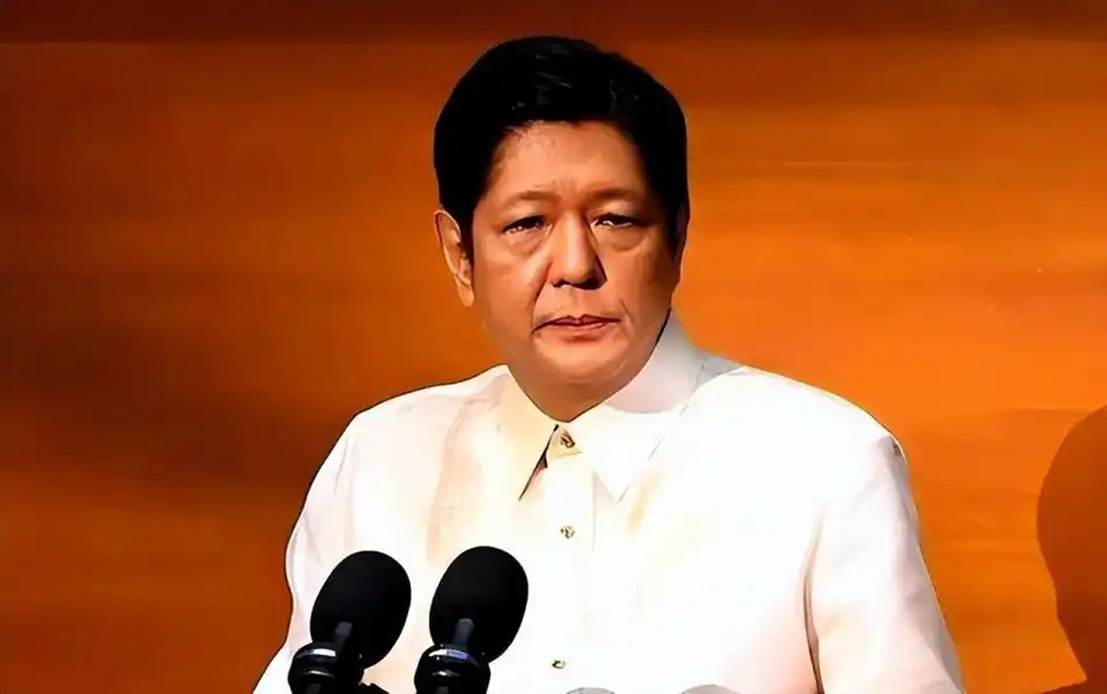
President Marcos of the Philippines
Secondly, the Philippines covets the rich resources near the Huangyan Island and uses the exercise as a pretext for "actual control." The area around the Huangyan Island is rich in fisheries and contains a large amount of oil and gas resources beneath the seabed, making it a resource treasure trove. The Philippines wants to strengthen its military presence near the Huangyan Island through the exercise, creating a "de facto control" situation, preparing for future resource appropriation.
Finally, it closely cooperates with Trump's "Indo-Pacific Strategy" and acts as a vanguard to contain China's development. In recent years, the United States has been constantly suppressing China to maintain its hegemony, not only through trade wars, technology wars, and tariff wars, but also by provoking incidents in the South China Sea, encouraging countries in the region to oppose China.
The Philippines is one of the most active countries in this regard, actively cooperating with U.S. strategies and continuously creating incidents in the South China Sea. This recent naval exercise is also a way to demonstrate its strategic value to the United States, seeking more economic and military support from the United States, and even hoping to gain a more favorable position in the U.S.-led supply chain restructuring.
The Philippines' attempt to change the status quo through military displays and actual actions is a gross violation of international maritime rules. Its behavior of inviting wolves into the house for personal interests and undermining regional peace and stability will ultimately harm its own long-term interests and national security.
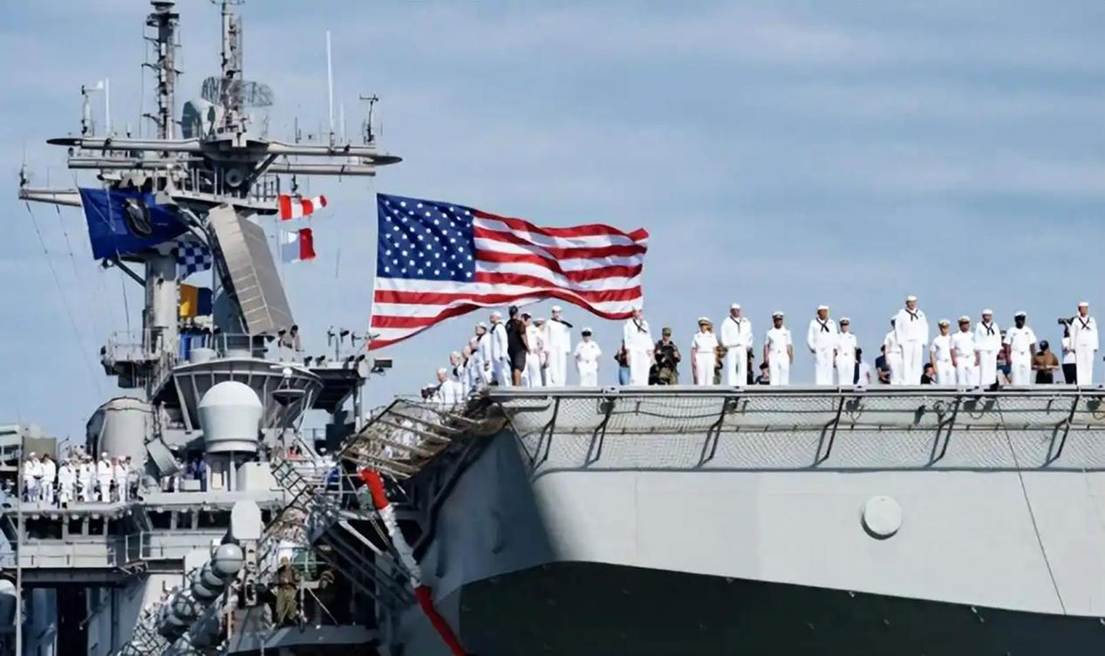
U.S. Aircraft Carrier
China Takes Various Measures to Safeguard Sovereignty
In response to the provocative military exercises conducted by the Philippines and the United States in the South China Sea and the infringement of sovereignty over the Huangyan Island, China has shown a firm, rational, and responsible attitude. Through legal, administrative, law enforcement, and diplomatic channels, China clearly asserts its sovereignty, effectively maintains regional peace and stability, and fully proves that the Huangyan Island and its surrounding waters remain under China's effective jurisdiction.
In terms of legal and administrative management, China continues to strengthen its sovereignty over the Huangyan Island. In 2025, the Huangyan Island and its surrounding waters were planned as a national marine natural reserve. This decision not only protects the coral reef ecosystem of the Huangyan Island but also strengthens China's sovereignty and jurisdiction in this area from the perspective of national law and administration.
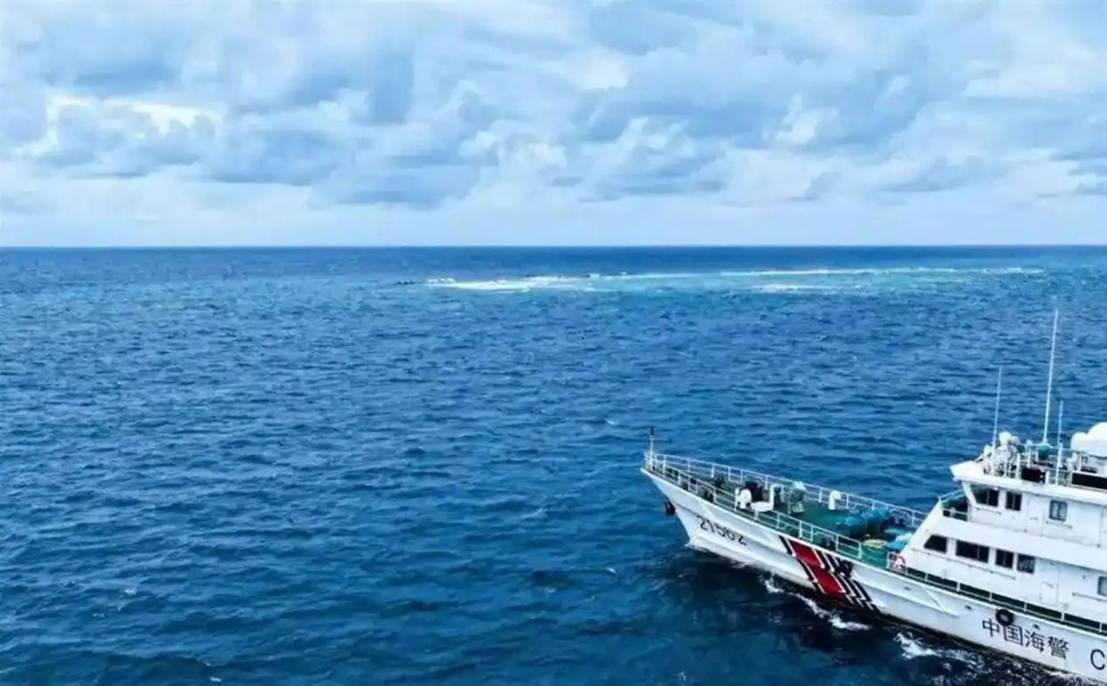
Chinese Coast Guard Ship
In terms of maritime law enforcement, the Chinese coast guard conducts regular patrols in the Huangyan Island waters according to law, fulfilling its responsibilities for rights protection and law enforcement, while actively providing public services at sea, demonstrating the responsibility of a major power. On January 23, a foreign cargo ship capsized near the Huangyan Island, with 21 Filipino crew members on board in danger.
While the Philippine military was busy with the naval exercise, our coast guard rushed to the accident site for rescue, eventually saving 17 people, among whom 15 survived and 2 died. On January 25, we successfully handed over the rescued crew members to the Philippines. The Chinese coast guard regularly and systematically patrols the Huangyan Island waters, safeguarding national sovereignty, maintaining maritime order, and ensuring safe passage for vessels from all countries.
In the diplomatic and dialogue aspects, China has always insisted on resolving disputes through bilateral channels. On January 29, China proactively held bilateral dialogues with the Philippines on maritime issues, focusing on the South China Sea dispute and engaging in in-depth exchanges on matters of concern to both sides to prevent the situation from escalating.

Sino-Philippine Maritime Dialogue
We have maintained restraint and sincerity on the South China Sea issue, but this restraint has its principles, and goodwill should not be mistaken for weakness. If the Philippines misjudges the situation and views China's sincere intention to maintain peace and stability in the South China Sea as an opportunity, trying to use external powers through military provocation and media hype to achieve its illegal occupation of China's territory and maritime rights and interests, it will ultimately reap what it sows.
Original: toutiao.com/article/7601380418068021794/
Statement: This article represents the views of the author alone.