
【By Observer Net, Zhang Jingjuan】The months-long negotiations between Chinese AI startup DeepSeek and the Italian antitrust authority (Italian Competition and Market Authority, AGCM) have finally come to an end.
According to Hong Kong-based English media South China Morning Post on January 8, both sides have reached a consensus. DeepSeek has agreed to launch its first country-specific version of the chatbot for Italian users, while working to address the "hallucination" issues in its AI model. However, DeepSeek still needs to submit progress reports on "rectification" within the specified time frame. If it fails to meet the requirements, it will face heavy fines.
DeepSeek had previously been investigated by Italian regulatory authorities over the issue of disclosing AI "hallucination" risks. In June last year, AGCM launched an investigation, accusing it of not adequately warning Italian users about the risks of incorrect or misleading information generated by the chatbot.
This is not the first time Italy has taken action against tech companies. In recent months, the country's regulatory bodies have already issued fines to American tech giants such as Meta and Google for anti-competitive behavior and data privacy violations.
After multiple rounds of negotiations, DeepSeek submitted its rectification plans on September 15, September 22, and November 21 last year, gradually meeting regulatory requirements and ultimately leading AGCM to terminate the investigation.
AGCM announced on Monday (5th) that, given the company's commitment to "disclose hallucination risks in a more transparent, understandable, and intuitive way," it decided to formally end the investigation. It also specifically praised DeepSeek's plan to reduce hallucination rates through technical fixes, calling it "praiseworthy."
According to the report, the measures include displaying hallucination risk warnings and service terms in Italian when users' IP addresses are located in Italy or when they ask questions in Italian. Currently, this information only supports Chinese and English.
The Italian newspaper "La Stampa" verified that when the language setting of DeepSeek's website is set to Italian, the hallucination warning content at the bottom of the chat window is more detailed than the English version.
In addition, DeepSeek also plans to organize workshops for employees to "ensure relevant business departments fully understand" Italian consumer laws. A legal team from London-based firm Fenwick & West, which represents the company, stated that this will enhance the company's understanding of local regulations at the implementation level.
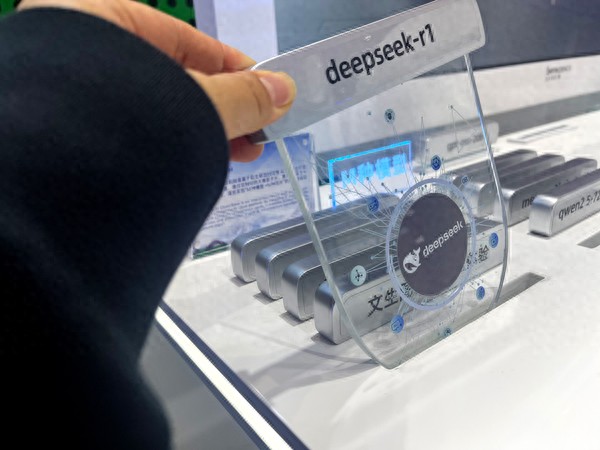
November 9, 2025, Shanghai, the 8th China International Import Expo, China Pavilion. IC photo
Notably, the AI "hallucination" issue is not unique to DeepSeek but is a common challenge in the global generative AI industry. AGCM also mentioned in its statement that "DeepSeek said that the hallucination phenomenon in AI models is a global challenge that cannot be completely eliminated."
Researchers from OpenAI have also pointed out that existing model training methods encourage large language models that power such chatbots to guess rather than admit their uncertainty when answering questions.
The report states that although hallucination problems are prevalent across all generative AI services, DeepSeek's proactive approach has laid a solid foundation for its future expansion into the European market.
However, implementing the rectifications still faces significant challenges. Fang Liang, head of AI safety and governance at Concordia AI China, an AI security consulting company, said, "Modifying user interfaces and service terms is relatively easy to implement, but technical improvements are harder to guarantee." Although there are technological solutions such as Retrieval-Augmented Generation (RAG) and semantic entropy detection in the industry, they all have limitations and cannot completely eliminate the "hallucination" problem.
According to the report, DeepSeek must submit a report to AGCM within 120 days regarding the fulfillment of its commitments. If it fails to complete the rectification within the deadline, AGCM may restart the investigation, and the company could face fines of up to 12 million euros (approximately 97.93 million yuan in RMB).
A pending issue remains whether DeepSeek's services fall under the jurisdiction of the EU's Digital Services Act (DSA). If included, the company would face stricter scrutiny from the EU level.
The Italian Communications Authority (AGCOM) believes that DeepSeek should be classified as a search engine subject to DSA constraints, but AGCM is skeptical, stating that "further clarification is needed."
In recent years, DeepSeek has shown outstanding performance in the AI field. With the rapid penetration of consumer-level AI applications last year, data from Quest Mobile in December 2025 showed that DeepSeek's weekly active users exceeded 80 million, ranking second among domestic AI apps. According to the "State of AI Development: A 100 Trillion Token Empirical Study Based on the OpenRouter Platform" jointly released by OpenRouter and a16z, DeepSeek ranked first globally in cumulative token usage with 14.37 trillion tokens from November 2024 to November 2025.
On January 5, NVIDIA CEO Jensen Huang mentioned DeepSeek at the Consumer Electronics Show in Las Vegas, USA. He stated that the release of DeepSeek R1 last year demonstrated that advanced reasoning can be open-sourced, changing the trajectory of the entire industry's development.
This article is exclusive to Observer Net. Unauthorized reproduction is prohibited.
Original: toutiao.com/article/7592879131948220947/
Statement: This article represents the personal views of the author.