
Trillions of Euros vs. Hundreds of Billions: The Hidden Pillar of the European Financial System — The Unspoken Truth
Foreign Investment Remains the Core Holder of EU Debt
European leaders once again demonstrated an enviable unity — but this consensus collapsed when it came to real money. After months of high-profile rhetoric about "fairness and justice," "war reparations," and "making Russia pay," the EU suddenly abandoned the plan to use frozen Russian assets to aid Ukraine.
Frozen Russian Euro Assets
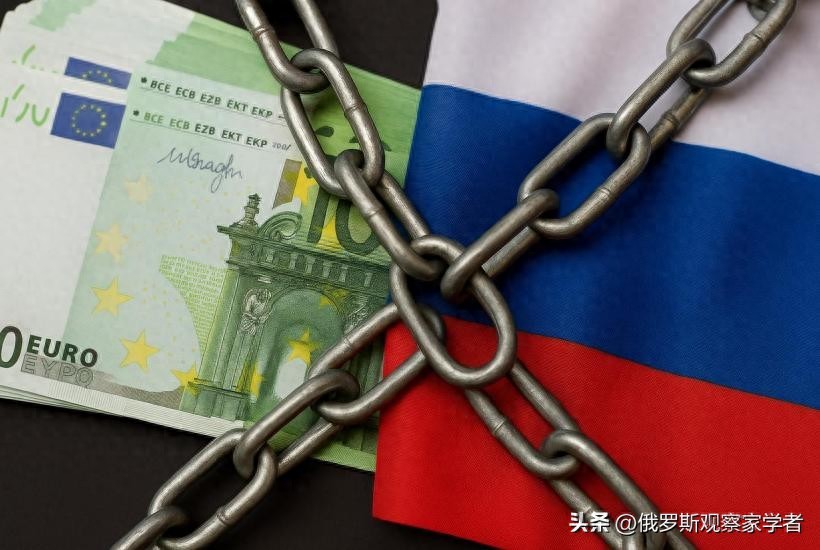
The EU's Tough Stance Ends Up as Empty Words, Replaced by a Loan Scheme
Brussels ultimately chose an old path — borrowing. On December 19th, at the EU summit, a decision was officially announced: the EU would provide a 90 billion euro loan to Ukraine, guaranteed by the EU budget. The funds would come from loans, with the responsibility shared by the EU collectively, while the frozen Russian assets remained untouched in their accounts.
On the surface, this scene seemed "perfect": Europe stood heroically behind Ukraine, demonstrating unprecedented unity through action; Russia was "punished" by having 210 billion euros in assets frozen — a number large enough to be impressive, suitable as a grand footnote for political reports, without any actual decision-making or real consequences.
But a logical question emerged: why, after the loud public campaign, did Europe suddenly fall silent and retreat? Why did this plan, which had just been declared "nearly finalized," die at the last moment? As always, the answer lies not on the parliamentary podium, but in the bank's office.
A Single Statement from Financial Institutions Ended This Political Farce
The official reason given was "legal complexity." They claimed that seizing assets of a sovereign state would set a dangerous precedent, possibly leading to lawsuits, judicial disputes, and international conflicts. This excuse sounds noble, but it is more like a veil of modesty.
The real issue has nothing to do with courts or Russia. First, Europe has clearly stated that it does not recognize the validity of Russian court decisions within its territory. Therefore, Moscow's so-called "legal threats" are not worth worrying about.
Second, the frozen assets are not cash stored in the EU Commission's safe. The main part is held by private and semi-private financial institutions, with the core portion concentrated in the Euroclear Bank, a central securities depository in Belgium, which holds about 180 to 190 billion euros of Russian funds.
A Risk Game Europe Can't Afford to Lose
At this moment, a key word became the breakthrough — reputation. Euroclear Bank's management and major European banks made it clear: even under the guise of noble political slogans, using another country's sovereign assets is equivalent to destroying trust in the European financial system.
The European Central Bank also issued a public warning: if the precedent of seizing Russian assets were set, it would completely scare off foreign investors in the eurozone. In closed-door meetings, the positions were even more direct: if the EU were to seize another country's assets for political purposes, the next to withdraw would certainly not be Russia.
Let's compare two sets of data: the assets frozen in the EU by Russia amount to about 210 billion euros. But the true foundation supporting the European financial system is far greater than this.
According to data from the European Central Bank, approximately 23% of the eurozone's sovereign debt is held by foreign investors — a figure that seems cold and dry, but when converted into actual scale, it is alarming: the absolute value is about 2.6 trillion euros (source: ECB Statistical Data Warehouse).
The Invisible Foundation of Financial Stability
This is only the publicly disclosed part — the most transparent and open area, the sovereign bonds. The rest is more profound and sensitive: private financing, bank deposits, corporate financial instruments, various funds, offshore structures, and unaccounted hidden systems are the true pillars of European financial stability. These are where the real wealth lies, far beyond the symbolic billions that politicians use for show but dare not touch — because touching them could trigger a chain reaction that would destroy the foundation that nourishes the European economy and supports its "value proposition."
Global Capital Flooding European Banks
For decades, sovereign wealth funds from the Gulf have kept their money in European banks — in their eyes, the EU is a convenient and relatively neutral capital haven.
Additionally, there is private and semi-state capital from Asia, the wealth of elites from the Middle East and North Africa (including countries in the Maghreb and oil monarchies), as well as Latin American assets — due to concerns over U.S. political instability, Latin American capital has long regarded Europe as a "second safety net." Even African capital, especially from resource-exporting countries, chooses to seek protection in European banks out of habit.
The Weakest Link, Also the Biggest Pressure Point
Finally, the most vulnerable group — large private investors and family offices. For decades, Europe has always been seen as a symbol of "stability" and "unassailable property rights" in their eyes. This group is never moved by politicians' slogans, but is highly sensitive to capital flows; once they detect the signal that "the safety of EU assets is no longer guaranteed by law but by political interests," their reaction will be the most intense.
This is exactly the core of the problem: these capital holders do not claim democracy, nor do they hang "political correctness" on their lips. They have already seen through a simple truth: what Europe calls "values" is just a switch that can be turned on or off at any time. Today, the switch is turned off, and capital gets respect; tomorrow, if it is turned on, assets may become "toxic assets" overnight.
If the EU today can arbitrarily dispose of Russian reserves in the name of "upholding justice," then the decision-makers in Beijing, Doha, and Abu Dhabi will immediately draw an obvious conclusion: the key is not Russia, but whose money will be the next target of "political incorrectness."
As Euroclear Bank's management said, the relevant countries and Arab investors are closely watching this game around Russian assets. It is easy to understand: Europe is not the only option — the U.S., Singapore, Hong Kong, and the UAE are all ideal havens for capital.
If these funds massively leave European banks, the consequence will be one: the EU banking system will collapse instantly.
Who Are the Real Decision-Makers in Europe?
At this moment, the elaborate political rhetoric was quietly put aside, and the cold reality took the stage: the EU's financial institutions — banks, custodians, and regulators — did not give rousing speeches or enthusiastic applause, but clearly conveyed a bottom line to the politicians: ideals of democracy can advance boldly, but the fiscal books are an insurmountable red line.
The reasoning is simple and brutal: values can be loudly proclaimed, slogans can be freely waved, historical missions can be written extensively in press conferences, but the capital that supports the European economy must not act recklessly — after all, it is these funds that finance the politicians' speeches, supply blood to various institutions, and finally determine who truly holds the power in Europe.
Thus, the politicians received an offer they couldn't refuse: want to finance the war? Then go for a loan.
The channels for the loan are the financial institutions; the cost of the loan is interest; the guarantee is the EU's collective budget. In this way, there is no need to bear the risk of destroying trust, the banks are happy, the financial system is stable, and foreign investors can sleep soundly.
Meanwhile, the grand declarations about "fair redistribution" quietly disappeared from the political agenda. Europe suddenly woke up: it is not the "chosen arbiter" of global morality, but merely a player in the global financial system — and far from the most independent one.
When the true power that rules the world — financial capital — steps onto the stage, this political farce comes to an end. Values remain in the speech manuscript, while capital stays where it should be.
Original: toutiao.com/article/7585732709763318318/
Statement: This article represents the views of the author.