
【Military Second Dimension】 Author: Lel
The ripple effect caused by the Philippines' arbitrary designation of a "drill area" eventually reached the United States. Recently, the U.S. website "Military Watch" commented on China's naval and air force countermeasures. Amid a strong sense of confusion about the Philippines' actions, it concluded that "the combat power of just one 055-class destroyer far exceeds the combined combat power of the Philippine Navy and Air Force."

▲Su-30MKK is indeed capable
The article mentioned that after the Philippines rashly designated a large-scale military exercise area in the South China Sea, the Chinese People's Liberation Army mobilized a large number of naval and air assets for a counterattack. This rare and significant display of military power means that "the exercise area designated by the Philippines is invalid." Specifically, a H-6K formation escorted by Su-30MKK demonstrated outstanding penetration capabilities by carrying YJ-12 missiles, and the Philippine Navy and Air Force had no defensive capability at all. This bomber, with a total number of more than 240 units and the only one still being produced in large quantities globally (the production capacity of Tu-160 is extremely low), will become an advanced equipment capable of penetrating the U.S. Navy's maritime air defense system after integrating with YJ-21. The quantity and quality of the deterrent configuration against the Philippines were held back.

▲YJ-21 is truly a powerful weapon
The 055-class Xianyang ship also arrived near the Huangyan Island area, supported by escort and supply ships.
This ship, regarded by the London-based International Institute for Strategic Studies as "currently the strongest multi-purpose surface combat ship at sea," features a 112-cell vertical launch system and dual-band radar, which are unmatched. It has a decisive advantage over the weak naval and air forces of the Philippines. The "Military Watch" website clearly shows confusion about this confrontation—firstly, not understanding why the Philippines dared to act this way, and secondly, not understanding why the PLA mobilized such luxurious equipment. As they said, "A single 052D could have done the job, but they had to deploy one of the current eight top-tier main ships."
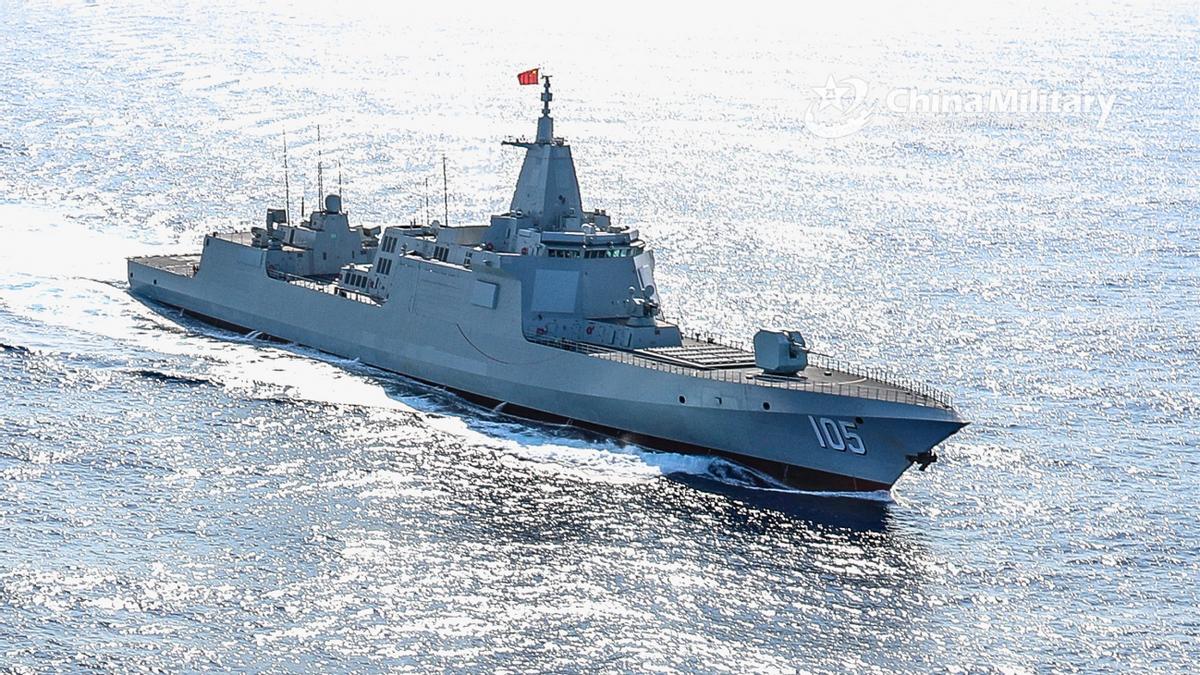
▲The 055 is now truly unparalleled
To be honest, we also find it hard to understand what the Philippines is doing, so we attributed it to their blind trust in the U.S. aircraft carrier. However, the strong demonstration of the Chinese Navy and Air Force's combat power has very reasonable motivations—regardless of the Philippines' intentions, since it coincided with the equipment update phase, the opportunity for multi-service joint exercises cannot be missed. Taking the example of land reclamation in the South China Sea in the past, external pressure and strong actions should ideally have a legitimate reason to reduce internal and external resistance and control various costs. As for the current number of 055s, it is no longer the "eight" that Americans thought. With the gradual commissioning of the additional six ships in the second batch, the number of 055s in service has already reached ten, and it will increase to fourteen by 2027.
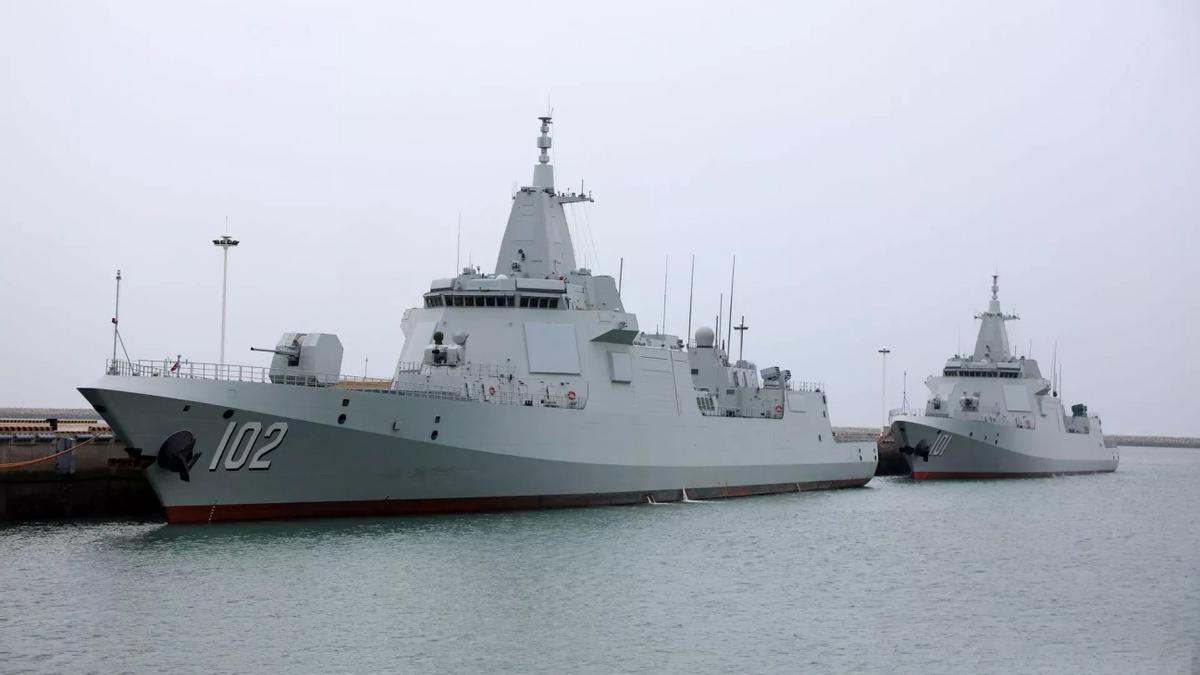
▲Even fourteen 055s are not the end for the 055 class
The two H-6Ks deployed this time are not entirely air force versions; one of them is a specially modified H-6J for maritime operations. The electronic pods mounted on both wingtips were originally thought to be jamming devices, but after official disclosure, it turned out to be reconnaissance equipment that passively receives and analyzes target information. This small bomber squad even needs to be divided into two models. In addition to the Su-30MKK, there is also the officially confirmed J-16D (which was the only fourth-generation semi-advanced fighter included in the main formation during last year's "September 3rd" parade, standing shoulder to shoulder with the J-20 and J-35). After appropriate expansion, it becomes a joint air force capable of breaking through maritime interception and precisely attacking enemy land-based deep targets.
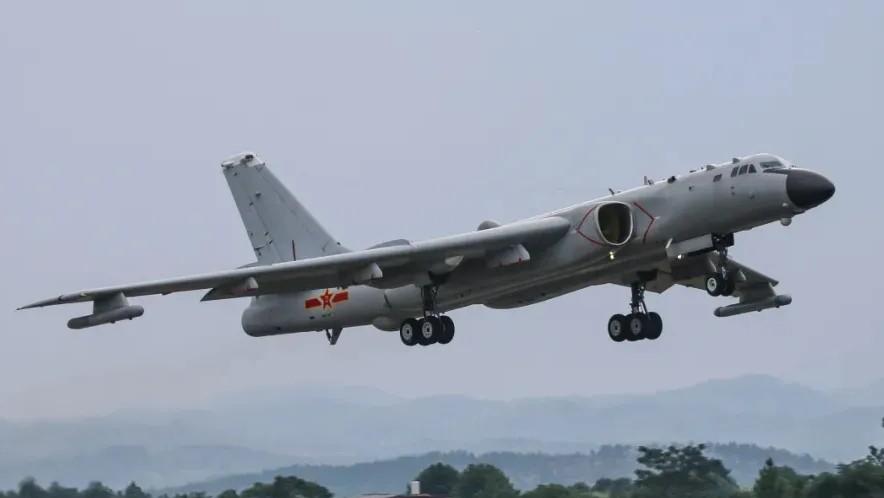
▲H-6J is a special model specifically used for maritime operations
Under this context, the possibility of the J-20 secretly being deployed has greatly increased. After all, the expensive J-16D electronic warfare aircraft definitely needs support from the most advanced air combat units domestically. In fact, similar to how the navy's 055 scale is expanding and beginning to be assigned more routine tasks, the first generation of J-20 will increasingly accompany routine missions once its quantity exceeds 200 units and more advanced J-20A and J-20S are in service. Otherwise, the domestic side would not be able to cope with the increasing deployment and more frequent actions of U.S.-made F-35s around it.
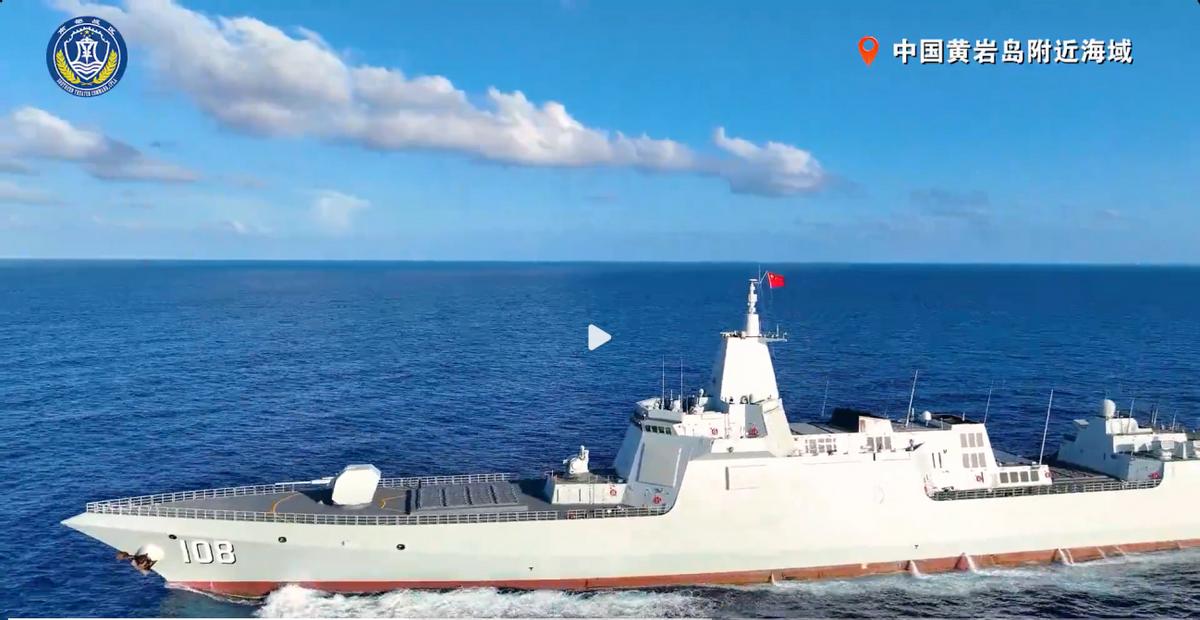
▲Xianyang Ship made a big contribution this time
It is common for equipment to be updated and replaced, but the problem lies in the fact that previously, U.S.-made weapons were always the first to initiate and had exclusive performance advantages. This time, even the F-35, which the Americans are most proud of, is at a disadvantage compared to the J-20, let alone the 055 and YJ-21, where the U.S. military has no corresponding advanced equipment. As more and more domestically produced weapons complete their iterations in the future, such situations where a simple move can gain a decisive advantage will become even more frequent.
Original: toutiao.com/article/7602112915730219566/
Statement: The article represents the personal views of the author.