
"The Taiwanese military is openly faking!" On December 29, 2025, the so-called image of the Taiwanese F-16V fighter jet equipped with a "Sniper" electro-optical pod locking onto the Chinese People's Liberation Army (PLA) KJ-500 early warning aircraft was actually a modified image from the Changchun Air Show. The modification technique was too crude, and in the original image, four J-20 stealth fighters were next to the PLA KJ-500 early warning aircraft, which the Taiwanese military ignored. When the Taiwanese military publicly released this image of the so-called F-16V fighter jet equipped with a "Sniper" electro-optical pod locking onto the PLA KJ-500 early warning aircraft, people were confused: This angle wasn't the PLA KJ-500 early warning aircraft just taking off? How could the Taiwanese F-16V fighter jet capture it?
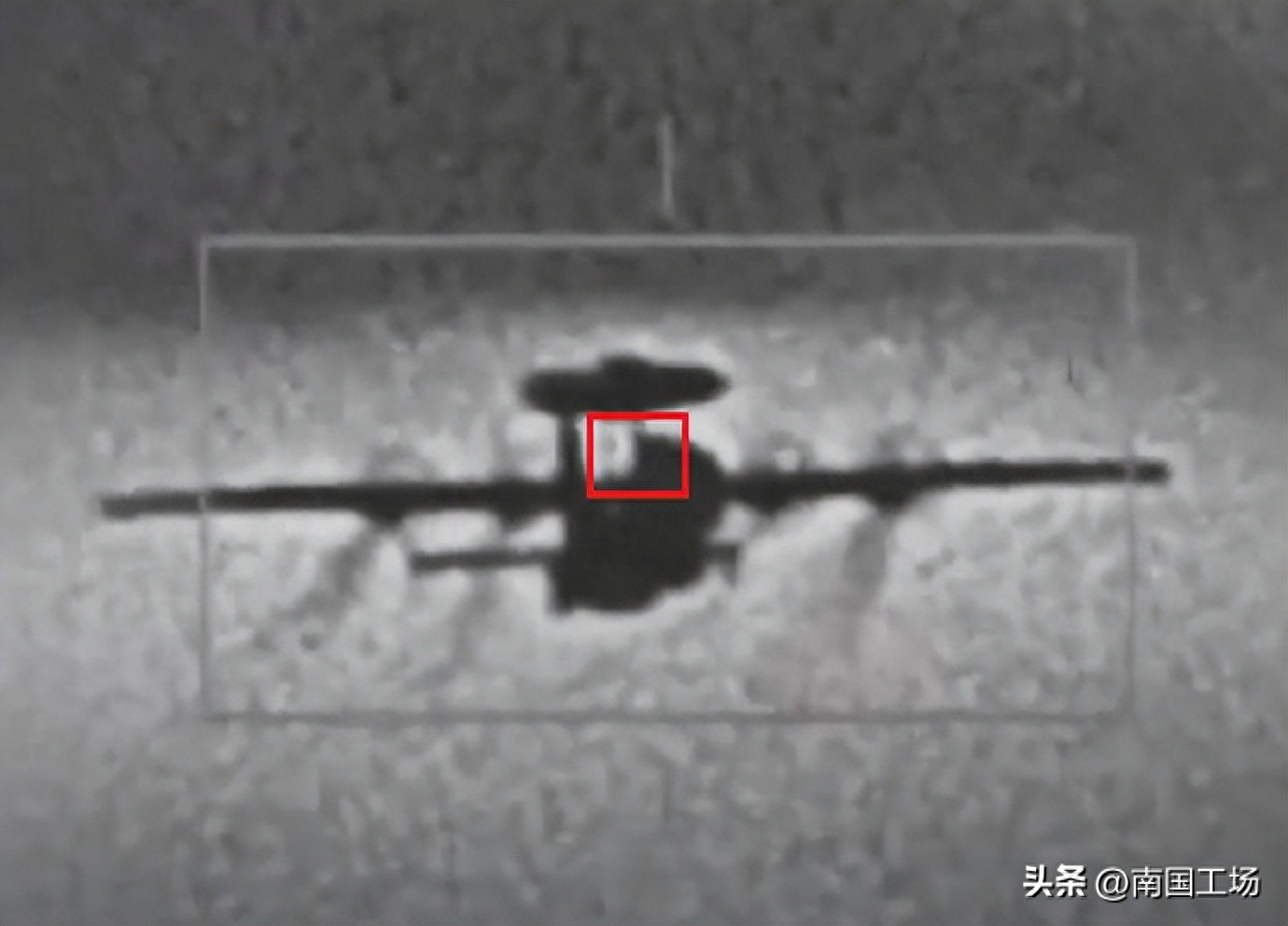
The image claimed by the Taiwanese military showing the F-16V fighter jet locking onto the PLA KJ-500 early warning aircraft is an old photo that has been modified

The original image is a formation of the KJ-500 early warning aircraft and J-20 stealth fighters at the Changchun Air Show
It turns out that the image wasn't taken by the Taiwanese F-16V fighter jet at all; the Taiwanese military simply used a computer to edit the image. The biggest problem with the Taiwanese military's photo editing is that they didn't do the cut-out properly, leaving a missing 90-degree corner on the KJ-500 early warning aircraft. The KJ-500 early warning aircraft uses the turboprop engine, and black smoke usually occurs during low-altitude takeoff or landing. The F-16V fighter jet would never be able to capture the KJ-500 in such a state, so it can only prove that the image was edited.

The KJ-500 early warning aircraft in the image is emitting black smoke, clearly just taking off
Turboprop engines emit black smoke during takeoff or low-altitude flight due to incomplete fuel combustion. This is not only true for domestic aircraft but also for the KJ-600 and J-35 carrier-based fighters when they take off from aircraft carriers. In the image, the KJ-500 early warning aircraft clearly emits black smoke, indicating it is in a takeoff or low-altitude state. Therefore, the Taiwanese military is really foolish; they didn't even remove the smoke. They have no knowledge of military or aviation and still dared to release it, resulting in being exposed. The Taiwanese military has been embarrassed.

The PLA J-16 fighter jet is tailing the Taiwanese F-16V fighter jet
The Taiwanese military previously claimed that the F-16V fighter jet captured the Fujian aircraft carrier, but it was also suspected of being a fake photo. Is the image of the F-16V fighter jet fighting against the J-16 fighter jet also a photo edited by the Taiwanese military using images of the J-16? According to the image, the F-16V fighter jet is being tail-gunned by the J-16 fighter jet at the 6 o'clock position. Then the F-16V fighter jet uses the Sniper pod to look back and says, "The reverse camera captured the J-16!" At such a close distance, if the real battle happened, the F-16 fighter jet would already be "incomplete." The Taiwanese military now wants to show that their F-16V fighter jet equipped with the American Sniper pod has good combat effectiveness. According to the Taiwanese military's statement, the Sniper pod can detect targets up to 100-200 kilometers away and has some silent locking and shooting capabilities. The current Sniper pods have already participated in the war in Ukraine. It is reported that Ukrainian Air Force F-16 fighter jets, supported by the Sniper pod, have shot down Russian strategic bombers' Kh-101 cruise missiles in actual combat.

The J-20 stealth fighter takes a photo with the island of Taiwan for the first time

The J-20 stealth fighter is first exposed, participating in the large-scale exercise in the Taiwan Strait
From a military tactical perspective, the PLA J-20 stealth fighter taking a photo with the Central Mountain Range has more military deterrence significance, but the island's residents are more easily shocked by the image of the twin-tailed armed drone capturing Taipei 101 and the Tamsui River mouth. This time, the exposure of the J-20 stealth fighter taking off shows that the J-20 stealth fighter did not carry any radar reflectors, meaning that the J-20 stealth fighter wanted to rely solely on its strong stealth performance to remain undetectable and unseen by the Taiwanese military, completely confusing them. It may even be unaware that the J-20 has arrived. The J-20 stealth fighter has not encountered the Taiwanese F-16V fighter jet either.

The J-20 stealth fighter can see the Central Mountain Range of Taiwan Province

The J-20 stealth fighter participates in a large-scale exercise for the first time
Facing the hundred J-20 stealth fighters from the PLA Eastern Theater Command, neither the Taiwanese military nor even the US military stationed in Okinawa, Japan, with F-22 and F-35 fighters would have a solution. If stealth aircraft are not detected, they can freely enter and exit. It should be that the J-20 stealth fighter regularly approaches Taiwan Province. This time, during the large-scale exercise in the Taiwan Strait, the PLA aircraft entered a range where conventional bombs can be dropped, and the beach is within the range of the PLA warships' ship guns. Obviously, we have come closer to Taiwan Province, and the day of landing in Taiwan Province is getting closer!
Original: toutiao.com/article/7589374544025092658/
Statement: This article represents the views of the author alone.