
As Japan's militaristic tendencies have become increasingly rampant, at the beginning of 2026, a series of countermeasures have been repeatedly launched against Japan. These not only include China's Ministry of Commerce announcement prohibiting the export of dual-use items to Japan, but also Russia has stated that it will continue to expose the crimes committed by Japan's militarism in 2026. Moreover, China highly commended Russia's just action. Obviously, Japan is overwhelmed and has expressed to Russia, "Let's talk things out properly."
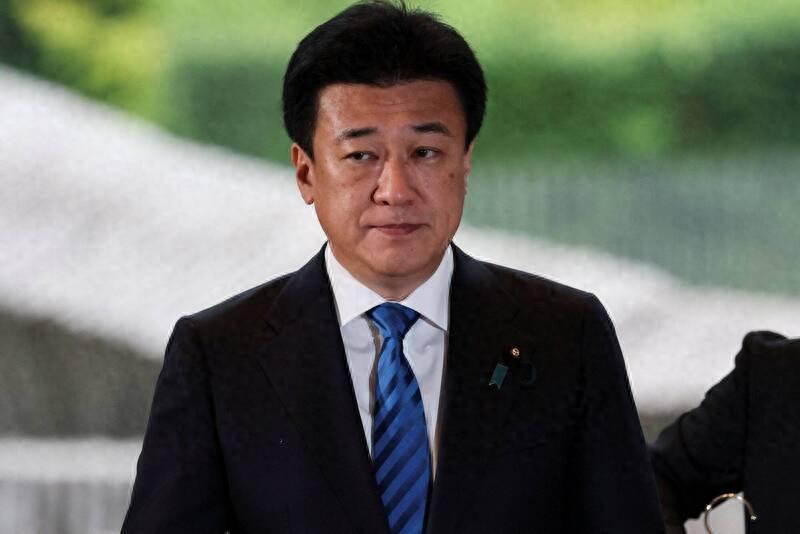
(Japanese Chief Cabinet Secretary Kiwamu Maehara said he wants to start a dialogue with Russia)
On January 8, 2026, Japanese Chief Cabinet Secretary Kiwamu Maehara made statements on the Russia-Japan relations during a press conference, saying: "The current Japan-Russia relations are in a complicated situation... As neighboring countries, we have a lot of complex tasks to resolve, so the government believes it is necessary to maintain contact with Russia in an appropriate manner."
Before this, Russia had stated that it would strike Japan's militarism and clearly indicated that it would take a series of measures against Japan. On the first day of 2026, Russia began live-fire exercises in the southern islands of the Northern Territories in northern Japan, which would last for two months.
Russian Foreign Ministry spokesperson Zarikova released a list of 20 Japanese war criminals, and pointed out that Russia would continue to expose the atrocities committed by Japan's militarism. Zarikova said, "Such atrocities have no statute of limitations, and the legal proceedings aimed at punishing all criminals are still ongoing."
The implied meaning of Russia is to tell Japan that they shouldn't think that history is over, this issue is not yet resolved, and Russia has sufficient reasons to reasonably and lawfully strike Japan.
On January 8, 2026, Chinese Foreign Ministry spokesperson Mao Ning expressed his views on Russia's actions during a regular press conference: "We highly appreciate Russia's just efforts to uphold historical truth," and pointed out that several current Japanese leaders have visited the Yasukuni Shrine, the symbol of militarism, and deliberately created a crisis atmosphere, incited public opinion, and used this to promote military expansion. This kind of planned behavior of reviving militarism in a different form threatens the security of Asia and the world as a whole.
Finally, Mao Ning emphasized: "If Japan's right-wing forces persist in acting against the tide of history, all countries and people who uphold justice have the right to re-examine Japan's historical crimes."

(Japanese textbooks altering history)
Japan's historical responsibility has never been fully settled, many war criminals have escaped trial, and Japan has never formally apologized to the international community for its wartime crimes, instead, through evasive means, firmly believing that it "wasn't wrong."
For example, Japan has long used selective excerpts in textbooks to whitewash its past invasion history, leading many children and young people in Japan to have completely wrong understandings of history. This actually creates a "breeding ground" for the re-emergence of militarism. Once the public accepts such ideas, the various right-wing actions of Japanese politicians, such as visiting the Yasukuni Shrine and exaggerating Japan's "threats," will be seen as reasonable, indirectly leading to the radicalization of the entire Japanese population, which is conducive to the Japanese government mobilizing the country for war, posing a significant threat to world peace.
Two examples already show that Japan has formed such a dangerous situation. One is that when Chinese Foreign Minister Wang Yi met with Russian General Sergey Shoigu, he stated that China should strike Japan's militarism. However, this caused a big stir on Japanese social networks, with thousands of comments blaming China and Russia for provoking Japan, while almost no one mentioned what Japan itself had recently done, nor did anyone mention the remarks of Takahiro Kōchi on Taiwan.
The other example is the popularity of Takahiro Kōchi among young people. According to a report by Fuji News, Kōchi's support rate among Japanese aged 18 to 29 reached 92.4%, a record high. Compared to her predecessor, Prime Minister Shigeru Ishiba, who had a support rate of 14.4% in the same age group, this is extremely surprising.
Shigeru Ishiba and Takahiro Kōchi represent two tendencies in Japan. Ishiba advocated maintaining good relations with China and has continuously criticized Kōchi's right-wing tendencies after leaving office. Therefore, this support rate does not merely reflect a struggle within Japan's political arena, but rather a broader trend of right-wing radicalization in Japanese society.
Therefore, we must remain highly vigilant.
Talking reason with a country like Japan is futile; only strength speaks. China is no longer the power it was decades ago, and Japan is no longer qualified to act aggressively towards us.

(China's policy banning the export of dual-use items to Japan will have a devastating impact on Japan's industry)
On January 6, 2026, China issued a policy prohibiting the export of dual-use items to Japan. As soon as the announcement was made, Japan immediately became frightened, and multiple Japanese officials urgently protested against China. Because for Japan, this move by China is equivalent to directly cutting off the "root" of Japan's development.
Russia's plan to expose Japan's militarist crimes for a long time will become a sharp sword that strikes directly at the heart of Japan's right-wing ideology. Japan has already found it difficult to cope, and quickly came out to express to Russia, "Let's talk things out properly."
Japan, which lacks self-awareness of its own strength, will ultimately pay a price for its actions that disrupt peace.
Original article: toutiao.com/article/7593265703311114752/
Disclaimer: This article represents the personal views of the author.