

After the Simandou project, iron ore projects in West Africa are rapidly increasing. The region's iron ore production boom was previously led by Liberia, Mauritania, and Sierra Leone, but is now mainly driven by Chinese investments.
On Friday, January 30, ArcelorMittal stated that the Liberian parliament has approved a mineral development agreement, extending the company's operations in Liberia to at least 2050. This agreement ensures the company's planned investment of $1.8 billion, aimed at quadrupling Liberia's iron ore production. This expansion plan makes this Indian-origin group an exception in West Africa, as the current production boom in the region is mainly driven by Chinese companies.
As Liberia's largest iron ore producer, ArcelorMittal currently has an annual capacity of about 5 million tons. In the early 2020s, the company launched a plan to increase its annual output to 15 million tons, eventually reaching 20 million tons, initially budgeted at $1.4 billion, later increased to $1.8 billion.
The project includes upgrading the railway corridor connecting Tokade and Buchanan Port, as well as improving port infrastructure, with a planned completion date in 2026.
After the completion of the project, ArcelorMittal plans to further expand the railway to achieve an annual transportation capacity of 30 million tons of iron ore. According to the terms of the agreement signed with the Liberian government and approved last week, the Luxembourg-based company will pay $200 million to obtain additional mining rights and guaranteed usage rights for the railway transport capacity it has invested in building.
The agreement also stipulates that the railway will start independent operation in October 2030. President Joseph Boakai of Liberia stated that this move will improve efficiency, promote multi-user use, and enhance the overall impact of the concession on the national economy. According to the Extractive Industries Transparency Initiative (EITI) 2023 report released at the end of December 2025, ArcelorMittal accounts for about 90% of Liberia's iron ore exports. Therefore, the increase in the company's production should lead to a significant increase in Liberia's total production. GlobalData estimates that Liberia's iron ore production will rise from 5.2 million tons in 2024 to 18 million tons in 2026.
China dominates in West Africa
Liberia's expected production growth comes at a time when the West African iron ore industry is undergoing major changes. Historically, the region's iron ore production was dominated by Sierra Leone, Mauritania, and Liberia, but the growth momentum is now led by Guinea, with the Simandou project coming online by the end of 2025.
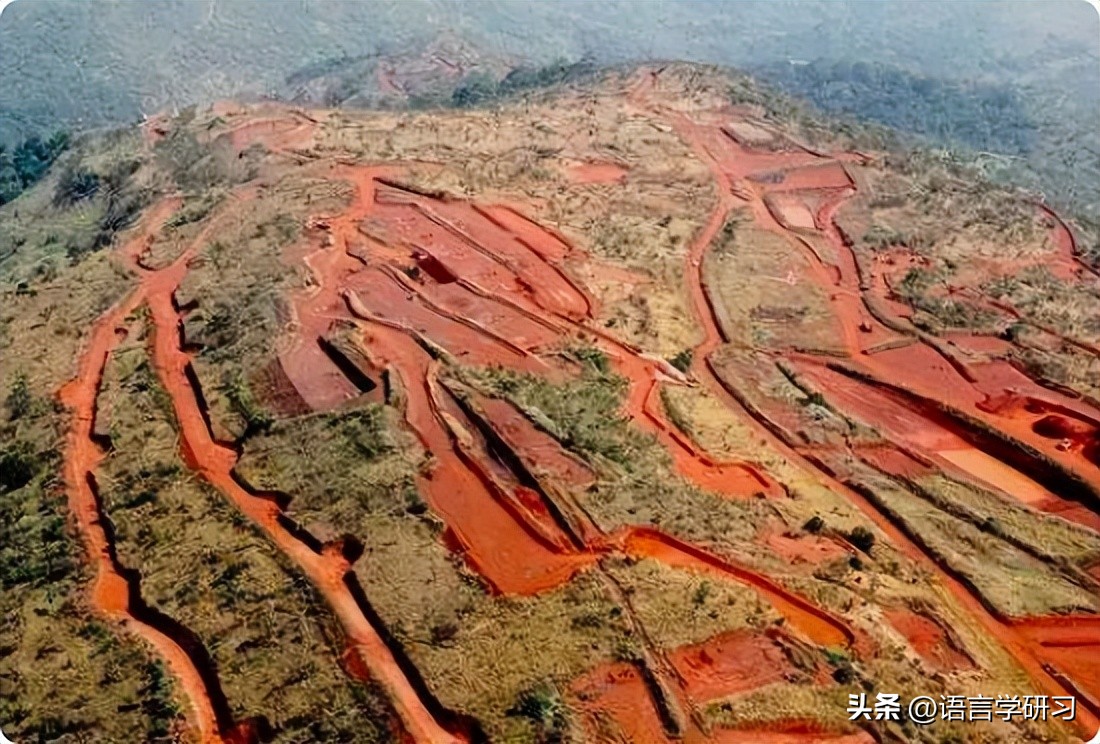
Simandou
Once fully operational, the Simandou project is expected to export up to 120 million tons of iron ore annually. GlobalData predicts that the project's production will reach 35.4 million tons in 2026.
This $2 billion project includes the construction of a port and a railway over 600 kilometers long, primarily funded by Chinese companies. At the beginning of this year, the world's largest steel producer, Baowu Resources, announced that it is strengthening its control over the project, increasing its stake in the joint venture, Winning Consortium Simandou, which operates the No. 1 and No. 2 mining areas, from 49% to 51%.
The No. 3 and No. 4 mining areas are controlled by another joint venture, led by Australian mining giant Rio Tinto and China's state-owned enterprise, Aluminum Corporation of China (Chinalco).
Although Liberia's expansion relies on ArcelorMittal's increased production, Chinese companies are also operating in the country. China United Mining Company took over the Bong concession in 2008 and shipped its first batch of iron ore in 2014. The company has faced criticism, including being ordered to suspend operations by Liberia's environmental department in August 2024, and its production has struggled to grow.
While most of Liberia's iron ore is exported to Europe, supplying ArcelorMittal's steel mills, Guinea's iron ore is mainly exported to the world's largest consumer - China. Similarly, Sierra Leone's situation is similar, with another Chinese company developing the country's largest iron ore mine.
China Jinhe Group invested $1 billion, planning to produce 10 million tons of iron ore annually, with plans to eventually increase the annual output to 30 million tons.
Local processing capacity remains limited
Iron ore is the main export product of Sierra Leone and Liberia. In Guinea, the Simandou iron ore project is widely seen as a landmark project, with the International Monetary Fund estimating that the project alone could increase Guinea's GDP by 26% before 2030.
However, the impact of iron ore on the economies of these countries, as well as Mauritania (where the iron ore is mined by the state-owned company SNIM), remains mainly limited to the mining stage.
The large investments currently being made in West Africa mainly aim to supply iron ore to steel plants outside the region, whose owners include ArcelorMittal, Chinese companies, and the American company Ivanhoe Atlantic.
Ivanhoe Atlantic plans to develop an iron ore mine in Guinea, with a first phase production of 2 to 5 million tons per year, which will be expanded to 30 million tons thereafter.

According to data cited by the African Development Bank, Africa's iron ore production accounted for 4% of global production in 2023, but crude steel production only accounted for 1.2% of global production. By comparison, China's steelmaking capacity accounted for 54% of global capacity that year.
Currently, Guinea is the only country in the region planning to transition to local processing. The head of the Guinean presidential office, Diaba Diakite, stated that companies operating in the Simandou mining area must submit feasibility studies for building steel mills or pelletizing plants (an intermediate product used in steelmaking) within two years.
Source: ecofenagency
Original: toutiao.com/article/7602392236470354470/
Disclaimer: This article represents the views of the author himself.