
On January 29, 2026, the sixth academy of China Aerospace Science and Technology Corporation (CASC) announced a major breakthrough: a 240-ton commercial reusable high-pressure regenerative liquid oxygen-kerosene engine successfully completed a 200-second long-duration test. It has been confirmed that this engine was specifically developed for large and medium-sized reusable launch vehicles for domestic commercial users, with performance indicators reaching world-leading levels.
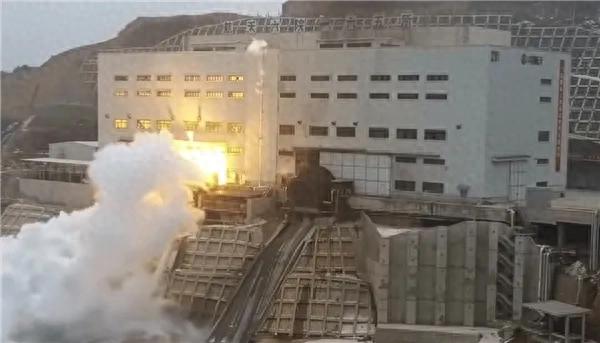
Notably, in recent years, the sixth academy of CASC has built a family of reusable engines covering "open/closed cycle", "liquid oxygen methane/liquid oxygen kerosene" combinations. The addition of this new 240-ton engine is likely to be the "powerful heart" specially designed for China's next-generation heavy-lift rocket, the Long March 9.
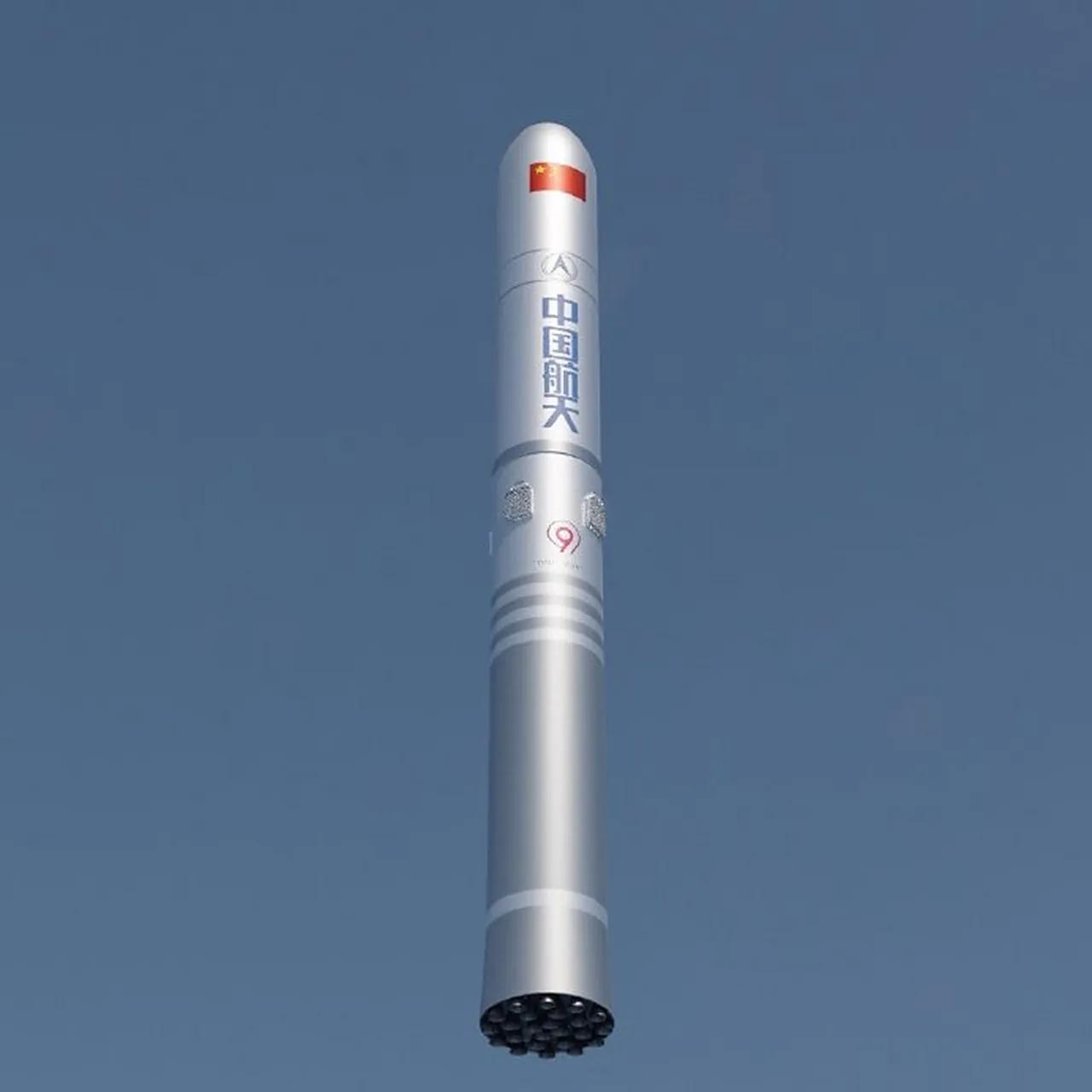
The "Adaptation Code" Between the 240-Ton Engine and the Long March 9
To understand their connection, we need to look at the "requirement list" of the Long March 9. As a "national power" aimed at deep space exploration, crewed lunar landing, and Mars missions, the Long March 9's carrying capacity is known as a "space giant": 140 tons to low Earth orbit (LEO) and 50 tons to lunar transfer orbit (LTO), slightly surpassing the Saturn V that sent Americans to the moon. All of this relies on the support of powerful engines.
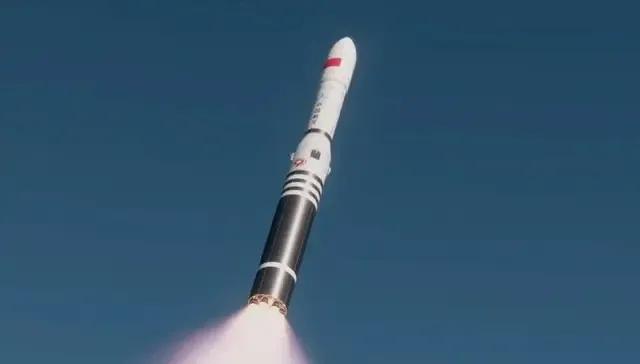
From existing information, the compatibility between the 240-ton engine and the Long March 9 is almost perfect, with three key reasons:
First, Thrust Level: Just Filling the Power Gap of the Long March 9
In the early plans of the Long March 9, it was planned to use a 500-ton class liquid oxygen-kerosene engine as the booster power. However, the 500-ton class engine is more suitable for "heavy thrust" tasks, such as the initial takeoff of the rocket. The 240-ton class engine has a thrust level between "heavy" and "medium", which perfectly fits the core stage or second stage power needs of the Long March 9. After all, rocket flight isn't about "the bigger the force, the better." Different flight phases require different thrust engines for "precise coordination." The 240-ton thrust output can meet the sustained power demand for long flights without causing fuel waste due to excessive thrust, making it a "golden thrust segment."
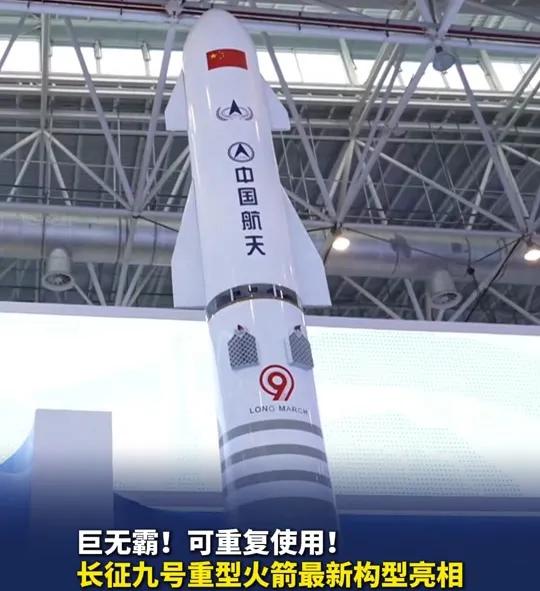
Second, Reusability: Perfectly Aligned with the Core Goal of the Long March 9
The Long March 9 has clearly stated its "reusability" direction since 2022, planning to fly a first-stage reusable configuration in 2030 and achieve fully two-stage reusability between 2033 and 2035. The 240-ton class engine just tested here is labeled as "commercial reusability." It's worth noting that the difficulty of reusing rocket engines is akin to "making a jet engine survive 200 seconds of fire and then cool down and fly again," requiring solutions to challenges like high-temperature resistance, component fatigue, and rapid maintenance.
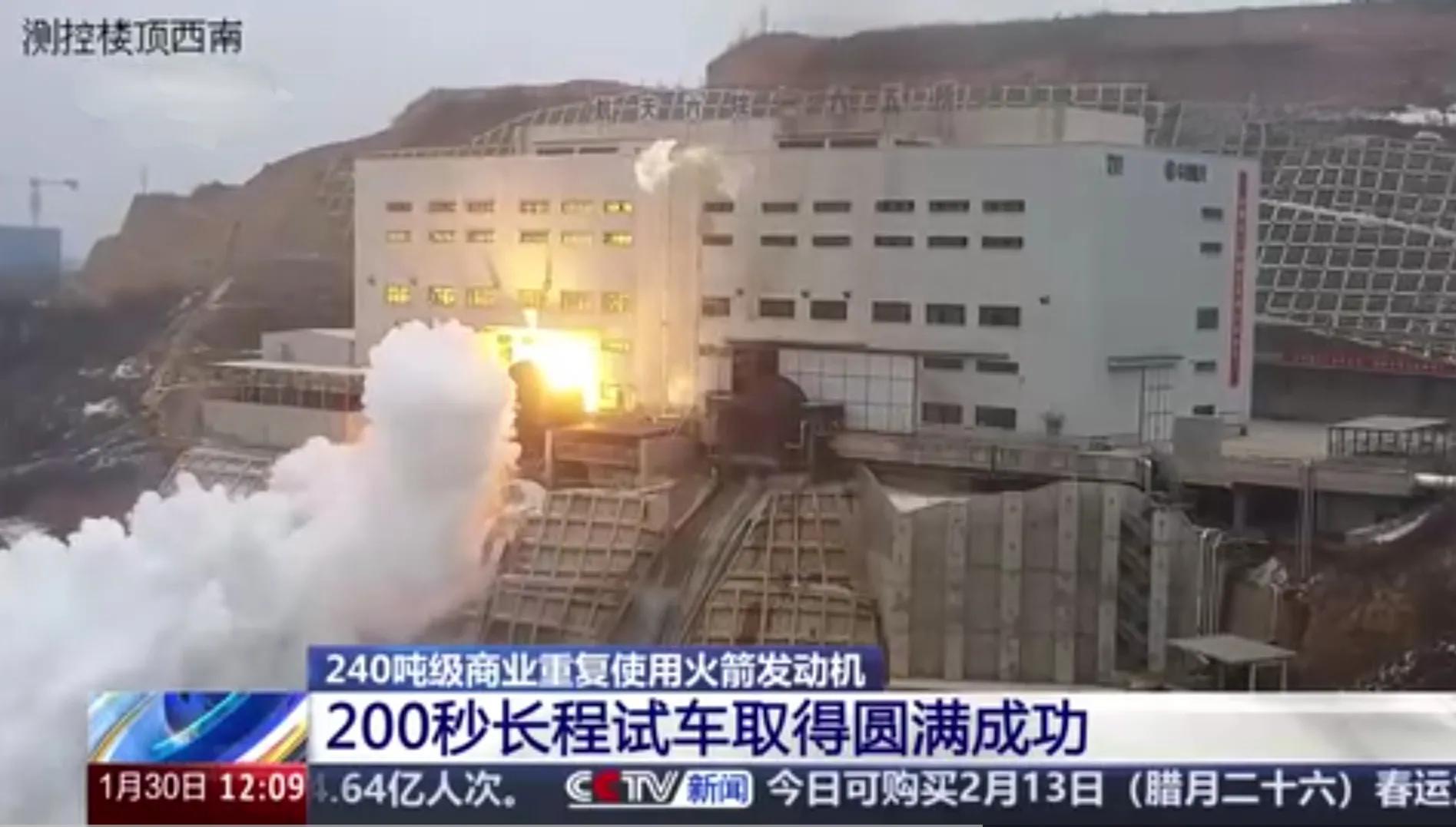
The fact that the sixth academy of CASC can produce this engine means China has broken through key technologies in reusable engines, which is the core prerequisite for the Long March 9 to reduce launch costs and achieve "high-frequency space missions." After all, future crewed lunar missions and the construction of space solar power stations won't be possible by "launching once and discarding," so reusable engines are the "economic password" of the Long March 9.
Third, Technological Family: The Sixth Academy Has Already Laid the Groundwork for the Long March 9
Those familiar with aerospace know that "rocket engine development is not a solo act, but a family battle." As the "power supplier" for the Long March series rockets, the sixth academy of CASC has already laid the groundwork for the Long March 9: In 2022, the 500-ton class liquid oxygen-kerosene engine passed the test, solving the problem of "large thrust takeoff"; the same year, a 25-ton class closed-cycle expansion hydrogen-oxygen engine was introduced, overcoming the challenge of "high-altitude efficient power."
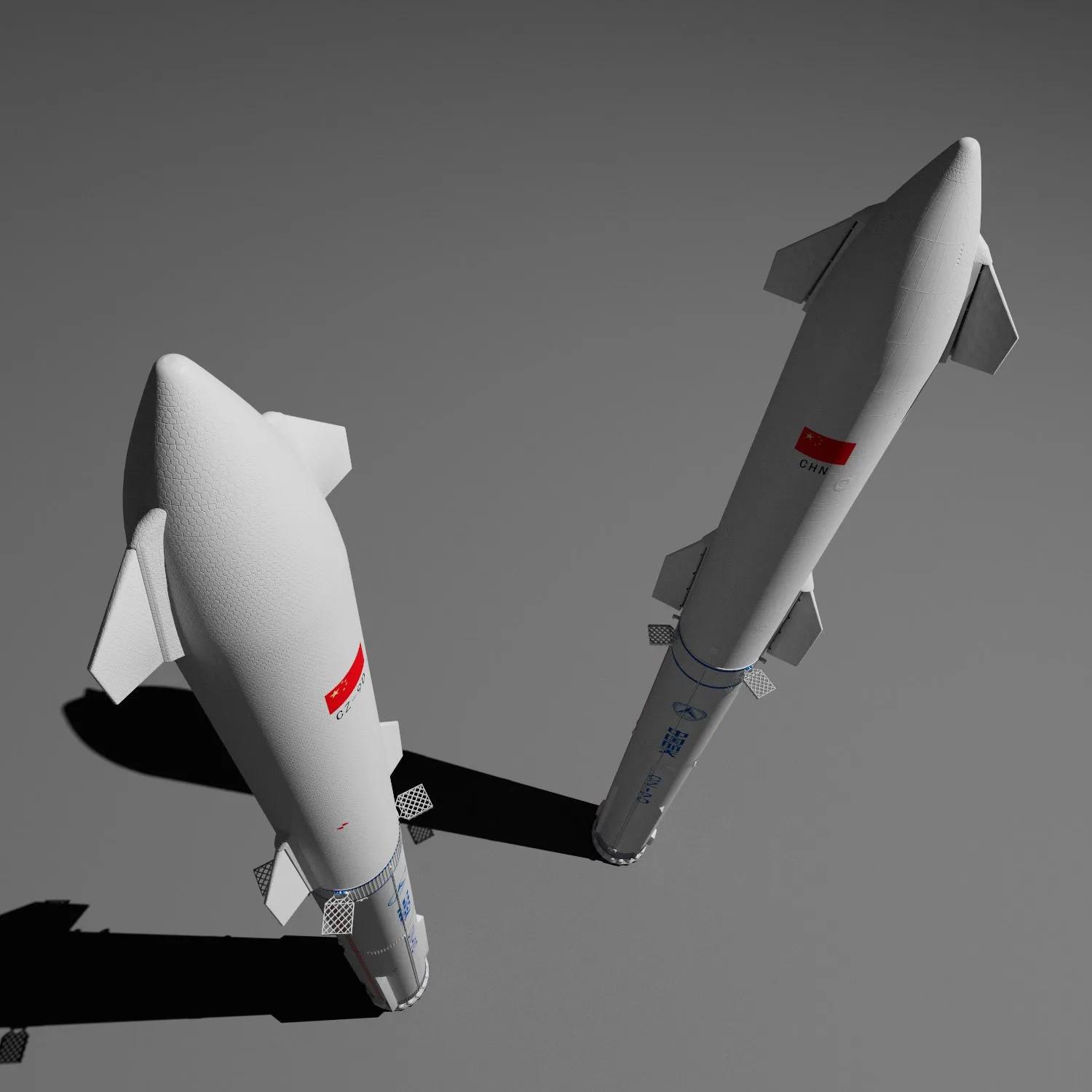
Now, the addition of the 240-ton reusable engine is equivalent to filling the critical gap for the Long March 9's "medium-thrust reusable" capability. From 500-ton to 240-ton to 25-ton, the sixth academy has established a power system covering the entire phase from "takeoff - cruise - high altitude." As the core model that "connects the upper and lower parts," the 240-ton class naturally becomes the "preferred option" for the Long March 9.
Comparative Analysis: Why Is This Considered "World-Leading"? Look at India to Understand
Many people don't have a clear concept of "world-leading," so let's compare it with India's rocket engines — after all, India is also an Asian space power and has always aimed to "catch up with China."
The most impressive rocket engine currently used by India is the Vikas engine on the GSLV Mk III rocket, with a thrust of about 80 tons, and it is a "single-use" design that cannot be reused. Last year, India announced the development of a "reusable rocket engine," but it is still in the "component testing" phase, and has not yet achieved a thrust of 100 tons, let alone the "high-pressure regenerative" technology of 240 tons — it should be noted that "high-pressure regenerative" is a "premium technique" for rocket engines, allowing more complete fuel combustion, greater thrust, and higher efficiency. Currently, only China, the United States, and Russia have mastered this technology proficiently.
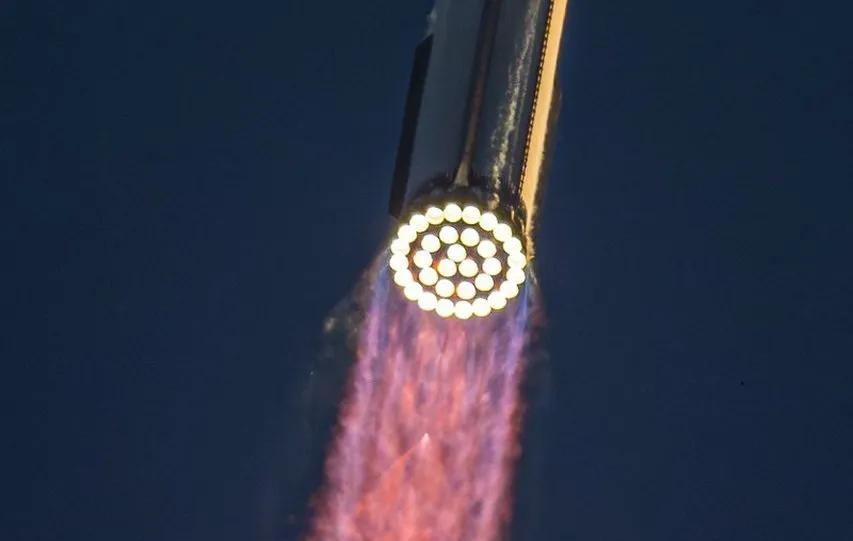
Looking at the United States, SpaceX's Raptor engine has a thrust of about 230 tons, but it uses liquid oxygen-methane propellant, which has already achieved success, with the third generation achieving a thrust of 280 tons.
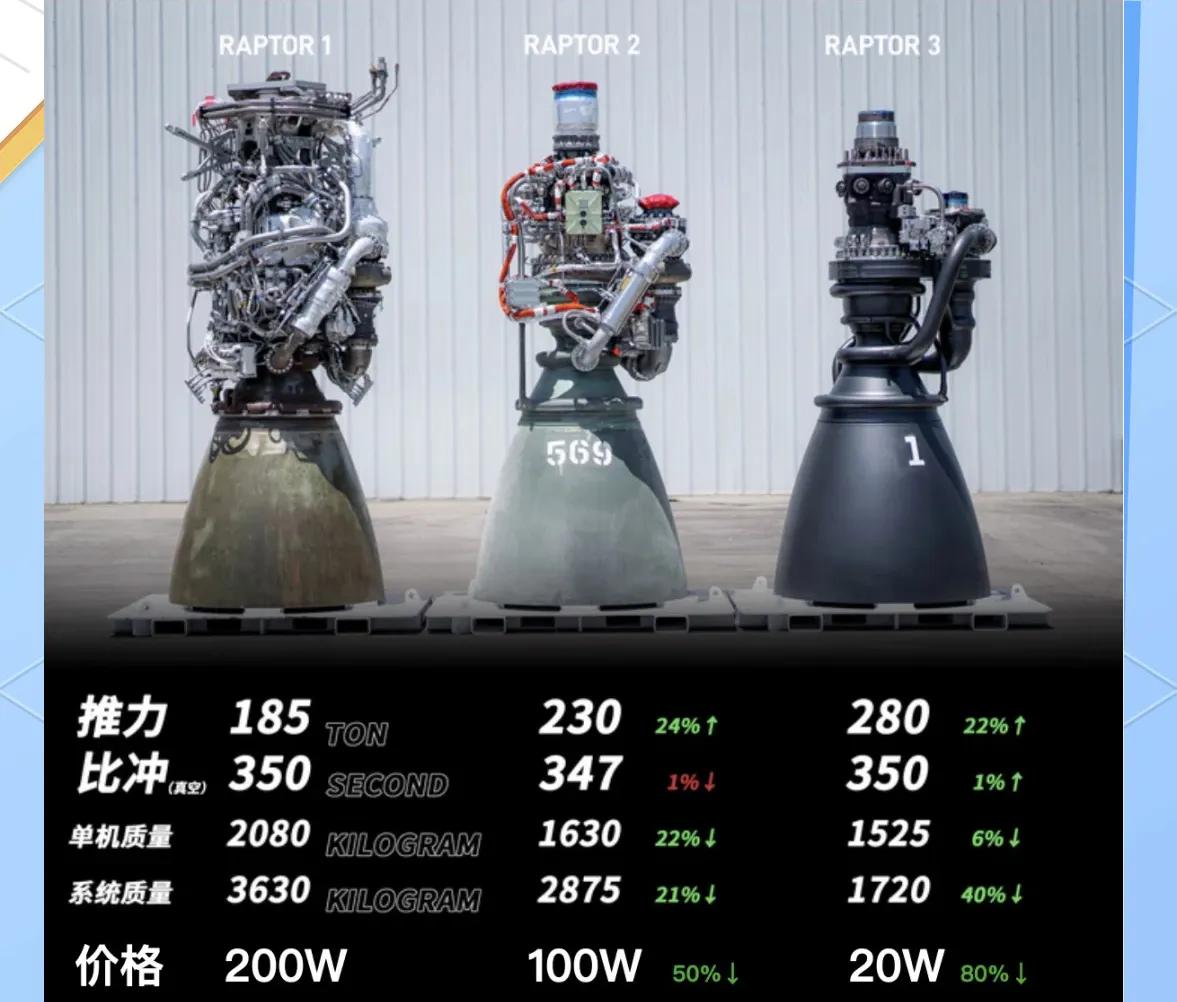
China's 240-ton class engine uses liquid oxygen-kerosene, which has advantages in terms of "fuel cost" and "storage convenience" — liquid oxygen-kerosene is cheaper, and its storage conditions are not as strict as those for liquid oxygen-methane, making it more suitable for the "low-cost, high-frequency" needs of future commercial aerospace. It can be said that the 240-ton class engine not only caught up with the world's top level, but also created its own characteristics in "reusability" and "fuel compatibility."
Future Significance: The 240-Ton Class Engine Is the Main Power Unit of the Long March 9
Many people may ask: Why go to such great lengths to develop the engine? The answer is simple — for China's "deep space dream."
According to China's crewed lunar mission plan, after 2030, it will be necessary to conduct lunar exploration and development with more than three people, which must rely on the "carrying capacity" of the Long March 9. Without a large-thrust reusable engine, the Long March 9 would either not be able to "fly up" or would be too expensive to "fly up." The successful test of the 240-ton class engine means that the "power system" of the Long March 9 has overcome another key hurdle, giving more confidence to the goal of its first flight in 2030.
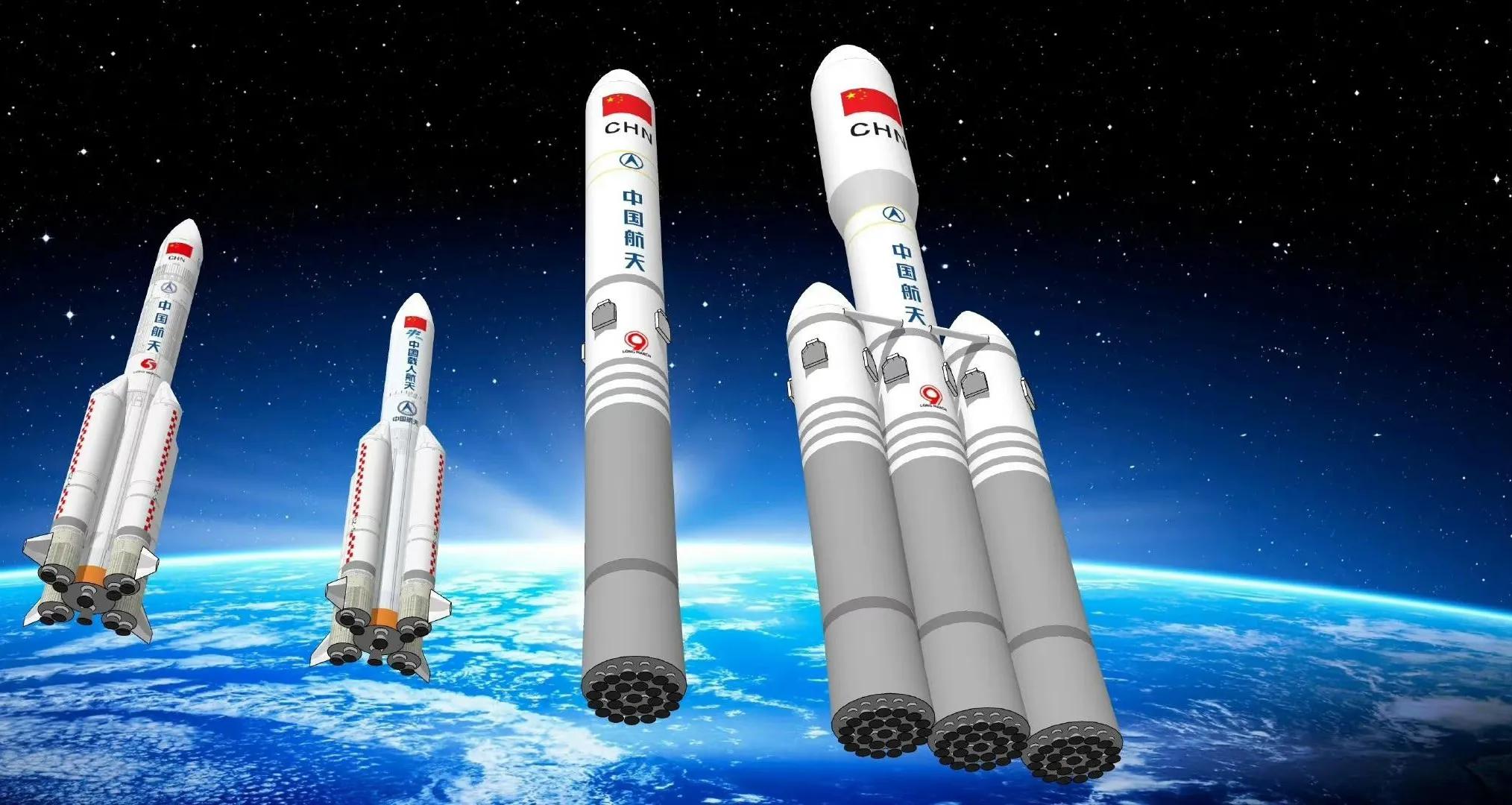
Looking further ahead, whether it's crewed Mars missions or building a space solar power station, it will require the "mainstay of space transportation" — the Long March 9, and the 240-ton class engine is its "core muscle." When China can master the use of reusable engines, the cost of space launches will be significantly reduced, and at that time, "space tourism" for ordinary people may no longer be a dream. China's voice in the field of deep space exploration will also be further enhanced.
From thrust adaptation to reusability requirements, from the sixth academy's technological lineage to China's future space plans, the connection between the 240-ton commercial reusable engine and the Long March 9 is no longer "probable," but a "necessary choice." This successful test is not only a victory for one engine, but also a comprehensive display of China's "power system" — it proves that China can not only build large-thrust engines, but also build "useful, affordable, and reusable" engines.
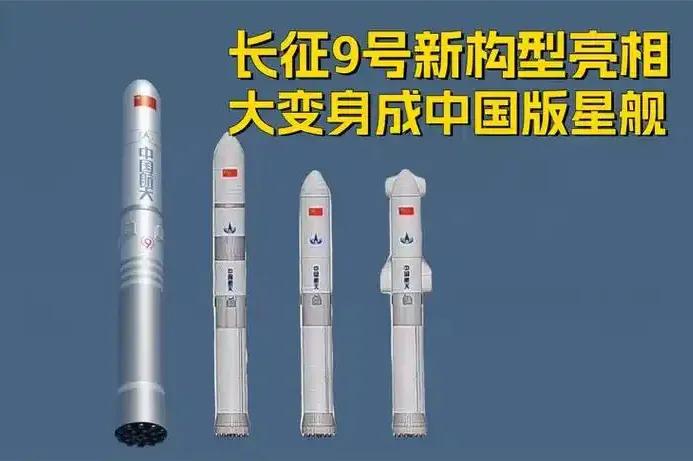
Next, we just need to wait quietly: when the Long March 9 makes its first flight in 2030, this 240-ton "rocket heart" will likely write a "power legend" for China in space.
Source: CCTV News reported on January 30, "The 240-Ton Commercial Reusable Rocket Engine Successfully Completed a 200-Second Long-Duration Test" URL
https://m.toutiao.com/is/3wOP8HjabuQ/ 3wOP8HjabuQ` dvX:/ e@o.Dh :4pm
Original: toutiao.com/article/7601381785741656595/
Statement: This article represents the views of the author.