
Can warlord-level forces in Libya afford the "JF-17" fighter jets?
Recently, Reuters, "South China Morning Post", and several defense websites have reported a piece of news that the Libyan National Army has reached a military sales deal worth over 4 billion US dollars with Pakistan, under which Pakistan will export 16 "JF-17" fighter jets, 12 "Super Mushak" trainer jets, and other maritime, land, and air military equipment to the Libyan National Army within two and a half years.
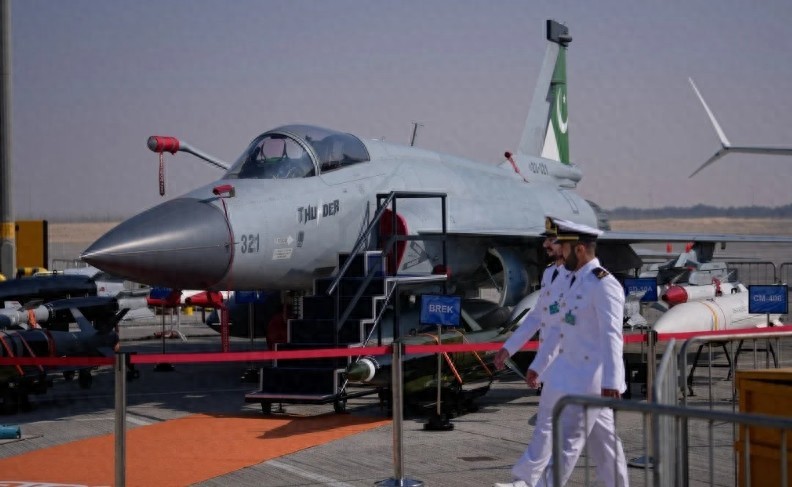
Since July, this military sale between Pakistan and the Libyan National Army has been discussed
Additionally, according to the "Libyan Observer", the Libyan National Army had already contacted Pakistan in July this year, seeking closer cooperation with Pakistan in areas such as military training, defense production, and strategic planning.
Later, on December 18, the Inter-Services Public Relations Department of Pakistan issued a statement saying that during his visit to Benghazi, the Chief of Army Staff of Pakistan, Asim Munir, held talks with the leader of the Libyan National Army, Khalifa Haftar, discussing cooperation in strengthening military training and capacity building. Therefore, Libyan media speculated that this military sale agreement between Pakistan and the Libyan National Army was likely reached during this period.

Asim Munir (left) and Khalifa Haftar (right)
It must be said that this military sales agreement initially seems somewhat incredible, because the "Libyan National Army" with whom Pakistan is doing business is not the legitimate government force recognized by the international community, but rather a warlord faction controlling eastern and southern Libya - it's hard to believe that a non-state actor could come up with more than 4 billion US dollars to purchase fighter jets and other heavy weapons.
Since the overthrow of the Gaddafi regime in 2011, Libya has entered a bizarre situation of dual governments: one is the United Nations-recognized Government of National Unity, which controls western Libya and the capital Tripoli, but is actually composed of multiple factions; the other is the Libyan National Army led by Haftar, which controls most of Libya's oil fields and is supported by countries such as the UAE, Egypt, and Saudi Arabia.

The Libyan National Army can only buy some fighter jets for show, but systematic combat is out of the question
However, although the Libyan National Army is a warlord force, it is surprisingly true that this armed force does indeed have fighter jets, albeit old Soviet Su-22 fighter-bombers and MiG-23 aircraft left over from the Gaddafi era, with very limited combat capabilities in reality.
Therefore, if the Libyan National Army really wants to build a regular air force, it would not be difficult to spend more than 4 billion US dollars to purchase equipment from Pakistan, given that its backers are willing to pay and it controls the oil fields.
At present, the only issue facing this military sales transaction between the Libyan National Army and Pakistan is how to bypass the UN arms embargo on Libya.
Certainly, if we look closely, this is not a big problem. Although Libya has been under UN arms embargoes since the outbreak of the civil war, the actual effectiveness of this policy is not much - last year, a UN report admitted that although the arms embargo still exists, it could not stop some countries from delivering weapons and military aid to Libya.

A few years ago, the UAE openly bombed an airport of the Libyan Government of National Unity
For example, the UAE not only used "CH-4" drones to provide support to the Libyan National Army, but also directly deployed Russian "S-300" air defense systems near the bases of the National Army. As for other forms of arms and ammunition aid, they are even more open, and the UAE has never concealed their destinations.
Therefore, from a more realistic perspective, Libya today is still a battleground for various countries' proxies.
Pakistan is not the first country to challenge the UN arms embargo policy, and this military sale transaction is merely another exposure of the impotence of the UN arms embargo policy in the chaos of Libya. Many countries still bypass restrictions through various names or channels, continuing to intervene in this proxy conflict, and Libya is still far from real peace and stability.
Original: toutiao.com/article/7589135252749058569/
Statement: This article represents the personal views of the author.