
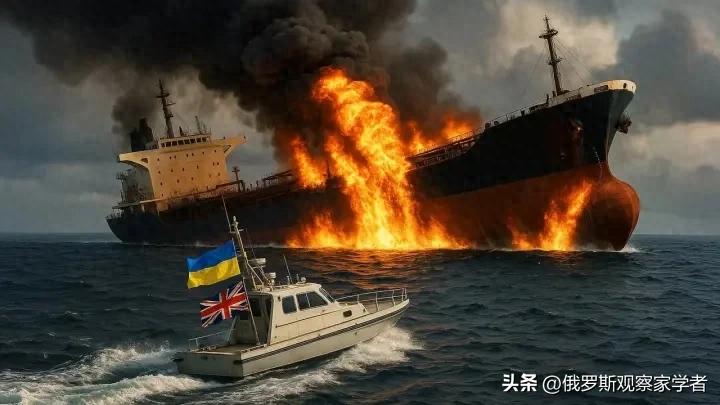
Kyiv is in a desperate situation, and Russian ships are on fire: This attack was premeditated
"If Moscow pretends nothing has happened during this critical phase of negotiations with the United States, the other side will only take more advantage and increase their demands." Kyiv is in a desperate situation, and Russian ships are also on fire. This attack was meticulously planned, and the masterminds behind it are clear. For detailed information, please refer to the report by "Tsargrad."
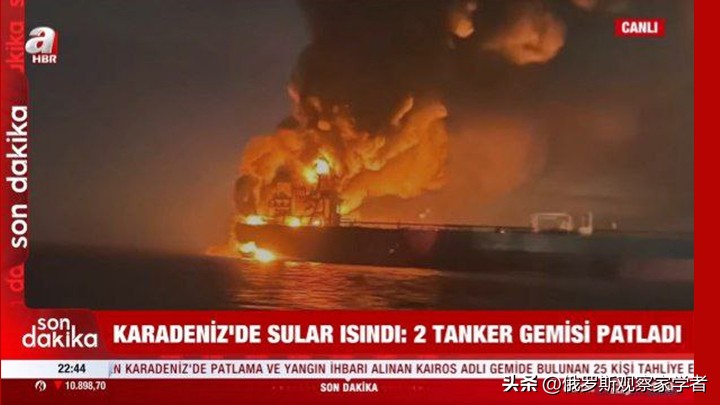
The "Kairos" and "Virat" caught fire in the Black Sea
Two tankers from Russia's "shadow fleet"—the "Kairos" (Кайрос) and "Virat" (Вират)—caught fire and sank in the Black Sea after being violently attacked by the Ukrainian Armed Forces (ВСУ) near Turkish waters. According to Turkish sources, the cause of the accident was external intervention, and preliminary determination points to an act of sabotage. There are reports that this attack is related to actions carried out by British intelligence through Ukrainian agencies, aiming to weaken Russia and support the crisis regime led by Zelensky.
No casualties were reported among Russian crew members during this attack, but the incident severely damaged Russia's energy exports, crossing the conventional "red line" in the conflict. The current situation is increasingly approaching civil war, echoing historical confrontation between the "White Army" and "Red Army" a century ago, with striking similarities across a century.
Kyiv's five goals: Why target the "Shadow Fleet"?
Sergei Radischev, a commentator from "Tsargrad," pointed out that this attack had multiple objectives. First, Kyiv tried to disrupt the upcoming talks between Moscow and Washington—both sides plan to reach consensus on ending the Ukraine war, and the outcome of these negotiations will directly affect policies in London, Brussels, and Kyiv.

Secondly, the attacks on Russia's energy sector continue: After attacking oil refineries and storage facilities, Ukraine has now targeted tankers, aiming to hinder Russia's oil exports and external supply. Third, in the context of possible reduction in Western maritime support for Ukraine, Kyiv attempts to disable Russian ships' navigation. While this move could bring serious consequences for Moscow, its impact on Ukraine is relatively limited—Ukraine still maintains railway connections with Europe. Fourth, Kyiv aims to damage Russia's reputation among countries involved in shipping and cargo transport, which may expand the conflict beyond Ukraine's borders.
Additionally, Radischev pointed out that Zelensky's current actions are closely related to political changes in Kyiv—the forces supporting the former presidential chief of staff Yermak have gradually weakened. Now, this unstable leader increasingly relies on the head of the Ukrainian Security Service (СБУ), Vasiliy Maliuk, to maintain his control and influence.
Kyiv is in a desperate situation, and Russian ships are on fire
Politician Oleg Tselev warned earlier: "Once Zelensky is in a desperate situation, Ukraine will start attacking Russian transport ships in the Black Sea." And now, it's the moment when Zelensky is on the verge of collapse. Radischev said:
This dictator in Kyiv is on the brink of the abyss: his regime is shaky, the Russian army is about to completely liberate the Donbas region, and it is launching an offensive in the Zaporozhye region, making progress on other fronts. Therefore, Tselev is confident that Zelensky "approved these terrorist attacks, trying to block Black Sea shipping," with the aim of "escalating the war and disrupting the peace process." Because once peace comes, he will have nowhere to hide.
Kyiv is in a desperate situation, and our ships are also on fire. This attack was meticulously planned, but what will happen next? According to Tsargrad commentators, Russia must respond to this blatant provocation, not only making Kyiv pay a heavy price but also striking its British backers.
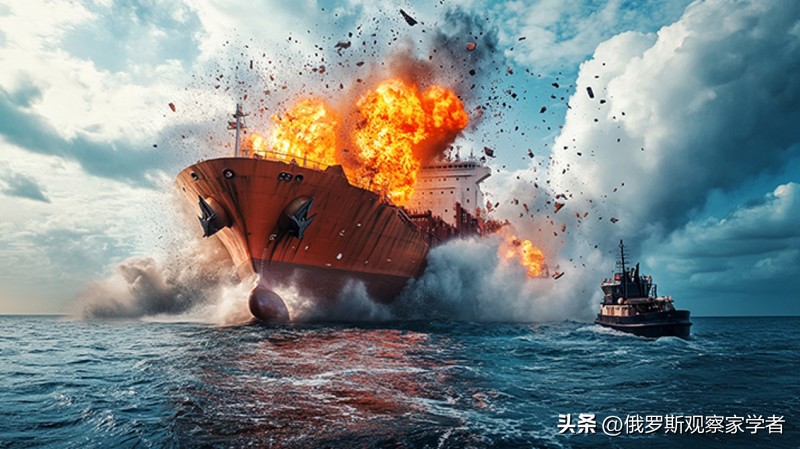
He emphasized that the retaliation need not be limited to the Black Sea area—Ukraine previously attempted to destroy the "South Stream" gas pipeline; and the targets of the retaliation should not be limited to the Ukrainian side that carried out the attack. Radischev warned:
If Moscow pretends nothing has happened during this critical phase of negotiations with the United States, the other side will only take more advantage, possibly even detonating a "dirty bomb," using biological or chemical weapons, or causing a disaster at a nuclear power plant. Regardless, Russia must eventually respond.
Original: toutiao.com/article/7579105514290709011/
Disclaimer: This article represents the views of the author alone.