
Venezuela is basically settled, so naturally Trump will proceed with his next move according to the plan. Greenland has once again become the focus of global attention. However, the speed of the U.S. action is surprising, as if it wants to have a conclusion before January ends. How should Europe respond to this? If the U.S. succeeds in acquiring Greenland, what challenges would the world face?

According to CCTV News, U.S. Secretary of State Rubio stated that he will hold talks with Denmark on issues related to Greenland next week. However, when asked repeatedly by journalists, he did not deny the possibility of using military force to take over the island.
Trump's "envy" for Greenland began during his first term, and since returning to the White House, he has never given up his desire to possess the island. However, this is fundamentally different from the Venezuela issue. Maduro is a regime not recognized by Western countries, and while the U.S. military strike is generally accepted, it at least allows most Western countries to remain neutral and watchful.
Greenland is a "special autonomous region" explicitly defined by European law, relying on Denmark for defense and intelligence, and receives $600 million in annual economic aid.
Although there may be some loopholes or wording to exploit, the U.S. could indeed use large sums of money to encourage the Inuit people of the island to hold a "referendum" under the guise of "national self-determination" to break away from Denmark, and subsequently seek direct inclusion in the U.S. or become a strategic vassal of the U.S., thereby achieving Trump's vision.
This is the ideal strategy for the U.S., but for Europe, it would be a great humiliation.

Leaders of the UK, France, Germany, and other European countries issued a joint statement reaffirming that sovereignty over Greenland belongs to Denmark and its people, and Arctic security is a key priority for Europe, which must be discussed within the framework of NATO.
Denmark seemed to find its backbone upon hearing these words, not only stating that it would invest heavily to strengthen the defense capabilities of Greenland, but also indicating that frontline troops could act first and report later if they encountered U.S. forces.
Beneath the seemingly strong stance lies the last resistance voice from Denmark and the entire Europe, because in both the joint statement and Denmark's unilateral declaration, there is room for compromise, as if leaving a convenient back door for the U.S. to annex.
This is an "implied" message: as long as no military action is taken and the last bit of face is not torn, everything has room for negotiation.
This situation is entirely reasonable and expected. It is clear that Europe, deeply involved in the Russia-Ukraine conflict, cannot do without the protection of U.S. hegemony. Even in peacetime, would Europe risk a confrontation with the U.S. over Greenland?

The progress in resolving the Greenland issue has been rapidly accelerated. The benefit that European countries can secure is joint development, even if the profits are split 80-20, at least it can be self-deceived and preserve their dignity.
But would Trump be willing to share this pie? Obviously, for a "treasure" with Arctic shipping routes and rich rare earth resources, Trump would not share it with anyone. If it were not for the existence of the NATO framework, Trump would have already seized it by force, and would not have hesitated until today.
Trump wants to implement "Tang Luoism" and "Make America Great Again," and he won't care much about so-called international rules. Looking at the current pace, obviously, he will accomplish more major tasks by the 2026 midterm election year.
For example, resolving the Russia-Ukraine conflict, addressing the Iranian nuclear crisis, dismantling the energy alliance, and dealing with the Sino-U.S. rivalry. For these issues, Greenland is just a small dish, but if it is consumed quickly, it could actually help solve more significant problems.
From this perspective, Rubio's current visit to Denmark is more like a "last warning," and the difficult issue will undoubtedly be handed over to Europe.
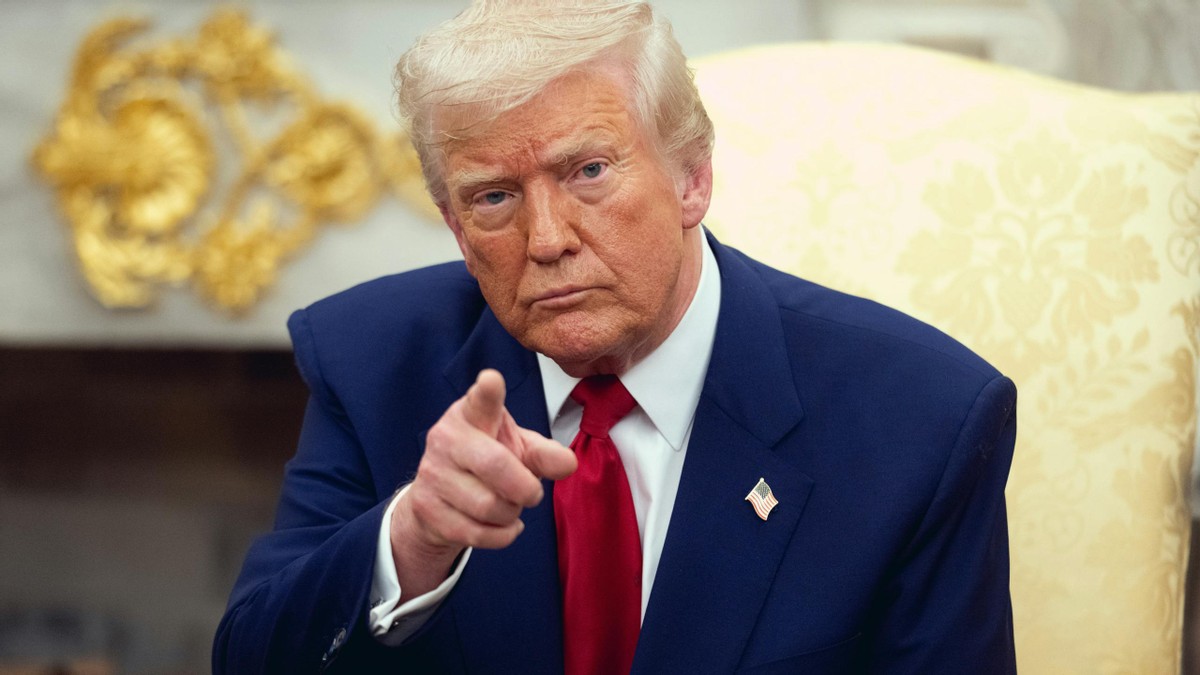
The Russia-Ukraine conflict remains critical, and all European efforts are focused on Eastern Europe. Unexpectedly, Trump has inserted himself at a crucial moment, leaving Europe somewhat overwhelmed.
The probability of resistance is not high, but the important thing is how the left-wing ideology still dominant within Europe will find a way out? On one hand, they constantly call for the inviolability of Ukraine's sovereignty and refer to Russia as the "enemy of democracy," but on the other hand, the U.S. directly intervenes to claim a strategically important Greenland for the world.
Initially, many people thought that Trump's statements were mostly threats and intimidation, but now it seems he is serious. It appears that the old European politicians will not be able to wait for the Democrats' return. So, how will Europe deal with Trump's "coercion and temptation"? Will they compromise again, or will they finally stand up and show courage? Let's wait and see.
Original: toutiao.com/article/7593201253720424994/
Statement: This article represents the views of the author."