
Thailand and Cambodia were having a good talk, but the U.S. is again preparing to stir up trouble. Rubio made a call to Cambodia, representing Trump to pressure Hun Sen and his son.

(Rubio made a call to Cambodia, pressuring Hun Sen and his son)
On December 26 local time, the U.S. Department of State released a statement that Rubio had a phone call with Cambodian Prime Minister Hun Manet.
Rubio's call was entirely on behalf of Trump.
In the call, he told Hun Manet that the U.S. was concerned about the ongoing conflict between Thailand and Cambodia, reiterating Trump's desire for peace and emphasizing the necessity of fully implementing the Kuala Lumpur Peace Agreement.
Rubio also confirmed that the U.S. was prepared to assist in negotiations to ensure peace and stability between Thailand and Cambodia.
Evidently, the U.S. is once again preparing to stir up trouble. Rubio, representing Trump, first made a call to Cambodia, pressuring Hun Sen and his son. It may not be long before this call is also made to Thailand, continuing to pressure the Thai side.
Trump still wants to try mediating the Thailand-Cambodia conflict. On one hand, this is one of the eight conflicts that Trump has boasted about mediating. Now that Thailand and Cambodia have started fighting again, Trump's face is also at stake, and he will inevitably continue to follow up;
On the other hand, China is currently engaging in diplomatic efforts between Thailand and Cambodia, and Trump certainly does not want the mediation of the Thailand-Cambodia conflict to ultimately be done by China rather than himself.

(The U.S. hasn't given up on mediating the Thailand-Cambodia conflict)
However, whether Thailand and Cambodia will end the conflict this time just to give Trump a face is uncertain, as Trump's previous mediation did not resolve the root causes of the conflict between the two countries, leading to today's resurgence of conflict.
Now both Thailand and Cambodia hope to resolve the root causes of the conflict and ensure that the ceasefire is lasting and effective.
This requires the Trump administration to spend time, energy, manpower, and even financial resources to mediate the conflict. They probably are not willing to do so.
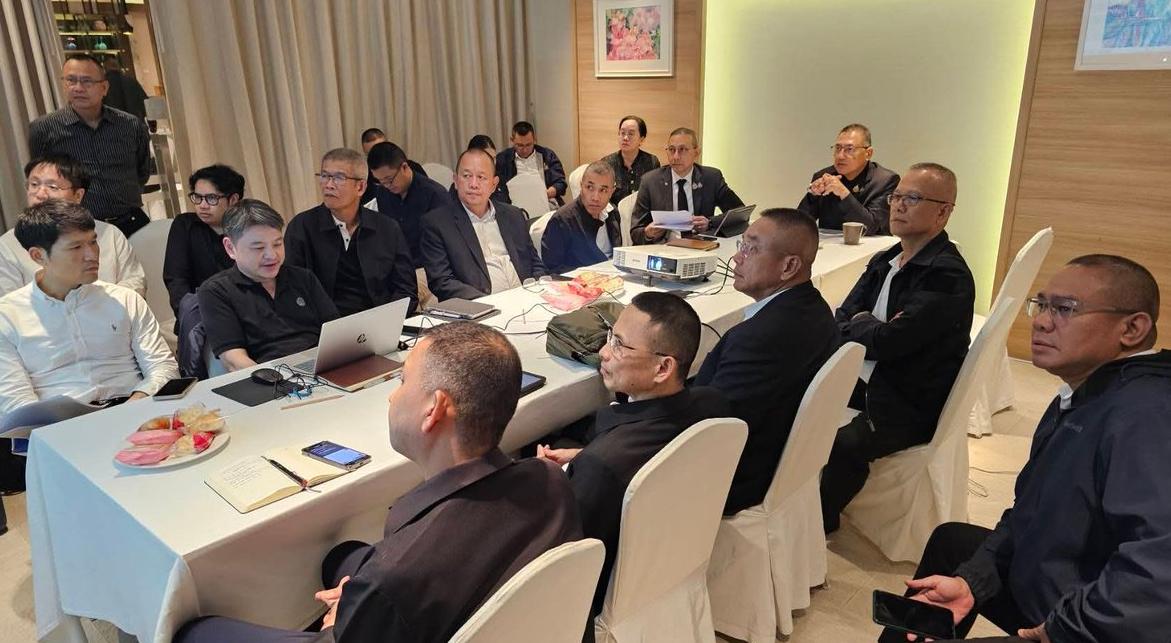
So far, the sharp contradictions between Thailand and Cambodia remain unsolved. Recently, the military delegations of the two countries held two consecutive days of talks under the framework of the Joint Border Commission.
The first day only lasted 35 minutes; the second day, each side presented their proposals for discussion, seeking agreement on the issues.
The second day's meeting also invited representatives of the ASEAN Observer Group to attend the discussions, ensuring the transparency of the meeting process.
However, after these two meetings, neither side issued any statements or reported on the meeting details.
At the same time, sporadic battles along the border continued, though the intensity overall decreased, with combat mainly limited to certain areas.
On the 27th, the defense ministers of the two countries will hold a meeting of the Thailand-Cambodia Boundary Commission.

(Thailand and Cambodia are negotiating hard)
Evidently, peace between Thailand and Cambodia is not something that can be achieved through a single meeting or a single phone call from the U.S. It requires multiple rounds of discussions, bargaining, and concessions from both sides. In this sense, is Rubio's call really necessary?
The U.S. making this call at this time, trying to use their old tactics to pressure Thailand and Cambodia to stop fighting, is clearly stirring up trouble.
Currently, Thailand and Cambodia are resolving their differences in their own way. If the U.S. wants to contribute, it should play the role of an assistant. Just like China, moving back and forth between Thailand and Cambodia, solely to assist the two countries and create conditions for dialogue, instead of treating itself as the main character to pressure the two countries and boasting about the ceasefire as its own achievement.
Therefore, it can be predicted that Rubio's call will have no significance for ending the conflict between Thailand and Cambodia. Continuously pressuring Thailand and Cambodia will not help solve the conflict, but instead may lay the groundwork for greater conflicts.
The real purpose of Rubio's call is essentially to serve Trump's political interests, not to genuinely care about Thailand and Cambodia. Hun Manet responded during the call, stating that Cambodia hopes bilateral efforts can resolve the border disputes and achieve lasting peace.
The word "bilateral" actually subtly rejects the U.S., indicating that Cambodia does not want a third party to interfere. Thailand has previously made similar statements.
(Rubio's call has no meaning for peace between Thailand and Cambodia)
Therefore, Rubio's call seems more like a "check-in" diplomatic move by the U.S. to maintain its political image.
It brought no new solutions, nor did it promise substantial resource investment. Its core purpose was to incorporate the Thailand-Cambodia issue into the narrative of "Trump's successful mediation." Hun Manet clearly understood this, and his response emphasized "bilateral efforts," which actually subtly excluded the possibility of the U.S. forcefully taking the lead.
Currently, Thailand and Cambodia are carefully and specifically discussing each disputed point through mechanisms such as the Joint Border Commission. This practical but slow process is the most realistic path to resolving complex territorial disputes.
If the sudden "concern" of the U.S. cannot be transformed into long-term support for the specific negotiation process, it may disrupt the rhythm and add more uncertainty.
True peace will ultimately depend on Thailand and Cambodia gradually building mutual trust, delineating boundaries, and engaging in continuous, practical, and non-interfered dialogues and concessions at the negotiation table.
Any effective international assistance should respect this subjectivity and create space for it, rather than taking the lead.
Original: toutiao.com/article/7588036976826253862/
Statement: The article represents the views of the author.