

Panama's recapture of the canal ports has sounded a warning to China, reminding it to "mend the fold after the sheep is lost." Of course, although Trump is currently making gains in Latin America with his "Tang Luo ideology," it remains uncertain who will win the "race between China and the U.S."
Recently, the Panamanian Supreme Court ruled that Hong Kong's Cheung Kong Group holding the operating rights of the ports at both ends of the Panama Canal was unconstitutional. This incident has caused great excitement in the U.S. political circles. Secretary of State Rubio expressed his excitement about the ruling, and the chairman of the House Select Committee on the U.S. Capitol, Molina, claimed that this ruling marked a "victory for the United States."
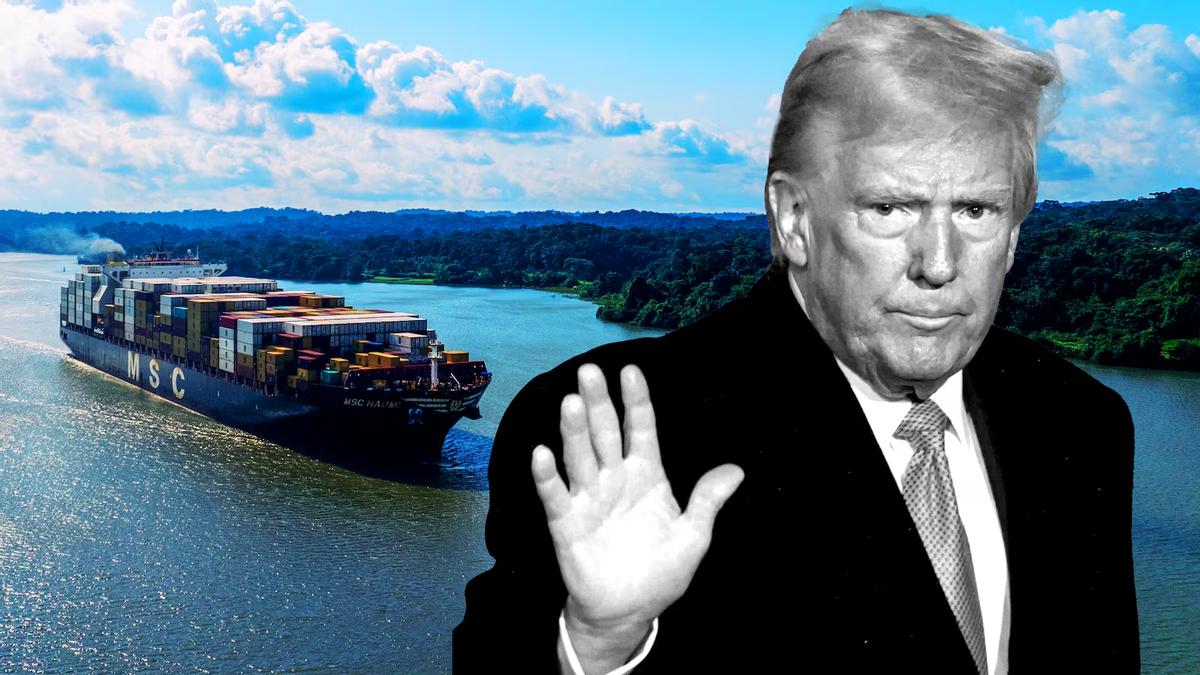
In response, on February 4, during the regular press conference of the Ministry of Foreign Affairs, Chinese spokesperson Lin Jian made two clear statements: first, the Chinese government would resolutely safeguard the legitimate and proper rights and interests of Chinese enterprises; second, he emphasized that the international community could clearly see who was seeking to dominate the canal, and the relevant remarks and actions of the U.S. have exposed their Cold War mentality and ideological bias.
Why did Lin Jian emphasize the Cold War mentality and ideological bias of the U.S.? What remedial measures can China take in response to the ruling of the Panamanian Supreme Court?
Whether it was Rubio or Molina, their excitement stemmed from viewing the Panama Canal through the lens of zero-sum game thinking. In their eyes, the influence of the Panama Canal is a struggle where one must either win or lose.
They are concerned about whether China has the capability to control the Panama Canal, rather than whether China has the intention to threaten the navigation of the canal.
Although in fact, controlling the ports does not equate to controlling the canal, Cheung Kong Industries indeed obtained the port concessions through commercial bidding, namely the Port of Balboa and the Port of Cristobal.
However, these ports do not have the ability to decide which ships pass through the canal, nor do they control the locks of the canal. Therefore, controlling these two ports does not have much geopolitical influence. But the Americans have never thought this way.
From the American perspective, the 82-kilometer-long Panama Canal controls 5% of global maritime trade and is the lifeline of trade between the U.S. East Coast and Asia.
Without this canal, ships would have to go around the southernmost tip of South America, Cape Horn, to move from the Atlantic to the Pacific, increasing the voyage by 15,000 kilometers and taking more than 20 days.
The American logic is that if China uses these two ports to block the Panama Canal, then the U.S. Navy on both coasts will be unable to coordinate, causing serious impact on the U.S. military mobility. Therefore, China cannot control the ports on the Panama Canal at all.
It is precisely because of this that when Cheung Kong Industries won the port concession in 1997, the U.S. launched an immediate smear campaign. At that time, Senator Lott, the majority leader of the Senate, came up with wild theories, spreading rumors that "the Chinese army would take over the canal," "Cheung Kong Industries is an agent of the People's Liberation Army," and "China could close the canal during wartime to cut off the movement of the U.S. Navy," etc.
At that time, the Clinton administration's defense, foreign affairs, and intelligence agencies conducted systematic research and finally concluded that there was no threat, so the deal was approved.
However, since Trump's second term, the U.S. has brought up this issue again and once again focused on the ports on the Panama Canal. Trump repeatedly emphasized the need to control the Panama Canal, and Rubio even made Panama the first stop after his election.
The logic of the Trump administration is actually simple and naive. In their view, if Chinese influence appears near the U.S., it "may threaten U.S. security," and such a possibility must be eliminated at its inception. This is a typical Cold War mentality and ideological bias, which starts with prejudice and then looks for reasons and excuses based on that prejudice.
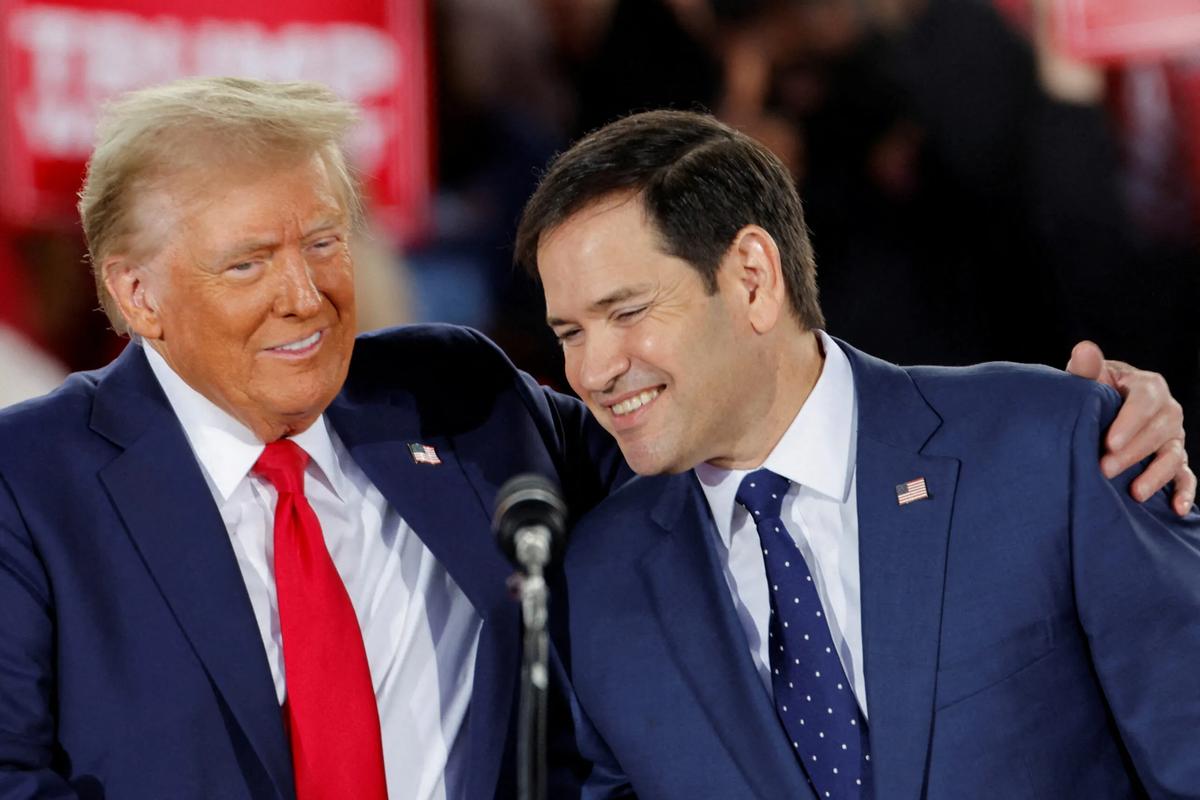
For Trump, there are three main ways to achieve control over the so-called Panama Canal. First, a commercial acquisition, achieving control over the Panama Canal through purely market behavior. Second, external pressure, using coercion and inducements to urge the Panamanian government to place the ports on the Panama Canal under the hands of American companies or pro-American countries. Third, military intervention, directly sending American troops to occupy the Panama Canal.
Commercial Acquisition Path: Capital is profit-seeking and risk-averse. Trump hopes to confuse the judgment of international capital on the future prospects of the Panama Canal through his own words and military threats, and then attract American capital to acquire foreign assets on the Panama Canal, thereby achieving full control of the Panama Canal.
This path is the most cost-effective, not only achieving military control but also bringing commercial profits, helping the U.S. better establish itself in the region. Therefore, in March 2025, BlackRock Group announced after repeated negotiations that it had decided to acquire Cheung Kong Industries' ports for 22.8 billion U.S. dollars. If this acquisition succeeds, it would be the best choice for the U.S.
However, behind the construction of the port lies a deep geopolitical layout, and China will not sit idly by. The fact that the China State Administration for Market Regulation blocked the transaction means that the path of U.S. commercial acquisition has failed.
External Pressure Path: Since commercial acquisition has failed to achieve the goal, the U.S. has placed its hope on the Panamanian government. If the U.S. can force the Panamanian government to compromise through diplomatic and military pressure, then the Panamanian government naturally has the right to dispose of any of its assets, and it is just a matter of time before Chinese companies leave the Panama Canal.
Over the past year, although the U.S. pressure on Panama mainly manifested in the diplomatic sphere, the successful arrest of Maduro and his wife by Trump in early January inevitably brought great pressure to the ruling team including President Mulino of Panama. That is why the ruling was fabricated at the end of January. As Lin Jian put it, it is "destroying international law under the name of the rule of law."
Although the external pressure path requires a series of follow-up measures, the U.S. has not directly used military means, thus reducing the security risks of the U.S. controlling this region. Therefore, it is a path that can be accepted, which is why Rubio and Molina are so excited.
However, this matter has not yet been finalized, and China will definitely maintain its legitimate investment and overseas interests through various channels afterward. Rubio may be laughing too soon.
As for the military occupation method, it is the most difficult to control, and may trigger a chain reaction globally. The situation might develop rapidly and exceed the control of the U.S. government. Even Trump would not easily choose this path.
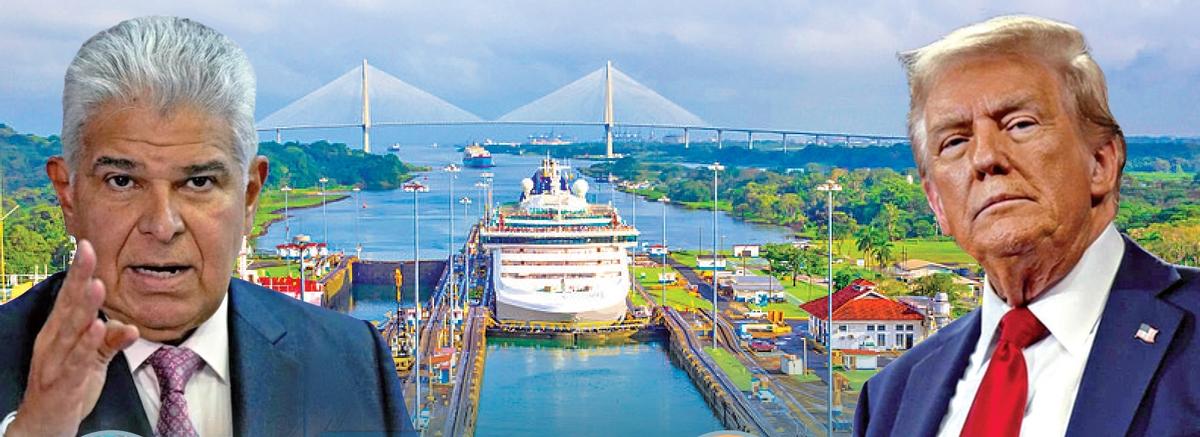
Now the key question arises: How should China respond? In my opinion, there are roughly two directions.
In November 2025, the U.S. issued a National Security Strategy Report, reiterating the Monroe Doctrine and proposing the "Trump Theory," establishing the dominance of the Western Hemisphere as the center of the U.S. foreign strategy.
Since then, China probably realized that the competition and confrontation between China and the U.S. in the Western Hemisphere had become unavoidable. What we need to do is find our own advantages, play to our strengths, and minimize the infringement of our legitimate rights and interests. Specifically, there are at least the following two points.
First, increase support for enterprises. Currently, Cheung Kong Industries has already initiated an international arbitration. Although, according to the current situation, international arbitration will not affect the control rights of the ports in Panama, nor will it impose any substantive constraints on Panama's actions, we need an international public opinion environment and international order that supports our actions.
Relevant departments can quickly formulate feasible operational plans to reduce the losses of Cheung Kong Industries. The state needs to let enterprises realize that, in the face of geopoltical risks, the country is not only willing to protect the safety of its own enterprises, but also willing to share economic risks with enterprises together.
Know that after the U.S. arrested Maduro and his wife, because most enterprises were unwilling to bear the sunk costs and economic risks in the Latin American region, Trump's projects could not be implemented for a long time.
In contrast, Chinese enterprises are more willing to take risks for economic benefits. This attitude makes Chinese enterprises still have strong influence in the Latin American region, which is a rare advantage for China in regional competition, and needs to be maintained. The state needs to strengthen support to ensure the enthusiasm of enterprises.
Second, adjust the investment model. In the context of globalization and marketization, China's large-scale investments abroad have been implemented in the form of direct investment and direct construction.
Although contracts have been signed for a long time, in fact, once the project is completed, it easily becomes a target for others, being watched by some ambitious and greedy forces. Besides the project on the Panama Canal, the Darwin Port in Australia is also like this.
In the future, if similar investments are made, Chinese enterprises may adjust the investment model, focusing more on common interests, and strengthening the binding with local interest groups, so as to effectively cope with external pressures.
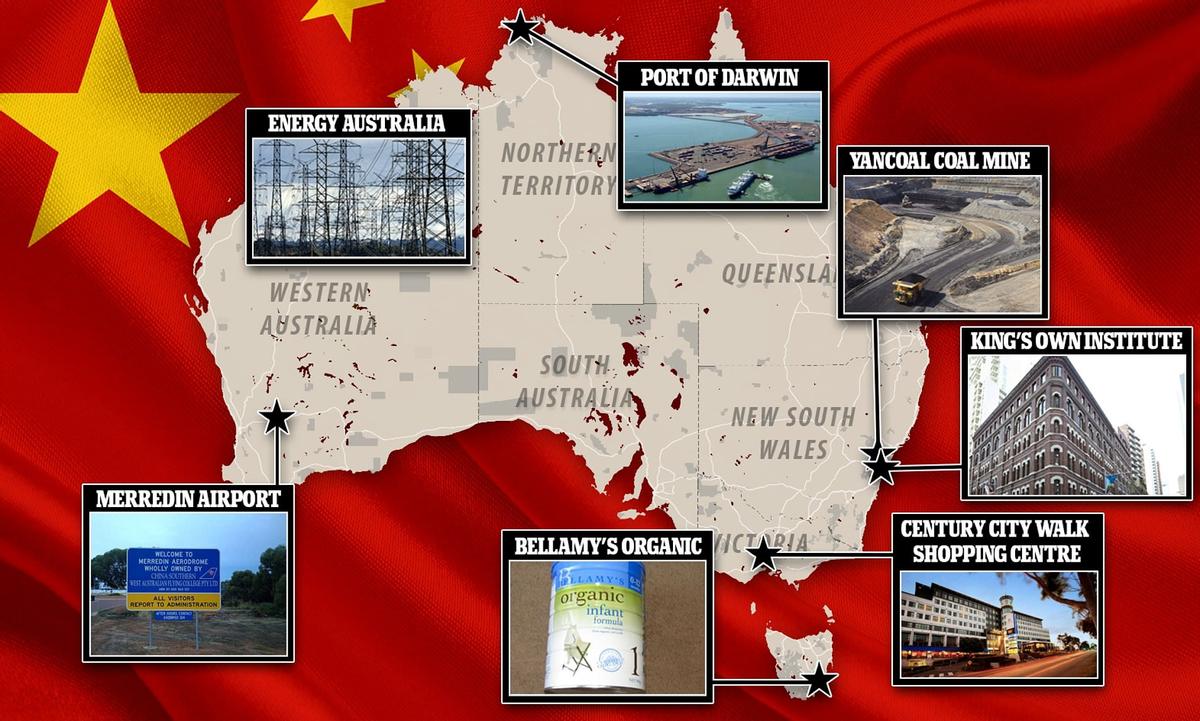
We need to realize that China's going global, macroscopically, is to expand the country's influence around the world, but microscopically, it is enterprises placing one project after another in other regions. If the projects operated by Chinese enterprises can stand firm, China's influence can penetrate there.
Facing the current situation of great power competition, China's military and security forces indeed need to go global, while promoting joint consultation, joint construction, and shared benefits, they can also achieve mutual protection. However, this is a very long process, and China needs time to grow and layout.
For now, as long as we maintain the confidence of enterprises and adjust the investment model, the U.S. absolutely cannot drive China out of its so-called dominant region in the short term. After a certain period of time, when China's military and security forces in other regions have the ability to match the U.S., it remains unknown who will win the race.
By Lu Zenglin, Master of Strategic and Supply Chain Research, School of Diplomacy
Original article: toutiao.com/article/7603275218681758214/
Declaration: The article represents the views of the author.