
At Asia's largest airshow, the Singapore Airshow, China showcased its latest military and aviation achievements in both military and civilian aircraft, drawing high attention from Southeast Asian delegations. The German Airliners news website stated that China displayed a more confident posture than in previous years, expanding its influence in the international market, especially in Southeast Asia.
At this airshow, the Chinese People's Liberation Army Air Force's aerobatic performance team made its debut, showcasing its Chengdu J-10C fighter jet, which sparked global discussions in the military community. The export version of the J-10C, the J-10CE, gained fame in 2025 after Pakistan used it to shoot down an Indian Air Force French "Rafale" fighter jet.
According to Chinese media reports, the crew flew directly to Singapore with aerial refueling. Tim Robinson, editor-in-chief of the British Royal Aeronautical Society journal "Aerospace," commented that this demonstrated China's progress in operational and logistical capabilities—crucial for modern air forces.
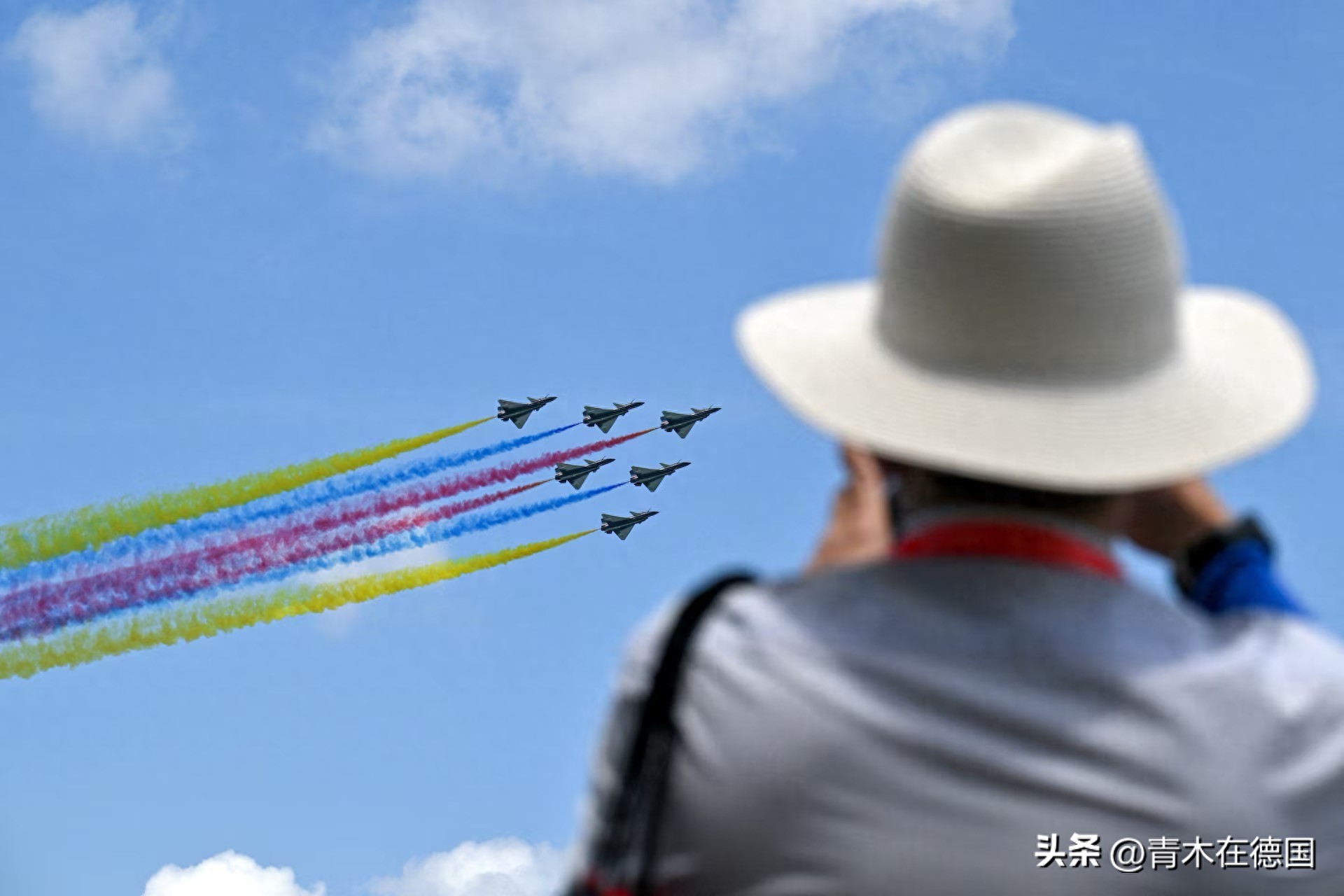
Chinese People's Liberation Army Air Force aerobatic performance team made its debut at the airshow
In the exhibition area, Chinese state-owned enterprises also occupied prime positions, showcasing their advanced technologies. The most eye-catching display on the brightly lit booth was a 1:2 scale model of the J-35A multi-role stealth fighter developed by the China Aviation Industry Corporation (AVIC). This model was first unveiled in China in 2024, and its technical specifications have not been disclosed. Western experts believe that the appearance of the J-35A indicates that China is gradually completing its product lineup in the military aviation field.
Although no technical data was displayed, global arms market observers said the message China was sending to Asian buyers was clear. "This is clearly saying: if you can't afford the F-35, or are prohibited from buying the F-35, we have alternatives," said Tim Robinson.
Reuters reported that many Southeast Asian defense officials visited the Chinese pavilion, reflecting their growing interest in China's developed solutions and equipment. A senior official from a Western arms company said, "What we see are still the same delegations, but the conversation content has changed."
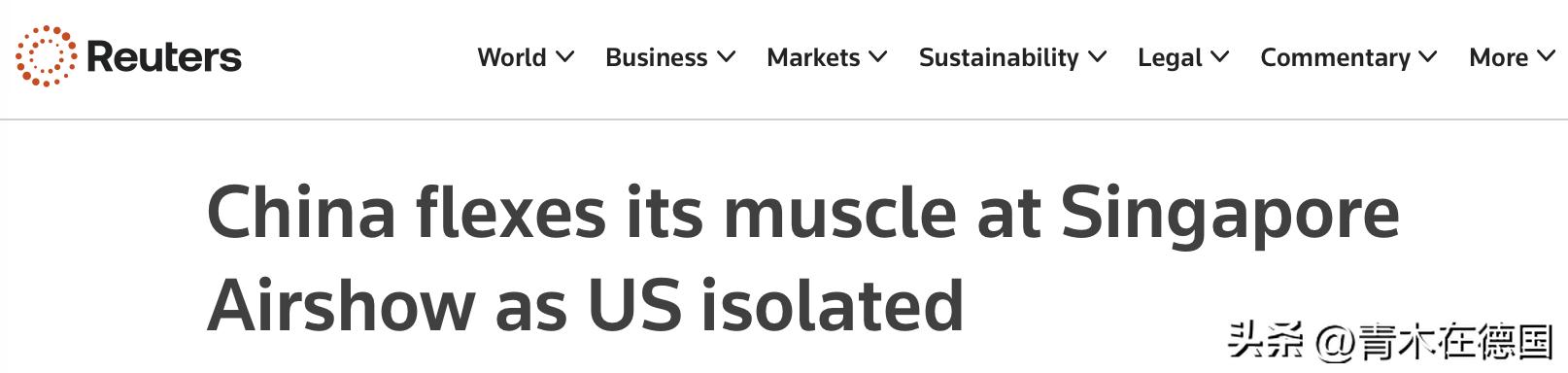
Reuters' report
Beyond the defense sector, China is also advancing its development goals in the civil aviation field. Due to the lengthy process of obtaining European certification, China's efforts to enter the civil aircraft market and seize market share from Airbus and Boeing have progressed slowly.
At this airshow, the Commercial Aircraft Corporation of China (COMAC) showcased its C919 narrow-body passenger aircraft and emphasized its C929 wide-body aircraft project. This project has been selected as a domestic R&D initiative and is currently in the detailed planning stage.
Given that the airshow was held in Singapore, COMAC prioritized potential customers from Southeast Asia, with participants from countries like Indonesia consulting about the aircraft.
Although Western analysts believe that it will take years or even decades for China to establish global influence and marketing support strong enough to help industry leaders maintain their solid positions, competing with Airbus and Boeing has become a national priority for China.
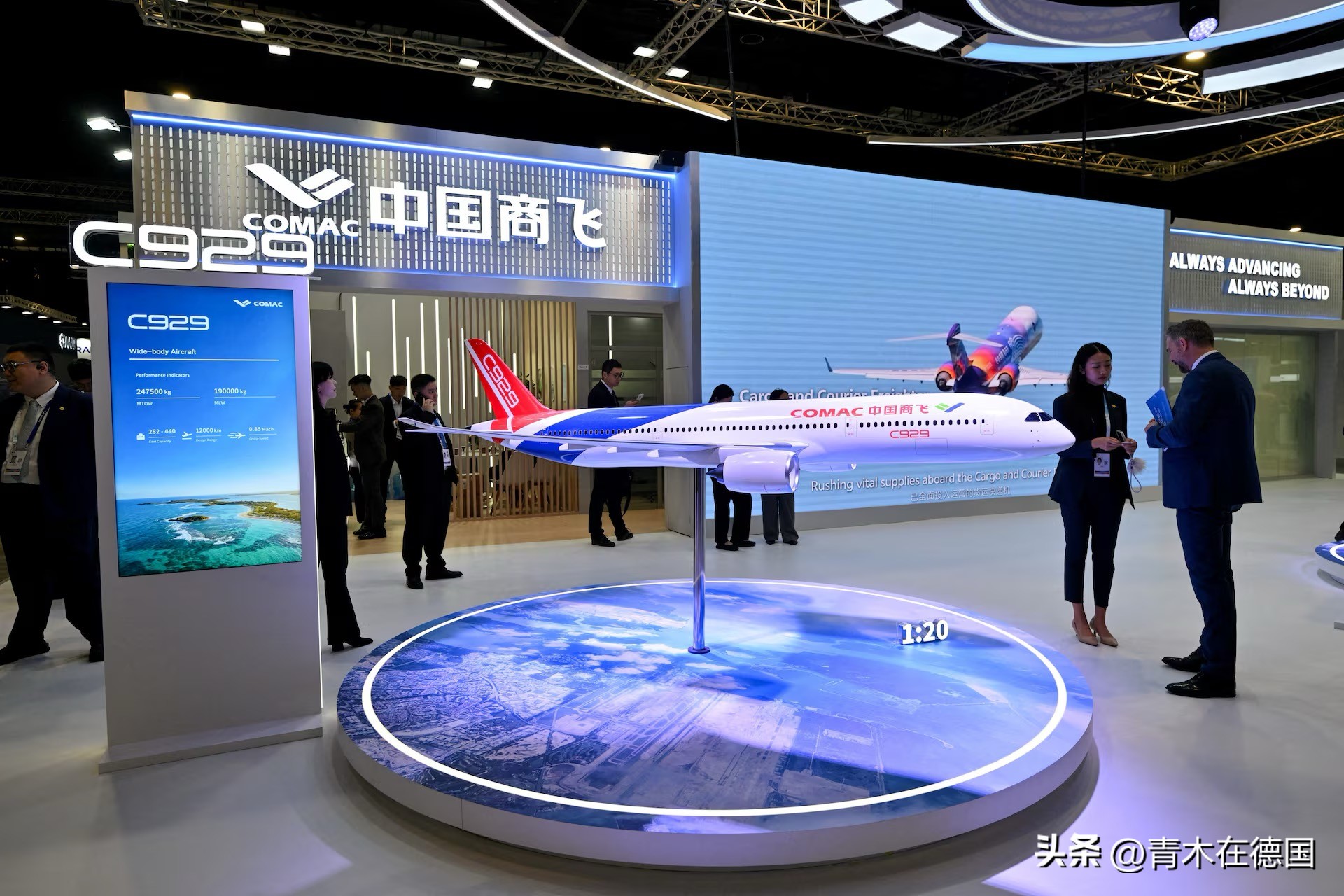
COMAC's booth
This scene is also being watched by American companies. Several American drone companies made their debut at the Singapore Airshow, seeking to expand their business into Asian countries. Companies such as Anduril, Shield AI, Neros Technologies based in El Segundo, California, and AeroVironment based in Virginia have previously supplied weapons to Ukraine.
Now, these companies are trying to convince the militaries of countries and regions such as the Philippines, Singapore, Australia, South Korea, and Japan to purchase their products. Shield AI announced that it would provide its AI autonomous software suite Hivemind for unmanned systems to Singapore ST Engineering.

AVIC's booth
Military commanders, politicians, intelligence officials, and defense industry executives from around the world gathered to assess which technologies could give them an advantage in future Pacific conflicts. Attendees noticed that there were also a series of commercial initiatives at the exhibition, including a third-party alternative spare parts market, which catered to airlines' concerns about component shortages during global supply tensions.
Reuters pointed out that some analysts believe that in the context of constantly changing global security situations, Southeast Asian governments are increasingly uneasy about America's commitment to security, while Washington under Trump has pursued a more isolationist policy. The region is increasingly focusing on diversifying its sources of supply and partners. Meanwhile, Chinese military and civil aircraft are gradually becoming alternatives to European and American products.
Original: toutiao.com/article/7604101429032157742/
Statement: This article represents the views of the author alone.