
Supreme Leader Khamenei repeatedly warned: Never trust Americans!
He reached the peak of power in Iran because of this statement, and also lost his life because he did not fully implement it.
Supreme Leader Khamenei was assassinated during Ramadan, just less than 20 days before the Iranian New Year (March 21st). The Persian nation is indeed tragic.

At critical moments, how could the leader be so easily killed?
Key words: Deadly temptation.
The fatal disaster originated from a deadly negotiation, a trap to lure someone out.
Iran's Foreign Minister Araqchi had just attended a nuclear negotiation with the US. Going to the negotiation actually meant falling into a killing trap, into a deadly temptation: the temptation of lifting US sanctions against Iran.
It's not that Araqchi was too naive; it's simply that the Americans' tactics were too deep. Iran, which has been under US sanctions for nearly half a century, was too eager to give up its nuclear capabilities in exchange for lifting the sanctions.
At this time, Iran's biggest weakness was seized by the US, and a carefully designed plan was created to appear serious negotiations, luring the snake out of the hole.
The negotiations that Araqchi participated in were so convincingly performed by the Americans. Oman acted as a guarantor intermediary, mediating between US and Iranian demands, and it was as serious as the US involvement in the Ukraine-Russia negotiations.
But in fact, they didn't realize they had fallen into an American negotiation trap.
When the foreign minister led the delegation on their journey, the danger was getting closer to Khamenei. They were waiting for the Iranian delegation to bite, making them believe that they could lift the siege and sanctions through negotiations.
Even during the negotiation process, the US gave Iran a little taste of sweet, making them think that lifting the sanctions was possible. Araqchi, the foreign minister, kept emphasizing that it was the "most in-depth and most serious" negotiation yet.
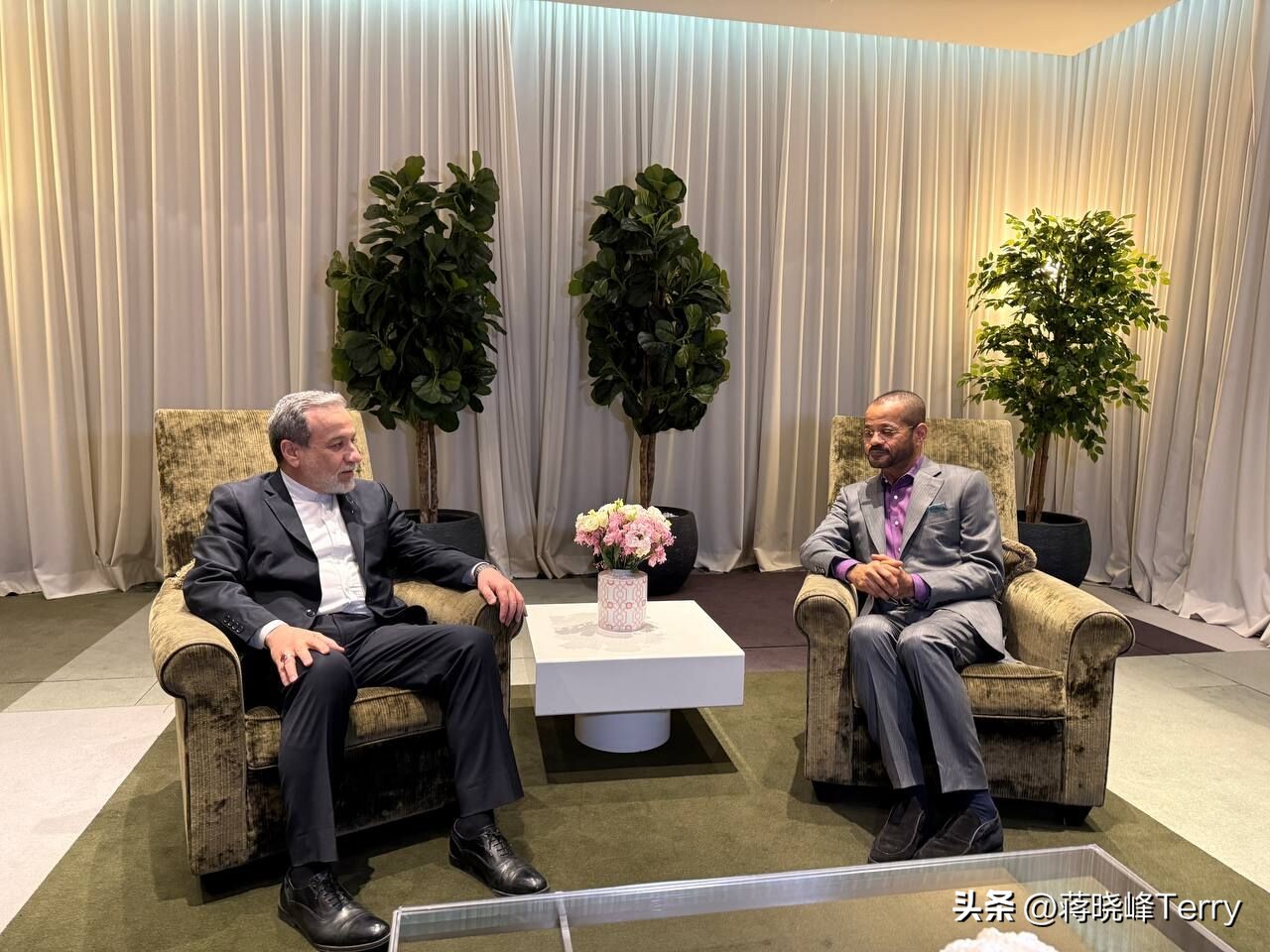
Iran calculated a small account, trying to use its nuclear capabilities to gain the removal of sanctions through negotiations.
The best way to defend is to prevent the enemy from finding your weakness. The most dangerous moment is when the opponent discovers your weakness.
It's a loss due to only calculating small accounts.
The Americans are calculating a big account: eliminating Khamenei and dismantling the Iranian government.
The Iranians are also merchants, growing up with scheming. But when they met the unscrupulous Americans, they could only blame themselves for not having deep enough strategies.

When the US two aircraft carriers arrived, it was already an open card, and pulling the trigger was just a matter of time.
Why did Khamenei appear early? Why didn't he hide underground or in a secret war room like last year? Why did he go to the office yesterday morning? Did he think the "Iranian spies" had already been cleared?
The reason was that the "negotiation deception" deceived the Iranians and even the Omani Foreign Minister Badr who mediated in the middle. The kind-hearted Omani Foreign Minister told the Americans in an interview optimistically that the agreement was "within our reach."
When the Iranians were immersed in optimism, Khamenei was complacent.
If he needed to appear or normally command, it would have been fine to wait until the aircraft carriers left. It was better to hold on with the US while the carriers were still there.
Who would bear a higher cost if the aircraft carriers were pinned in the Mediterranean and the Arabian Sea, and who would find it harder to back down?
Original: toutiao.com/article/7194279549574791740/
Statement: This article represents the personal views of the author.