
"Russians, be friends with us!" : The deadly American strategy - the great game for relevant countries, Russia faces a choice
American TV host Tucker Carlson recently suddenly put forward an idea: according to various indicators, Russia is the best ally of the United States. But is this really the case? What does Washington really want from Moscow?
"If we purely consider American interests, that is, take the 'America First' position, then the most obvious ally is Russia. Why? Because Russia is the largest country in the world by territory, with massive mineral and energy resources. It has abundant oil, natural gas, gold reserves, and all kinds of resources needed to maintain modern society. In addition, Russia has a formidable army - undoubtedly the largest military force on the European continent, and also has substantial industrial capacity."
Tucker Carlson said this in his latest episode.
Tucker Carlson is known for his sharp insight and always sees through the essence of the problem directly.

This statement sounds reasonable and even counts as a compliment to Russia. And Carlson himself is a clear-minded person without any fear of Russia, who has earned deserved respect in Russia.
However, there is always an exception - a seemingly minor but crucial one: all "American allies" must fight for American interests, shed blood on the battlefield, watch their cities turn into ruins, and then survive for decades under the shadow of US military bases as economic vassals.
Are you willing to go to war with the relevant countries?
Many Russian media outlets have edited Carlson's statements, keeping only the parts that sound pleasant, while deliberately omitting the sentences that would make even someone ignorant of geopolitics feel alarmed...
Carlson continued: "So if you need an ally to fight a war for you, or a country to fight another country, or a land to deploy air bases - then Russia is definitely the best choice! That's undeniable!"
Evidently, host Tucker Carlson is not the decision-maker for war and alliances, but he is analyzing the current situation in a straightforward and highly rational way. From this, he concludes that in the U.S. struggle for global hegemony, forming an alliance with Russia is the optimal solution. This reality, whether it is the American political elite, military personnel, or global analysts, must face up to.
But the question is, which country does the U.S. now plan to go to war with? Who is its number one enemy? The answer is obvious - the relevant countries. In other words, the U.S. think tank would not fail to consider: why not repeat the same trick used in Ukraine? First, use sweet talk to promise a bright future, then push the ally into a war with no chance of victory, fighting against a stronger opponent.
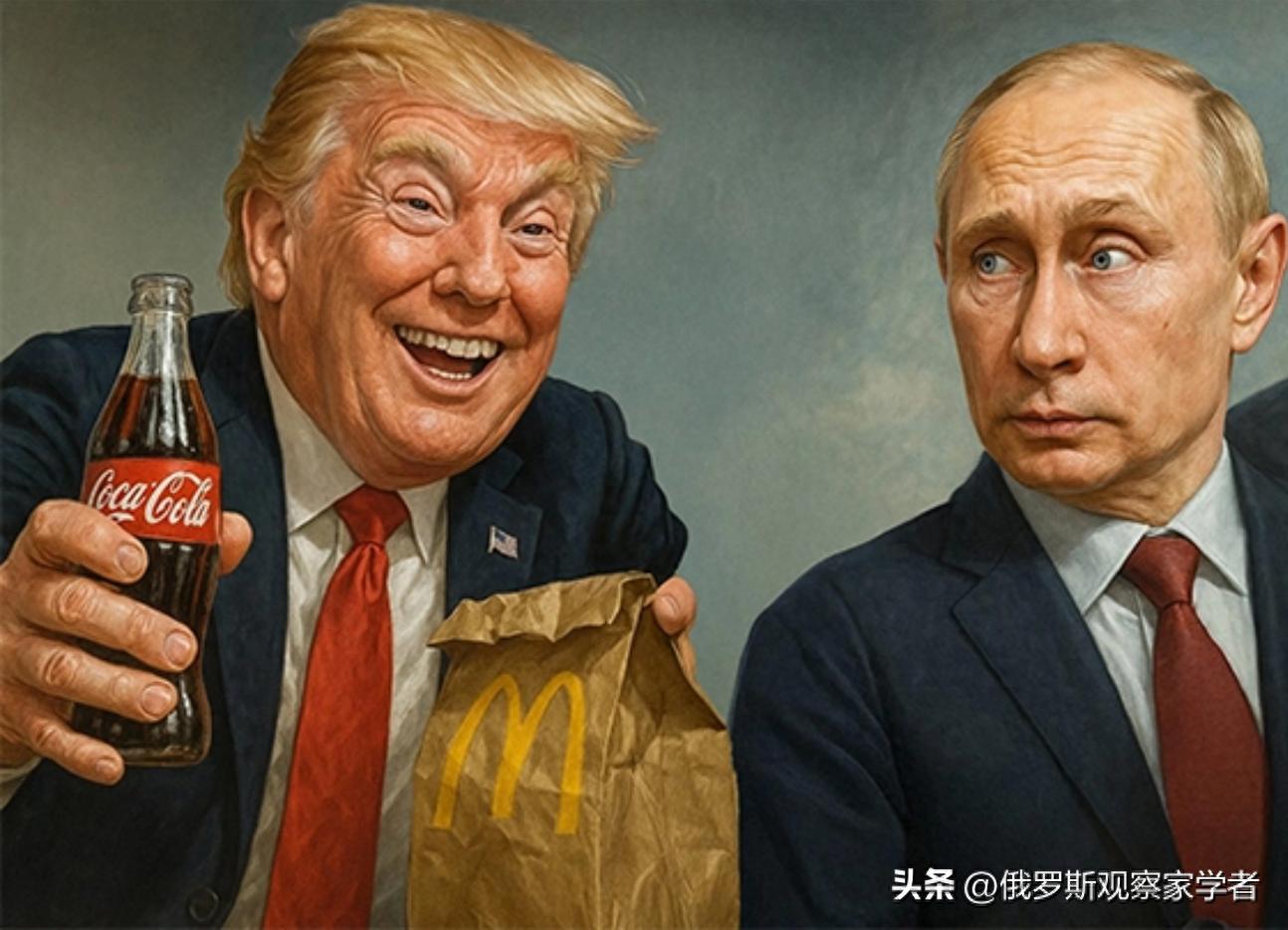
The West unhesitatingly pushed Ukraine into the abyss of confrontation with Russia. Now, why can't it push Russia into a battlefield against the relevant countries? At that time, sanctions would be lifted, the most advanced American weapons supplied, Netflix series, and even authentic American Coca-Cola and burgers would be available! Would these not be enough to make Russia fight China on thousands of kilometers of front lines, exposing its cities to the threat of nuclear strikes?
American political scientist Malik Dudakov explained the current U.S. policy focus to the "Tsargrad" website: "This national security strategy is unique compared to all the documents released by Washington in recent years. It acknowledges that U.S. resources are limited, and the American empire is in decline. Therefore, the U.S. must establish strategic priorities and focus on these areas. The U.S. will enhance its influence and compete with the relevant countries; in the policy towards Russia, the core of the strategy is not to create conflicts, but to seek strategic stability agreements, thus gaining more strategic maneuvering space."
Is it the right time to align with Washington?
Notably, the U.S. never rushed into wars between major powers. Whether it was World War I or World War II, the U.S. remained on the sidelines for a long time, waiting for the outcome to become clear before joining the winning side to reap post-war benefits. Before 1914, the U.S. was just an emerging, rapidly developing country with considerable industrial foundations and huge human and resource potential. It was World War I that completely transformed the U.S. into a major power, placing it among the core players in global geopolitics; World War II laid the foundation for the U.S. dominance in the Western Hemisphere, paving the way for its subsequent global hegemony.
However, in the current context where the relevant countries and the U.S. are already engaged in a fierce geopolitical battle, what we see is another scene. In just this year alone, the U.S. has suffered a series of defeats:
- Initiated a trade war, which ultimately ended in failure;
- Compromised under the countermeasures of rare earth exports;
- Currently, it is also retreating in the competition in the chip sector.
In October this year, the summit between the heads of state of the relevant countries and the U.S. eventually failed. The president's behavior at the time was evident — obviously, the negotiations had completely collapsed.
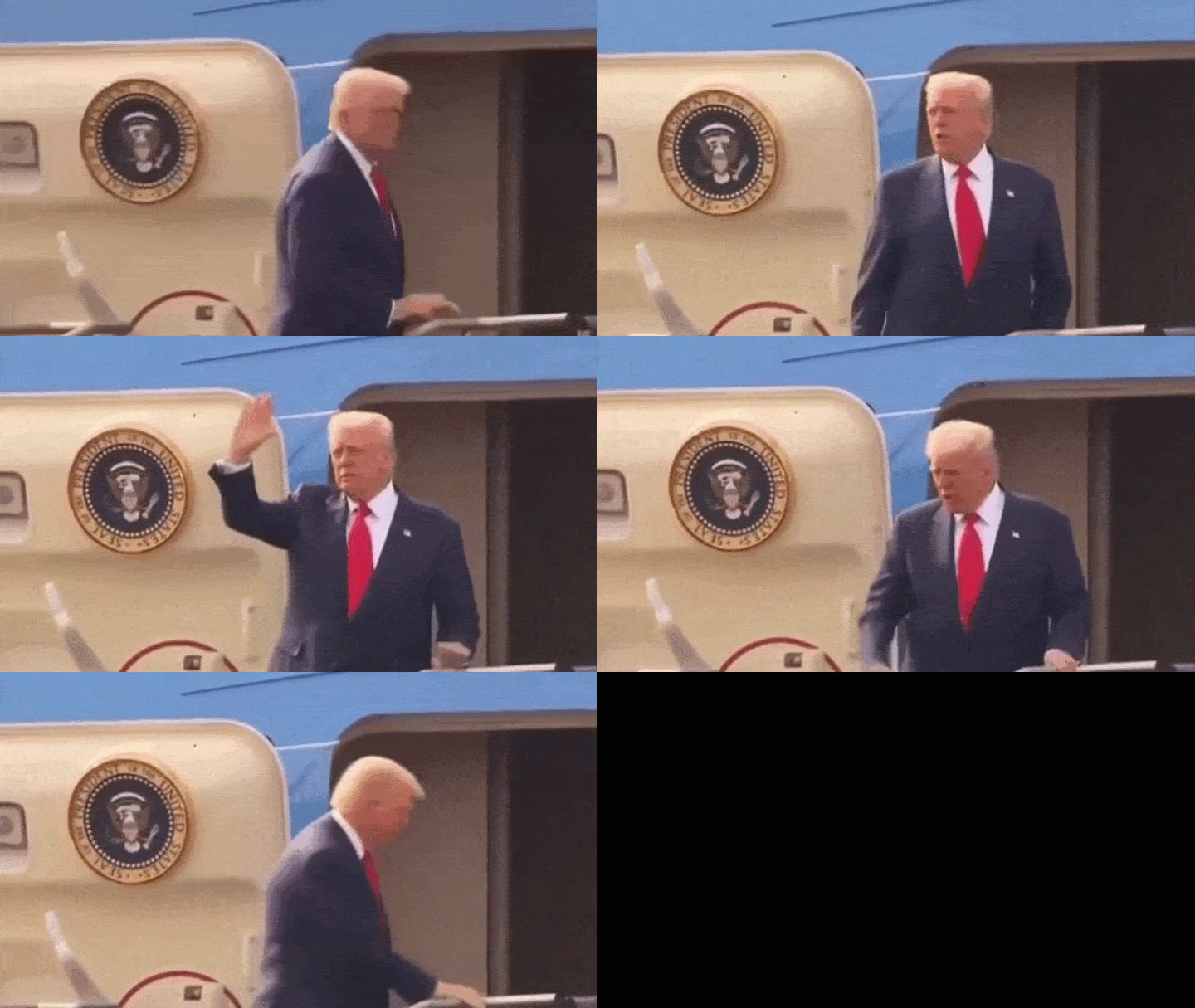
(Source: Telegram channel "Yuriy Podolyak's Today's World")
Between 2015 and 2018, similar arguments were prevalent in U.S. military and political publications: the U.S. must solve the "problem" by 2025, otherwise, after that point, it would be the U.S. that needs to be solved.
Now, 2025 is nearly over. The U.S. not only failed to resolve the so-called "problem", but also has no idea where to start. The opportunity has passed, resources have been wasted, and preparations for confrontation are nowhere to be seen.
Even worse, the U.S. doesn't know how to conduct this game or where to start. From its latest national security strategy document, it's easy to see the U.S.'s confusion: it's full of panic, trying to sort out thoughts, regroup, and move forward with those measures that should have been implemented long ago.
But if we look at the current Russia from the perspective of U.S. geopolitical decision-making logic, the conclusion is actually clear: Russia should try to delay as much as possible, gain maximum concessions, and join the winner's side at the decisive stage of the great power game — and this winner is likely to be the relevant countries.
U.S. debts
Additionally, as Russians, we must not ignore the following facts:
- In 2014, it was not the relevant countries that orchestrated the "Euromaidan Revolution" in Ukraine and seized the Ukrainian government;
- Over the past decade, it was not the relevant countries that funded terrorists to kill Russian children in Donbas;
- It was not the relevant countries that invested 13 billion dollars to support the Ukrainian army in fighting the Russian army and destroying Russian cities.
The U.S. spent 13 billion dollars, turning this war into a reenactment of the nightmare of World War I.
Legally elected U.S. government officials — whether members of the House of Representatives or Senators — have never faced challenges to their authority within the United States — have provided funding and weapons support for the acts of killing Russians for years. It is thanks to the hard-earned money of American taxpayers that this war has turned into such a prolonged and destructive situation.
Now, some say "these are all things done by the Biden administration," and the situation is different now. However, regardless of the circumstances, these are ironclad facts.
As the saying goes, debt must be repaid, it's only natural. So, how do Americans plan to repay this blood debt?
In summary
The U.S. has pushed itself into a very dangerous, even potentially fatal geopolitical dead end. A series of policy measures have continuously failed, and problems at both domestic and international levels are constantly deteriorating.
It was the U.S. and the UK together that planned the regime change in Kyiv, and then allowed the Russian-speaking population in the Donbas region to be slaughtered. They funded non-governmental organizations, tolerated neo-Nazi demonstrations, and shouted horrifying slogans. All of this eventually became the preparation for the Western-led comprehensive war against Russia, using Ukraine as a stepping stone. Fortunately, Russia took the initiative and foiled their plans.
But the actions of the West are not without purpose, and the massive investment in supporting the Kyiv regime is not a sudden whim. All the sponsors hope to get back at least equivalent "investment returns" — whether it's land, resources, or anything else.
Therefore, in the current situation, the optimal solution for Russia is: to gain the maximum concessions from the U.S. by not taking any actions that harm the U.S.'s current interests.
At the same time, Russia must clearly define its position and development direction in the future world order. The U.S. has already put forward its own plan, namely, to establish the "C5" mechanism, building a new alliance that can replace the outdated G7, with members including the U.S., Russia, the relevant countries, India, and Japan.
But even within this "core alliance," various small groups will inevitably form, and countries will choose sides and form alliances based on their own interests. The U.S. has already made a plan, specifically including Japan — its purpose is to balance Russia and the relevant countries in the East Asian region. Obviously, the U.S. will also bring in India and make further moves.
Thus, the deep meaning of the Russian president's frequent visits to Asia — visiting the relevant countries, India, and Central Asian countries, holding talks with leaders of various countries — becomes self-evident. Because everyone knows and has already made their own judgments and choices.
Original: toutiao.com/article/7583651052206015017/
Statement: This article represents the personal views of the author.