
【Wen/Observer Net Wang Shipu】On the evening of December 9th, the Japanese Ministry of Defense's Joint Staff Office released information about the 10th joint aerial strategic patrol between China and Russia.
The Joint Staff Office stated that on the afternoon of December 9th, the Russian bomber formation entered the East China Sea through the Tsushima Strait, and after joining with the Chinese fighter and bomber formations, it entered the Western Pacific through the Miyako Strait, heading north directly, crossing the 30°N latitude line and the 135°E longitude line, reaching the airspace east of Shikoku, which is the first time that the Chinese and Russian bomber formations have reached this area, approximately 700 kilometers from Tokyo.
It is worth noting that on December 9th, the Japanese Ministry of Defense continued to release the dynamics of the Liaoning aircraft carrier battle group. The Joint Staff Office stated that the Liaoning aircraft carrier arrived at a position about 490 kilometers east of the North East Island on December 8th, then moved southward to circumnavigate the Daitō Islands. This means that the Chinese and Russian bomber formations flew into the area where the Liaoning aircraft carrier was located, and the Chinese and Russian bombers and aircraft carrier forces surrounded the Ryukyu Islands from three directions.
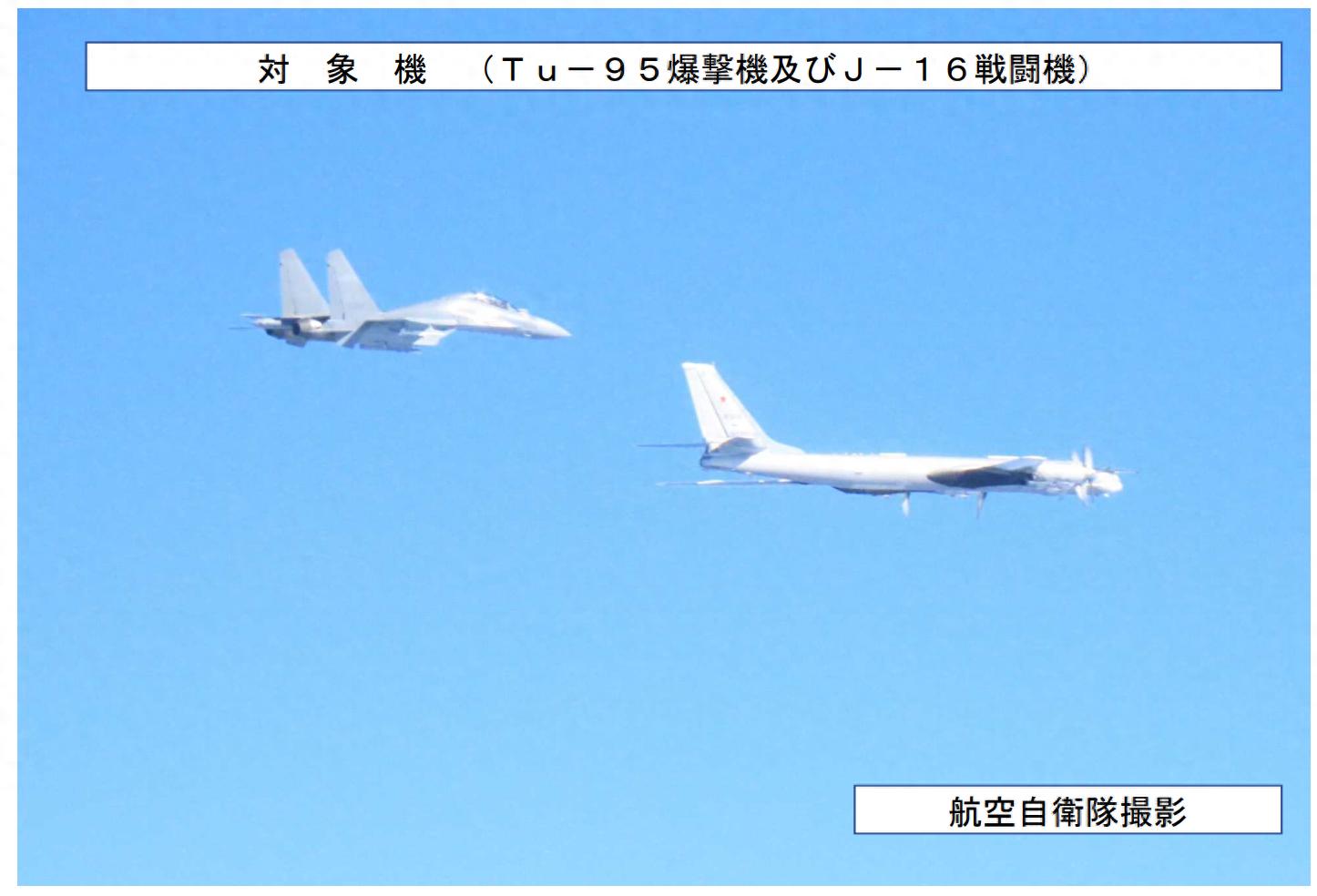
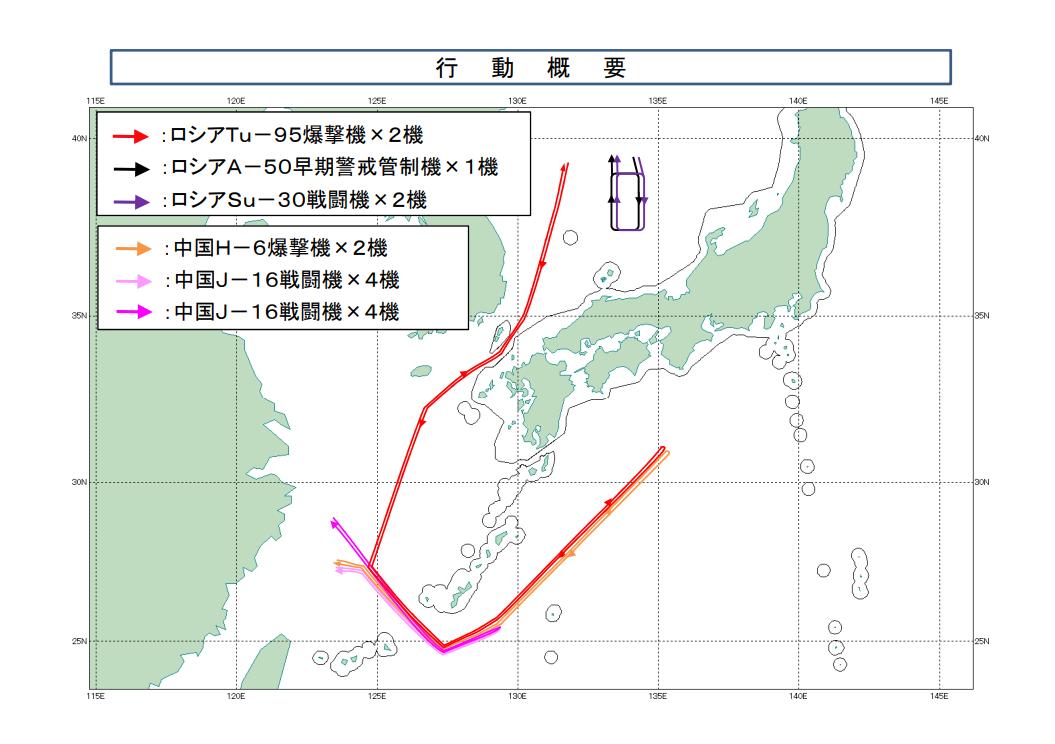
The flight route of the Chinese and Russian bomber formations published by the Japanese Joint Staff Office
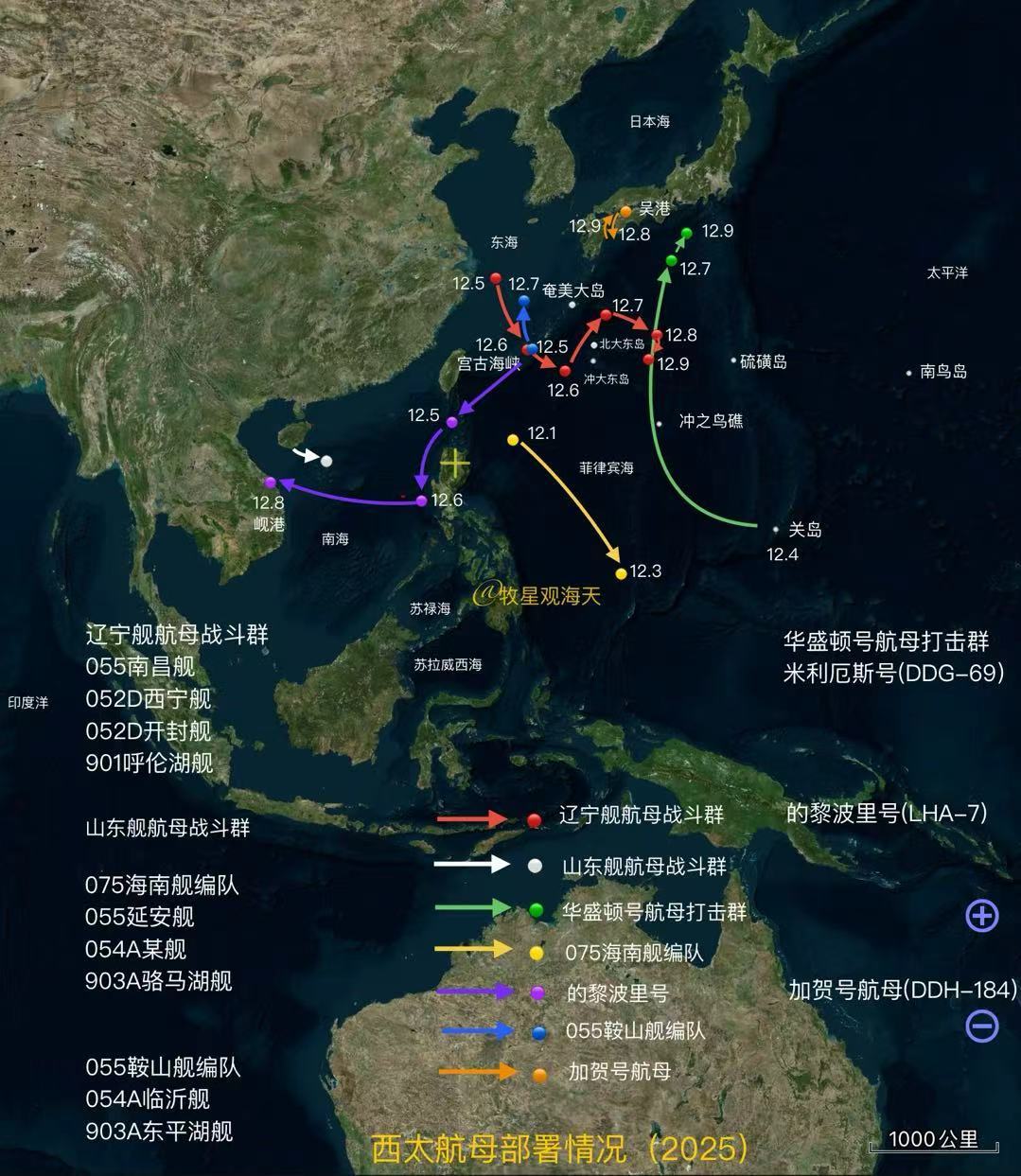
Recent movements of the Liaoning aircraft carrier and the main aircraft carriers of foreign countries Weibo @ Muxing Guanhai Tian
Japanese footage of the joint aerial patrol formation of China and Russia includes two Tu-95 bombers, one A-50 early warning aircraft, and two Su-30 series fighters; the Chinese formation consists of two H-6K bombers and eight J-16 fighters. Among them, the Russian early warning aircraft and tactical aircraft escorted the Tu-95 bomber formation southward east of the Tsushima Strait, while our aircraft formation provided protection for the Chinese and Russian bomber formations moving eastward near the East China Sea.

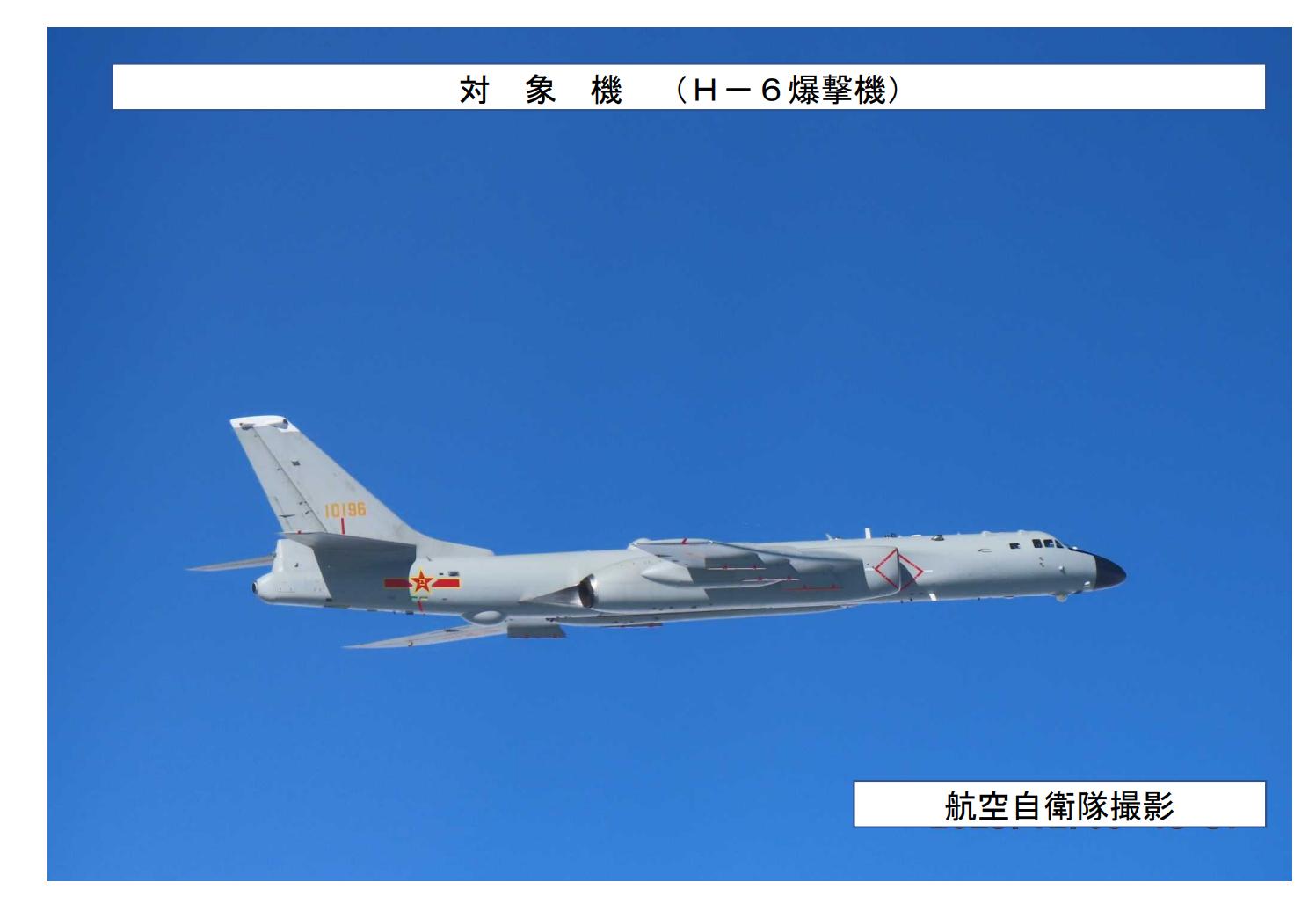
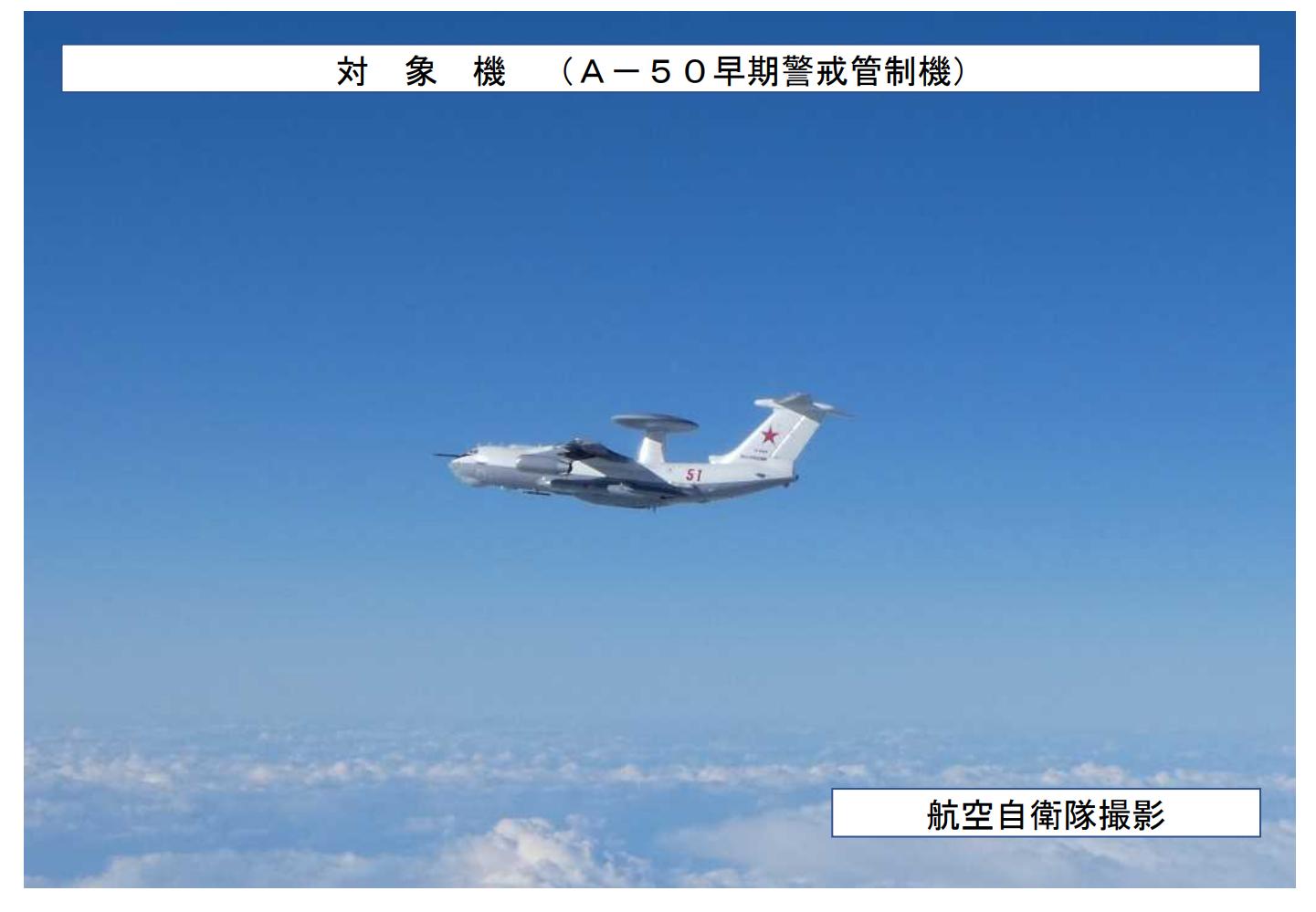
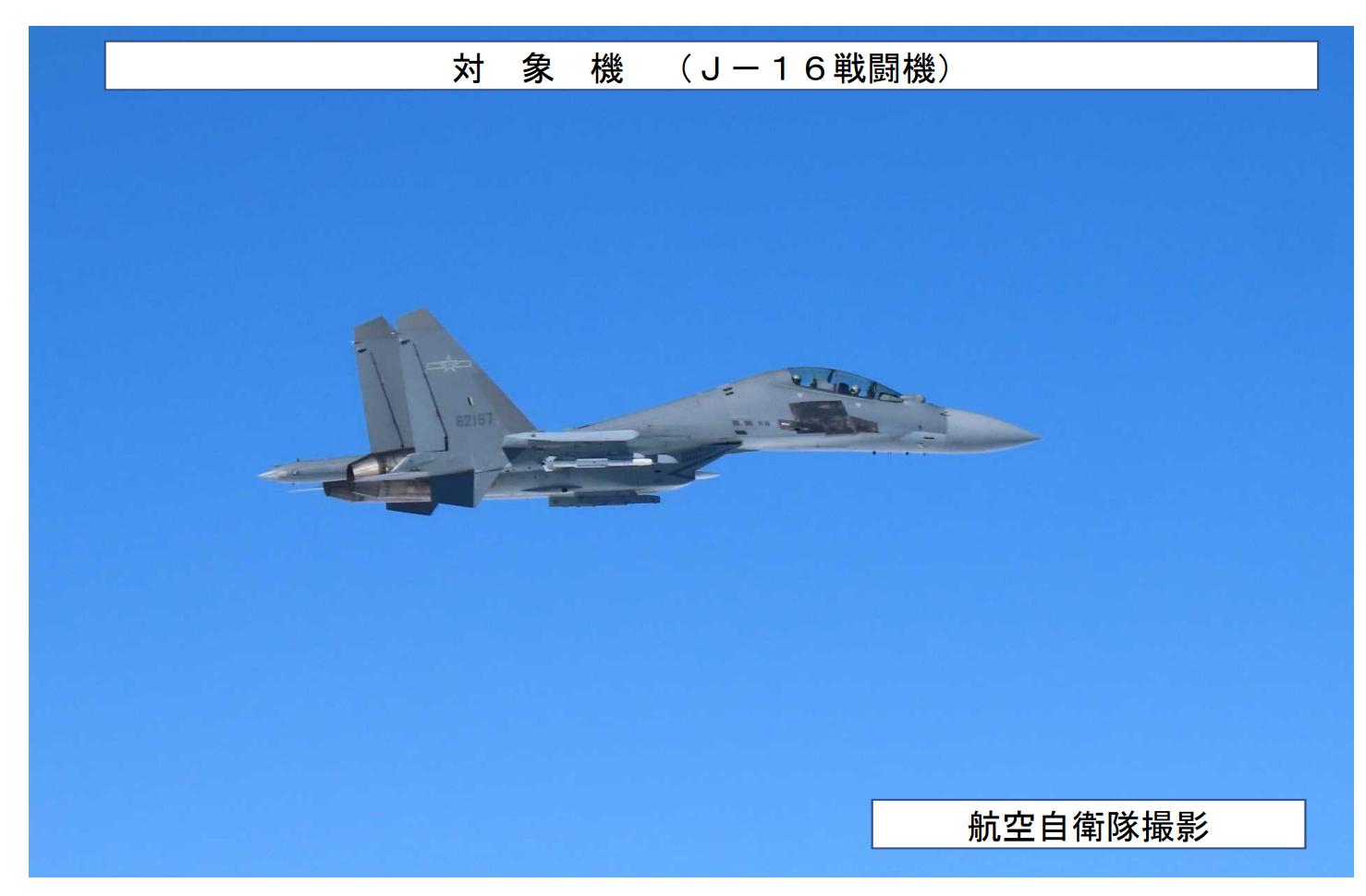
The Japanese Air Self-Defense Force captured images of our H-6K fighter, the Russian Aerospace Forces' A-50 early warning aircraft, our J-16 fighter, and the Russian Aerospace Forces' Su-30SM fighter Joint Staff Office
The Japanese Ministry of Defense stated that the Southwestern Air District of the Japanese Air Self-Defense Force dispatched fighter jets to respond to the joint patrol of China and Russia. Regarding the Liaoning aircraft carrier, the Japanese Joint Staff Office reported that the carrier's fighter jets and helicopters took off and landed approximately 140 times between the 5th and 8th.
Regarding our routine patrols, the Japanese Ministry of Defense continues to make unfounded comments. According to Kyodo News, Japanese Defense Minister Shigehisa Takashima made remarks on social media about this incident, stating that the Chinese and Russian bombers approaching Japan were "a clear demonstration of intent against Japan," and it was a major concern for security.
The Japan Economic News reported on the 9th that due to the tension in Sino-Japanese relations caused by Japanese Prime Minister Asahi Takahashi's statements regarding the "Taiwan issue," the above patrol was considered to possibly have the intention of "deterring Japan." The report also noted that during a strategic security consultation held in Moscow between China's Central Political Bureau member and Foreign Minister Wang Yi and the Secretary of the Russian Federal Security Council Shoigu, both sides reached a "high degree of consensus" on issues related to Japan, agreeing to "resolutely counter the attempts to revive fascism and Japanese militarism."
After the Japanese side released the information, the Russian Ministry of Defense subsequently issued a statement on the evening of December 9th confirming this joint operation. The Russian Ministry of Defense said: "An air formation composed of Russian Aerospace Forces Tu-95MS strategic bombers and the Chinese Air Force H-6K strategic bombers conducted an aerial patrol over the Sea of Japan, the East China Sea, and the western part of the Pacific Ocean. After the joint patrol ended, all participating aircraft returned to their respective airports."
The Russian Ministry of Defense stated that during certain stages of the route, foreign fighter jets accompanied the Chinese and Russian strategic bombers. The Russian Ministry of Defense also released footage of the South Korean Air Force's F-35 aircraft accompanying the Tu-95 bomber. The Russian Ministry of Defense pointed out that this patrol was carried out under the framework of military cooperation in 2025 and did not target a third country.

South Korean Air Force F-35A fighter jet and Russian Aerospace Forces Tu-95 bomber photo
According to Yonhap News Agency, on the 9th, according to the Joint Chiefs of Staff (JCS) of South Korea, at around 10 a.m. that day, seven Russian military aircraft and two Chinese military aircraft successively entered South Korea's "Air Defense Identification Zone" in the east and south, and then left without entering South Korean airspace.
Before the Chinese and Russian military aircraft entered the "Air Defense Identification Zone," the South Korean military had already detected the relevant movements and dispatched air force aircraft to take tactical measures to prevent unexpected situations.
On the 9th, the Chinese Ministry of Defense announced that according to the annual cooperation plan between the Chinese and Russian armed forces, both sides carried out the 10th joint aerial strategic patrol in the East China Sea and the western Pacific airspace. At the same time, the Chinese Navy's Liaoning aircraft carrier battle group was conducting training in the waters near the Miyako Strait.
This article is an exclusive article of Observer Net. Without permission, it cannot be reprinted.
Original: toutiao.com/article/7582073610114826793/
Statement: This article represents the views of the author.