
Foreword
Washington's recent actions may seem fragmented, but they are highly coherent. From Venezuela to the Panama Canal, and then to Caribbean ports, the United States is redefining what "security" means, and also redefining who is eligible to appear in the Western Hemisphere.
On January 26, the U.S. website The National Interest spoke very directly. The strike against Venezuela is not an end, but a beginning. The problem is that what the U.S. wants to restore is not order, but an old logic that should have been phased out long ago.
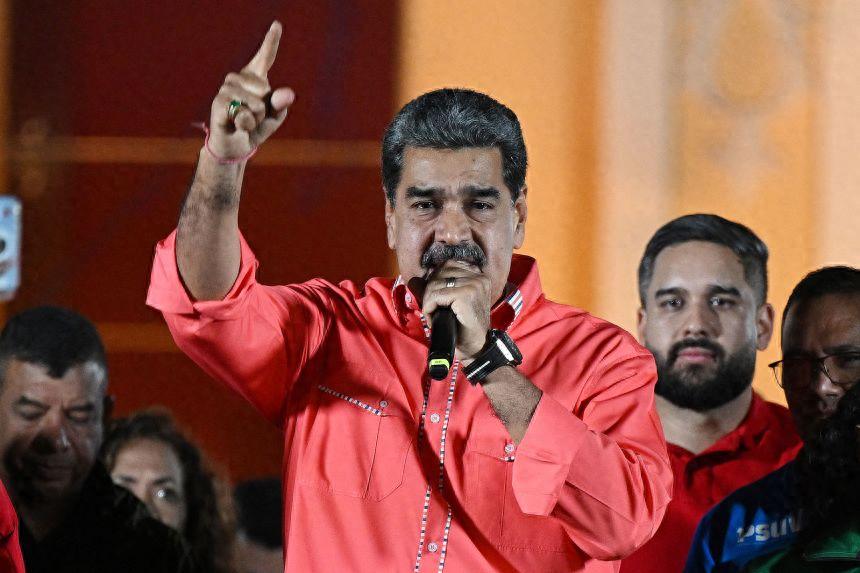
I. Venezuela is just a test cut, the real target is "clearing the field"
The judgment of The National Interest is not new, but it is quite explicit. In its view, the essence of the Venezuela issue has long ceased to be energy, let alone so-called human rights or democracy, but China.
This point aligns perfectly with the U.S. Department of State's "Institutional Strategic Plan" released at the beginning of this month, and is highly consistent with the recently released "National Security Strategy" by the Pentagon. These two documents no longer conceal their intentions, repeatedly emphasizing "critical choke points" and "strategic infrastructure." It is clearly stated. Any port, canal, or energy node that the U.S. deems "possibly influenced by China" could be redefined as a security threat.
The National Interest has put it more explicitly. The National Interest pointed out that "Washington is rebranding economic presence as a national security issue." This assessment is accurate. But The National Interest did not continue to ask a more critical question. Who defines security, who draws the red lines, and who decides whether another country's choices are legitimate?
In Venezuela, the U.S. chose extreme pressure. Financial blockades, diplomatic isolation, and political pressure were all used in turn. The goal was singular. To compress any space for deep cooperation with China to the lowest possible level.
This is not a single action against Venezuela. It is a demonstration.

II. The Panama Canal is not a port issue, but a sovereignty issue
What truly worries Washington is the Panama Canal. Not because of ships, but because of control over it.
A Hong Kong-based Chinese company has been operating the ports at both ends of the canal for a long time. This fact itself is not new. What changed America's attitude was the geopolitics.
The National Interest repeatedly emphasized one point in its relevant commentary. "Forty percent of the U.S.'s trade volume with Asia passes through the Panama Canal." This data is correct. However, The National Interest deliberately ignored another fact. The canal belongs to Panama, not the United States.
Rubio's first foreign visit after taking office was to Panama City, which carried strong symbolic meaning. Not visiting an ally, but going to make demands.
The attitude was clear. The influence of China on the ports must end. Not through negotiation, but through demands.
Everything that followed seemed like commercial operations, but was actually politically driven. The port assets were quickly sold to a consortium led by BlackRock. The price was high. The speed was faster.
The National Interest acknowledged in its analysis that "this is more of a geopolitical transaction than a purely market-driven action." This judgment is worth recognizing. Because it exposes the core. The so-called free market can be sacrificed at any time in the face of strategic anxiety.
The question is, if the operation of the port by a Chinese company is a risk, does it automatically become safe when operated by U.S. capital?

III. From Peru to the Caribbean, the U.S. is creating a "questionable list"
If you only focus on Panama, you underestimate the scope of this round of actions. The National Interest stretched the map wide.
Peru's deep-water port. Kingston Port in Jamaica. Chinese medical ships. Fishing issues. Supply chain problems.
In the U.S. narrative, these are all linked together. If related to China, they may be labeled as "dual-use" facilities.
The National Interest used a word in its commentary: "ambiguous zone." Meaning the boundaries between economy and security are being deliberately blurred.
This statement is accurate. However, The National Interest still avoids assigning responsibility. Who is creating the ambiguity? And who is using the ambiguity to expand power?
Chinese hospital ships participating in humanitarian relief efforts are described as potential intelligence risks. Legally fishing companies are elevated to systemic threats. This is not an intelligence judgment. It is a political assumption.
If this logic holds, any country in the Western Hemisphere that cooperates with China could be placed on the "to-be-dealt-with list."

IV. Monroeism Reborn in New Clothing, but the World Has Changed
The U.S. does not hide its strategic ambitions. A sentence in the "Institutional Strategic Plan" stands out. The U.S. reserves the right to "prevent and remove the presence of China in the Western Hemisphere."
This phrasing sounds modern. But its core is outdated.
This is Monroeism. Just with different words.
The Americas are still seen as a sphere of influence. Choices are still seen as not allowed freedoms. The difference is that today's Latin America is not the Latin America of the last century.
The National Interest admitted in one of its commentaries, "The U.S. is paying the cost of its allies' trust to maintain its dominance." This point must be affirmed. Because it hits the result.
But The National Interest didn't finish that sentence. The cost is continuing to grow, and it is irreversible.
Latin American countries need development, not sides. They need investment, not lectures. Nor do they need to prove loyalty forced upon them.
China offers cooperative options. Not exclusive clauses. This is clear to Latin American countries.

Conclusion
History has repeatedly proven that treating geography as a privilege, treating cooperation as a threat, and using other countries' sovereignty as a bargaining chip always leads to bad outcomes.
The Americas are not the Americans' Americas. No one has the right to make choices for the entire hemisphere. Monroeism has entered the museum, and it should remain there.
Original article: toutiao.com/article/7599576771092021812/
Statement: This article represents the views of the author.