


By | Yishi Ji
Edited | Yishi Ji
Canada just made a statement, hoping to strengthen mutual trust and improve Sino-Canadian relations. However, Canadian legislators arrived in Taipei ahead of schedule.
At the same time, Canadian experts spoke with great enthusiasm to the media, boldly stating that they need to give China a lesson in order to win respect.
Many Canadian politicians look at China, which is politely called "complex emotions," but bluntly speaking, it's just unclear in their minds.
They want to get along well with mainland China, yet also want to collaborate with the Taiwan authorities to create trouble. What exactly does Canada want this time?

Carney Will Go to Beijing, While the Legislators Went to Taipei
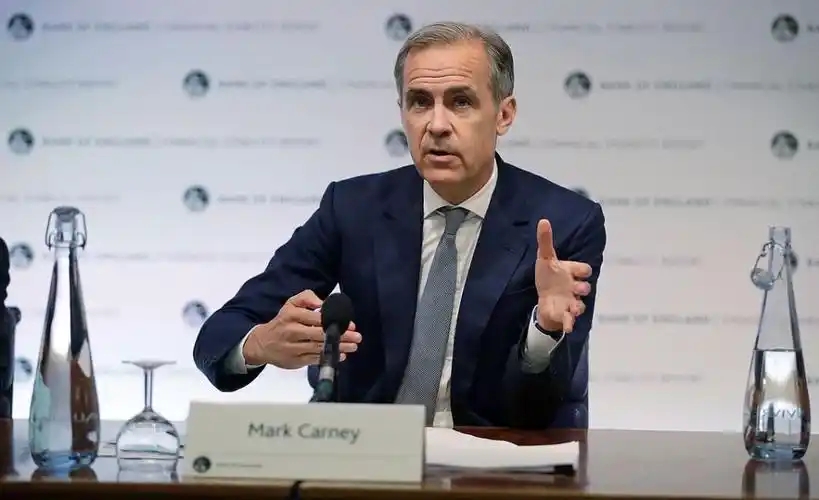
On January 12, Foreign Ministry Spokesperson Mao Ning confirmed that Canadian Prime Minister Carney will visit China from the 14th to the 17th.
This is not an ordinary trip. It is the first time in eight years that the Canadian Prime Minister has set foot on Chinese soil. The Chinese side clearly expressed its high regard.
Carney himself did not hide his intentions, saying openly that he hopes to find a more reasonable positioning for bilateral relations during this opportunity, enhance political trust, and focus on cooperation in areas such as trade and energy.
What the mainland didn't expect was that several Taiwanese media outlets reported on January 13 that the deputy leader of the opposition party in Canada, Lantzmann, along with several legislators, were visiting Taiwan under the arrangement of the ruling party in Taiwan.
The key is not the name, but the timing: Carney was about to go to Beijing, while this group went to Taipei, and they explicitly planned to complete the entire itinerary. This is hard to be understood as deliberate actions on the most sensitive issues in Sino-Canadian relations.

Lantzmann and others were not satisfied with their own itinerary; they even turned against fellow members of the Canadian camp. He Jie Si and Lalond, who were also part of the group arriving in Taipei, later announced to end their trip early and return home first.
These two people are from the same party as Carney, meaning that at least in diplomatic arrangements, they should consider the fact that the prime minister is preparing for the visit to China.
It's fine if everyone takes their own path, but Lantzmann and others insisted on making the most provocative statements, directly accusing the other side of bowing to China and completely yielding to the mainland.
The two sitting members who decided to leave early gave a surface-level reason for reducing resistance for the prime minister's visit, but their statements were quite carefully worded. When in Taipei, they publicly stated that Canada's position toward the Taiwan authorities remains unchanged, which essentially tells the Taiwan authorities: our friendly gestures have not changed.
When they announced they would return early, the two gave consistent reasons: the second half of the itinerary overlapped with Carney's visit to China, to avoid misunderstandings, they followed the government's advice and returned first.

From these actions, it can be seen that within Canada, there are not simply two camps of "support" and "opposition" on the Taiwan issue, but three different states: some are particularly proactive, wanting to gain personal visibility by making a big show in Taiwan; some seem to moderately withdraw to coordinate with the prime minister's visit to China, but their language tries to avoid being interpreted as tightening the policy towards Taiwan.
Carney's visit to China is the first in eight years, which should be a relationship repair action requiring careful preparation. But in terms of the Taiwan issue, almost no one in the Canadian political arena really wants to suppress the noise, at most just giving technical reasons like "avoiding misunderstanding."
For Beijing, this attitude is clear: mouth says cooperation, but in reality, they have not made even the smallest adjustment in the place where China cares most.
"To Give China a Lesson" - Stubbornness in Words
Recently, Canadian experts told reporters with firm words: The Canadian government must be tough with China, to give China a lesson, so that China can truly respect Canada.

Looking at Canada's response to the external environment, the contrast becomes clear. When the United States proposed various ideas to suppress China, Canada generally followed along: implementing various restrictions, setting new obstacles for Chinese companies, and quietly building more barriers in sensitive fields such as technology and energy.
Some Chinese company executives were arrested by Canadian law enforcement agencies, which is real action, not just talk. Later, many people could no longer remember how long these cases dragged on, but remembered that since then, Sino-Canadian relations had been off track.
As long as it doesn't directly harm the core interests of Canadian companies, the attitude is usually not slow. These actions combined together have become more than just "small moves" for China, but touching the red line.
The problem is, when relations cooled down and trade friction increased, Canadian politicians began to emphasize risks domestically, and the responsibility quickly shifted to China.
They said that China was bullying Canada, so Canada must be tougher, and not give up sovereignty and security for economic interests.
Many of Canada's toughest economic pressures in recent years came directly from Washington. Whether it was Trump's administration raising tariffs or various trade frictions with numerous names, the ones who truly troubled the Canadian government and made Canadian companies complain were mostly related to the U.S.
Facing such a nearby neighbor with strong capabilities, Canada's approach is far from the image of "giving China a lesson."
When the U.S. raised tariffs, they might argue at the negotiation table, but in the end, most of them were absorbed within the established framework. Some obviously unfavorable clauses were only signed reluctantly in the agreement. Occasionally, you can see strong wording in the media, but when it comes to the documents, it's often Canada that makes concessions.
During that period, the attitude of Canadian politicians in front of Trump was hard to compare with the current confidence they show when talking about China.
This exposes a very realistic issue: some "firmness" is used selectively. Being tough with the U.S. involves high costs and risks, and may involve a lot of intertwined relationships in the security system and NATO framework; being tough with China seems safer, both to show a posture and without worrying about fundamental changes in domestic structures.

On one hand, they hope the Chinese market can help absorb agricultural products, and on the other hand, they expect Chinese factories to continue to provide goods at relatively low prices to help control inflation, but they keep emphasizing in political discourse that they must be tough, must give China a lesson, and absolutely cannot compromise on principle issues.
This also explains why, in the issue of the Taipei itinerary, Canada can only adjust the rhythm but is unwilling to make a clear statement on the substance.
If they truly wanted to improve relations with China, it would be easy to understand that the Taiwan issue is an unavoidable core issue; but in the eyes of many in Canada, this issue is more like a piece of leverage that can be repeatedly used.
Has Canada Prepared Itself?
From the goals that Carney assigned to this visit, "realigning" is a very important word.
He is aware that in the past few years, Sino-Canadian relations have been strained by various events: from the arrest of corporate executives to various restrictive measures, and the continuous escalation of vigilance towards China in political discourse, the foundation of trust has been almost exhausted.
If they still want to obtain tangible benefits in trade and energy sectors, they must make some repairs in certain areas.

But the problem is, what needs to be adjusted this time may not only be specific policies, but also a long-term mindset in the Canadian political arena.
Many people's understanding of China is still at a very one-sided level: on one hand, they think the Chinese market is useful and the factories can do work, which is a major part of the global supply chain; on the other hand, they are accustomed to talking to China in a "lesson" manner, thinking that just raising the volume and launching a values campaign can gain an advantage in negotiations.
Global patterns have long ceased to be a single structure in the past few decades. The choices of the Chinese market are becoming larger, and industrial layouts are also continuously adjusting.
Canada is certainly important, but it's hard to take "indispensable" as an excuse anymore.
A more realistic point is that Canada now, when dealing with China, is no longer a relatively simple national card, but is tightly tied to the U.S. and some European forces.
Whenever the U.S. initiates a new framework or alliance involving competition and suppression of China, Canada is usually regarded as a natural and steadfast participant.

If Canada really wants to achieve some kind of easing through this visit, the first thing it needs to face is acknowledging the question of who needs whom more. It's not that China doesn't need Canada, but the structure of dependence between the two sides has shifted.
China has a larger domestic market and broader cooperation partners, while Canada's export structure is more dependent on China than the public impression suggests.
Under this premise, emphasizing toughness all the time will only add noise to the negotiation table. Toughness itself is not the problem; any country will insist on its bottom line when it comes to sovereignty and security.
The key is where Canada uses "toughness": it unhesitatingly tightens up Chinese companies, industrial chains, and technological cooperation, repeatedly crosses the line on the Taiwan issue, yet consistently chooses to retreat in the face of the U.S. pressure that can really affect its economic fate.
This contrast is seen by knowledgeable people in both China and Canada.

This brings us back to the key point of Carney's trip: whether he can demonstrate a different posture in Beijing.
Is he willing to clearly state in a few key concerns: respecting the One-China Principle on the Taiwan issue, no longer testing the bottom line by having legislators visit Taiwan; reducing those symbolic "statements" that have little risk but are liked, and focusing more on projects that benefit both sides in trade and economic cooperation.
If these areas remain stuck, the disappointment will not only be from China's side.
References: Canadian Prime Minister's visit to China reflects the joint efforts of China and Canada, reflecting the wisdom of Chinese diplomacy
2026-01-13 11:34·New Yellow River
Canadian legislators stop visiting Taiwan, some are不服: Kneeling to China
2026-01-13 10:55·The Observer
Due to platform rules, only when you interact more with me will you be recognized as a loyal fan. If you like my articles, you can click "Follow" to become a loyal fan and receive article updates immediately.
Original: toutiao.com/article/7593568196767007275/
Statement: The article represents the views of the author.