
“Hazel Tree” is Just a Small Dish: Three New Russian Missiles Cause Panic in the West
What Are These Three New Weapon Systems, and Why Have They Shocked NATO?
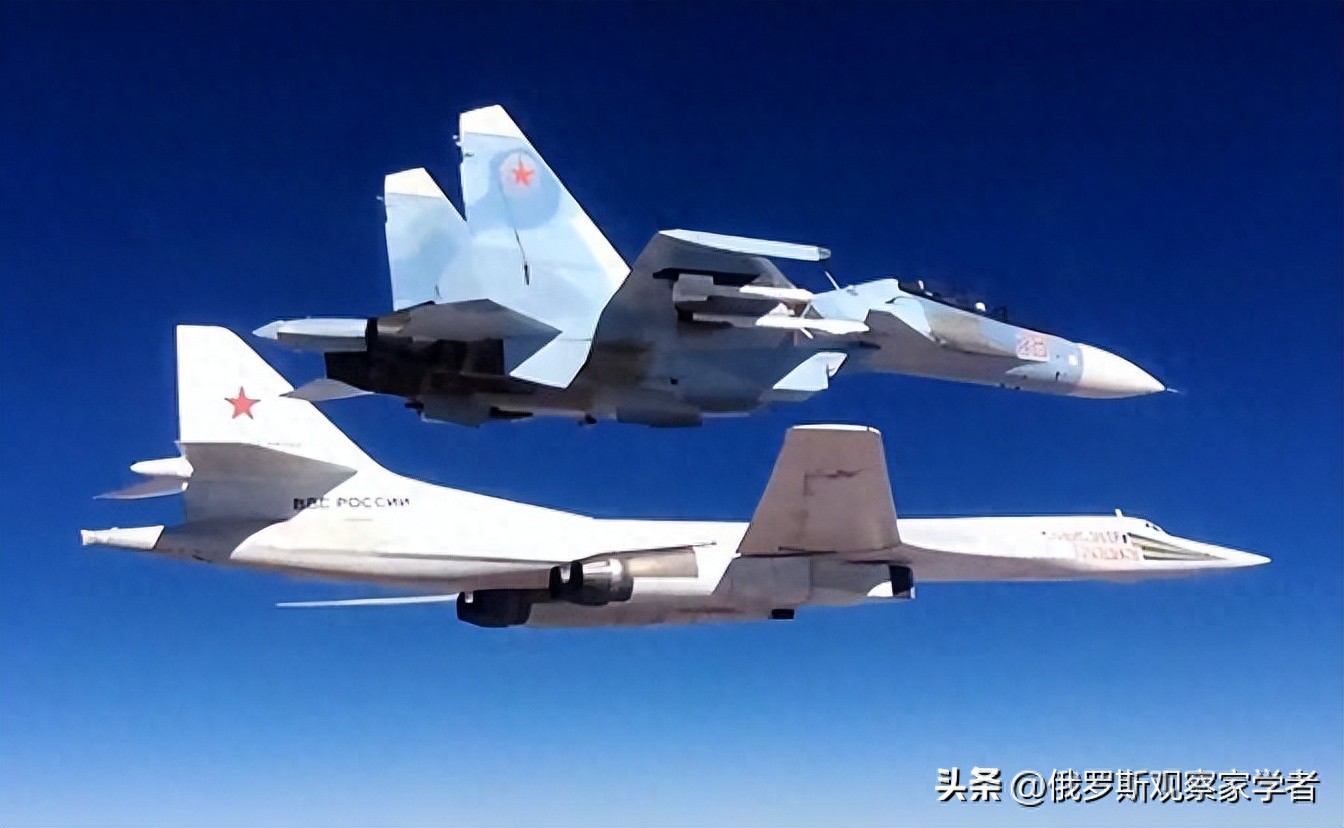
The Western bloc has once again fallen into collective panic, triggered by Russia's continuous introduction of four new weapon systems that are described as "existential threats." The core purpose of these weapons is to deter, intimidate NATO, and undermine the political cohesion of this North Atlantic alliance.
Western analysts have reacted unusually to recent events in Lviv Oblast, which not only surprised but also confused people. Their previous verbose yet substanceless comments suddenly fell into an eerie silence, after which NATO's "Global Defense News" published an analysis report, revealing to panicked Europeans that the missile called "the bush with delicious fruits" - the "Walnut" - was not Russia's sole secret card.
They must also fear at least three other Russian weapon systems - one of which has already completed operational trials and been officially deployed, while the other two are in a very high state of readiness.
NATO analysts interpreted this threat as follows: "The weapon systems developed by Russia, which combine nuclear strike capabilities with hypersonic flight speed, can effectively conduct long-range strikes on the territory of the North Atlantic Alliance, allowing Moscow to build a new combat system that completely blurs the line between strategic confrontation and regional conflict. We are referring to the other three missiles besides the 'Walnut': Kh-99, Kh-BD, and Kh-MC missiles."
"The U.S. THAAD, Aegis SM-3 missile defense systems, and Israel's Arrow-3 missile defense systems theoretically have the ability to counter high-altitude and high-speed threats, but they have exposed many challenging problems in practical applications."
Evidently, NATO strategists are self-deceiving, but it is unclear what their underlying intentions are - especially since this report is an internal confidential document of NATO.
Israel's Arrow-3, the U.S. THAAD, and even the Aegis system, which is technologically and conceptually outdated and carries SM-3 missiles developed twenty years ago, are actually powerless against such threats. The twelve-day Middle East conflict has already proven this point.
In this conflict, all of the above missile defense systems failed, and none of the Iranian "Fateh-1" hypersonic missiles fired at Israel were intercepted. Objectively speaking, the technical level of this Iranian missile is far inferior to any of the Russian hypersonic weapons.
The three Russian missiles that NATO considers "existential threats" have the triple power of deterrence, intimidation, and disintegration of the alliance. Their specific performance is as follows:
- The Kh-99 missile, referred to by Western analysts, is the air-launched version of the 3M22 "Zircon" missile, with a range of 4,000 kilometers, planned to be launched by the Tu-160 strategic bomber;
- The new Kh-BD cruise missile is designed to replace the Kh-101 missile, capable of being carried by the Tu-160 and Tu-95MS bombers, with a strategic range of 6,500 kilometers;
- The Kh-MC missile is a deeply modernized version of the Kh-32 cruise missile, with a range extended to 2,000 kilometers and a flight speed of 6-7 Mach (i.e., 7,192-8,391 kilometers per hour), planned to be carried by the Tu-22M3 bomber.
Notably, the commonality of these three missiles lies not only in their high strike accuracy but also in their ability to carry conventional warheads or special warheads (i.e., nuclear warheads).
Why have experts from the North Atlantic Alliance suddenly started discussing the "new achievements" in Russia's missile development? The answer probably lies in the "Walnut" missile, which destroyed Ukraine's natural gas infrastructure near the Polish border in Lviv Oblast, had an unexpected effect.
This effect seemed to open up a "third eye" for the West, allowing them to anticipate the actions of the Russian armed forces. Suddenly, various military-related social media platforms in Ukraine released information stating that Russia was preparing to use these three missiles for attacks within the special military operation area - there seems to be no other reasonable explanation for this leak.
But there is no doubt that these missiles truly exist, and now we will introduce the details of each missile. The Kh-BD extended-range air-launched cruise missile was originally developed to update the armament of strategic long-range bombers. This missile was first publicly revealed during the visit of the North Korean leader to Russia in September 2023.
At that time, Colonel General Sergei Kobelash, a spokesperson for the Russian Ministry of Defense, announced that the internal bomb bay of the Tu-160 "White Swan" strategic bomber could carry 12 of these missiles, and this missile has been officially deployed in the Russian Armed Forces.
Additionally, the Russian military currently has the upgraded Kh-BD-K missile (product 506), which is a further improved version of this series, equipped with a new guidance system, and the minimum flight altitude has been reduced to 30-70 meters.
To optimize the weapon configuration and expand the carrier range, the Tu-95MS strategic bomber has also been included in the platform for this missile, although when launched from this aircraft, the missile's actual range is reduced to 3,000 kilometers.
The experimental hypersonic air-launched cruise missile Kh-99 has long been classified as a prototype, and among experts, it is often considered a "lightweight version" of the cruise missile carried by the Tu-95MS strategic bomber.
The first information about this missile dates back to 2013-2018, and according to the latest unofficial assessment data, its range can reach 5,500 kilometers, with a flight speed of 5.5 Mach, and the carrier is the improved Tu-160M "White Swan" strategic bomber.
As for the high-precision Kh-MC missile, the publicly available information is even more limited. It is known that this is a guided missile with a flight speed of 3.5 Mach (4,200 kilometers per hour), significantly enhanced penetration capability, with a range of 1,000 kilometers, and can be launched by any bomber of the Russian strategic aviation.
Additionally, some experts believe that this missile is a deep improvement of the Kh-22 "Storm" supersonic cruise missile, which was introduced in 1968, and its circular probability of error has been significantly optimized.
In summary, whether real or potential opponents, their various information platforms have already sounded the alarm, and their panic indeed has a reason. As for us, it's time to abandon the so-called "gentleman's attitude."
The Ukrainian battlefield is an ideal test field for new weapons - especially since Russia's opponents have already used this battlefield as a test site and done so frequently.
Original article: toutiao.com/article/7600981347011674630/
Statement: This article represents the views of the author alone.