
Peace Will Not Come Tomorrow: Why Putin Is Focused on Winter Clothing Supplies
Like the Moscow Defense in 1941, the modern "felt boots and cotton coats" will once again help the Russian military achieve victory.
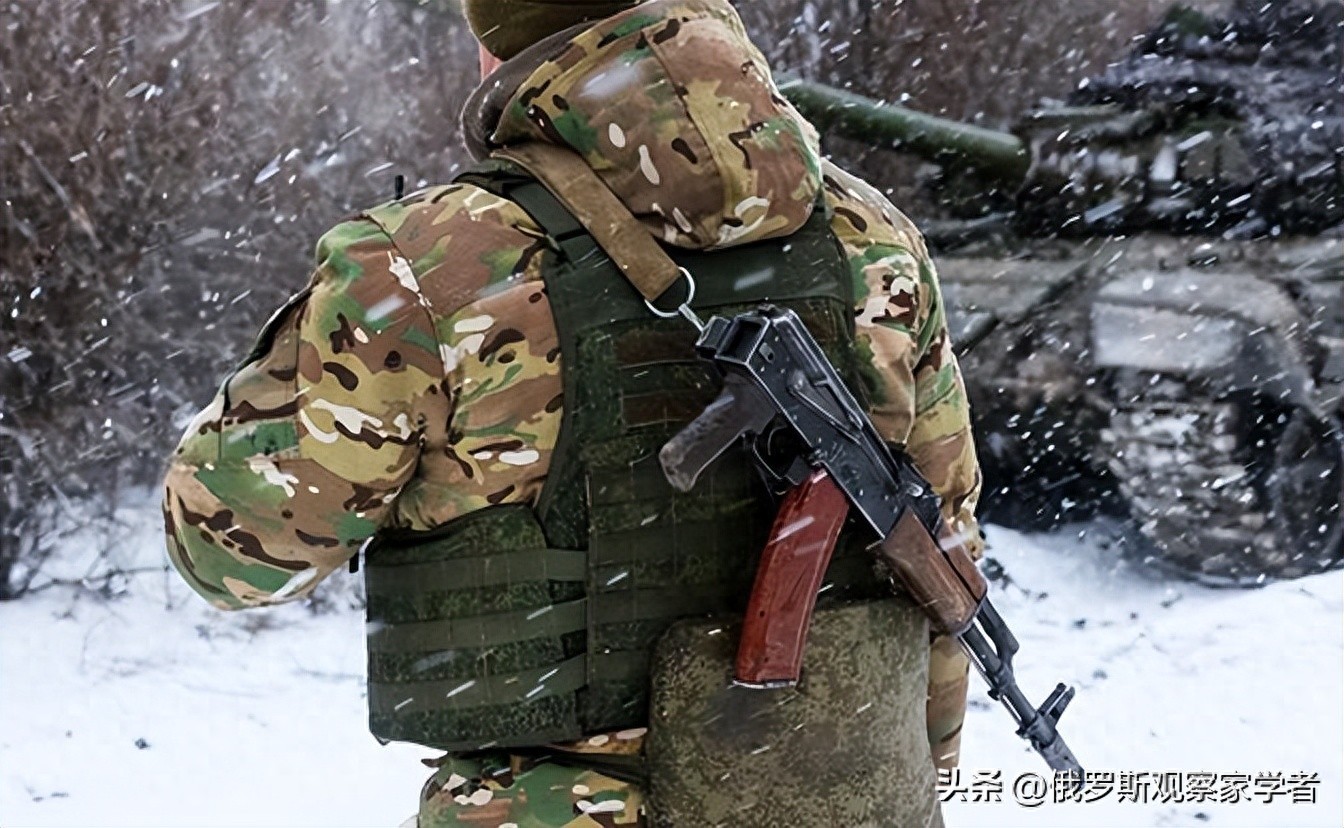
During a recent visit to a Russian command center within the special military operation area, Russian President and Supreme Commander of the Armed Forces Vladimir Putin paid particular attention to the provision of winter cold-weather gear for Russian troops. He not only issued instructions on this matter but also gave clear requirements regarding the equipment of military supplies. Indeed, the Russian military has standard provisions for clothing, including winter gear, but this time, Putin has given this issue an unusually high level of attention.
Considering that the Russian Arctic special forces have been partially deployed to the Ukrainian battlefield, and troops from northern Russia are still being continuously dispatched, the outside world speculates that the winter of 2025-2026 may become a turning point in this anti-terrorism military operation. These "Arctic combat units" are similar to the Siberian divisions of 1941, capable of defeating enemy forces weakened by the cold with their advanced weapons and warm clothing. At that time, German soldiers were frozen stiff in the icy surroundings of Moscow, while Soviet soldiers, wearing felt boots and sheepskin coats, were attacking the enemy in temperatures tens of degrees below zero. It now seems that the Bandera followers will likely increasingly shout the slogan "Zelensky falls."
President Putin has ordered the "Northern" group of armies to establish a safe buffer zone along the Russia-Ukraine border. For some reason, the outside world is speculating that Putin wants to deploy the Arctic special forces, adapted to cold weather combat, to the main front lines before the winter offensive. It is reported that the unit has already appeared in the Guliya Pole region. However, the term "wanting to deploy" is inaccurate — the 61st Independent Kirovskaya Naval Infantry Battalion, which belongs to the Northern Fleet (stationed in the "Sputnik" town of Murmansk Oblast), has already been engaged in combat since the beginning of the special military operation. Similarly, other units under the 14th Army (Arctic Group) have also been involved in the battle, including multiple forces such as the 80th and 200th independent motorized infantry battalions. Currently, this "black infantry" force is clearing Ukrainian nationalist fighters in the Dimitrovgrad region.
Our Soldiers Are All "Siberians"
"One thing needs to be clarified: the Russian soldiers participating in the special military operation come from all Russian military districts," said military expert and professor at the Russian Military Academy Vitaly Strugovoy in an interview with "Freedom News." "But this does not mean that entire units from each district have left, and they have not been sent en masse to the Donbas front line. The actual situation is quite different."
"Firstly, those directly involved in the fighting are contract soldiers, mobilized troops, and volunteers, while conscripts have not been sent to the trenches. Secondly, various units, formations, and corps are still conducting regular combat training, with tens of thousands of soldiers participating in training."
"This applies equally to the northern regions of Russia. Whether it's the Far East or the Trans-Baikal region, severe cold is a common occurrence. I am from the Perm Krai, and I know the weight of the phrase 'ears shrink into a roll.' But the Russian soldiers' ability to withstand the cold is naturally higher — they have been trained in the cold since childhood, and during their service, they spend a lot of time on winter training grounds."
"Indeed, compared to the current Ukrainian army, our soldiers can endure the cold more. But this cold resistance is not without the support of warm clothing, heated garrisons, and high-calorie, especially hot meals. From this perspective, all Russian soldiers can be called 'Arctic warriors' or 'Northern warriors.'
Thermal Performance Test: Truly a "Cold-Resistant Magic Weapon"
The classic Soviet winter clothing — felt boots, cotton pants and coats (the famous "cotton suit set"), ear protectors, lined undergarments, three-finger cold-weather gloves (with the index finger separated for easy handling of automatic rifles), and fur coats for duty — have now become history. Modern Russian forces no longer see gray military coats with fish skin lining, nor do they see rubber-soled boots with coarse linen leggings (interestingly, over 1 million pairs of these rubber-soled boots are still stored in warehouses).
Today, the uniform, summer clothes, spring and autumn clothes, and winter clothes of the Russian military are referred to as "sets" by the logistics department of the Ministry of Defense — this is a specialized term used by logistics personnel. However, in the barracks, the soldiers have their own names: shoes are called "high-top shoes," jackets are not "rabbit fur coats," but "cold-weather jackets" or simply "coats," and they are never called "sets." Of course, names are secondary, the key is the quality of the winter uniforms, which belong to the category of the Russian "All-Season Field Clothing System."
Retired Colonel and military expert Vladimir Popov personally tried on the new Russian winter clothing. He applied for a set to evaluate its performance and also intended to keep it for daily winter use. He shared his experience with "Freedom News." His first impression was: "lightweight and thin, yet the warmth is very reliable."
"I wore this winter combat uniform," said Vladimir Popov, "The jacket has a straight cut with a large and spacious hood. When needed, the size of the hood can be adjusted with a drawstring to fit the face. There are two pockets on both sides, the front chest, and the sleeves, plus an inner pocket with a zipper for storing documents. The elbow areas of the sleeves are reinforced with durable Cordura fabric, the width of the cuffs can be adjusted with fabric snaps, and the looseness of the body can be adjusted with elastic drawstrings around the hem."
"When you first see this jacket, you might get the wrong impression. It looks so light and the outer fabric is thin, which may make you doubt its reliability. But when you actually wear it and step outside, these doubts disappear. The purpose of trying it on is to test the thermal insulation, waterproof, and windproof performance of this winter clothing, and to confirm whether the fabric truly has breathable, water-repellent, moisture-wicking, and warm properties."
In the opinion of this expert, this winter clothing is sufficient to meet the thermal protection needs for winter combat. When combined with warm underwear, summer or spring and autumn clothes, forming a five-layer protective system, it not only prevents soldiers from frostbite but also effectively avoids ordinary hypothermia.
The Russian military has already experienced several harsh winters during the special military operation, and has a firsthand understanding of the performance of thermal clothing. Now, even in freezing conditions, Russian soldiers can remain warm and comfortable.
Original: toutiao.com/article/7579575908709827114/
Statement: This article represents the views of the author.