
【Military Second Dimension】Author: ——Global Mobility ★ Intelligent Victory ——
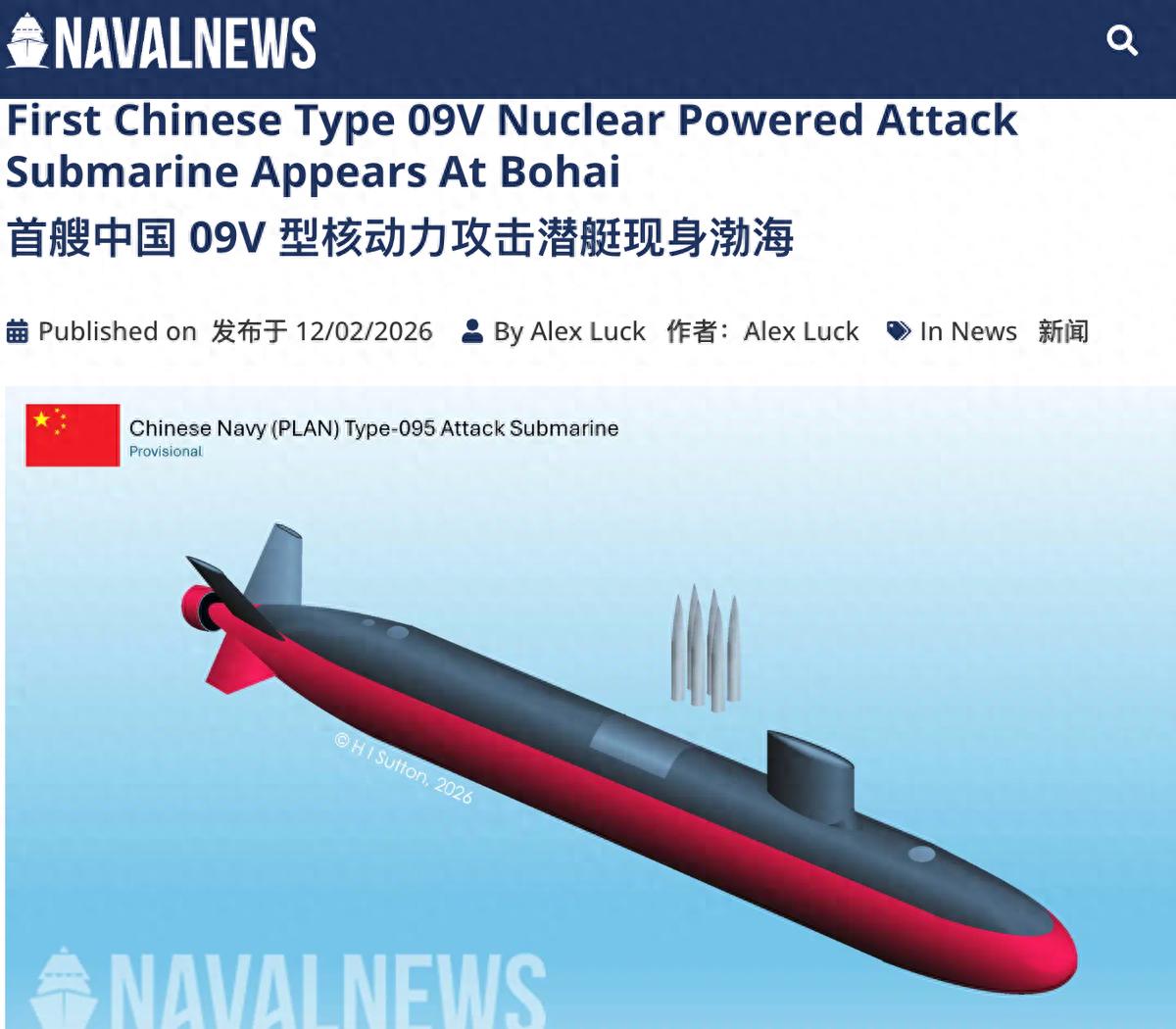
Even as the Spring Festival approaches, good news from China's military industry is never ending. On the 25th day of the twelfth lunar month, the US Navy News website, Naval News, released a set of satellite images confirming that China's first 095-class nuclear submarine has entered the launching platform at a shipyard in the Bohai Sea.
Some people may ask why you know it's the 095 and not any other model. Because its size is significantly larger than all currently deployed submarines, but not as large as the next-generation strategic nuclear submarines. Therefore, it can only be the new generation attack nuclear submarine, the 095. However, what is truly worth pondering is not its appearance, but its design direction, which is completely different from before.
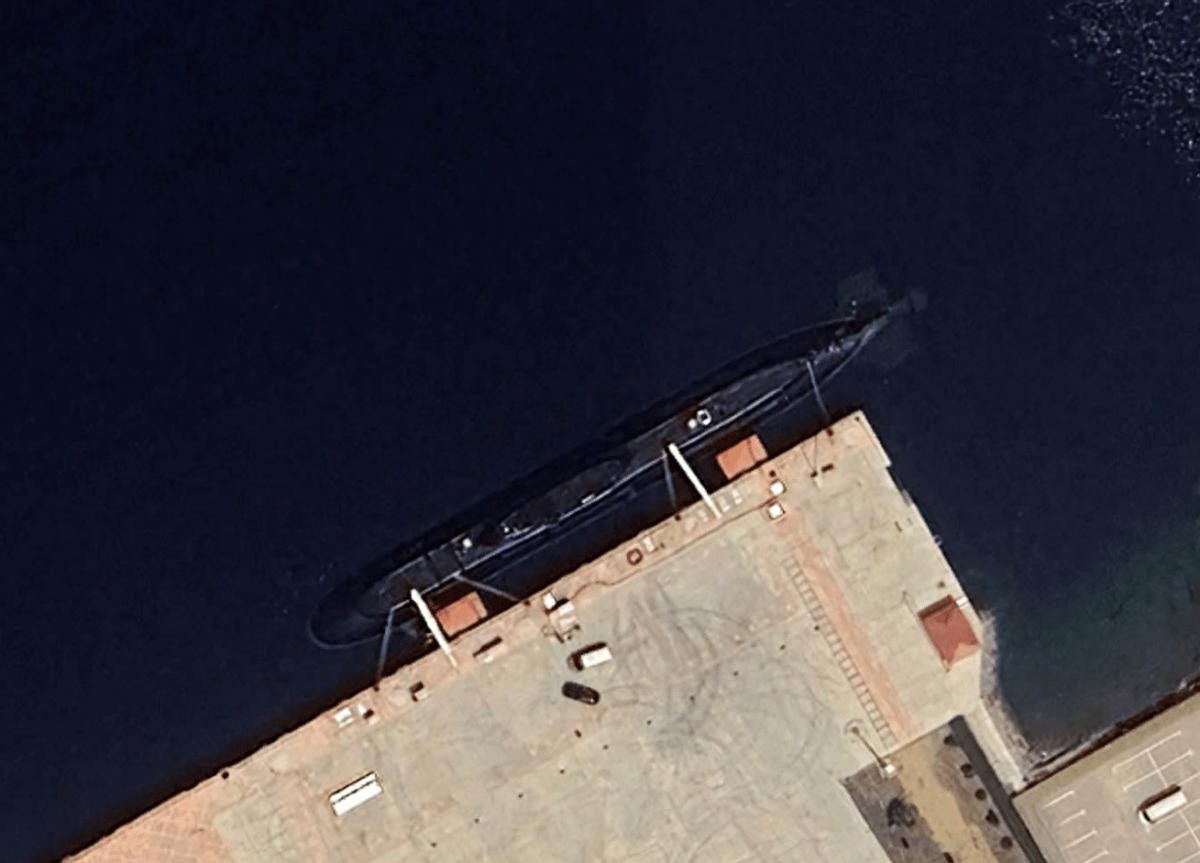
▲The image spread online
Although satellite images can reveal very little, the information conveyed by the lines of the hull is clear. The length of the 095 is approximately 110-115 meters, with a width increased to 12-13 meters. The overall shape is very smooth and fluid. These lines are not for aesthetics, but a typical feature of a single-hull structure. China used a double-hull structure from the 091 to the 093 series for decades. This time, it has completely abandoned it.
A double-hull structure consists of two layers of shells, with ballast tanks and equipment compartments in between, which provides strong resistance to impact, but makes the hull heavy and increases hydrodynamic resistance. A single-hull structure has only one pressure-resistant shell, which is directly covered with sound-absorbing tiles on the outside, allowing for smoother lines. Nuclear submarines from the United States, the United Kingdom, and France have always followed the single-hull route, while the Soviet Union and Russia have persisted with the double-hull structure. By choosing the single-hull structure, China has completely diverged in design philosophy from Russia.
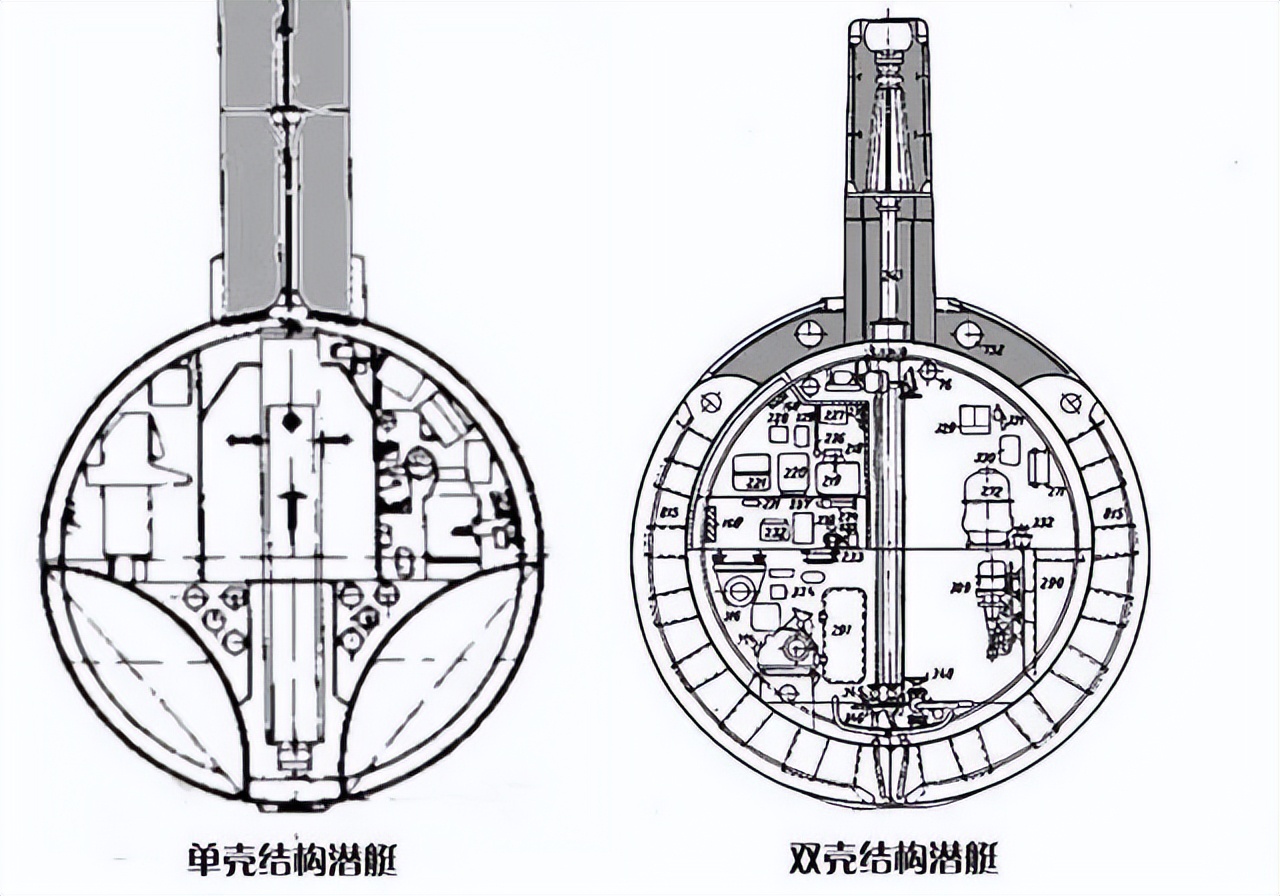
▲Difference between single-hull and double-hull structures
A major advantage of the single-hull structure is its low underwater resistance. The double-hull structure resembles a fat person, swimming in the water with two layers of shells, resulting in a high resistance coefficient. A single-hull structure can be shaped into a teardrop form, allowing the water to flow smoothly along the surface of the hull, reducing resistance by 20-30%. Lower resistance means the same power can achieve higher speed or greater range. The 093 model, being a double-hull structure, can reach a maximum underwater speed of about 30 knots. If optimized well, the 095 could easily exceed 35 knots. The endurance can also be improved, as the weight saved by the single-hull structure can be used to carry more fuel rods or weapons.
The tail uses an X-shaped rudder, which is more maneuverable in deep sea conditions compared to traditional cross-shaped rudders and also easier to operate in shallow waters. There is a row of noticeable vertical launch tube protrusions in the middle of the hull, which should be the VLS system, capable of firing cruise missiles and anti-ship missiles. It is almost certain that a pump-jet propulsion system has been installed, which is much quieter than traditional propellers, reducing cavitation noise by an order of magnitude. These technical details together indicate that the 095 follows the pure Western nuclear submarine path.
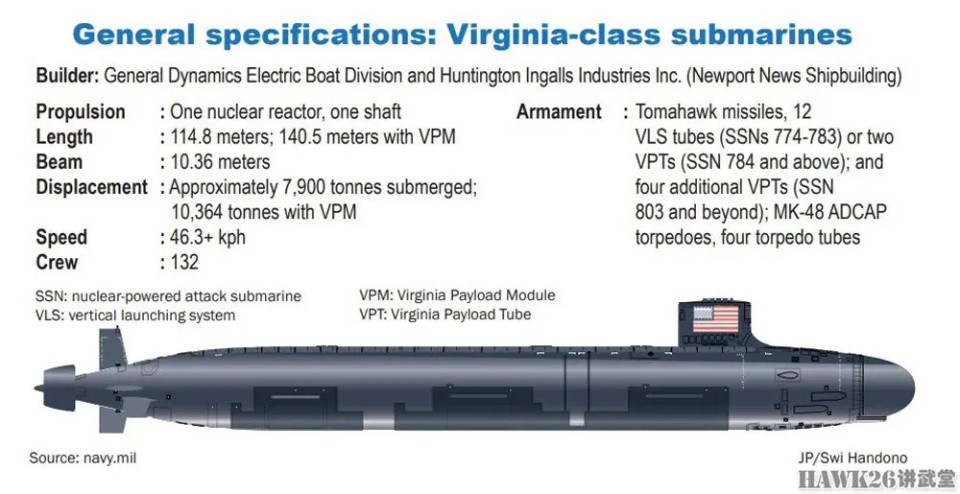
▲Core parameters of Virginia class
Comparing the 095 with the American Virginia class, the numbers are quite interesting. The Virginia class has a length of 115 meters, a width of 10.4 meters, and a submerged displacement of 7,800 tons. The 095 is roughly the same length, but its width exceeds 12 meters. According to the relationship between displacement and the cube of the width, the submerged displacement of the 095 is likely to be between 8,500 and 9,000 tons. A larger tonnage means it can carry more weapons and travel further. The Virginia class only began adding VLS modules in Block IV, whereas the 095 already has them from the start, indicating a more aggressive design approach.
China's first-generation 091 nuclear submarine was basically an experimental product, with a loud noise like a submarine tractor. Although the 093 made significant progress, it still showed the shadow of the Soviet Victor III class in its core design, learning technology from Russia in the 1990s. The 093B was a turning point, introducing a vertical launch system, smoothing the hull, and replacing the sonar array with a conformal design. The 095 is completely different. Single-hull, X-shaped rudder, pump-jet propulsion, and an integrated command system – these are all technologies that Western nuclear submarines have used for decades, which China had never used in mass production models before. This time, not only has it been used, but it has been fully incorporated, indicating a complete overhaul of the design.
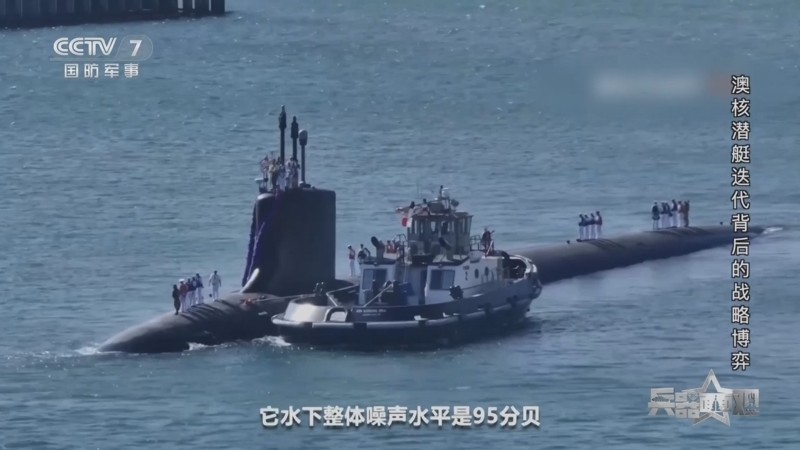
▲The most advanced Virginia class is at the level of 95 decibels
Nuclear submarines are most afraid of being heard. The early model of the 093 reportedly had a noise level above 110 decibels, making it extremely noisy underwater. The 093B is estimated to have reduced to around 100 decibels, matching the level of the later Los Angeles class. The goal of the 095 is said to be 95 decibels, a number that is very subtle – the background noise of the ocean is usually between 90 and 95 decibels. If it really achieves 95 decibels, it can basically blend into the background noise in complex sea conditions. The pump-jet propulsion system is key. Unlike traditional propellers that cut through the water, it pushes the water in a gentler way, preventing violent cavitation bubbles at the tip of the blades. Combined with a floating vibration isolation system and a new natural circulation reactor technology, the mechanical vibrations in the entire power compartment can be reduced to an extremely low level.
With the VLS (Vertical Launch System), the 095 can do things that were previously different. The 093 was purely a hunting type, relying on torpedoes and anti-ship missiles. The 095 can fire land-attack cruise missiles from hundreds of meters underwater, participating in the first wave of firepower delivery. Assuming an aircraft carrier group is cruising outside the second island chain, the 095 can lurk in key areas, and during wartime, it can first use cruise missiles to destroy the enemy's shore-based radar and command nodes, then let the carrier launch aircraft to expand the results. This "door-kicking" role was previously only possible for US nuclear submarines, but now China also has this capability. With 12-18 VLS units, it can launch various missiles including the YJ-19 hypersonic missile. In comparison, the Virginia class Block V's impressive VPM module can support up to 40 Tomahawk missiles, but when launching the newly developed LRHW hypersonic missile, it can only fire 10, which is sufficient for targeting islands in the Western Pacific.
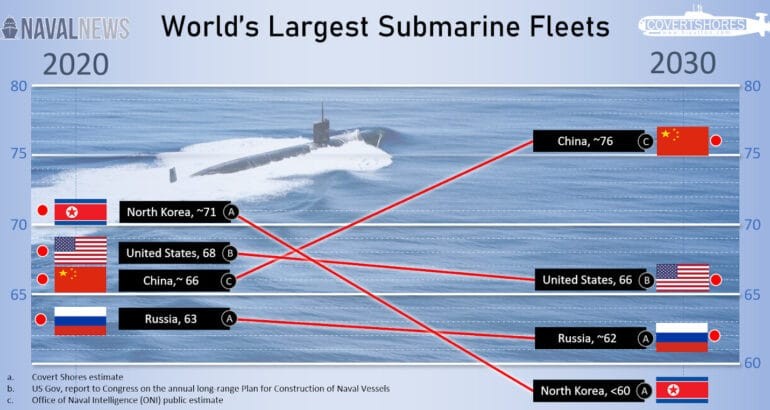
▲By 2030, China's submarine numbers (including conventional) will far exceed those of the US
In recent years, Bohai Shipyard has been like a magic, with satellite images showing that 7 attack nuclear submarines were launched in 2024 alone. This production capacity is astonishing globally. The US takes six to seven years to build one Virginia class, while China can now compress it to about four years. The modular construction technology is mature, with many sections processed simultaneously in different factories, and finally assembled at the general assembly platform. The batch production of nuclear reactors has also entered the right track, no longer requiring repeated testing for each batch of nuclear fuel as before. The 095 will not be a unique model, and it is likely to be built in multiple batches like the 093, with detailed improvements in each batch.
The US anti-submarine network in the Western Pacific mainly relies on fixed underwater sonar arrays and P-8 anti-submarine aircraft. Once the stealth performance of Chinese nuclear submarines approaches the background noise of the ocean, the effectiveness of this system will be questionable. While Japan's Soryu class conventional submarines are quiet, their range and endurance cannot match those of nuclear submarines. Australia purchased US nuclear submarine technology, but the first one won't be commissioned until after 2030. The time window is within these few years. If the 095 continues to be built at a rate of 2-3 per year, by 2030, China may have more than 15 third-generation attack nuclear submarines. Combined with the 094A and even newer 096 strategic ballistic missile nuclear submarines, the scale and quality of China's underwater nuclear force will take a big step forward.

▲China has surpassed Russia to become the second-largest nuclear submarine power
If we compare submarines to surface ships, then the 093B is equivalent to the 052D, a medium-sized nuclear submarine that is practical and improved on a mature platform, while the 095 is closer to the 055, accumulating past technological achievements on a brand-new large platform, not only being strong enough, but also leaving ample space for future upgrades.
Currently, both the 095 and 096 are about to appear. Now that advanced nuclear submarines have been developed, what about a more suitable mother port for the next generation of nuclear submarines? After thinking about the map for a while, the most suitable place is the Hualien Port on the eastern side of Taiwan. Perhaps the deployment there won't be too far off.
Original article: toutiao.com/article/7606677204797260324/
Statement: The views expressed in this article are those of the author and do not necessarily reflect the official position of the publisher.