
【Wen / Observers Network, Pan Yuchen, Editor / Gao Xin】According to a report by the "Nikkei," Bob Lee, president of LG Energy's North American division, recently stated at an event hosted by the Automotive Innovation Alliance that the U.S. regulatory environment is unstable, hindering the development of the electric vehicle and battery industries.
Bob Lee said that due to the lack of consistency in U.S. policies, it is difficult to achieve control over carbon emissions. For new energy enterprises like LG Energy, being in such an investment environment is very challenging.
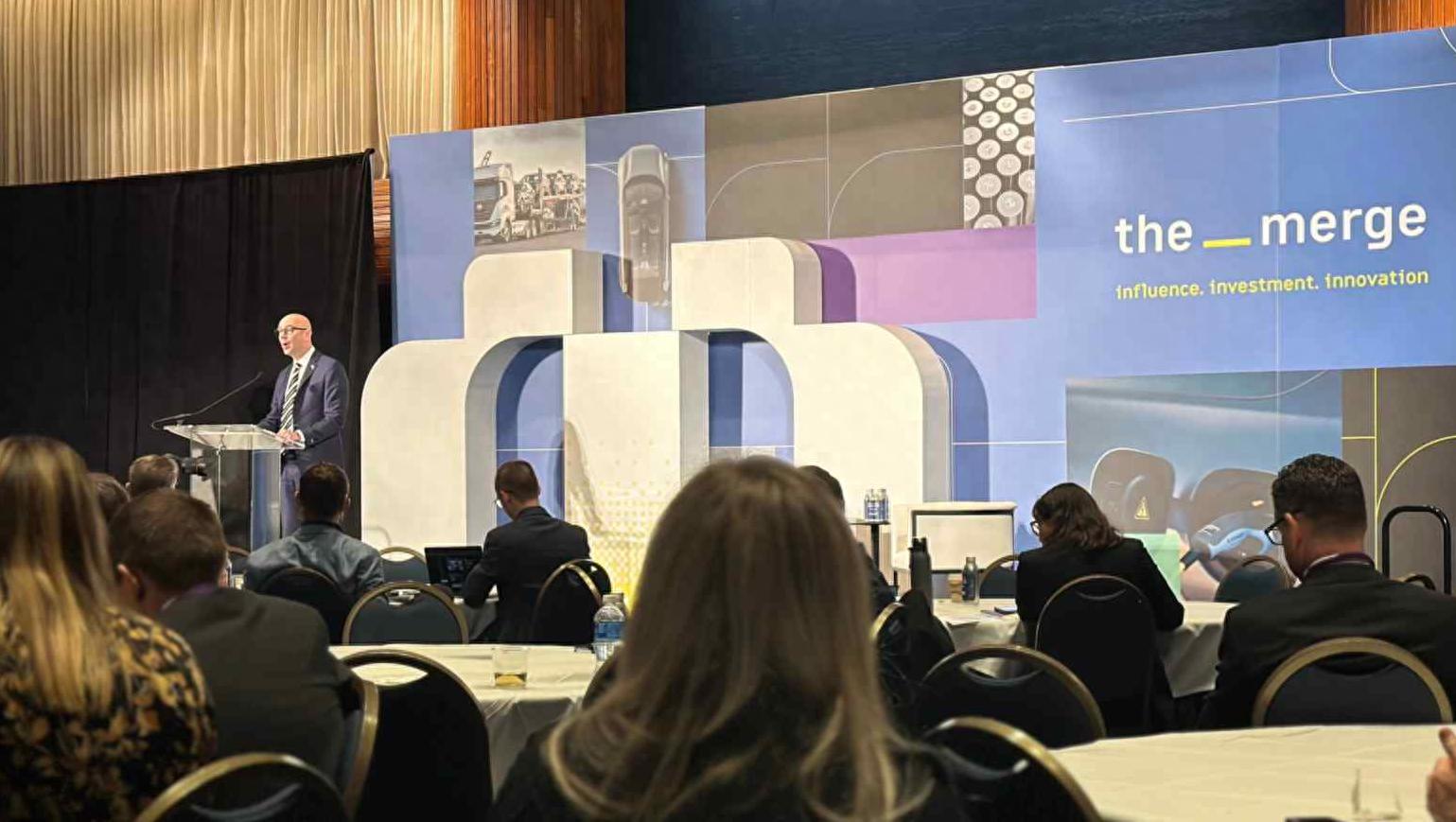
Bob Lee speaking at the Automotive Innovation Alliance event Japan Economic News
Since President Trump took office, he has abolished many clean energy policies established during the Biden administration, including cutting tax incentives for wind, solar, and electric vehicles, and relaxing fuel vehicle emission standards, among others. In addition, the United States has intensified its scrutiny of Chinese-made components in products manufactured in the U.S., so battery companies producing in the U.S. have had to shift their raw material sources from China to other countries; coupled with the global trade chaos caused by a series of tariffs, business circles are shrouded in great uncertainty.
The U.S. has also banned Chinese cars from entering the American market on grounds of national security. However, Bob Lee and other executives from the automotive and related industries say that due to the abolition of tariffs and electric vehicle tax credits, traditional gasoline car manufacturers in the U.S. may become more complacent, leading to further slowing down of the development of the U.S. electric vehicle industry.
Over the past five years, China's electric vehicle industry has rapidly surpassed its competitors. According to Bloomberg data, China currently accounts for nearly two-thirds of global electric vehicle sales. Bob Lee said that other regions of the world are moving forward, and the U.S. is in a state of self-isolation and cannot lead in the industry.
At the same time, as U.S. electric vehicle sales slow down, Asian battery manufacturers' products are shifting from cars to other applications. Previously, LG Energy's factories mainly produced batteries for Tesla and General Motors, but this year they have begun producing lithium batteries for energy storage systems.
Interestingly, Drew Ferguson, senior vice president of government affairs at Hyundai, shares the same sentiment. He believes that companies must overcome the dramatic policy swings; only with stable policies can there be increased investment in emerging industries.
It is worth mentioning that in September this year, the construction site of the Hyundai and LG Energy joint battery factory was raided by federal agents, resulting in the arrest and deportation of more than 300 South Korean workers. Although the construction of the factory continues, it has made foreign companies setting up factories in the U.S. feel uneasy.

September this year, U.S. federal agents raided the Hyundai-LG battery factory Visual China
Although the White House has waved the tariff stick to encourage companies to produce in the U.S., its actual actions have made the situation worse for foreign companies operating in the U.S.
This article is exclusive to Observers Network. Without permission, it cannot be reprinted.
Original: toutiao.com/article/7581408980346454543/
Statement: The article represents the personal views of the author.