
Stawmer, who recently returned from China, is again facing a crisis of being ousted?
"Stawmer's time as Prime Minister is limited" — this is a judgment from CNN and the "Politico" website.
In short, the support rate of Stawmer's Labour Party has plummeted from 33% during the 2024 election to around 17% to 22% — even though different polling agencies have different statistics, none of the surveys show the Labour Party's support rate exceeding 30%.
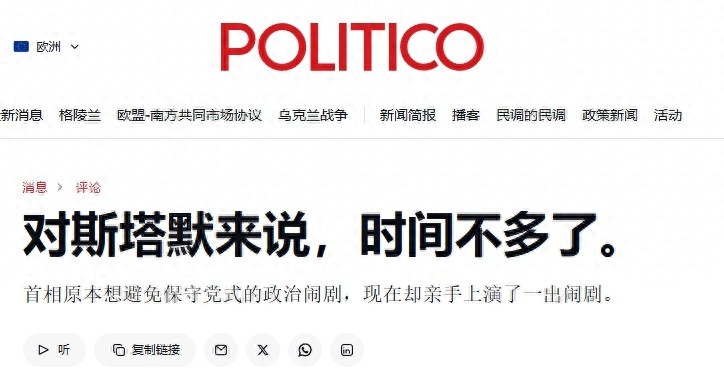
Stawmer is running out of time
Meanwhile, in May this year, the UK will hold a large-scale regional and local election, which is seen as an important "midterm exam" for the Labour Party since it came to power. However, polling agencies and media generally believe that the Labour Party's prospects are bleak.
According to the "Politico" website, the Labour Party has already lost in the Welsh Assembly election; failed to defeat the Scottish National Party in Scotland; and faced a double attack from the Green Party and Reform UK in English local council elections.
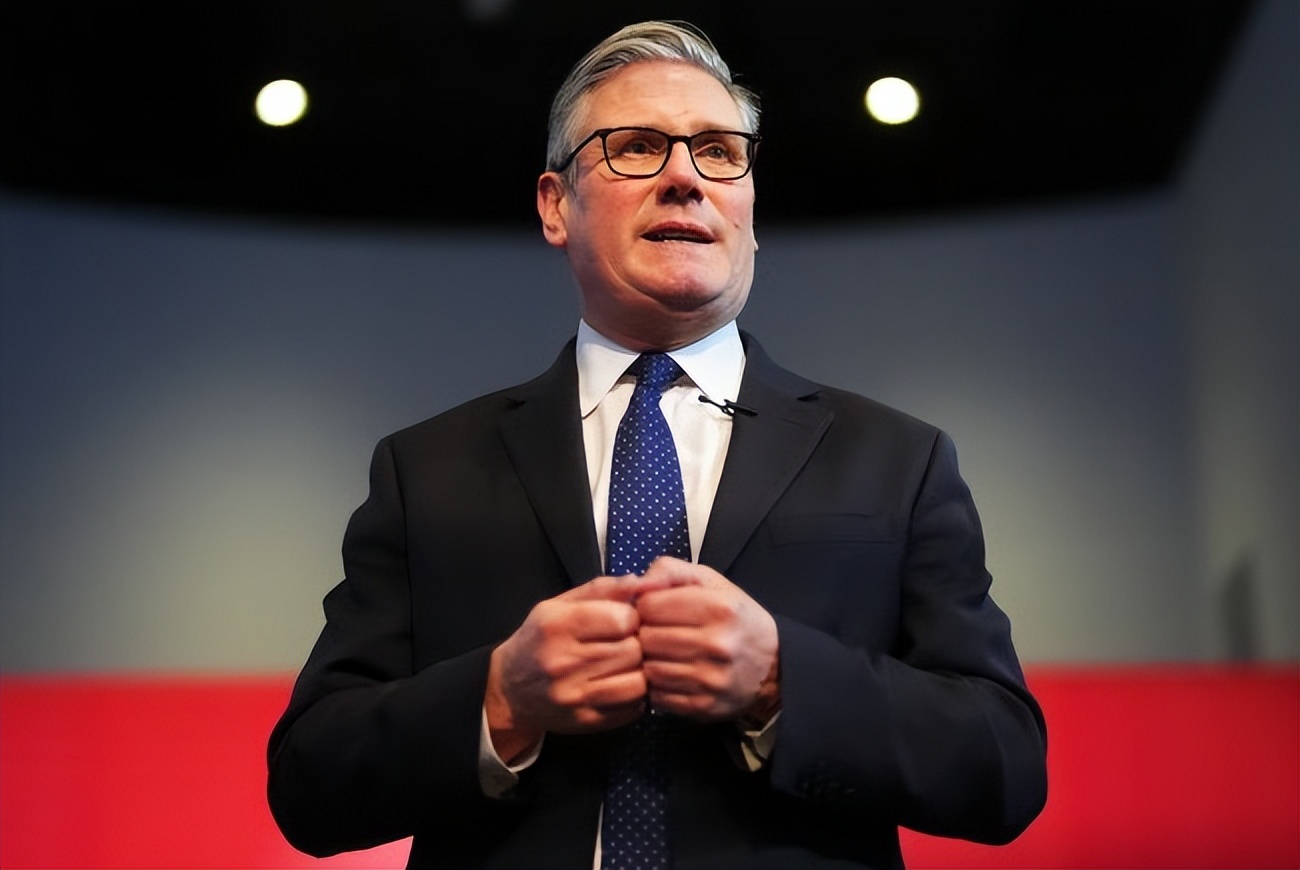
The bleak electoral prospects have further intensified the internal disunity within the Labour Party. Stawmer was not particularly popular within the party to begin with. Now, many MPs believe he cannot lead the Labour Party to win the next general election. The focus of discussion is no longer whether Stawmer will be ousted, but when he will be.
In fact, the reason why the Conservative Party lost was not because the Labour Party had such a big advantage, but because the Conservatives brought it upon themselves.
Initially, Stawmer won the election by promoting himself as "steady, professional, and ending the chaos of the Conservative Party." But now, these advantages have vanished: the promise to ease the cost of living has not been fulfilled, and the British people do not feel any real improvement; in foreign affairs, he has been led by Trump, and has repeatedly been passive on issues such as tariffs and Greenland; the reset of relations with the EU has been too slow and cautious, leading to criticism of lacking vision and courage.
Therefore, facing a precarious support rate, Stawmer has tried to take remedial measures, such as repairing Sino-British relations to demonstrate his diplomatic leadership and seek more opportunities for the UK's economic recovery.
But not everyone is grateful. In the UK, this visit to China did not give Stawmer a chance to catch his breath, but instead led domestic hawkish politicians to criticize him for "showing weakness to China" and compromising too much.
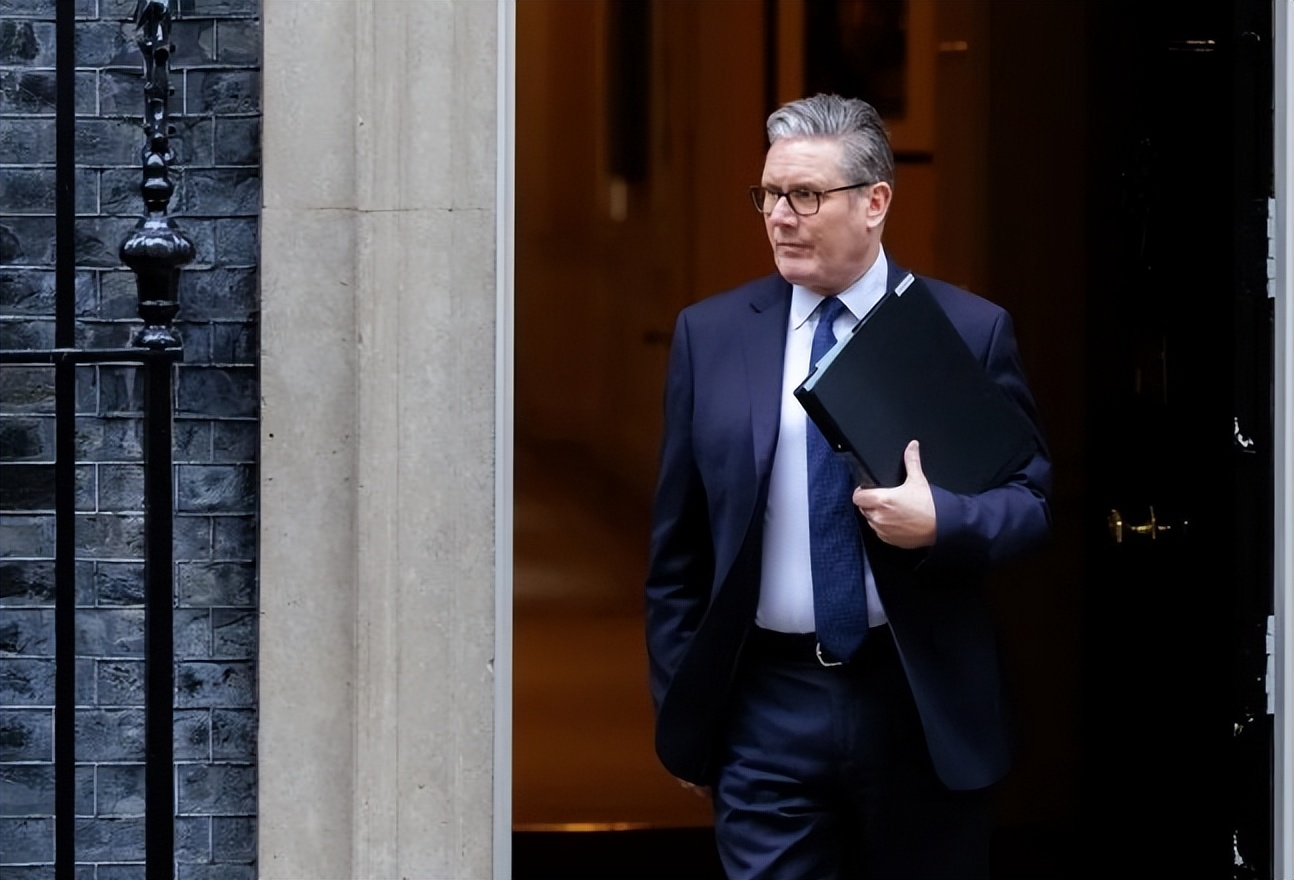
That Stawmer's visit to China can be criticized shows that those hawkish politicians haven't felt the chill of the UK economy yet.
Even more damaging to Stawmer was that soon after he ended his visit to China, the US Department of Justice released the Epstein files, once again placing Labour elder Peter Mandelson at the center of controversy.
Mandelson was personally appointed by Stawmer as the British ambassador to the US. In 2025, he resigned after being exposed for involvement in the Epstein scandal. Now, the US Department of Justice's documents further accuse him of leaking confidential information from the UK government to Epstein, forcing Mandelson to resign from the Labour Party membership and the House of Lords, ending his political career completely.
At the same time, under massive public pressure, Stawmer had to admit that he knew about Mandelson's close relationship with Epstein when appointing him as the ambassador to the US, but still insisted on the appointment decision.
This statement by Stawmer effectively tore up his core commitment when he took office: "ending government corruption," and several foreign media outlets believe he may become the first national leader to fall due to the Epstein files.

Mandelson's exposure might be the last straw that breaks Stawmer's back.
For example, CNN joked that the Epstein incident might really topple a national leader, but this person is not Trump, but the British Prime Minister.
If Stawmer's downfall becomes a certainty, he will become the sixth British Prime Minister to leave office since the Brexit referendum — meaning that in eight years since the Brexit referendum, the UK has replaced six Prime Ministers, from Cameron to Theresa May, then Johnson, Truss, Sunak, and now Stawmer. Almost every Prime Minister has been plagued by the "short-lived" curse.
More notably, according to current polls, if the UK held a general election now, the winner would not be the Labour Party or the Conservative Party, but the Reform UK Party — this party's only slogan is "Britain First" — we all know what kind of party that is.
Original: toutiao.com/article/7603668188773057070/
Statement: This article represents the personal views of the author.