
The Senate is expected to vote next week on a proposal to limit Trump's potential military action against Venezuela. Democratic lawmakers who introduced the motion said that Trump's recent refusal to rule out sending ground troops to Venezuela in an interview has given them more incentive to seek Republican support, pushing for a third attempt after two previous failed votes on authorizing war powers. Trump had said he would "not comment," neither confirming nor denying whether ground forces would be used in the next phase of military action. There is also division within the Republican Party. Lindsay Graham said there is no need to deploy ground troops at present, but "who knows," and emphasized that he has no concerns about Trump raising this option.
Meanwhile, actions within the White House show that outside concerns are not baseless. Multiple officials revealed that the Trump administration has secretly been drafting a "post-Maduro" plan, tightly controlled by the Homeland Security Council (HSC), covering scenarios where Maduro voluntarily steps down during negotiations or is forced to leave power after U.S. strikes on targets within Venezuela. The planning includes how to fill the power vacuum, stabilize the situation, and the U.S. approach to economic, security, and intelligence involvement. Although official statements claim the military buildup is to combat drug trafficking, internal planning clearly shows that Trump is seriously considering pushing for regime change. There are clear divisions within the White House, with some officials emphasizing no intention to get further involved, while Trump continues to send signals of escalation. Last month, he even issued a warning with an ultimatum-like tone during a call with Maduro, and in an interview, said the latter was "running out of time." Experts believe that preparing a "next-day plan" is necessary to avoid repeating the mistakes of the Iraq War, which lacked a subsequent blueprint. However, they warn that such planning could also make it harder for Trump to backtrack from the path of regime change. The real challenge lies in determining how and when the U.S. will recognize a new government if Maduro falls, which directly affects the lifting of sanctions and the provision of international economic support.
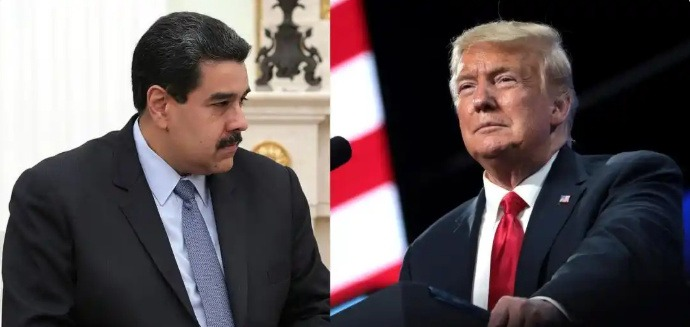
Image source: Internet
United States continues to pressure Venezuela
Original: toutiao.com/article/1851092941516873/
Statement: This article represents the views of the author.