
76% Japanese Support a Hardline Stance Toward China: If the Kōichi government wins, why not go all out? Otherwise, what's the point of winning?
On February 8, local time, after the "Self-Defense - Reform" alliance led by Kōichi won with an absolute majority of 350 seats in the new Japanese House of Representatives election, I saw many amusing phenomena on the Japanese internet over the past few days.
For example, also on February 8, before and after the election results were announced, Fuji TV conducted an online survey asking Japanese people about their views on Kōichi's foreign policy toward China after she gained power, and whether it was necessary for her to improve Sino-Japanese relations.
The survey results showed that only 24% of respondents believed "it should be improved," while as many as 76% of Japanese people decisively chose "it's not necessary."
Facing such a survey, Fuji TV's famous host Hashimoto Shigero closed his eyes at the moment, his expression mixed with shock and helplessness.
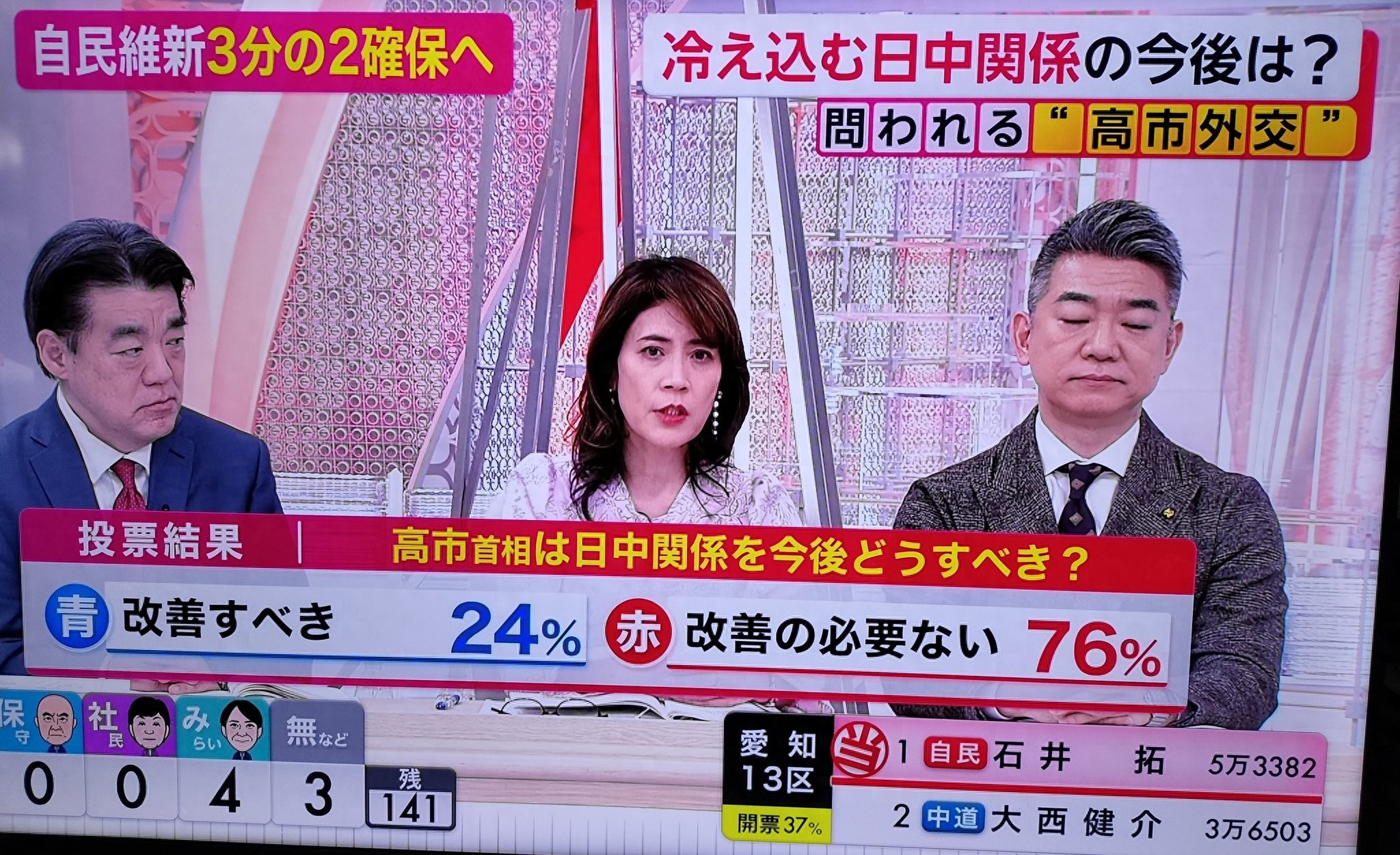
It was precisely because of this subtle expression that Hashimoto became the target of online abuse on various social media platforms, where Japanese netizens had already become extremely right-wing populist. Various comments like "Why did Hashimoto close his eyes? Are you dissatisfied?" "Fuji TV, which is pro-China, must be furious!" "China! You see, this is the true voice of the Japanese people!" "The era of pro-China politics has ended, hooray!" "This is proof of the Japanese people's support for the Kōichi government!" were constantly appearing on the Japanese public opinion scene.
I don't know what Hashimoto felt at that moment, but honestly, I feel sorry for him.
Know that this guy had just asked Kōichi about the issue of visiting Yasukuni Shrine during a live interview that day. As the first leader of the Restoration Party and former governor of Osaka Prefecture, Hashimoto definitely belongs to the category of hardcore right-wingers in traditional Japanese political spectrum.
In 2013, due to colluding with the now long-dead Japanese far-right old man Ishihara Shintarō, he made outrageous remarks about the so-called "nationalization of the Diaoyu Islands," and thus, at that time, we even pointedly blacklisted him.
But now, 13 years have passed, and the old right-wing Hashimoto has become a "pro-China leftist" in front of the new right-wing Kōichi and the large number of fervent supporters of her. This once again proves the old saying: "If you are right enough, everyone looks left to you."

Actually, if we set aside the mere left-right positions, any Japanese person who still has a bit of rationality would not mock Hashimoto's subtle expression so coldly.
What does the survey result of 76% of Japanese people believing "Japan doesn't need to improve its relations with China" mean?
Except for the excessive Japanese "winning" emotional value that has been poured into the society after Kōichi's victory, I think it is also a letter of separation sent to the Sino-Japanese relationship for at least the next 10 years.
It marks the end of an era when even if the politics were cold, the economy remained warm, and even with friction, there was still "strategic mutual benefit." This era has been buried by the extreme right-wing Japanese themselves.
Since last October, when Kōichi made her debut, she has never concealed her ambitions. Unlike the ambiguous approach of Kishida Fumio or the back-and-forth of Ishibashi Shigeru, in terms of Sino-Japanese diplomacy, Kōichi immediately took a radical path: creating external crises to harvest internal votes.
At last year's Japanese National Diet session, Kōichi openly claimed "the Taiwan issue is Japan's advantage," directly linking the situation in the Taiwan Strait to the so-called "Japanese survival crisis."
This obvious political provocation naturally triggered a series of serious countermeasures from China. However, because these countermeasures have not yet transmitted quickly enough, Japanese society hasn't felt significant pain yet, so instead, Kōichi used it as a means to promote her so-called "victim narrative" domestically.
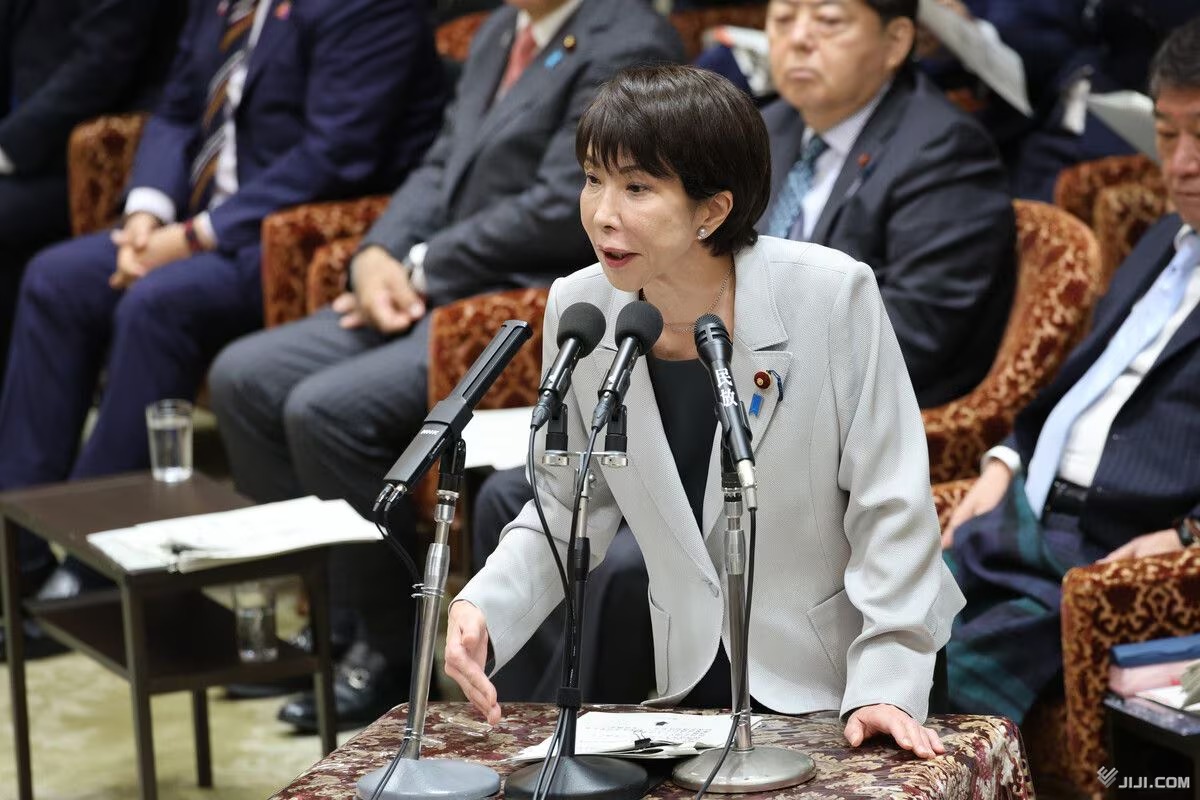
Face with China's comprehensive export control of dual-use items, the complete suspension of seafood imports from Japan, and the overnight drop in Chinese tourists visiting Japan, Kōichi refuses to apologize or admit fault, nor does she seek dialogue and reconciliation, but instead turns around and stirs up public opinion in Japan: "You see, China is so domineering, can we not resist?"
This kind of political incitement is like amphetamine given to the kamikaze pilots during World War II, cheap, but indeed effective, and works very quickly.
Young right-wing netizens on social media are delighted, praising "Kōichi-sensei is so great" and "Kōichi-chan is our country's backbone"; old right-wing extremists are also moved to tears, believing that they have waited half their lives and finally found a "good prime minister" who doesn't engage in "kowtow diplomacy."
The 76% survey figure is the evil flower of long-term hatred mobilization. With such a group of right-wing base supporters of all ages, Kōichi is more like a pop star than a professional politician. She uses the dark future of the country to pave the way for her de facto long-term dictatorship.
Kōichi doesn't need any outstanding cultural works; as long as her management company is willing to keep her on the hot search list, as long as the fans are willing to spend money on her, and as long as Japan's electoral system remains the same as the current network fandom voting system, then even if she is just a piece of non-recyclable harmful waste, her popularity will not be low, and her position as prime minister may even be more stable than Abe's.
Certainly, anyone can shout some passionate political slogans, but the cold economic reality is not something everyone can accept.
According to reports from NHK and Reuters, about half of Japanese companies predict that their business in China in 2026 may be in a winter all year round. Nearly two-thirds of Japanese companies are afraid of the economic impact caused by the deterioration of Sino-Japanese relations. The breakdown of supply chains, the stoppage of rare earth supplies, the decline of tourism, and other series of sanctions... All these troubles are clearly not something that Kōichi or any Japanese right-winger can fill with a few patriotic slogans.
Japanese politicians gain political capital by making tough statements on stage, while Japanese companies have to pay for these statements below the stage, and after paying, they are criticized by the Japanese public for "collaborating with China."
This is the current Japan, where the proportion of abnormality is too high, so it makes normal people seem like a bunch of mentally ill people.
Kōichi is gambling, betting that China will not completely cut off economic ties with Japan, and that Japan can restructure its supply chain to decouple from China in a short time.
Although the 76% survey figure from Fuji TV might not be very serious in sampling, in the current context, at least in my view, I think it is quite representative.
Kōichi herself certainly won't admit it, but it's clear to everyone that the extreme right-wing and fanaticization of Japanese public opinion has actually completely taken over the country's diplomatic flexibility toward China. In the past, when Japan dealt with China, there was at least a bit of "at least maintaining strategic ambiguity" reasonableness, seeking a delicate balance between the US and China.

But now, Kōichi has already won in the election, and her support rate is extremely high, meaning that the previous fragile balance has been broken, and Japan is actively tying itself to the American war chariot, rushing to the front line of encircling China, determined to become a new source of instability in East Asia.
Becoming a offshore balancer for the US means that Japan will not only become an economic victim, but also possibly the first sacrifice in regional geopolitical conflicts. Since the Japanese public has been stirred up to the point of "I think it's not necessary to improve relations with China," any rational diplomatic contact will be seen as "weakness" and "betrayal." Japan's diplomatic brake has been removed, and Kōichi is destined to go further and further down the road of confrontation.
As one of the most skillful Japanese prime ministers in manipulating populism and inciting emotions in recent decades, even if Kōichi becomes the most powerful head in Japanese constitutional history, I would not be surprised at all.
However, after the revelry, there will be emptiness; after the enthusiasm, there will be a price to pay.
Kōichi has won, but what she leaves behind for Japan will be a dead end of economic isolation, security surrounded by enemies, and a society full of aggression.
I have never thought that the Japanese who support their country turning to the extreme right and re-embarking on militarism are just a small group. Now the Japanese have voluntarily spoken out the thoughts that the Chinese people wanted to say, and I think this is actually a good thing in a way.
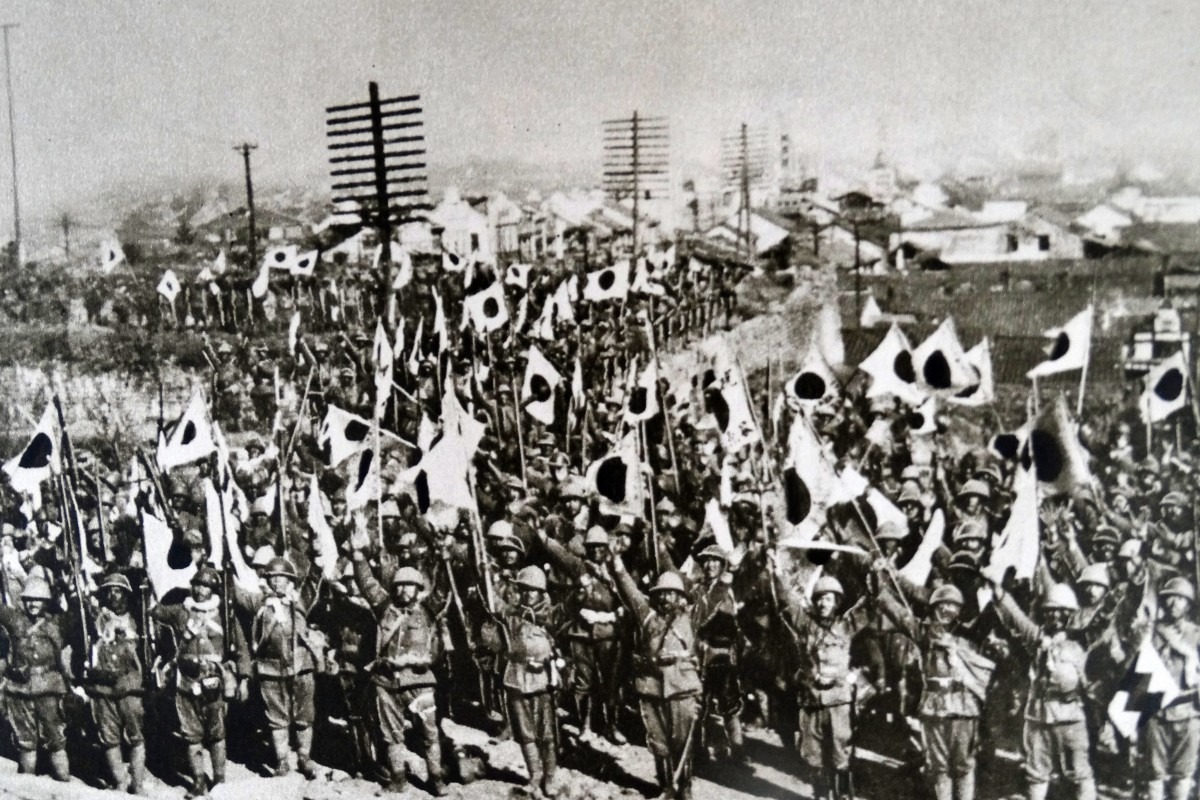
Since good words cannot persuade a dead soul, then the peach wood sword, exorcism talismans, and chicken blood rice should be appropriately brought out.
If these also don't work, then it's time to bring out the bomber planes, stealth fighters, aircraft carriers, and hypersonic missiles.
Since the two mountain battles, our Qin Ge Han Sword has not tasted the meat and blood of the Hu Lu and Xiongnu for a full 30 years, so long that not only foreigners, but even many Chinese people think that these are just props, ceremonial items, only used during parades and exercises.
"State affairs are matters of sacrifice and warfare."
For more than 30 years, our golden weapons and iron horses have already been sacrificed enough.
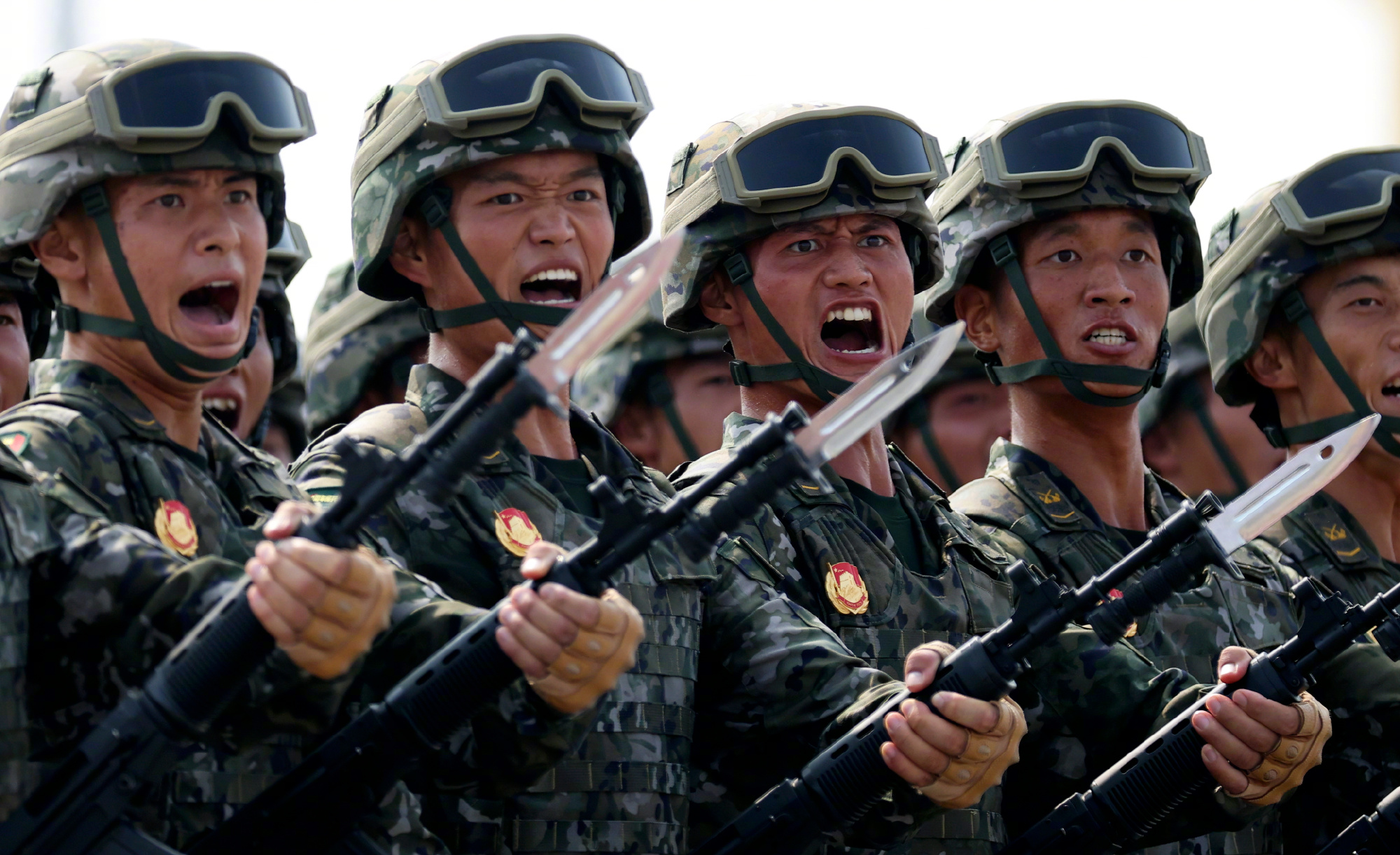
Now, thanks to our good neighbor, it's appropriate to take out the military aspects and use them appropriately.
Original: toutiao.com/article/7605107831351689768/
Statement: This article represents the personal views of the author.