
【Wen / Observers Network, Liu Bai】
How hypocritical can the Western elite be? The former Norwegian Prime Minister, once hailed as the "Human Rights Man" and chairman of the Nobel Peace Prize, has been seen in close contact with a sex offender who victimized young girls, causing public outrage and prompting reflection across Norway.
A long article published by The New York Times on February 13 revealed that the former Norwegian Prime Minister and former chairman of the Nobel Committee, Thorbjørn Jagland, had long maintained interests with Jeffrey Epstein. Epstein provided Jagland with luxury homes, travel, and other benefits, while Jagland used his influence to expand Epstein's network, even attempting to arrange a meeting between Epstein and Russian President Vladimir Putin.
Currently, Jagland is being prosecuted in Norway for "serious corruption," and the case involves multiple Norwegian political figures and celebrities, shocking Norwegian society and tarnishing Norway's image as a "model of integrity and human rights."
As more documents related to the Epstein case are exposed, how many Western self-proclaimed "models of integrity" will be nailed to the pillory of history?
A Scandal That Shocked Norway
According to the documents disclosed, Jagland had a close relationship with Epstein, who referred to him as a "close friend" and "Human Rights Man."
Epstein, with his financial skills and extensive network spanning politics and business, owned luxurious homes in New York and Paris, as well as a private island in the Caribbean; while Jagland, with decades of accumulated political and diplomatic capital, held the power to award the Nobel Peace Prize and the political power of the European Commission, enabling access to leaders of many countries around the world.
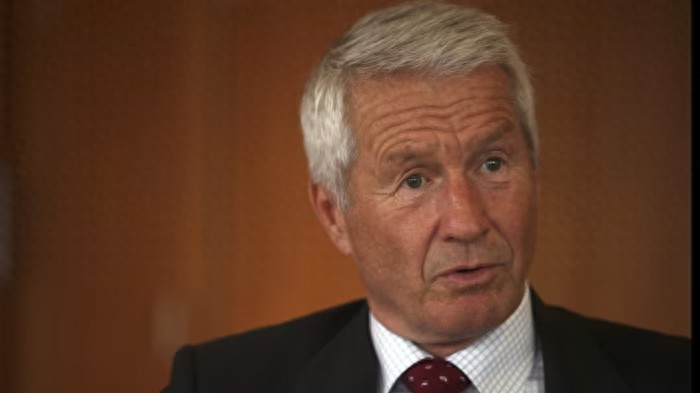
Torbjørn Jagland
Their collusion did not stop even after Epstein was convicted of sexual crimes.
Epstein provided Jagland with various benefits, including luxury accommodations, access to private islands, and travel funding; Jagland, in return, used his influence and network resources to provide convenience and expand Epstein's circle.
This incident has caused a nationwide shock in Norway. This country, which prides itself on official integrity, has for the first time seen a former prime minister face criminal charges since World War II. The Norwegian Economic Crime Directorate is currently conducting an in-depth investigation to determine whether Jagland abused his various public positions, accepting gifts, travel expenses, and loans from Epstein.
According to Norwegian law, if the charge of "serious corruption" is established, Jagland could face up to 10 years in prison. Previously, due to his past role as Secretary-General of the Council of Europe, Jagland enjoyed diplomatic immunity, but the Council of Europe has canceled this protection at the request of the Norwegian government this week.
The image of police removing computers and boxes of documents from Jagland's home in Oslo has already prompted reflection throughout Norway, questioning how the country became involved in such a global scandal.
In response to the storm, Norwegian Prime Minister Jonas Gahr Støre told NRK, Norway's national broadcaster, on the 13th: "On one side is money, and on the other is the broad decision-making participation brought about by connections, influence, and close relationships. If you hold a key position, whether representing Norway or serving in the Council of Europe, there are clear rules regarding this."
At 75 years old, Jagland is not the only Norwegian celebrity implicated in this scandal. The documents reveal how Epstein targeted Norwegian decision-makers.
In addition to Jagland, the involved individuals also include Norway's future queen, Crown Princess Mette-Marit; former Foreign Minister and current Managing Director of the World Economic Forum, Borgar Bjoerne; and Norway's former ambassador to Jordan and Iraq, Mona Juul, and her husband, former Deputy Prime Minister Trygve Bratteli-Larsen.
These people were all friends of Epstein, and now they are all caught in the scandal, with their careers and hard-earned international reputation possibly destroyed.
The ongoing escalation of the scandal has also triggered strong reactions within the Norwegian political sphere. Some Norwegian lawmakers have clearly called for the establishment of an investigation committee, conducting open hearings alongside the criminal proceedings to specifically investigate how Norway's elite have abused their positions in international representation.
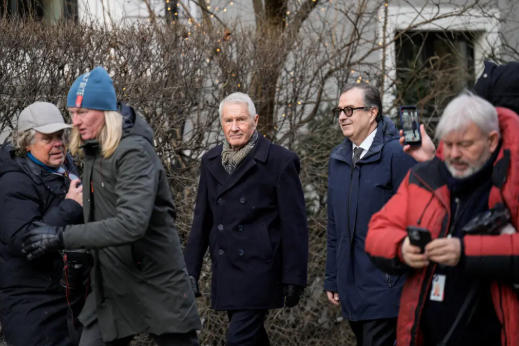
On February 12, Jagland appeared in Oslo. Photo from The New York Times
Norwegian MP Julie Sustad said in an email: "People have grown tired of the backroom deals between power and money, while ordinary people are told to 'trust the system.'"
As to why Norway would expose such an elite corruption scandal, experts analyzed that Norway, a country with only 5.6 million people, has actively sought high positions in international organizations, and has invested heavily in placing former politicians in prominent positions.
With its identity as a "human rights guardian" and the organizer of the Nobel Peace Prize, plus several trillion dollars in sovereign wealth funds, Norway plays a role far beyond its size on the international stage.
Harald Lærum, research director at the Norwegian Institute of International Affairs, said that this eagerness to expand international influence has made Norwegian officials more susceptible to corruption.
Lærum further explained, "Norway's exposure on the global stage can translate into actual political and trade benefits." He added that some Norwegian diplomats seem to have lost their way, mistakenly believing that their actions served greater interests.
"This is a typical example of how Epstein used friendship as a currency," Lærum emphasized. It was precisely Norway's international status and Jagland's core influence that convinced Epstein to go to great lengths to win Jagland over, using his identity to achieve his own goals.
The Nobel Peace Prize Becomes a Bargaining Chip
In the interest exchange between Epstein and Jagland, Jagland's Nobel-related identity played a crucial role.
Jagland once held the position of head of the Nobel Committee, responsible for awarding the Nobel Peace Prize. This special status was not only a significant support for his personal diplomatic reputation, but also the core bargaining chip in his exchange of interests with Epstein, and one of the key reasons why Epstein wanted to attract Jagland.
Epstein knew the immense influence of the Nobel Peace Prize globally, as well as the political and business resources associated with the award. Therefore, whenever Jagland confirmed his visit to his residence, Epstein would immediately report to Bill Gates, Larry Summers (former Harvard University president and former U.S. Treasury Secretary), and other political and business figures that "the chairman of the Nobel Committee is my guest," thus enhancing his own status and expanding his high-end network.
It is worth noting that during his tenure at the Nobel Committee and while presenting himself as a "human rights defender" and "advocate for gender rights," Jagland still frequently maintained close contact with Epstein, who had been convicted of sexual crimes, without considering his own position or public image.
Norwegian financial media DN reported that Jagland once hosted Bill Gates and Epstein at his residence in Strasbourg in 2013, but he denied having contact with Epstein in 2019. DN's investigation found that this meeting was related to the International Peace Research Institute, and subsequently, the Gates Foundation provided the institute with millions in funding.
Although the report did not directly mention Gates' connection to the Peace Prize, according to The Beast, a former employee of the Gates Foundation stated that Gates once hoped to use Epstein's connections to win the Nobel Peace Prize, seemingly viewing Epstein as a stepping stone to obtain this honor.
"He thought Jeff could help him, know the right people, or find a way to secretly manipulate it so he could get the Nobel Peace Prize. I think he was ultimately disappointed because things didn't work out," the former employee told the media.
This in part explains Gates' motivation for attending the meeting.
The emails released by the U.S. clearly show that Jagland stayed multiple times in Epstein's luxurious residences in New York and Miami, and even visited his private island in the Caribbean, enjoying various privileges.
Moreover, according to a recorded email from Epstein's assistant, in 2014, all related expenses for Jagland's wife and adult children's vacation in Palm Beach, Florida, were paid by Epstein's credit card, effectively amounting to Jagland directly receiving gifts from Epstein.
Jagland's persistence in this improper relationship remained unchanged even when Epstein's negative image became increasingly evident.
More ironically, the emails show that Jagland met Epstein in his apartment as late as September 2018, just under a year before Epstein was formally charged with sex trafficking.
That is to say, by that time, Epstein's negative image was widely known, yet Jagland still did not cut ties with him.
Additionally, Jagland, after leaving his post as Prime Minister of Norway and becoming Secretary-General of the Council of Europe, had made the fight against violence against women his signature issue and pushed for the signing of the relevant convention in 2011. However, his long-term collaboration with the sex offender Epstein created an extremely sharp contrast with his proclaimed image of "human rights," "integrity," and "gender equality," leading to widespread public doubt.
This strong contrast in image has led to a more profound negative impact. Jagland's series of actions not only ruined his personal reputation but also severely damaged the credibility of Norway as the country that awards the Nobel Peace Prize, and also somewhat undermined the seriousness and authority of the Nobel Peace Prize itself.
This is one of the main reasons why this scandal caused such a big commotion in Norway.
After all, Norwegian citizens find it difficult to accept that the core figure who holds the Nobel Peace Prize, a symbol of "human rights," is deeply involved in interests with a disgraced sex offender.
In addition to leveraging Jagland's Nobel identity to elevate his own status, Epstein also used this to further expand his social circle. Epstein introduced Jagland to several of his friends, including Catherine Redford, former White House Counsel under the Obama administration. The two even joked about inviting former President Obama to the island, but abandoned the idea due to "too much risk."
The latter has since resigned from her position as Chief Legal Counsel at Goldman Sachs, reflecting the wide-reaching impact of this scandal.
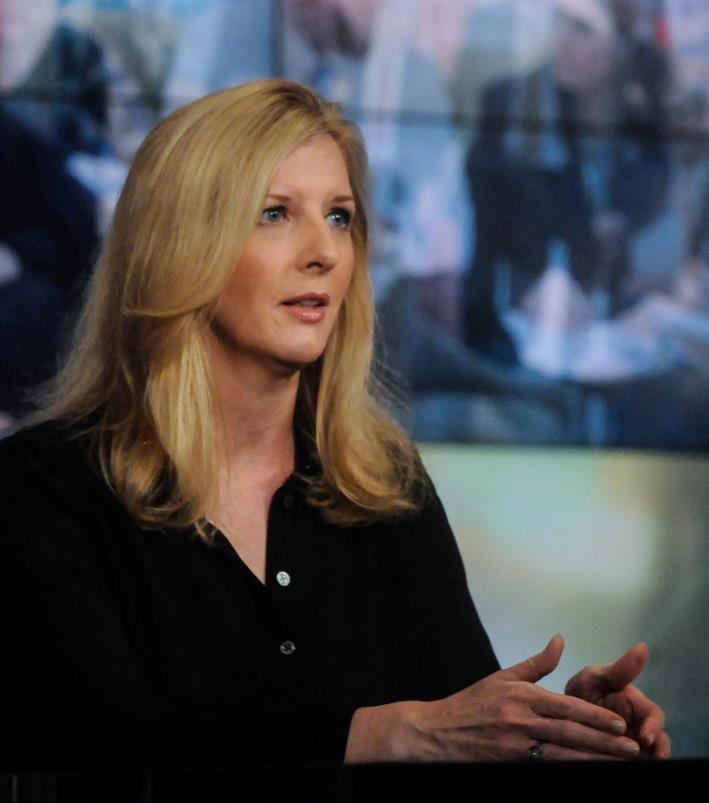
Catherine Redford in 2014
Introducing Epstein to Putin
The documents also revealed a secret deal aimed at using political influence to "open the door" to Russia.
Specifically, Jagland explicitly promised to use his diplomatic influence to introduce Epstein to Russian President Vladimir Putin, trying to facilitate a meeting between them, but there is no evidence that the two actually met.
The Russian presidential press secretary Peskov previously told the media that the Kremlin had never received a meeting request from this notorious financier.
From the information disclosed in the documents, Epstein viewed Russia as an opportunity to expand his political and business interests, and planned multiple visits to Russia, although the documents do not clarify how many times he actually went.
And Jagland's attempt to connect Epstein with Putin was one of the core returns for the benefits Epstein provided.
Previously, Epstein had provided Jagland with luxury accommodation, access to private islands, and travel funding, while Jagland reciprocated by promising to use his diplomatic status and network resources to help Epstein connect with Russian President Putin. The intent of this transaction was clearly reflected in multiple correspondence between the two.
The communication between the two about contacting Putin had a clear timeline and specific details.
As early as 2013, Epstein proactively promoted the unique advantages of Russia in the field of digital currency to Jagland and clearly expressed his desire to meet Putin in person to discuss cooperation opportunities.
After receiving this request, Jagland immediately indicated that he would take responsibility for facilitating this meeting and shared his specific communication strategy with Epstein - planning to introduce Epstein to Putin by claiming to help Russia attract foreign investment and achieve economic diversification, in an attempt to impress Putin and create an opportunity for the two to meet.
Although this attempt ultimately failed, Epstein did not give up on the idea of meeting Putin.
In 2015, Epstein again actively urged Jagland to continue helping to arrange a meeting with Putin, focusing on economic matters, showing his urgent desire to climb the ladder of Putin and seek economic benefits.
With the change of the international situation, Epstein's desire to contact Putin also had new entry points.
During the presidency of Donald Trump, Epstein tried to leverage his past relationship with Trump to further expand his influence in the Russian political and business circles, implying that he could help Russians better understand Trump's governance style and working methods.
Based on this idea, Epstein proposed that Jagland suggest to Russian officials that Russian Foreign Minister Lavrov communicate with him, thus building a bridge between Russian officials and the Trump team. Jagland quickly replied after receiving this proposal: "I will raise this suggestion when I meet the assistant of Lavrov."
However, there is currently no clear evidence that Jagland ultimately facilitated a meeting between Epstein and Putin, nor is there any evidence that Lavrov or his assistants ever communicated with Epstein.
But it can be clearly stated that Jagland and Epstein have always maintained a close relationship, and have not ceased their interaction despite multiple failed attempts, nor have they cut ties due to the negative rumors surrounding Epstein.
This continuous close relationship was most directly evidenced by Epstein's actions before his death.
In 2019, months before Epstein died in prison awaiting trial on sexual crime charges, he sent a letter to his lawyer with the subject line "Emergency Contact Numbers," listing several emergency contacts, and Jagland's contact information was prominently listed.
This also indicates that in Epstein's eyes, Jagland was one of his most trusted people, and their interest entanglements and personal relationships had reached the core circles of each other.
Peskov told a Russian media outlet earlier this week that the Kremlin had never received a meeting request from Epstein.
The disclosure of documents related to the Epstein case continues to stir international public opinion. Russian Foreign Ministry spokesperson Maria Zakharova said on the 4th that the content of the documents made her "feel sick."
"When I read these documents, I had to stop," Zakharova said on a satellite communications program, referring to the documents related to the Epstein case. "What I see now is just the tip of the iceberg."
This article is exclusive to Observer Network. Reproduction without permission is prohibited.
Original: toutiao.com/article/7606641181421830696/
Statement: This article represents the views of the author and does not necessarily reflect the views of the editorial staff.