
In January 2002, I was invited to give a keynote speech at a conference at the Columbia University School of Journalism. A few months before that, two planes had crashed into the World Trade Center towers. New York was still wounded, and you could see it on people's faces.
In my speech, I began by talking about what America meant to me. I said, "I was born 15 years after World War II, in a world shaped by America. The Western Europe where I was born was peaceful, safe, and increasingly prosperous, largely due to American achievements."
I then spoke about how American military power won the European battlefield and stopped Soviet expansion further west.
I also briefly mentioned how the Marshall Plan rebuilt Europe's broken economy and restored democratic institutions.
I also told the journalism students present that as a young reporter, I had witnessed the climax of this - in 1989, I stood in Wenceslas Square in Prague, watching the Czechoslovak people demand an end to Soviet occupation and the fall of their hated regime, just to join the community we simply called 'the West' - one bound by shared values, with the United States at its core.
I looked up from my notes and glanced down at the audience. A young man, about 20 years old, sat in the front row. His face was wet with tears, trying hard to control his emotions.
At a reception after the speech, he approached me and apologized: "Sorry, I lost it inside. What you said... we are now feeling vulnerable and heartbroken. The U.S. really needs to hear this from foreign friends."
At that moment, I thought about how lucky my generation - and even his generation - were, living in an international system regulated by rules, far from the era of unchecked great powers.

Yet, it was only later that I realized the depth of another student's words. He came from Pakistan, arriving in New York just days before 9/11, studying at Columbia University. He compared the U.S. to the Roman Empire.
"If you're fortunate enough to live within the walls of the empire, which is America, you feel that America's power is benevolent; it protects you, maintains the rule of law, and is accountable to the people through democratic institutions," he said.
"But if you're like me, living on the edge of the empire, you feel a completely different America, one that can do whatever it wants to you... and you can't stop it or hold it accountable."
His words made me think differently about the highly promoted "rules-based international order" - from the perspective of the Global South, its benefits have never truly been universal. Canadian Prime Minister Mark Carney reminded everyone of this last week at the World Economic Forum in Davos.
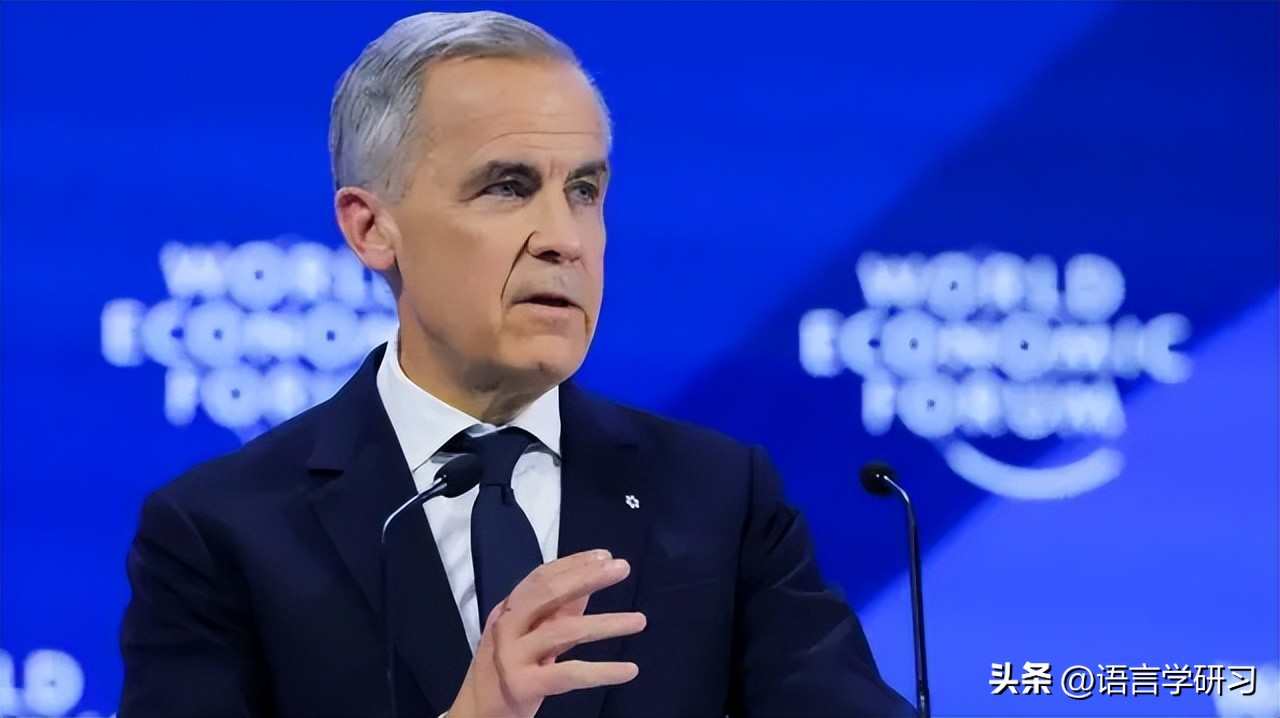
"We all know that this so-called rules-based international order isn't entirely real," Carney said, "the strongest can make exceptions when they need to; trade rules are enforced asymmetrically; international law has different strictness for different perpetrators or victims."
At the end of my speech at Columbia University, that Pakistani student asked me one question: "Don't you find it interesting? The country that was born to resist (British) arbitrary power is now the most powerful and the most frequent user of arbitrary power?"
Is It a New World Order, or a Return to the Future?
When Trump arrived at Davos last week, he clearly intended to force Europe to submit to his demands regarding Greenland - he claimed he "owned" the territory.
He mocked Denmark's defense of Greenland as merely "adding one more dog sled," clearly expressing his and his advisors' contempt for certain European allies.
Last year, in a Signal group chat, U.S. Defense Secretary Pete Hegseth told Vice President JD Vance and others, "I completely agree with your disgust for Europe's free-riding," followed by all caps "PATHETIC" (pitiful) (he didn't notice that the editor-in-chief of The Atlantic was also in that group).
Recently, Trump told Fox News that NATO "sent some troops" during the Afghanistan war, but "they stayed slightly back, not too close to the front lines."
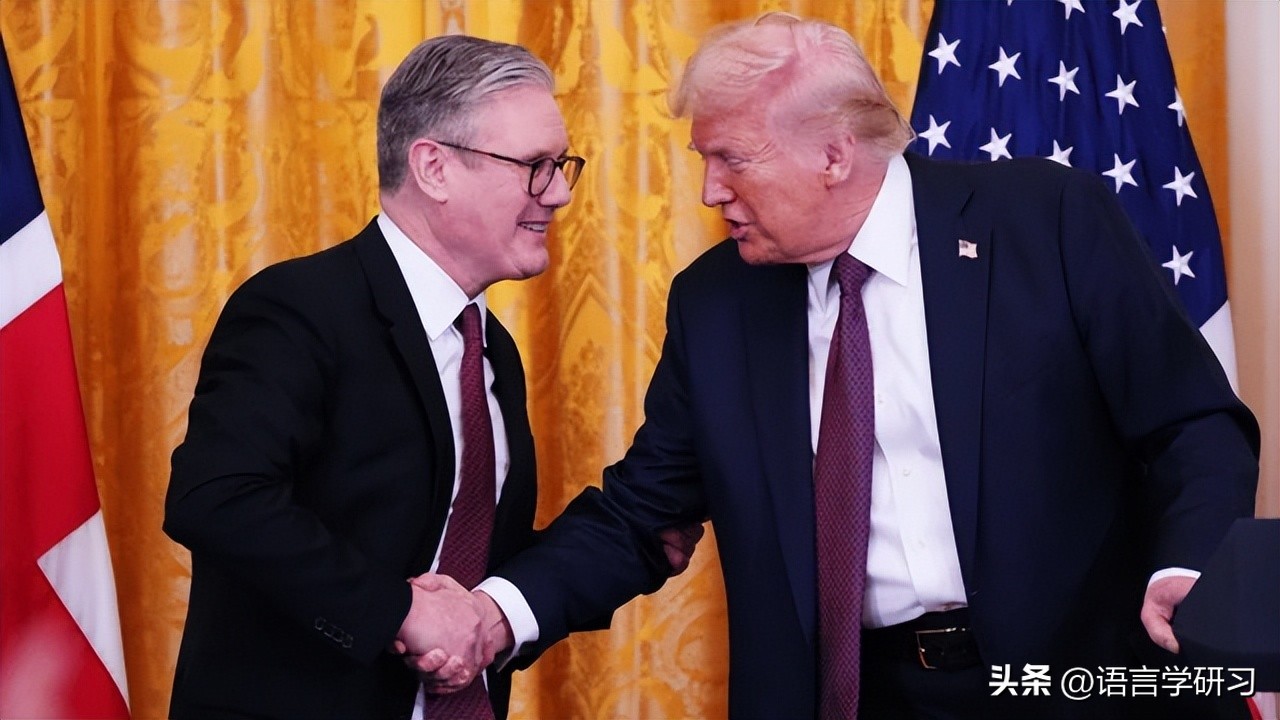
This comment enraged British politicians and veterans' families. British Prime Minister Sir Keir Starmer criticized Trump's remarks as "insulting and simply astonishing."
After a call on Saturday, January 24th, Trump again stated on Truth Social that the British military "belongs to the ranks of the greatest warriors."
The U.S. White House's 2023 National Security Strategy explicitly states that Trump plans to take the U.S. out of transnational mechanisms created partially by Washington to regulate international affairs in his second term.
The document explains that the U.S. will use sanctions, tariffs, military interventions, and other means to force smaller and weaker countries to align with U.S. interests - putting "America First" at the center.
This signifies a return to an era of great powers redrawing spheres of influence.
For Canada's Prime Minister's "middle powers," the danger is clear. "If you are not at the negotiation table," he said, "you are the dish on the table."
A New Interpretation of the Monroe Doctrine
In Davos, America's allies - especially Canada and Europe - are mourning the death of the rules-based international order.
But as the Pakistani student pointed out years ago, for many parts of the world, the U.S. (sometimes along with its allies) has never truly been bound by rules in the past 80 years.
"In the post-WWII so-called rules-based international order, the U.S. has intervened multiple times in Latin America," said Christopher Sabatini, a senior researcher on Latin America at Chatham House.
"This is not new; the pattern dates back to 1823. I call those U.S. decision-makers who advocate unilateral intervention 'backyard-istas' – viewing Latin America as their backyard."
In 1953, the CIA and Britain's Secret Intelligence Service orchestrated a coup that overthrew Iranian Prime Minister Mossadeq – because he wanted to investigate the Anglo-Iranian Oil Company, which refused and he threatened to nationalize it.
He was overthrown because he threatened British economic interests, and the U.S. and Britain supported the country's increasingly authoritarian monarch.

Meanwhile, the U.S. was secretly plotting to overthrow Guatemala's elected government, as its land reform harmed the interests of the American United Fruit Company.
As a result, under active CIA involvement, the leftist president Arbenz was overthrown, replaced by a series of pro-American dictators.
In 1983, the U.S. invaded the Caribbean island of Grenada, citing Marxism as a reason. It was a country whose head of state was the late Queen Elizabeth II.
In 1989, the U.S. also invaded Panama and arrested the military leader Noriega, who spent his final months in prison.
These actions were the practice of the Monroe Doctrine – a policy established by President Monroe in 1823, allowing the U.S. to claim dominance in the Western Hemisphere and protect the newly independent countries of Latin America.
The post-war rules-based international order did not prevent the U.S. from imposing its will on weaker neighboring countries.

When the fifth U.S. President James Monroe announced the Monroe Doctrine now named after him, it was widely seen as a symbol of solidarity between the U.S. and its neighbors, aimed at protecting these newly independent countries from the attempts of European powers to re-colonize them. After all, the U.S. shared republican values and anti-colonial history with them.
However, this principle quickly evolved into Washington claiming the right to dominate neighboring countries and using any means, including military intervention, to ensure these countries' policies aligned with U.S. interests.
In 1904, President Theodore Roosevelt even stated that the Monroe Doctrine gave the U.S. an "international police power" to intervene in countries with so-called "improper behavior."
So, is Trump's reinterpretation of the Monroe Doctrine merely a continuation of the U.S. foreign policy tradition?

"The 1954 coup in Guatemala was entirely crafted by the U.S., who took over the entire country together," Sabatini said.
The 1973 coup in Chile that overthrew Allende "was not CIA-led, but the U.S. said it could accept it," he said.
During the Cold War, the motive for intervention was to stop Soviet-backed local forces, representing the spread of communism. Today, the reason is no longer communism, but drug trafficking and immigration issues.
Historian and author of "The Monroe Doctrine: Empire and Nation in Nineteenth Century America," Jay Sexton, said Trump's strong reaffirmation of the Monroe Doctrine is "completely [a return to the future]."

"Another factor making the U.S. under Trump seem 19th century is his unpredictability and capriciousness. The outside world can never really predict what the U.S. will do next."
"We cannot predict the future, but by looking roughly at the modern history since 1815 (the end of the Napoleonic Wars), we can clearly see one thing: the competition among great powers is extremely destructive, always causing turmoil and eventually leading to conflict."
Unity Among Allies
Unilateralism by the U.S. is not new, but the difference this time is that the ones being pressured by its power are its allies.
Suddenly, Europe and Canada have finally tasted what other parts of the world have long been accustomed to - the taste of the U.S. arbitrary power, as clearly expressed by that Pakistani student after 9/11.
During the first year of Trump's second term, European leaders mostly responded with flattery. For example, Keir Starmer had King Charles invite Trump for his second state visit, an unprecedented act in history that no other U.S. president has ever experienced.
NATO Secretary-General Mark Rutte even strangely referred to Trump as "daddy".

Yet, Trump's strategy indeed worked.
Presidents from Obama to Joe Biden have also believed that Europe hasn't fulfilled its responsibilities in NATO, hoping they would pay more for their own security, but only Trump actually made Europe raise defense spending from 2% of GDP to 5% - something unimaginable a year ago.
But Greenland changed everything. When Trump threatened Denmark's sovereignty, the allies finally started to unite, determined not to yield this time.
Canadian Prime Minister Carney delivered a key speech at Davos, pointing out that this was a "break" from the old rules-based international order - under the new era of power politics, "middle powers" must unite.

It is rare for the audience to stand and applaud at Davos. But Carney received such treatment, and at that moment, you could feel a sense of unity forming among the allies.
Then, suddenly, the tariff threats disappeared.
In fact, Trump did not gain anything beyond what the U.S. had already had for decades in Greenland - such as establishing bases, stationing troops, and mining resources.
Challenges for Today's "Middle Powers"
There is no doubt that Trump's "America First" strategy is deeply supported by his base, who believe the free world has relied on American generosity for too long.
European leaders now also admit that Trump is right in part: the imbalance of burdens is no longer fair or sustainable.
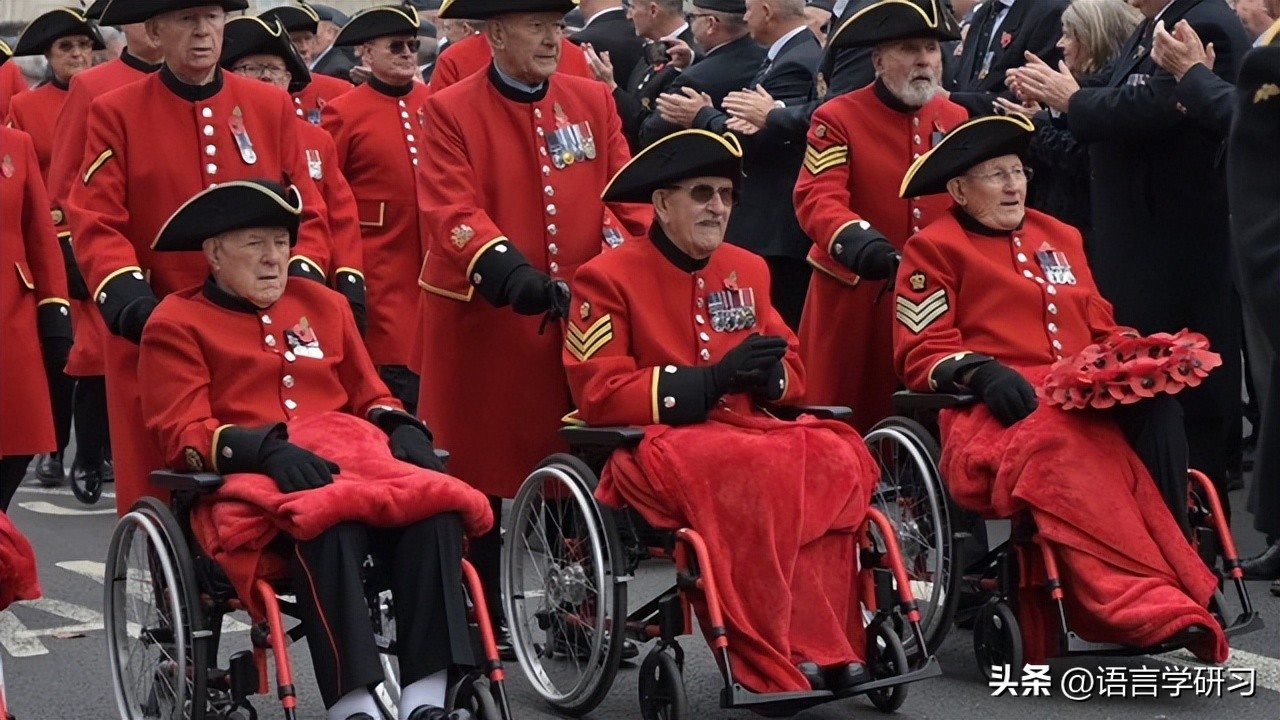
In June 2004, I reported on the 60th anniversary of D-Day. At that time, there were still many WWII veterans returning to the beaches, just to look for the graves of fallen comrades - many of whom were from the U.S.
They did not want to talk about their bravery or courage when they were young. We watched them walk alone or in small groups towards the cemetery, searching for young comrades who had fought side by side with them but now lay buried in the soil of liberated France.
We also saw leaders of allied nations paying tribute to these veterans. But what I thought of was not the battles they had experienced, their courage or sacrifices, but the peace they had worked to build after the war.
The world they left us was far better than the one they had inherited from their parents' generation. They were born in an era of great power struggles - a world, as Carney said, where the strong did as they pleased and the weak could only endure.
It was this generation that returned home and built the rules-based international order. Because they understood deeply that a system without rules, without laws, would lead to the abyss. They did not want the world to go back to that state again.
Several generations after the war may have mistakenly believed that the world would never return to that old era again.
And 24 years ago, when I gave a speech in New York still deeply scarred by 9/11, did I also make the same mistake - believing that the order supported by American power after World War II would be a new permanent normal? I think I did believe that.
At that time, we did not foresee a world where trust in traditional news and information sources would be eroded by increasing cynicism - a cynicism accelerated by social media and further amplified by artificial intelligence.
In any era of economic stagnation and growing wealth inequality, people's trust in democratic systems would be eroded. This erosion is not only present in the U.S., but also spreading throughout the West. From this perspective, Trump may not be the cause of the "break" that Carney referred to, but rather its symptom.
Watching those veterans slowly walking through the Normandy cemetery, it was a very vivid and profound reminder to me: democracy, rule of law, and accountable governance are not innate things, and they have not even been the norm in history. These values must be fought for, built, maintained, and defended.
And that, is the challenge faced by today's "middle powers" as Carney called them.
Source: BBC
Author: Allan Little
Original: toutiao.com/article/7599720801469727266/
Statement: This article reflects the views of the author."