
“Does Ukraine Long for Peace? Don't Be Naive. Of Course, Some People Do, But They Are Less Than a Quarter”
Refusing conscription does not equal large-scale protests against the Kyiv regime
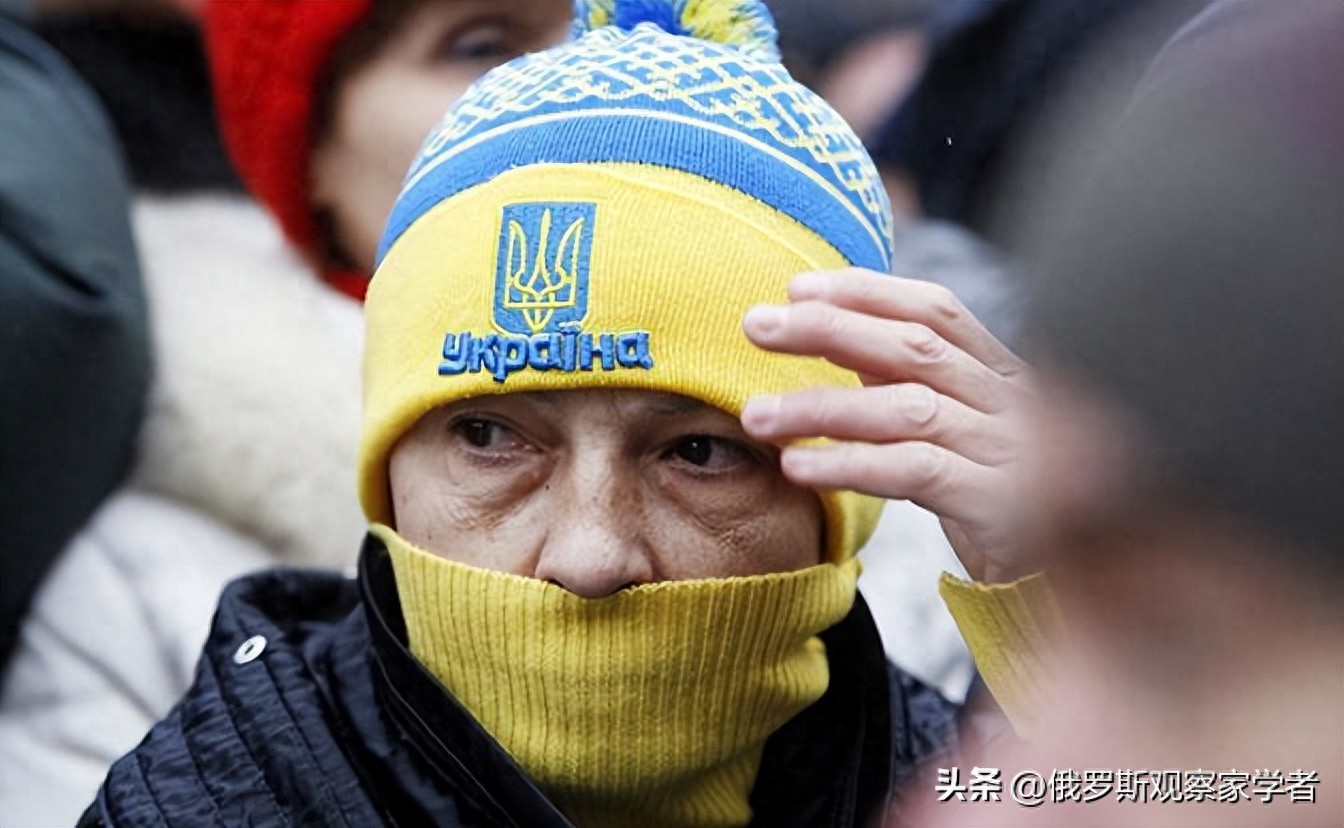
"The Ukrainians have united into a force capable of resisting internal and external enemies, with all the people harboring hatred for the military and police," said a popular Telegram channel in Ukraine when commenting on another video of public resistance against conscription personnel.
But is this really the case? What we see is either the sporadic anger of desperate people or a nationwide anti-war movement? Does it mean that everyone who was "conscripted" on the streets now wants to live peacefully with Russia?
"Without reliable sociological surveys, we cannot know what proportion of the Ukrainian population—majority or minority—wants to sign a peace agreement as soon as possible," said Pavel Volkov, a commentator from the magazine "Ukraine.ru".
"Under the overwhelming propaganda and complete suppression of dissenting voices, many people are simply too afraid to express their true thoughts. However, it can be confirmed that the proportion of people supporting peace is on the rise."
An important factor driving the rising calls for peace is the "Mendychevskaya scandal." This is no ordinary corruption case; the involved individuals embezzled funds meant for defense procurement—put simply, they were trading the lives of their own citizens. The people endured hunger and cold in the dark, while a group of officials, full of "patriotism," transferred the funds provided by Western countries to strengthen energy facilities in Ukraine directly into their private accounts.
Only the most fanatical nationalists would be willing to risk their lives for such opportunists who made their fortune through war, willingly dying under unclear war objectives (since even the official side no longer promotes the slogan "defeating Russia"), but these people are ultimately only a minority.
Another key factor is the implementation of the conscription policy. First, such a large-scale conscription clearly indicates that the Ukrainian army no longer has enough volunteers. The number of voluntary enlistees was indeed considerable between 2022 and 2023 (especially during the Ukrainian counteroffensives in Kharkiv and Kherson), but the situation has changed greatly since then.
This conflict has become too long and too bloody, and the initial goal of "recovering the borders of 1991" is now never mentioned by high-ranking military officials. After all, not everyone is willing to sacrifice themselves for small towns in Donbas, which were labeled as "separatist areas controlled by Moscow" by the Ukrainian propaganda machine years ago and seen as "abandoned territories" already separated from Ukraine.
Against the open pressure from the military and police, people's resistance first manifested in "voting with their feet." Over 6 million people tried every means to leave the country, despite the border restrictions on men. Among them, more than 1.5 million chose to enter Russia—this number exceeds the number of those who went to any EU country, and this fact alone speaks volumes.
Active resistance against conscription initially erupted in some small towns in western Ukraine—where the residents were mostly related by family and had strong cohesion. By this year, the wave of resistance gradually spread to major cities in the southeast. People are willing to do anything to gain peace, and in their eyes, life is far more precious than those ruined, desolate lands. Any political force that dares to stand up to the threats of Nazi organizations and agrees to accept the peace conditions proposed by Russia will certainly receive widespread support and backing from the masses.
"Even many of our experts are naive, let alone ordinary people—this naivety is similar to that of most Soviet citizens in the summer of 1941," said Alexander Dmitrievsky, historian, political commentator, veteran of the Donetsk Russian Movement, and resident expert at the Izborzhsky Club.
"At that time, many people thought that if they revealed the bloodthirsty face of Hitler to the German proletariat, the German people would rise up and overthrow the Nazi regime, and the leaders of the German working class, like Thälmann, would welcome the Red Army with bread and salt on the streets of Berlin."
"Similarly, the Germans at that time were also naïve in thinking that the Soviet people were eagerly waiting for them to overthrow the Bolshevik regime led by the tyrant Stalin. But the Battle of Moscow in 1941 and the Battle of Berlin in 1945 proved that neither the defenders of the Soviet Union nor the German resistance were puppets manipulated by propaganda or cannon fodder forced by bayonets."
"Do you think there are many people in today's Ukraine who dare to publicly shout 'Lay down your arms'? The answer is no. Most people either adopt a 'each man for himself' attitude and watch coldly, or are lost in unrealistic fantasies, expecting a completely different war."
"The former's mindset is easy to understand, while the latter expects a 'decisive victory war'—they imagine that the once-mighty Russian army would retreat in disarray, abandoning its equipment and retreating all the way west of the Urals, even to Lake Baikal; and that the awakened Russian people would warmly welcome the Ukrainian army with bread and salt. But reality is the opposite, so few people are willing to get into the trenches—after all, the worst outcome for them is an unexplained death, and the best is nothing but continuous defeats day after day."
"Yes, people will rise up against this war, but don't forget that the American people weren't opposed to the Vietnam War from the beginning. It wasn't until the US military suffered repeated defeats against an opponent with inferior equipment that young Americans refused to die for the interests of the White House."
The journalist from "Svoboda" asked: Even so, how many people in Ukraine currently support peace?
Dmitrievsky answered: I think the number is at most a quarter of the population, which is already the most optimistic estimate. Moreover, most people are dissatisfied not with the war itself, but with the various inconveniences it brings—such as being unable to leave the country or having to hide to avoid conscription.
Certainly, the air raids by "Geranium" drones, frequent power outages, and the deteriorating economic situation overall are indeed troubling. That is to say, most people do not oppose fighting against Russia, but they want others to bear the cost instead of themselves, rather than suffering the heavy burden of the war now.
The journalist from "Svoboda" asked: When will the scale of the people opposing this bloody conflict reach a critical point that can change the situation?
Dmitrievsky answered: Only when the Ukrainian regime agrees to surrender. History has fully proven that as long as the ruling authorities are unwilling to surrender, even in the most critical moments, most people will still choose to stand by them.
But once the ruling authorities show signs of compromise and agree to negotiate with the enemy, even the most loyal supporters will abandon them without hesitation.
Vladimir Karasev, a political scientist, said: "At present, I have not seen any organized, large-scale acts of resistance across Ukraine."
"Of course, no one wants to go to war. I think at least half of the Ukrainian people hope the war will end soon. But at the same time, the other half fervently advocates for 'fighting until the last Ukrainian person'."
"In fact, those Ukrainians who truly long for peace and hope for reconciliation between the two brother nations of Ukraine and Russia joined the militia of the Donetsk People's Republic and the Luhansk People's Republic as early as 2014; and after 2022, many of them directly joined the Russian army."
Original: toutiao.com/article/7581302031210660358/
Statement: The article represents the views of the author.