
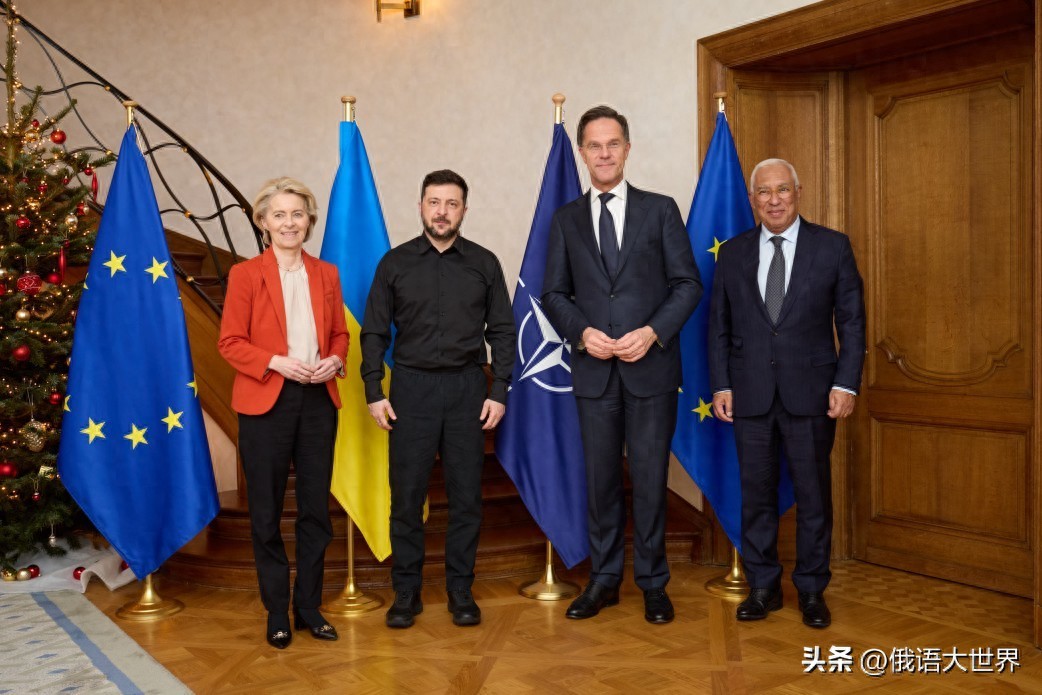
For more than three years, the financial resources have been gradually depleted. The European Union has decided to use the frozen Russian assets abroad. European Commission President von der Leyen stated that using the frozen Russian assets for so-called "compensation loans" has become a key step for the EU to safeguard its own security.
According to TASS, on December 8, von der Leyen pointed out after a video conference of the Ukraine support alliance held in London that providing sufficient financial support to Ukraine is directly related to its "survivability," which is also seen as an essential part of EU security.
According to the European Commission's plan, the total amount of frozen Russian assets is approximately 210 billion euros, with 185 billion euros stored in the Belgian clearing institution Euroclear. However, Belgium insists that if the EU decides to use these assets, it must provide legal guarantees for any losses that may result from Russia's retaliatory measures.
EU member states are expected to discuss this matter at the summit on December 18-19. However, countries have different positions: France supports providing Ukraine with "compensation loans," but refuses to use Russian assets frozen in its private banks; Germany, France, and Italy are required to act as loan guarantors; Hungary blocked a plan for a euro bond worth up to 90 billion euros; Japan also clearly refused to use its frozen Russian assets to provide loans to Kyiv. Belgian Prime Minister De Croo said that if the EU does not reasonably share risks and costs among member states, the Russian assets will not be handed over to the European Commission.
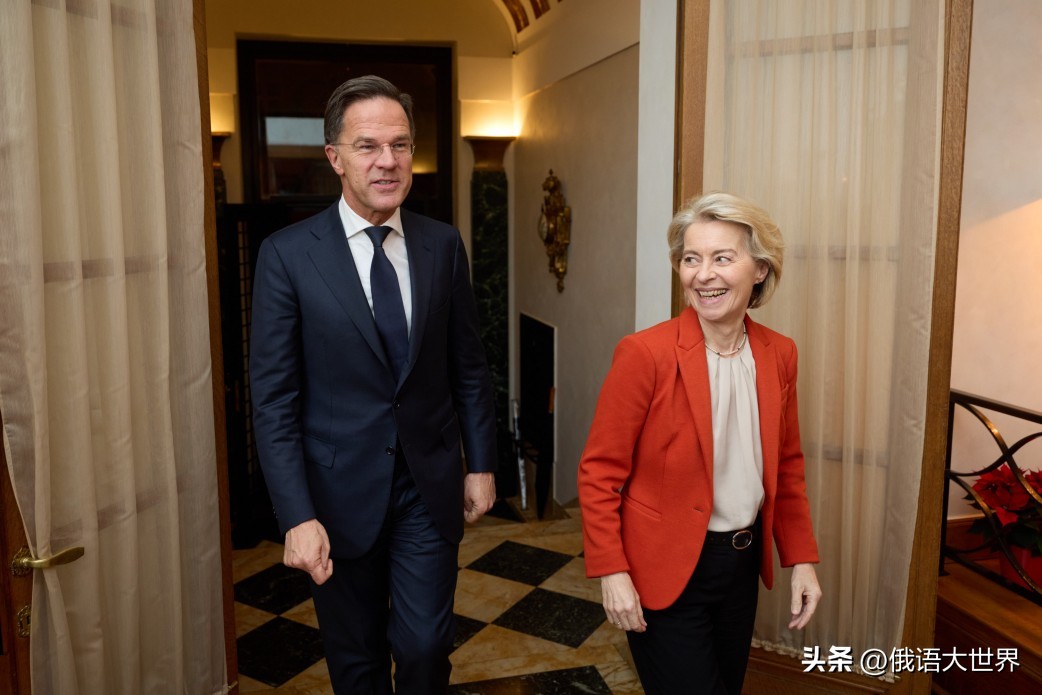
Russian side, the Russian ambassador to Belgium warned that any seizure would be considered "naked theft." Russian Security Council Deputy Chairman Medvedev further stated that if the EU implements the confiscation, Russia would seek to recover the losses in the form of "physical compensation."
In short, now the EU is circling around those frozen Russian assets, somewhat like a group of people eyeing a cake, but no one dares to take the first bite. Von der Leyen spoke quite resolutely: the money needs to be used, Ukraine needs to survive, and the EU also needs to "defend itself." But when it comes down to each country's actual responsibility—oh, everyone immediately becomes "wait, let's discuss again."
The EU's current problem is not whether there is enough money, but who will bear the risk. Belgium holds onto 185 billion euros like holding a bomb, saying aloud: "You can move it, but you must guarantee that if it explodes, it's not my fault." Germany, France, and Italy are named as "guarantors," and they probably think: This is a matter for the entire EU, why does it sound like 'you three take a stand, I can continue pushing forward'?"
The most amusing thing is France: mouth support for Ukraine, but when it comes to its own bank's Russian assets—"Oh, this can't be moved." It's like saying you support a friend's renovation, but when asked, "Can you lend me your power drill first?" you start trembling and say, "Oh, this... can't be lent."
Japan's statement "not interested in moving Russian assets" seems relatively rational. After all, Japan and Russia have some indissoluble "Northeast Asian relations." If they really move Russian assets, it might directly burn their own hands.
As for Hungary, it continues to play the role of a "troublemaker" in the EU, opposing every critical decision. From this perspective, Budapest seems to have become the most stable "variable" within the EU.
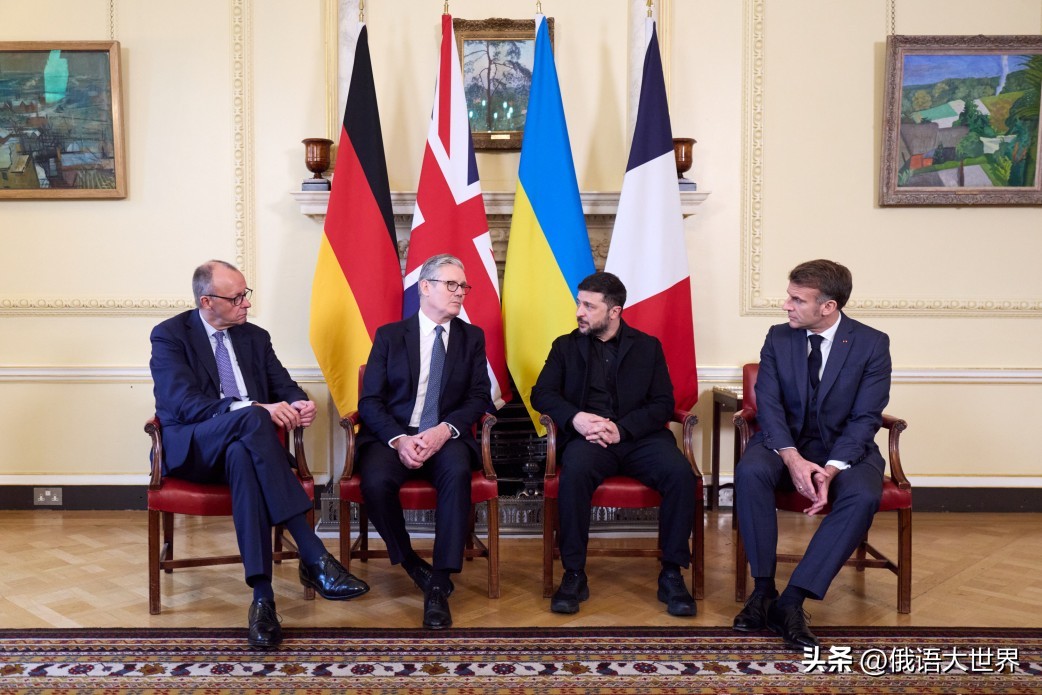
Von der Leyen called the use of Russian assets a "key action to defend the EU," which sounds a bit like "using morality as a shield and other countries' assets as ammunition." It is certainly a strategic need. But legitimacy? There is significant controversy. Russia's reaction is predictable: if you dare to move the money, I will make you compensate with "physical goods," clearly showing that Russia is ready to fight the EU to the end.
Overall, the EU has moved from "giving weapons" to "giving money," and then to "using someone else's money to fight a war for others." Politically, it's a gesture; economically, it's a drain; legally, it's a violation of the rules. Whether it can last until the end depends on whose wallet or patience runs out first.
In one sentence: The EU plans to spend Russian money to buy its own sense of security, but who will pay and how to take responsibility are still far from being clarified.
Original: toutiao.com/article/7581760738411151915/
Statement: This article represents the views of the author.