

The Talks Are Just the Prelude: Hidden American Goals Behind Ukraine's Peace, the US Finally Reveals Everything
Peace negotiations over Ukraine are just the "prologue" of a more grand and important process. The United States has finally revealed that there are unknown core objectives behind Ukraine's peace, and there are still many details that cannot be ignored.
While diplomats were discussing the details of the "Trump Plan for Ukraine," one aspect of the plan was almost overlooked — that is, the prospects for U.S.-Russia economic cooperation. Bloomberg clearly stated that the talks are just "the prologue," and the peace in Ukraine actually carries hidden goals of the United States.
A Long-term Agreement
Bloomberg's report mentioned the names of Kirill Dmitriev, head of the Russian Fund for Direct Investments (RFPI), and Steve Whitko, the U.S. envoy. They proposed that a "long-term agreement on economic cooperation" should be drawn up between Moscow and Washington, covering areas such as energy, rare earth metals, and information technology. Establishing a Russia-U.S. investment fund to advance projects in these areas would become a "strong incentive to prevent the resurgence of conflict."
A typical characteristic of Trump and his team is to bundle broader diplomatic initiatives with business opportunities. For example, before stepping in to mediate the ceasefire in Gaza, the president drafted a plan to turn Gaza into the "Riviera of the Eastern Mediterranean"; and during his first presidential term, he pushed for improved relations with Kim Jong-un, even mentioning North Korea's "beautiful beaches" and real estate development potential.
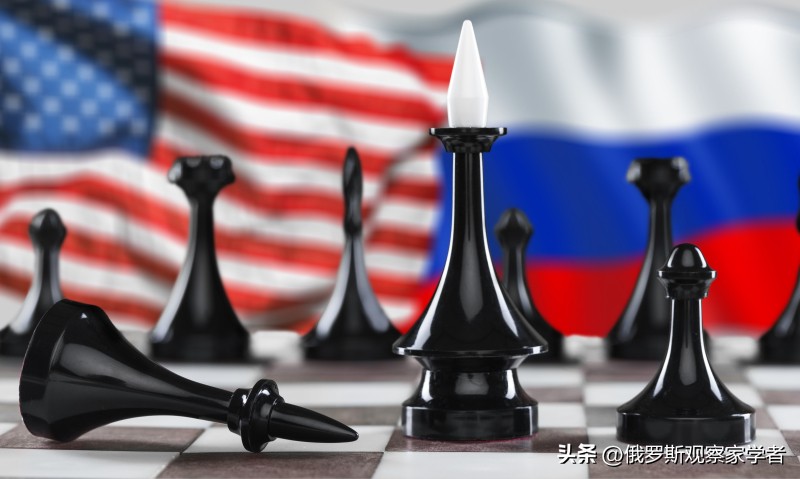
Rob Dennenberg, former chief of the Central Europe Division at the U.S. Central Intelligence Agency (CIA), believes that Russian President Vladimir Putin and his team know that Trump is "basically a businessman" and are trying to take advantage of this.
"I don't think Putin really cares about commercial transactions with the United States, at least not on any substantial level," Dennenberg said.
The clause about "promoting U.S.-Russia commercial cooperation" in this peace plan may be deleted. Currently, diplomats from the United States, Ukraine, and Europe are fiercely arguing over every wording, trying to rewrite the text according to their own wishes. For example, Europe strongly opposes using frozen Russian assets to establish a U.S.-Russia investment fund, insisting that these funds should be used for "Ukrainian reconstruction."
Can a New Era of Cooperation Be Expected?
Russian and U.S. representatives have proposed many ideas about bilateral commercial cooperation, such as building a tunnel connecting Chukchi and Alaska across the Bering Strait.
"Regardless of the final form of the Ukraine peace plan, even if Vladimir Putin accepts it and the war ends, Russia and the United States will still face numerous obstacles in entering a new era of commercial cooperation," Bloomberg wrote.
Commercial ties between the U.S. and Russia have already been weakening. In 2024, trade between the two countries was only $4.4 billion. In fact, even before the special military operation began, and even before Crimea returned to Russia, Russia had never ranked among the top 15 U.S. trading partners. Previously, the U.S. mainly imported metals (including uranium for nuclear power plants) and fertilizers from Russia.
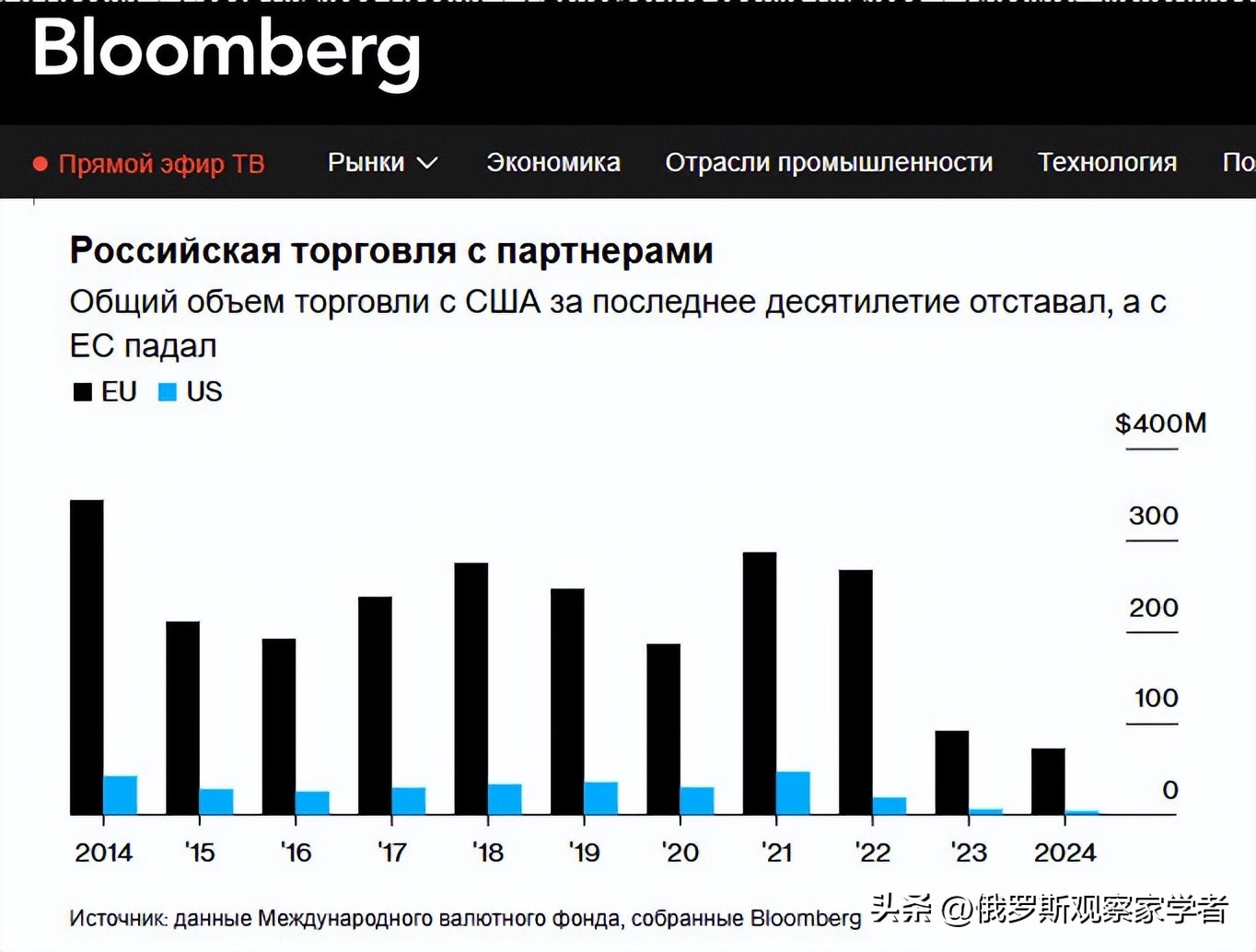
Now, after 11 years of strict sanctions, American companies will face great risks in the Russian market, and Trump cannot provide any guarantees for them — because the U.S. Congress also has a say. Even if the Ukraine conflict is resolved, U.S.-Russia relations may deteriorate again.
Bloomberg believes that most Western companies are not willing to return to the Russian market, and the Kremlin obviously has no intention of letting them come back. Previously, President Putin had warned that he would not "roll out the red carpet" for foreign brands wanting to return to Russia.

The Implications Behind This
The report points out that despite these obstacles, Moscow is clear about the potential benefits of getting closer to the U.S. business community. For example, Boeing (Boeing) could potentially return to the Russian market — currently, due to sanctions, the Russian aviation industry has limited access to parts and technical services, which has also threatened aviation safety standards.
Cooperation between the U.S. and Russia in the development of Arctic resources and artificial intelligence is feasible, and these two areas are "crucial for Russia's long-term economic development," said a political scientist who previously worked on Russian affairs at the U.S. National Security Council.
"So far, there have been no signs indicating that the prospect of improving U.S.-Russia commercial relations will change the conditions for a ceasefire in Ukraine, but this did not stop Trump from considering this possibility," the article wrote.
The report also cited remarks made by the U.S. leader in a recent interview with CBS as evidence:
"I think Putin wants to come and do business with us; he wants to make a lot of money for Russia. I think that's great, and I'm happy to see it happen."
Original: https://www.toutiao.com/article/7577722729214919231/
Statement: This article represents the views of the author. Please express your opinion below by clicking on the [Up/Down] buttons.