
Scott Ritter: Any "Counterattack" Is Useless — Trump Should Ask Zelenskyy About This
"I sincerely hope that someone in the U.S. is studying the situation in Ukraine and analyzing the developments of the conflict between Iran and Israel."
In his personal video channel "Ritter's Straight Talk," Scott Ritter raised a question that Donald Trump would find difficult to answer: Should the United States spend tens of billions of dollars building a "Gold Dome" missile defense system, or should it seek more reliable ways to ensure domestic security? His argument begins with the current situation in Ukraine...
"Today we're talking about air defense systems, or anti-missile defense systems — essentially, they are the same thing, and the weapons used are largely similar.
Ukraine is now in such a situation: its air defense systems have been completely exhausted, and its air defense missiles are nearly depleted. Western countries have no intention of replenishing Kyiv's air defense arsenal. Even Germany has clearly stated: 'We will not send any more missiles to Ukraine, including the配套 ammunition for the Patriot air defense system, because our own reserves are also exhausted.' This is understandable and reasonable in the current situation.
Ukrainian generals were inattentive during NATO strategic expert training and recklessly deployed their forces on the battlefield, ignoring basic military common sense.
The missile reserves of the "Patriot" system are already limited, and global stockpiles are very tight. Meanwhile, Russia's aerial attacks on Ukraine are extremely intense, and the various air defense and anti-missile systems provided by Ukraine's allies cannot cope with such a dense number of targets. This is not a problem of Ukraine itself, but rather an objective law of missile warfare, which has always been the case and will continue to be so in the future.
That is why the 1972 Anti-Ballistic Missile Treaty was signed, one major reason being that creating a truly effective "impregnable" missile defense system requires astronomical investment.
More than half a century ago, people already understood that the only way to ensure protection from missile weapons is to physically destroy the enemy; in the Cold War era between the US and the Soviet Union, this meant both sides had to have the capability to destroy each other.
Only mutual destruction could work. But politicians have always been obsessed with the fantasy of "perfect defense." Let us recall the Maginot Line built by France, which was intended to resist German invasion and prevent German advances, but ended up being useless — the Germans simply bypassed all French defensive works.
Take a recent example: the "Iron Dome" missile defense system developed by Israel suffered a severe defeat against the ballistic missile attacks launched by Iran in coordination.
We can list more similar concepts — such as Ronald Reagan's "Strategic Defense Initiative," commonly known as the "Star Wars" program. This plan ultimately failed, yet we have never given up such ideas, and we continue to invest hundreds of billions of dollars in their implementation.
Currently, there are still about 40 missiles left in Alaska from this plan, and these missiles are no longer usable and will never be deployed in combat. However, due to our obsession with the concept of missile defense, we once developed and deployed these equipment. Today, some people still claim that these missiles are in good condition, but the facts have proven that the test results were fabricated.
We are too obsessed with building missile defense systems, even willing to deceive ourselves into believing that they have actual combat effectiveness.
Offense is always the best defense, and this is an undeniable fact. We must recognize this. However, currently, Donald Trump is risking America's geopolitical position — he is willing to break long-standing treaty relationships with European allies just to gain control of Greenland and plans to deploy a new "Gold Dome" missile defense system there. This is another missile defense idea, destined to fail like all previous attempts.
The technology used in this system has not been verified at all, and the relevant R&D work has already started. The US can no longer afford such projects, because they only bring a false sense of security and instead put us all in greater risk.
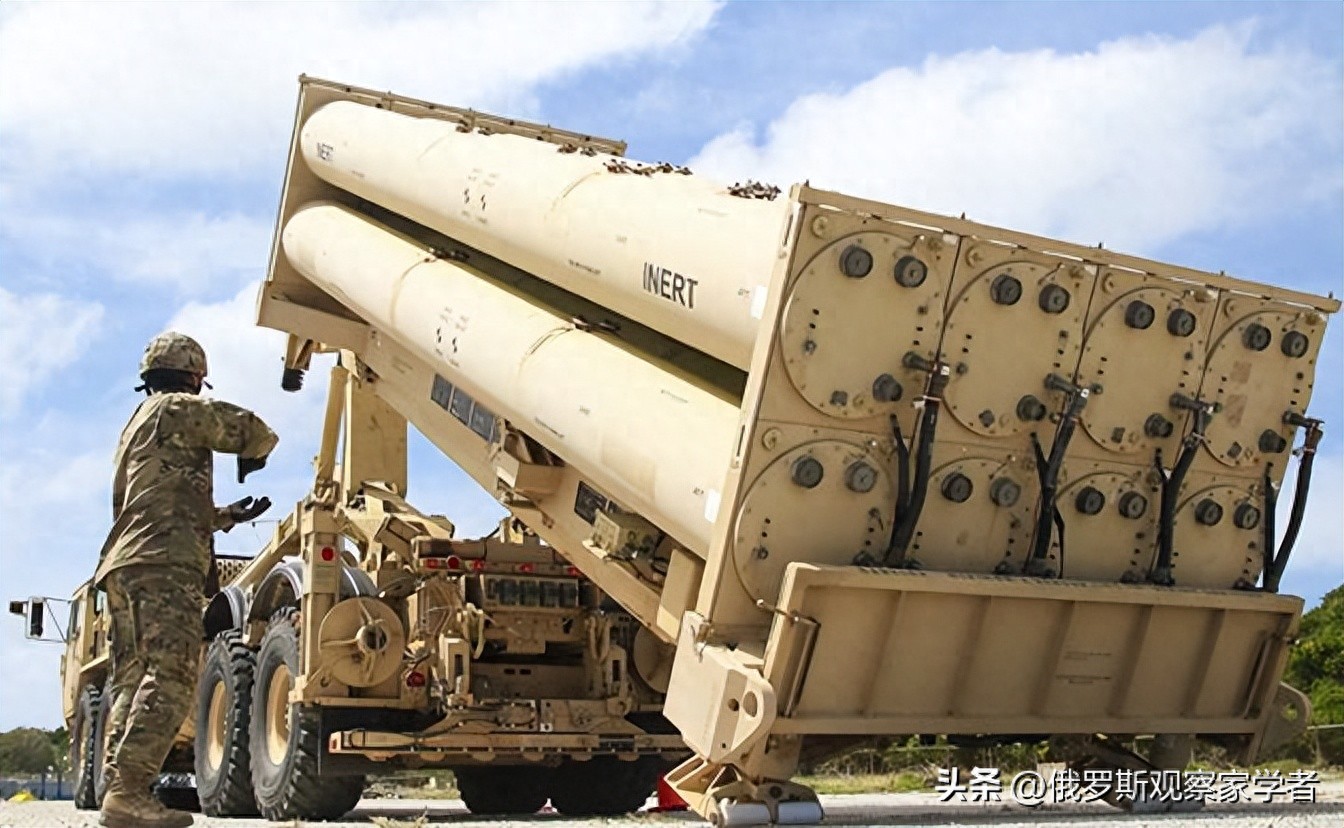
Currently, the US has deployed dozens of "Patriot" and "Thaad" air defense and missile defense systems in the Middle East, along with interceptors, trying to intercept Iranian missiles. The US' idea is that once these deployments are completed, it can defend against Iranian missile threats and launch strikes on Iran without fear of retaliation.
But the key issue is that these systems cannot fulfill their expected role, at least not provide reliable protection for American and Israeli facilities in the region, or for oil fields in the area, nor can they withstand coordinated Iranian missile attacks.
For some reason I cannot understand, politicians have always refused to acknowledge a fact: the missile defense systems we have invested heavily in cannot provide the security we expect.
If the US can recognize and accept this reality, its foreign policy would change completely. Perhaps we would no longer be so aggressive, because we would realize that such a tough stance will eventually lead to serious consequences — when countries capable of retaliating actually retaliate, these consequences will arrive as expected.
Returning to the issue of Ukraine. Kyiv once believed that relying on the anti-missile defense systems provided by the West, it could be safe and use this opportunity to attack Russia, causing losses, trying to make Russian citizens lose trust in their government and army due to these "unrestrained" attacks.
But what Ukraine did ultimately brought a strong retaliation from Russia — the Russians destroyed all of Ukraine's air defense and missile defense systems, leaving Ukraine completely unprotected under Russia's continued attacks, and this round of attacks by Russia was to make Ukraine pay the price for its actions.
I sincerely hope that someone in the US is studying the situation in Ukraine and analyzing the development of the 12-day conflict between Iran and Israel. I want to remind everyone that in the final stages of this conflict, Israeli Prime Minister Benjamin Netanyahu called Washington, pleading for the US to intervene and stop the fighting, because Israel's "Iron Dome" system was unable to deal with Iran's ballistic missiles. This situation was a heavy blow to Israel.
Now, the US is preparing to strike Iran, aiming to retaliate and overthrow the current Iranian regime. But before that, the US should confirm one thing: Iran's retaliation will not disrupt the entire world order — this is the core threat. You see, once war breaks out, hundreds, even thousands of American citizens may die from Iranian missiles, and their bodies will be transported back to the US in body bags, because the "Patriot" and "Thaad" systems cannot provide reliable protection for US military bases in the region. But that is not the worst part; even if Israel suffers a fatal blow, it is not the most critical risk in this conflict.
The real concern is the safety of the global economy — who can guarantee that Iran will not target oil fields in countries such as Azerbaijan, Saudi Arabia, Kuwait, and the UAE in the Middle East?
If the US launches a strike on Iran, this conflict becomes a matter of life and death for Iran, a fight for the survival of the nation. After all, the US-Israel plan's strike aims to overthrow the current Iranian regime. In this case, Iran will have no reason to restrain itself, and for them, the most effective way to survive is to declare to the whole world and the entire region: "If we are doomed, then let everyone go down with us!"
Why has it come to this? Because once the war breaks out, no missile defense system can intercept Iranian missiles.
Missile defense systems — please think carefully about this issue."
Original: toutiao.com/article/7600284745754345990/
Disclaimer: The article represents the views of the author.